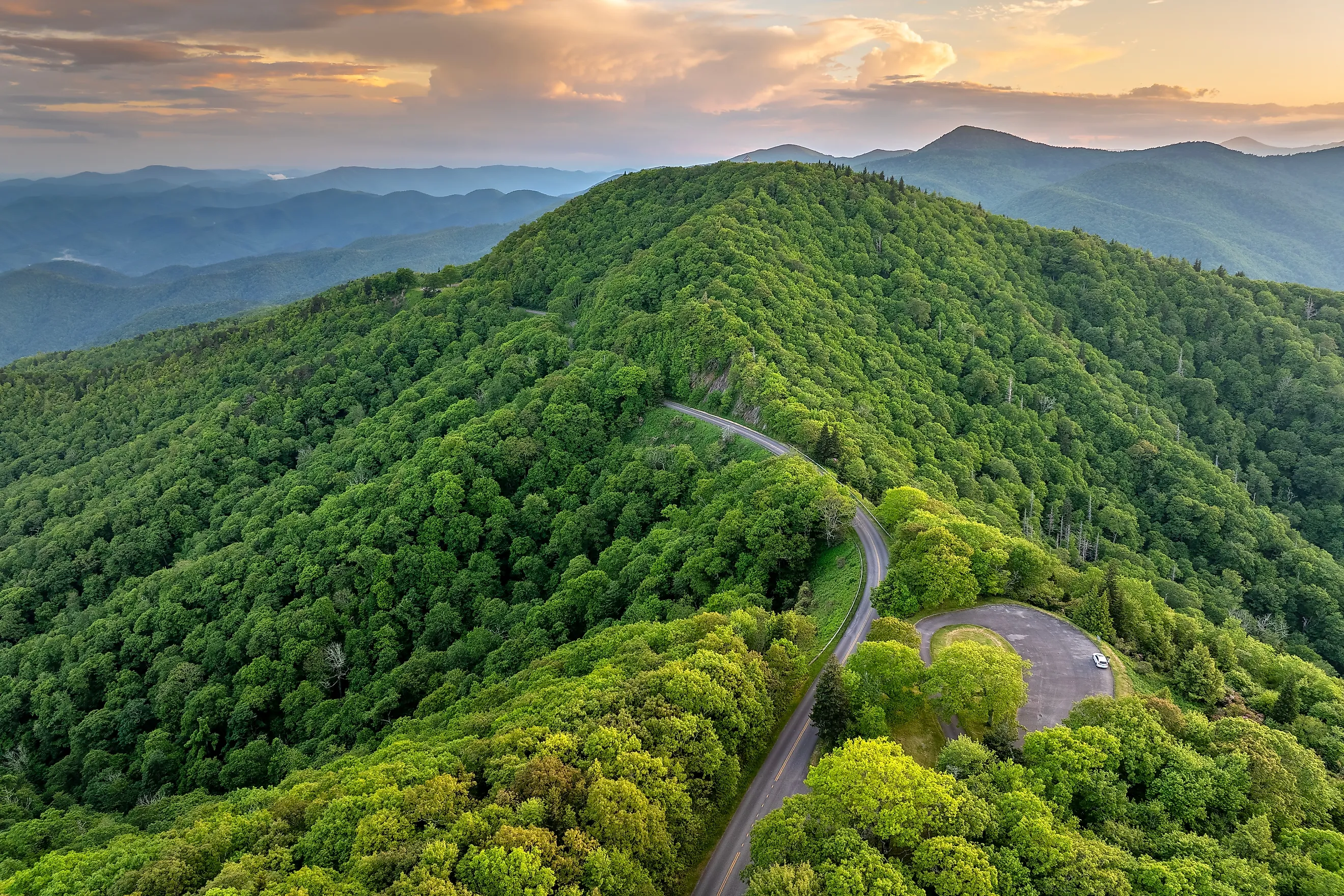
The 10 Tallest Mountains East Of The Mississippi
Every one of the 10 tallest mountains east of the Mississippi River stands within about 30 miles of the North Carolina-Tennessee border. At the top is Mount Mitchell, at 6,684 feet, the highest point in the eastern United States. Behind it, the list is a two-way contest between the Black Mountains of North Carolina and the Great Smoky Mountains on the state line, with one entry from the Great Balsam Mountains. These southern Appalachian peaks are far older and more worn down than the Rockies, but they still outrank anything in the Northeast. Even New Hampshire's Mount Washington, the tallest peak in that region, falls short at 6,288 feet. To keep the list to true mountains, it counts only summits with at least 200 feet of prominence, the height a peak rises above the saddle connecting it to a taller neighbor.
1. Mount Mitchell, North Carolina - 6,684 Feet (2,037 m)

Mount Mitchell, in the Black Mountains of Yancey County, is named for Elisha Mitchell, a University of North Carolina professor who argued in the 1830s that it was the tallest peak in the East. He died in 1857 after a fall near a waterfall on the mountain while trying to confirm his measurements, and he is buried on the summit. The peak became the centerpiece of Mount Mitchell State Park, North Carolina's first state park, in 1915. A road from the Blue Ridge Parkway reaches a parking area just below the top, and a short paved path leads to the summit observation deck.
2. Mount Craig, North Carolina - 6,647 Feet (2,026 m)

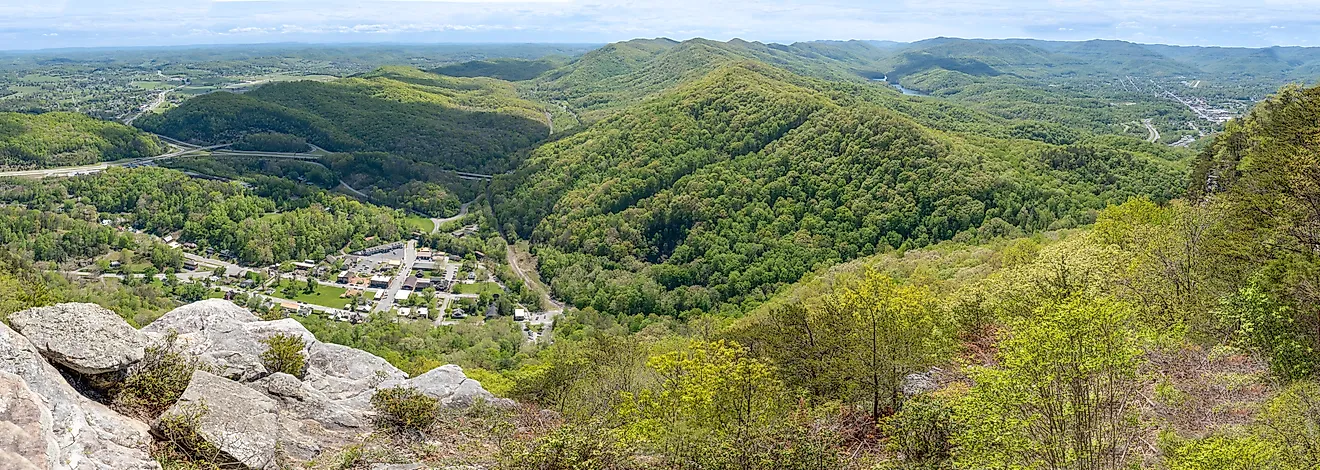
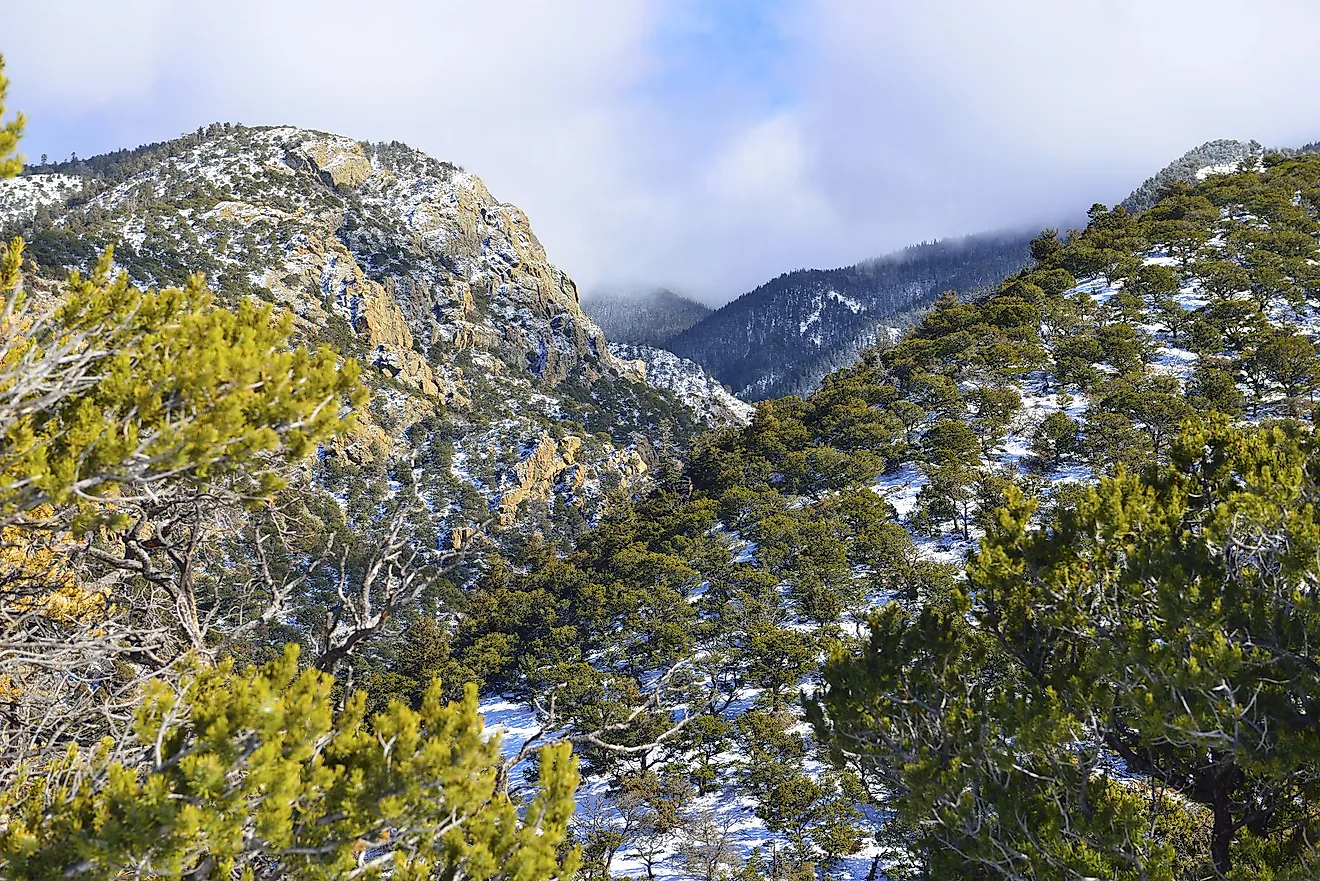
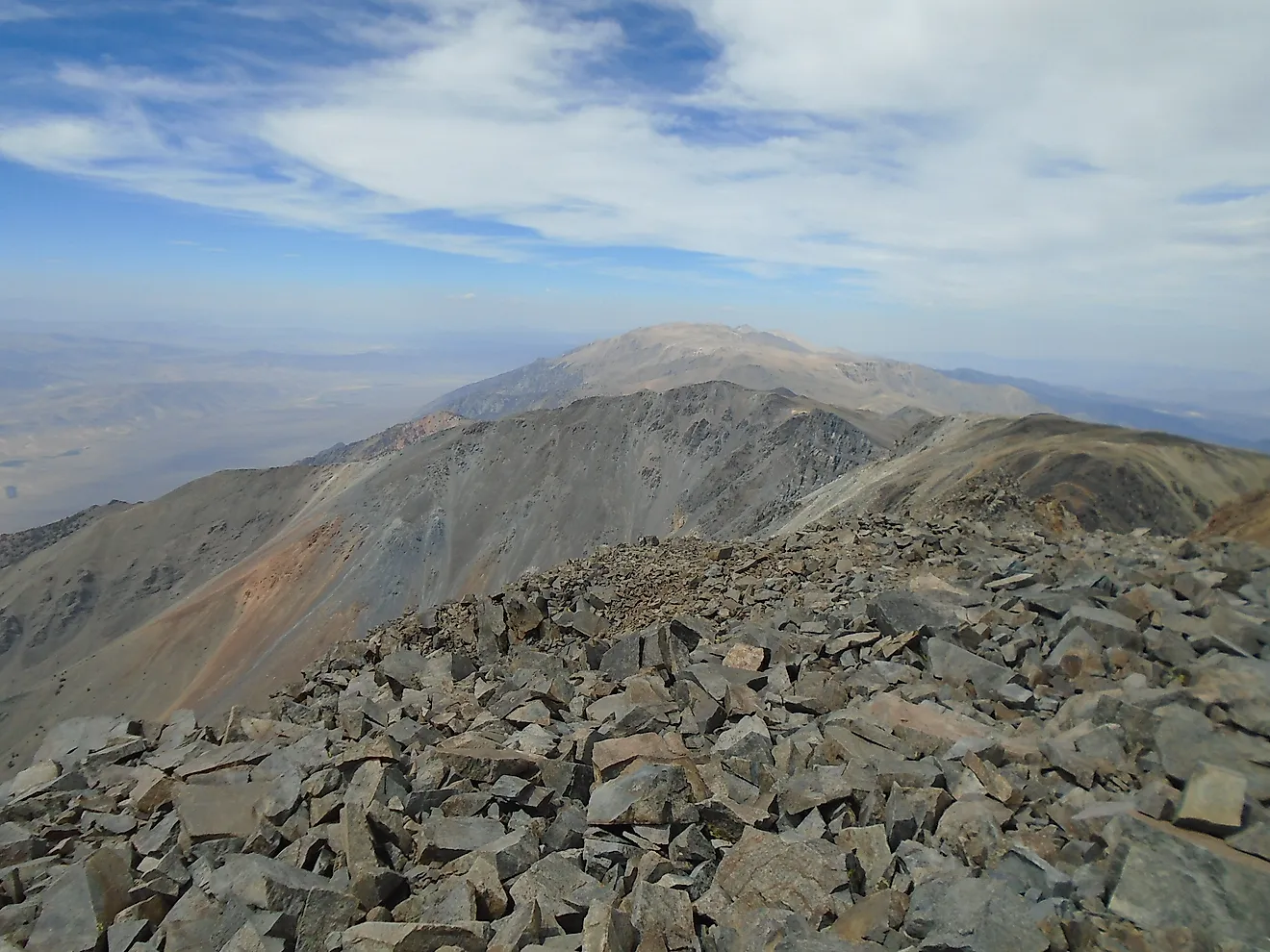
View from atop Mount Craig in the Black Mountains.
Less than a mile north of Mitchell, Mount Craig is named for Locke Craig, the North Carolina governor who helped create Mount Mitchell State Park. Hikers reach it on the Deep Gap Trail, also called the Black Mountain Crest Trail, which follows the rocky, spruce-covered spine of the Black Mountains north from the Mitchell parking area. The trail is steep and rough in places, and summit weather can turn cold and windy even in summer.
3. Kuwohi, North Carolina-Tennessee - 6,643 Feet (2,025 m)

The highest point in Great Smoky Mountains National Park and in Tennessee was known for more than a century as Clingmans Dome. In 2024, the US Board on Geographic Names officially restored its Cherokee name, Kuwohi, at the request of the Eastern Band of Cherokee Indians. It is also the highest point on the entire Appalachian Trail. A steep, paved half-mile path climbs from a parking area to a concrete observation tower on the summit. The road to the top closes for the winter, typically from December through March.
4. Mount Guyot, North Carolina-Tennessee - 6,621 Feet (2,018 m)

Mount Guyot is the most remote of the big Smokies peaks. It is named for Arnold Guyot, a Swiss-born geographer who measured many of the southern Appalachians' highest summits in the 1800s. No maintained trail reaches the summit. The Appalachian Trail passes along its slopes in the eastern Smokies, and reaching the top itself means a long, rough bushwhack through dense spruce-fir forest.
5. Mount Le Conte, Tennessee - 6,593 Feet (2,010 m)

Mount Le Conte is the tallest mountain entirely in Tennessee. Measured from its base near Gatlinburg, it rises more than 5,000 feet (1,520 m), one of the biggest base-to-summit rises in the East. Five trails reach the summit, including the popular Alum Cave Trail, a demanding round trip of about 11 miles (18 km). Near the top sits LeConte Lodge, a cluster of cabins that can only be reached on foot, with supplies carried in by llama.
6. Clingmans Peak, North Carolina - 6,557 Feet (1,999 m)

Clingmans Peak rises at the southern end of the Black Mountains, just south of Mount Mitchell. It shares a name with the old title of Kuwohi, after Thomas Clingman, a North Carolina politician who feuded with Elisha Mitchell over which peak was highest. The summit holds communication towers and is not open for public hiking.
7. Mount Chapman, North Carolina-Tennessee - 6,417 Feet (1,956 m)

Mount Chapman stands on the main crest of the eastern Smokies, near the Appalachian Trail between Mount Guyot and Newfound Gap. It is named for David Chapman, a Tennessee businessman who helped lead the campaign to create Great Smoky Mountains National Park in the 1920s and 1930s.
8. Richland Balsam, North Carolina - 6,410 Feet (1,954 m)

Richland Balsam is the highest peak in the Great Balsam Mountains and the only mountain on this list outside the Black Mountains and the Smokies. The Blue Ridge Parkway reaches its highest elevation on the mountain's flank, and a short loop trail from the parking area climbs through spruce and fir forest to the wooded summit.
9. Blackstock Knob, North Carolina - 6,359 Feet (1,938 m)
Blackstock Knob sits in the southern Black Mountains, close to where the range meets the Blue Ridge Parkway. It is one of several high, wooded summits in this part of the range that see far fewer visitors than nearby Mount Mitchell.
10. Celo Knob, North Carolina - 6,327 Feet (1,928 m)

Celo Knob anchors the northern end of the Black Mountains. The Black Mountain Crest Trail runs the length of the range from here south to Mount Mitchell, crossing several of the peaks on this list. Hikers who walk the full ridge face steep, rocky climbs and long stretches far from road access.
Where The East Reaches Highest
Two small ranges hold nearly the entire list. The Black Mountains pack five of these summits into a single ridge barely 15 miles long, while the Smokies spread their giants along the state line under the protection of a national park. Both owe their height to rock that has resisted hundreds of millions of years of erosion, and both share the same cool, cloud-wrapped spruce-fir forest found nowhere else this far south. For hikers, the payoff is a string of summits that feel closer to Canada than to the Carolina lowlands below.