What Happens To The Boundary Waters If The Mine Opens
The first thing to establish is that there is no mine, and under current conditions there cannot be one. Twin Metals Minnesota, a subsidiary of the Chilean company Antofagasta, has been trying to open an underground copper-nickel mine near Ely for more than a decade, and the federal leases it needs have been cancelled and reinstated repeatedly across four administrations. In 2026 Congress removed the federal mining ban, and within months Minnesota's governor blocked the state permits. So the honest version of the question is what the geology and the geography say would happen, what each side argues, and where the fight currently stands. All three are worth knowing because they are different things.
The Geography Is The Whole Argument

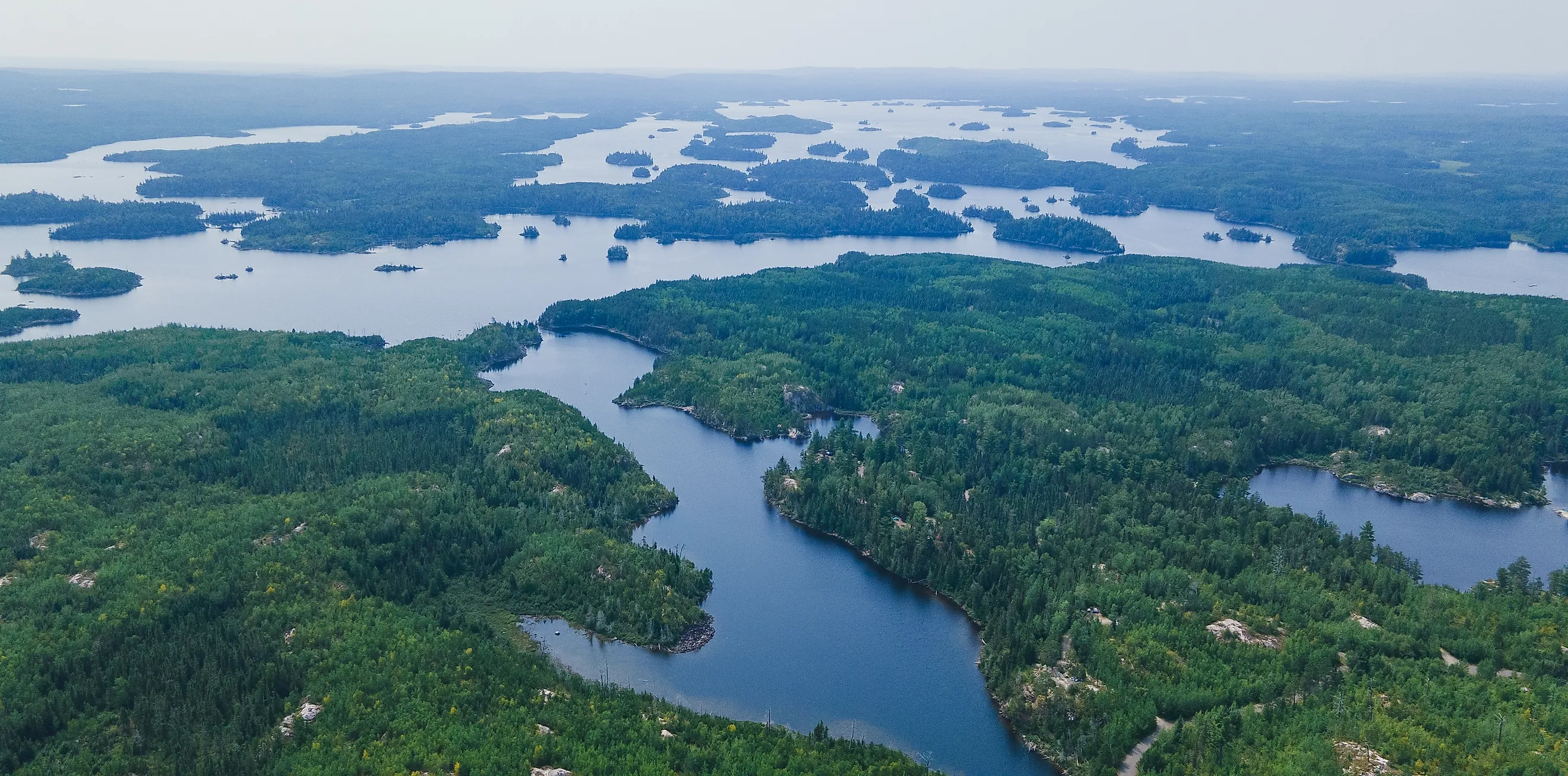
The proposed mine sits near Birch Lake and the South Kawishiwi River in Minnesota, roughly five to nine miles from the wilderness boundary, with one of the original leases lying about a quarter of a mile from the line.
Those waters sit in the Rainy River watershed, and that watershed flows north into the Boundary Waters Canoe Area Wilderness. This is the fact both sides accept, and everything else follows from it. A mine on this site is not beside the wilderness the way a factory is beside a town. It is upstream of it.
Mines elsewhere in Minnesota, including the iron ranges that have operated for over a century, sit in watersheds that drain away from the wilderness. This one does not.
Sulfide Is The Technical Distinction
Minnesota has mined iron ore for generations without the kind of controversy this project attracts, and the reason is chemistry rather than politics. The copper, nickel and precious metals in the Duluth Complex occur in sulfide-rich rock. When sulfide minerals are excavated and exposed to air and water, they can generate sulfuric acid, which in turn mobilizes heavy metals into runoff. That process is known as acid mine drainage and it is the specific risk at issue.
Iron mining does not produce the same reaction, which is why a region with 140 years of mining history is nonetheless having a genuinely new argument.
What The Company And Supporters Argue
Twin Metals has estimated the project would create around 700 direct jobs and 1,400 in related industries, operating for roughly 25 years and processing 20,000 tons of ore a day from depths between 400 and 4,500 feet. It would be an underground mine rather than an open pit.
Supporters frame it around three points. Northeastern Minnesota's mining economy has declined and these are well-paid union jobs in a region that wants them. The Duluth Complex holds one of the world's largest undeveloped copper-nickel deposits, and copper demand is rising sharply with electrification. And Representative Pete Stauber, who introduced the resolution overturning the ban, argued that the moratorium was an attack on the region's way of life and put national mineral security at risk.
The company has said it remains committed to advancing what it describes as a sustainable underground mining project bringing economic opportunity to northeastern Minnesota.
What Opponents Argue

Opponents do not generally argue against mining as such, which is worth noting because it shapes the whole dispute. Senator Tina Smith put the position this way before the Senate vote: supporting the need for mining does not mean mining on the edge of Chaco Canyon or the rim of the Grand Canyon, and it does not mean a copper-sulfide mine on the doorstep of the Boundary Waters is a good idea. The argument is about this specific watershed rather than the industry.
The economic counter-argument is that the region already has an industry here. The Boundary Waters supports a tourism and recreation economy valued at around a billion dollars, drawing roughly 150,000 visitors a year to America's most visited wilderness area. A geophysicist at the Center for Science in Public Participation has argued the copper proposal poses a greater threat than the iron mines that have long operated nearby, precisely because of the sulfide chemistry.
Critics have also raised that Antofagasta would ship ore concentrates abroad for processing, which they say undercuts the domestic mineral security case.
The Leases Have Flipped Five Times
The legal history explains why nobody on either side treats any current decision as final. International Nickel Company acquired the two federal leases in 1966, long before the wilderness received its current protections in 1978. In 2016 the Forest Service and Bureau of Land Management declined to extend them and proposed a 20-year mineral withdrawal. In 2018 the first Trump administration reinstated them. In 2022 the Biden administration cancelled them again, concluding that sulfide-ore copper mining in this watershed posed unacceptable risk. In 2023 a 20-year mineral withdrawal covering roughly 225,000 acres was put in place.
Each reversal has come with litigation, and the courts have been involved throughout.
2026: Congress Removed The Ban
In April 2026 the Senate voted 50 to 49 to overturn the 20-year mining ban covering about 350 square miles of federal land, using the Congressional Review Act, and the resolution was signed into law.
In June the House Appropriations Committee passed an Interior appropriations bill containing language that would reinstate the two federal leases directly. Separately, the Minnesota DNR approved an exploratory drilling plan in late 2025 for a Twin Metals subsidiary on the Birch Lake deposit.
That cleared the largest federal obstacle. It did not grant the leases, and Twin Metals still does not hold them.
Then The State Blocked It

In August 2026 Governor Tim Walz issued Executive Order 26-10, directing the Minnesota DNR and the Minnesota Pollution Control Agency to halt permitting and environmental review for nonferrous mining in the Rainy River Headwaters Watershed. The state subsequently cancelled one of Twin Metals' state mineral leases.
This matters because a mine needs both. Federal leases cover the minerals on federal land, but the operating permits, water quality permits and environmental review come from the state, and Minnesota has stopped processing them.
The result is a standoff. Federal protections have been removed and state permitting has been closed, which leaves the project no further forward than it was.
So What Would Actually Happen
If the mine did eventually open, the serious version of the concern is not a sudden catastrophe. It is considerably slower than that, and slower is part of what makes it hard to argue about.
The risk opponents describe is chronic rather than acute: seepage from waste rock and tailings carrying acidified water and dissolved metals into a connected chain of lakes and rivers over decades, in a watershed where water flows into a wilderness that cannot be drained, flushed or easily remediated. The Forest Service reviewed 20 other copper-nickel mines across the United States as part of its assessment of that risk.
The company's position is that modern underground mining and engineered containment can manage it. That is the actual disagreement, and it is a technical one about failure rates over long timescales rather than a dispute about whether anyone wants pollution.
Where It Stands

As things stand, Twin Metals holds no federal leases, faces a state permitting freeze, has lost one state lease and is the subject of ongoing litigation. Groups on both sides are now pursuing permanent solutions, with opponents seeking a state statutory ban and supporters pursuing federal legislation to transfer the leases outright.
The 1966 leases predate the wilderness designation, the watershed flows the wrong way, the ore is in sulfide rock, and the legal position changes with each administration. Those four facts have produced sixty years of argument and will likely produce more.
What happens to the Boundary Waters if the mine opens is therefore still a question about politics rather than geology, because the geology has not changed since 1966 and the politics changes every four years.