The US Lakes Where Paddlefish Still Survive
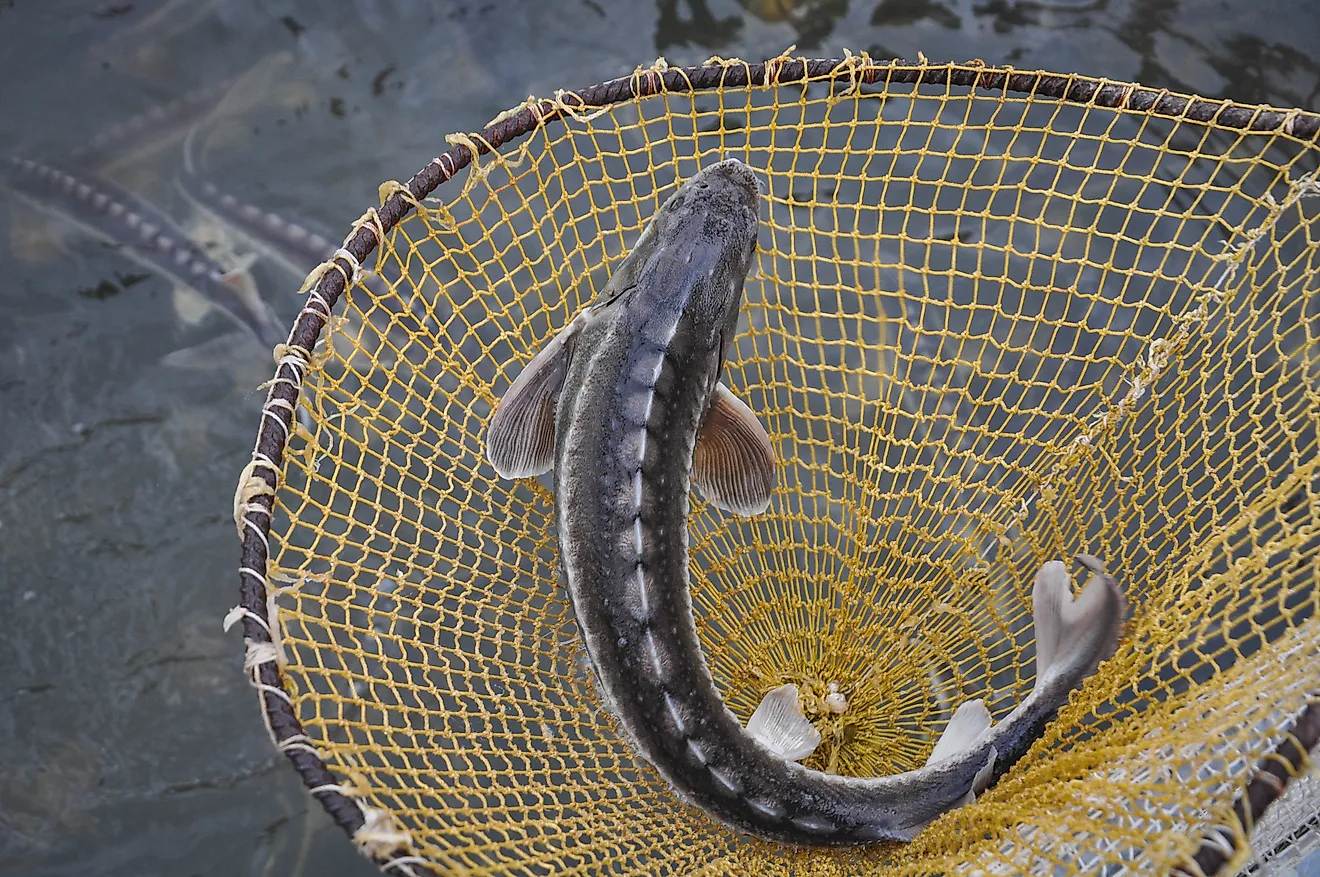
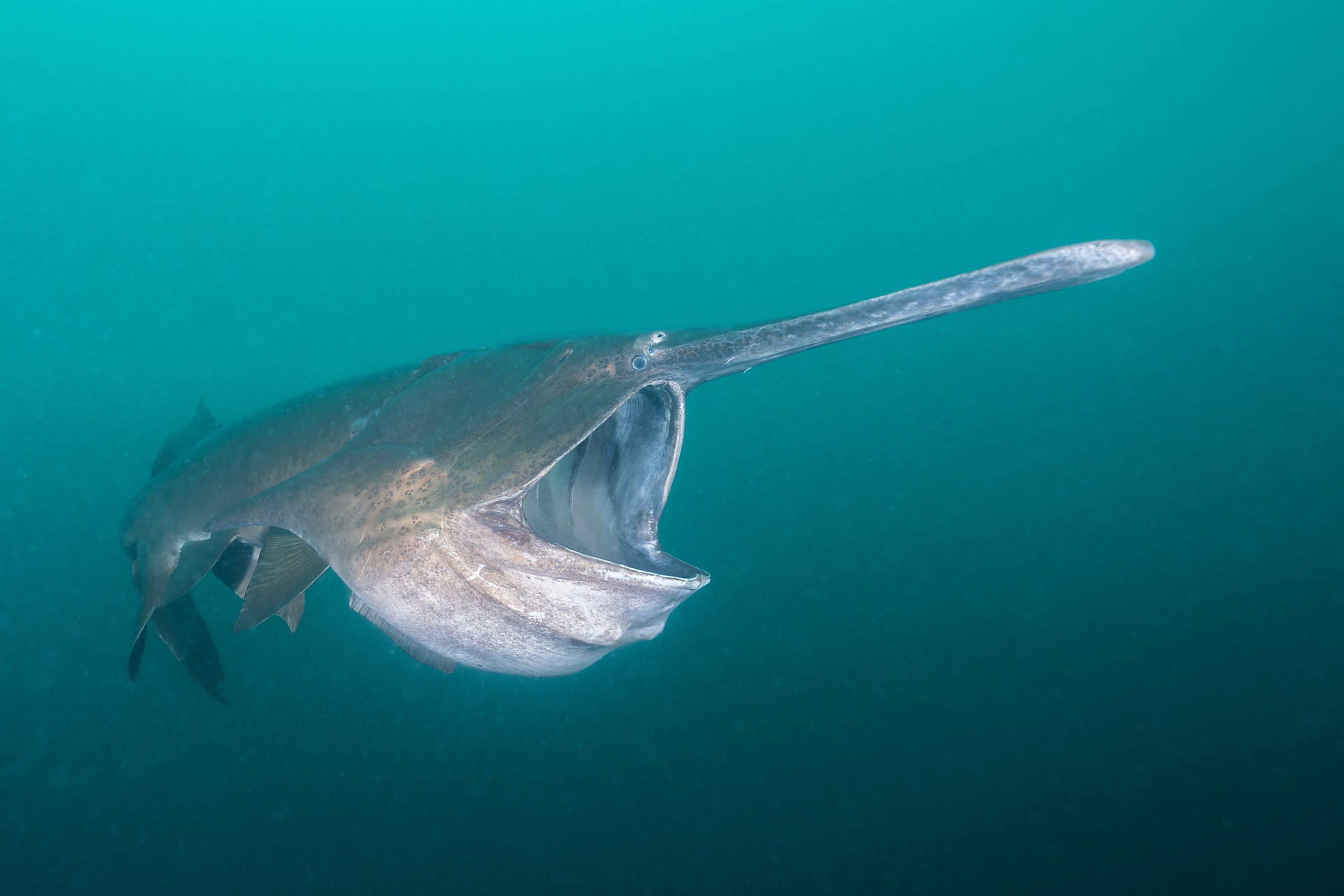
Most fish that top a hundred pounds and live sixty years are proof of a healthy river. The paddlefish is the exception. In a few reservoirs it still runs up the Missouri each spring to spawn on flooded gravel, but in most it survives only because a hatchery truck arrives every year, since the same dams that pool its plankton-rich water also strip out the flood pulse that triggers spawning. Cherokee gave up a 149-pound state record from water that may never produce a wild fish again.
Lake Sakakawea, North Dakota

Of every paddlefish stock in the upper Missouri Basin, the one biologists call the Yellowstone-Sakakawea stock is among the healthiest. North Dakota Game and Fish manages it as a self-sustaining breeding population, tracking adults as they leave the reservoir each spring and push up the Missouri and Yellowstone rivers to spawn. How many young survive swings hard each year with river conditions.
High Yellowstone flows and rising water levels in 1995 produced an exceptionally strong year class, and drought from 1999 through 2007 knocked recruitment far down. The pattern reversed in 2011, when record Missouri River runoff refilled the reservoir and produced the best year class since 1995.
Biologists have released hatchery fish here, but stocking supplies only a fraction of the replacements. North Dakota Game and Fish reported that naturally spawned fish made up roughly 95% of even the strong 1995 cohort. Managers therefore concentrate on river flow and spawning habitat in the Yellowstone and Missouri, since those upstream reaches produce the young fish that later grow up in the reservoir.
Fort Peck Reservoir, Montana

A distinct upper Missouri River stock lives in Fort Peck Reservoir, managed jointly by Montana and North Dakota. Adults spend most of the year in the reservoir, then run upstream into free-flowing stretches of the Missouri once spring conditions cue their spawning movements. Montana's management plan focuses on the river reaches above Fort Peck, because reproduction there hinges on current, temperature, and the right gravel or cobble bottom. The state still runs a limited-entry Upper Missouri paddlefish season, and wildlife officials note that the fish tend to stack up near the Fred Robinson Bridge once Missouri River discharge climbs past roughly 10,000 cubic feet per second. Anglers crowd that stretch of river each spring, a corridor still biologically tied to the vast reservoir downstream where the adults spend the rest of their year.
Lake Oahe, North Dakota And South Dakota

A sizeable paddlefish population lives in Lake Oahe, though its biology looks nothing like Sakakawea's. North Dakota Game and Fish estimates that 10,000 to 12,000 paddlefish gather in the Missouri River north of Bismarck during spring sampling. The fish run upstream, yet biologists have found no sign that they reproduce successfully in the reach between Garrison Dam and Lake Oahe.
The obstacle is temperature. Water drawn from the bottom of Garrison Dam keeps the Missouri below it colder than paddlefish need to spawn. North Dakota researchers think many of the adults below the dam simply passed through Garrison from Lake Sakakawea. Large paddlefish can feed and grow in Oahe for years, but this population leans heavily on fish arriving from upstream rather than on a steady local supply of juveniles.
Lake Francis Case, South Dakota

One of South Dakota's oldest stocking programs has kept paddlefish in Lake Francis Case for decades. South Dakota Game, Fish and Parks began releasing them in the late 1970s.
The earliest efforts used fry, and since 1990 crews have stocked fingerlings roughly 8 to 10 inches long each year. Managers set out to build a dependable brood source, and enough fish survived and grew that the state opened a limited paddlefish season on the reservoir in 2012.
The season is still draw-based. For the 2026 May season, the first drawing offered 75 resident licenses. Reservoir surveys reaching back to the early 1980s give biologists decades of data on survival, growth, and harvest. Managers still treat this as a stocked fishery, so continued releases remain the reason adult paddlefish are there to catch at all.
Grand Lake O' The Cherokees, Oklahoma

Few paddlefish stocks anywhere have been studied as closely as the one in Grand Lake O' the Cherokees. Since 2008, Oklahoma Department of Wildlife Conservation biologists have run about 22,000 paddlefish through the state's research program, logging age, growth, movement, and harvest data. The Grand-Neosho stock still spawns naturally, though strong generations show up only now and then. Unusually good Neosho River flows in 1999 created a banner year class that dominated the adult stock for years afterward. State monitoring later flagged another big class in 2015, then smaller pulses in 2016, 2017, and 2019. Those gaps are normal for a long-lived fish whose spawning success rides on the timing and strength of spring floods. Together with Hudson and Fort Gibson lakes, Grand now forms the core of Oklahoma's paddlefish fishery.
Lake Of The Ozarks, Missouri

Paddlefish grow enormous in Lake of the Ozarks, but they do not reproduce reliably enough to sustain themselves. Missouri Department of Conservation managers make up the shortfall by stocking hatchery-raised juveniles from Blind Pony Hatchery, currently around 15,000 fish a year, with bigger pulse stockings every third year. Those juveniles usually need seven or eight years to reach legal harvest size.
A five-year tagging study marked 2,134 paddlefish in the reservoir and pegged the annual exploitation rate at about 8%. Across Missouri's three managed paddlefish reservoirs, more than a fifth of harvested fish topped 50 pounds. A 34-inch minimum body-length rule gives each stocked cohort several years of growth before anyone can keep one. Managers weigh tag returns, stocking numbers, and size limits together when they set harvest policy for such slow-growing fish.
Harry S. Truman Reservoir, Missouri

Long spring migrations still run through the upper Osage system above Harry S. Truman Reservoir. Missouri biologists implanted transmitters in 100 reproductively mature fish and picked up strong seasonal concentrations in the upper Osage Arm, including riverine water above Taberville Access.
Some fish also push into the Marais des Cygnes system as spring flows and temperatures climb. Those runs still do not hatch enough young to hold the population up, so Missouri stocks Truman every year, currently around 15,000 juveniles and double that in scheduled pulse years.
A separate five-year tagging project marked 2,065 paddlefish; anglers later reported 454 of them harvested, an annual exploitation rate of 8.7%. The tags also mapped movement well beyond the reservoir. Some fish dropped downstream into Lake of the Ozarks, and others turned up elsewhere in the Missouri Basin, adding hard movement records to the spring telemetry work.
Table Rock Lake, Missouri And Arkansas

Deliberate stocking in 1972 started the Table Rock Lake paddlefish population from scratch. The Missouri Department of Conservation describes it as the first successful case of establishing paddlefish anywhere from stocked juveniles. Adults now run into the tributaries each spring and appear to try spawning, but no one has documented successful natural recruitment. Missouri currently targets about 7,500 juveniles a year for the reservoir, more in pulse years. Adults from Table Rock also supply brood fish to the state hatchery, tying this population directly to future stockings. Over a five-year study, biologists marked 2,547 fish here and received harvest reports on 456 of them, an annual exploitation rate of 7.9%. A few of the marked fish later showed up below other dams. Each new generation still leans mostly on the hatchery.
Kentucky Lake, Kentucky And Tennessee

Paddlefish still hold on in the main stem of the Tennessee River within Kentucky Lake, and Tennessee's current rules treat them as an active part of the reservoir fishery. The season runs in late spring, with a two-fish daily limit and no culling. Those regulations are the clearest present-day confirmation that the species is still there in this enormous impoundment.
A navigation canal ties Kentucky Lake directly to Lake Barkley, joining the Tennessee and Cumberland systems at reservoir level. The link opens a large network of open water to the fish, but it does nothing to restore the flowing conditions they spawn in. Reproduction still comes down to spring discharge, temperature, migration distance, and the right bottom substrate. Present-day occupancy and regulated harvest are well documented here; consistent natural recruitment inside Kentucky Lake itself is not.
Lake Barkley, Kentucky And Tennessee

Another large reservoir refuge sits just across the canal on the Cumberland River. Tennessee's current rules set a Lake Barkley paddlefish season in late spring, with a two-fish daily limit and no culling.
The reservoir spreads across about 57,920 acres and joins Kentucky Lake through the navigation canal. Paddlefish also work the water immediately below Barkley Dam, where a Kentucky Department of Fish and Wildlife Resources angler survey recorded people specifically targeting them in the tailwater.
Tailwater catches cannot prove the fish are reproducing inside the reservoir, but they do document steady use of this Cumberland River corridor. Tennessee rules separately confirm that Barkley itself stays open to regulated paddlefish harvest. The record here points to continued presence far more than to strong natural recruitment, so no one should mistake this population for the naturally reproducing stocks farther west and north.
Cherokee Reservoir, Tennessee

The largest fish ever recorded in Tennessee came out of Cherokee Reservoir. On April 13, 2023, Henry Dyer landed a 149-pound paddlefish there, still the state's Class A record and the heaviest fish of any species Tennessee has on the books. The Tennessee Wildlife Resources Agency notes that Cherokee routinely produces fish over 100 pounds, and each spring adults move toward the upper reservoir as they head upstream. Managers watch that migration closely and hold the Cherokee season to just April 1 through 15, with a one-fish daily limit and no culling. TWRA also admits the population is hard to study, since paddlefish are difficult to collect and can live for decades. The mix of giant adults and a tightly timed spring season makes Cherokee one of the best places in Tennessee to grasp just how large this ancient species gets.
Caddo Lake, Texas And Louisiana
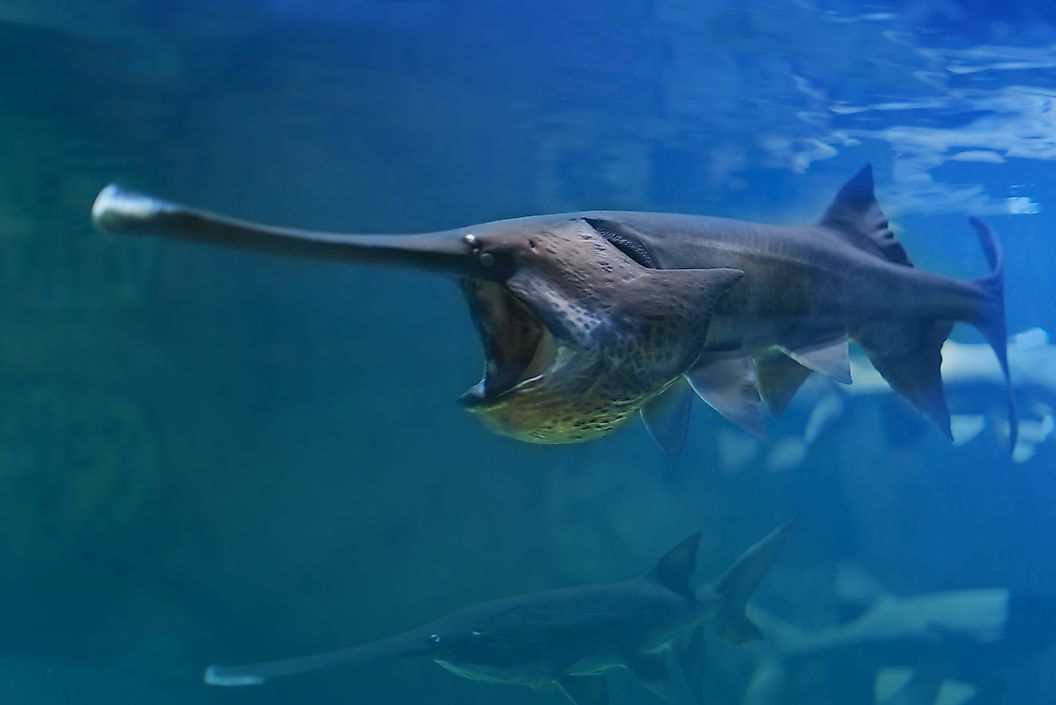
By the time Texas launched its modern restoration work around Caddo Lake, paddlefish had already vanished from the Big Cypress Bayou system. Lake O' the Pines Dam, finished upstream in 1959, had flattened out the seasonal flows that once cued spawning. Texas and federal partners built cobble spawning shoals in 2008 and 2009, then signed a voluntary environmental-flow agreement in 2011 to bring back more natural high-water pulses.
Biologists released 47 tagged juveniles in 2014 to see whether paddlefish would stay put in the system. Tracking showed strong retention and growth, which cleared the way for far larger releases. A 2024 Texas fisheries report counted almost 100,000 paddlefish stocked since the current 10-year restoration plan began in 2018. The goal is a self-sustaining population, so natural reproduction remains the real measure of success, and it has not been reached yet.
What The Reservoirs Reveal About A Survivor
Laid side by side, these lakes trace the whole predicament of a species that outlived the dinosaurs but not the dam. Where a reservoir still connects to a long, cold-shocked-free run of flowing river, as at Sakakawea and Grand, the fish spawn on their own and the year classes rise and fall with the spring floods. Where the dam severed that connection, biologists keep the fish present by hand, hauling hatchery juveniles into Francis Case, the Ozarks, Truman, and Table Rock so anglers still have something to snag. Caddo sits at the far end of that spectrum, a watershed being rebuilt piece by piece to see whether paddlefish can be coaxed back into reproducing at all. Their future depends less on the reservoirs themselves than on how much natural river the people managing them can give back.