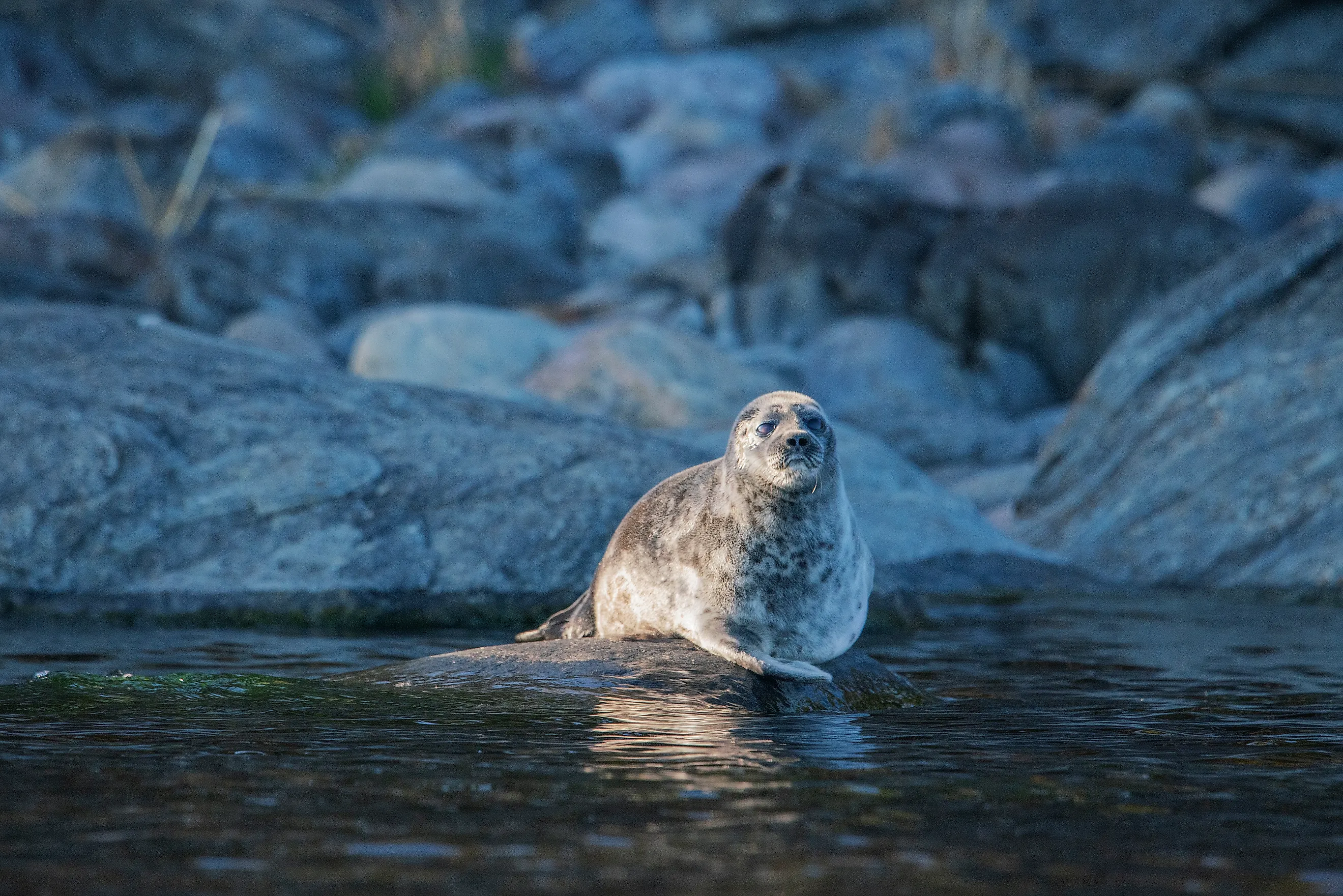
The Only Lakes In The World With Freshwater Seals
Only five seal populations in the world are known to live year-round in freshwater lakes. They occur in Lake Baikal and Lake Ladoga in Russia, Lake Saimaa in Finland, Iliamna Lake in Alaska, and a remote network of lakes centered on Lacs des Loups Marins in northern Quebec.
They are not all the same kind of seal. Baikal and Saimaa now have their own recognized species; Ladoga has a freshwater subspecies of ringed seal; Quebec has a freshwater subspecies of harbor seal; and Iliamna holds a genetically distinct population of harbor seals. Marine seals regularly enter rivers and estuaries elsewhere, but these five populations are different because freshwater is their normal year-round habitat. Their histories also vary considerably: some became isolated after the last Ice Age, while the Baikal lineage separated from its closest marine relatives much earlier.
Lake Baikal

Lake Baikal is home to the Baikal seal, Pusa sibirica, a species found naturally nowhere else. Its origin remains one of the major questions surrounding the lake's fauna. Genetic research places its split from the closely related ringed-seal lineage roughly 1.15 to 1.7 million years ago, but scientists cannot yet say exactly when or how its ancestors reached Baikal. One leading hypothesis involves movement from Arctic waters through the Yenisei-Angara river system or through large glacial lakes that existed during the Pleistocene. Lake Baikal offered an enormous freshwater habitat once seals became established. At about 25 million years old and roughly 5,400 feet deep, it is the world's oldest and deepest lake and contains about 20% of Earth's unfrozen freshwater. The seals retained the ice-associated breeding behavior of their northern relatives, using winter ice and snow for breeding and shelter.
Baikal seals have also developed an unusual feeding strategy. Along with endemic fish, they consume vast numbers of Macrohectopus branickii, a tiny freshwater amphipod weighing less than one-tenth of a gram. Researchers using animal-borne cameras and accelerometers found seals capturing these crustaceans at exceptionally high rates. Their strongly cusped, comb-like cheek teeth appear to let water escape while retaining small prey, making such tiny animals energetically worthwhile. The population is much larger than any other freshwater seal population. Russia's fisheries research institute reported in 2024 that recent estimates have generally placed it at about 150,000 to 160,000 seals.
Iliamna Lake

Alaska's largest lake contains about 400 resident harbor seals, one of only two known freshwater harbor-seal populations. Iliamna Lake is not completely cut off from the ocean. The 70-mile Kvichak River connects it with Bristol Bay, creating a physical route that seals could use. What makes the population remarkable is how little genetic exchange appears to occur despite that connection. A 2024 study comparing Iliamna seals with harbor seals from eight regions of the North Pacific found that the lake animals formed a strongly differentiated genetic cluster. They also had lower genetic diversity and higher levels of inbreeding than the marine populations examined. The results provide some of the strongest evidence yet that Iliamna's seals have followed a largely independent evolutionary path.
Exactly when harbor seals established themselves in Iliamna remains uncertain. Historical accounts show that they have lived there for at least two centuries, while earlier research has suggested that colonization could have occurred within the past several thousand years. Food is one reason the lake can support a permanent population. Iliamna receives enormous runs of sockeye salmon, and dietary research found salmonids in 98% of seal scat samples containing identifiable prey during summer. The seals also consume lampreys, smelt, sculpins and other resident fish when adult sockeye are unavailable. Local Indigenous knowledge has long described the lake seals as particularly large and fat, but those physical differences have not been established as separate taxonomic adaptations. Their legal status also requires care: NOAA rejected petitions to list the Iliamna population under the Endangered Species Act in 2016 and again in 2021, although the seals remain protected under the Marine Mammal Protection Act.
Lacs des Loups Marins Lake System

Northern Quebec holds the world's only recognized freshwater subspecies of harbor seal, Phoca vitulina mellonae, commonly called the Ungava or Lacs des Loups Marins harbor seal. It is misleading to describe this as the population of a single lake. Fisheries and Oceans Canada identifies confirmed critical habitat in Lacs des Loups Marins, Lake Bourdel, and Petit lac des Loups Marins, with additional connected waterways forming part of its potential range. Unlike Iliamna Lake, this population is considered completely isolated from the sea. Its ancestors are thought to have been separated from marine harbor seals about 3,000 to 8,000 years ago as postglacial land uplift transformed the waterways of the Ungava Peninsula.
The isolation has produced a highly unusual harbor-seal population. Cree and Inuit observers have historically described these seals as darker, softer-coated, and behaviorally different from marine harbor seals. Scientific evidence confirms that their diet is entirely freshwater-based, with lake whitefish, lake trout, brook trout and related species among their main prey. Reproduction may also differ from that of marine harbor seals at comparable latitudes. Quebec wildlife authorities report that breeding occurs earlier and that females appear to give birth on platforms beneath the ice. Open-water areas, rapids and other places that remain ice-free are therefore essential because harbor seals cannot maintain breathing holes through solid ice as ringed seals can. The population remains extremely difficult to count. Canada's older recovery assessment cited estimates of 50 to 600 animals, while the Quebec government estimated in July 2026 that fewer than 500 remain. Much of their habitat lies within Tursujuq National Park, but climate change and proposed energy development remain important concerns.
Lake Saimaa

Lake Saimaa's seal has undergone a major taxonomic change. Long known as the Saimaa ringed seal, Pusa hispida saimensis, it was traditionally treated as a freshwater subspecies of the widespread ringed seal. Genomic research published in 2025 showed that its evolutionary history is much deeper than its isolation in Finland would suggest. Lake Saimaa was cut off from the Baltic region roughly 9,500 to 10,000 years ago, but the lineage leading to its seals had already been separate from other ringed seals for at least 60,000 years. Researchers also found distinctive anatomical characteristics in the teeth and tongue. Based on that combination of genomic and morphological evidence, the Society for Marine Mammalogy accepted the Saimaa seal as the separate species Pusa saimensis in 2025.
Its habitat is very different from the open waters of Baikal or Ladoga. Lake Saimaa contains about 14,000 islands and a maze of narrow channels, bays and separate basins. That fragmented geography has contributed to strong site fidelity and partly separated local seal groups. Saimaa seals breed in snow lairs along island shorelines and usually live more solitary lives than Ladoga ringed seals. Their pale ring patterns are individually distinctive enough for researchers to identify particular animals from photographs. Intensive conservation has brought the population back from a severe decline. Estimates fell to roughly 130 to 160 seals around the 1980s, but Finland's Metsähallitus estimated 530 individuals in 2025, up from 495 a year earlier. The population remains vulnerable to fishing nets and increasingly mild, low-snow winters, leading conservationists to construct artificial snowdrifts and, in some areas, artificial lairs for breeding.
Lake Ladoga

Lake Ladoga, the largest lake in Europe, supports the Ladoga ringed seal, Pusa hispida ladogensis. It remains classified as a subspecies of the ringed seal rather than a separate species. Its ancestors became isolated in the Ladoga basin as northern Europe's waterways changed after the last glaciation, leaving a resident freshwater population that has persisted for thousands of years. The isolation is not completely absolute. Individual seals have occasionally been recorded moving between Lake Ladoga and the Baltic through connecting waterways, but such movement appears to be minor, and the Ladoga population remains genetically, morphologically and behaviorally distinct.
Current assessments place the population at approximately 6,000 seals. Ladoga seals are the smallest of the recognized ringed-seal subspecies and behave quite differently from their relatives in Lake Saimaa. They are more social during the open-water season, form larger groups, use a greater range of vocalizations, and may share winter lairs. Breeding habitat also varies across the lake. Some females use snow-covered lairs close to islands, while seals in the southern lake can use areas of pack ice. Those reproductive habits make winter conditions particularly important. Reduced ice cover associated with warmer winters is a major concern, alongside accidental capture in fishing gear and increasing development and recreation along parts of the shoreline.
Separate Paths To The Same Habitat
The world's freshwater seals do not represent a single evolutionary experiment. Lake Baikal and Lake Saimaa now contain two independently recognized freshwater seal species, while Ladoga and northern Quebec support specialized subspecies and Iliamna contains a genetically distinct harbor-seal population. Their histories range from the million-year evolutionary separation of the Baikal lineage to populations isolated only thousands of years ago after the last glaciation. The clearest adaptations are not simply about tolerating water without salt. They involve feeding, breeding, movement and survival in particular lake environments. Baikal seals exploit tiny endemic amphipods with highly specialized teeth, Saimaa seals breed across a fragmented island system, and the Quebec seals depend on permanent openings beneath winter ice. Five populations reached freshwater by different routes, and each has followed its own evolutionary path.