The Next Invasive Species Threats Facing The Great Lakes
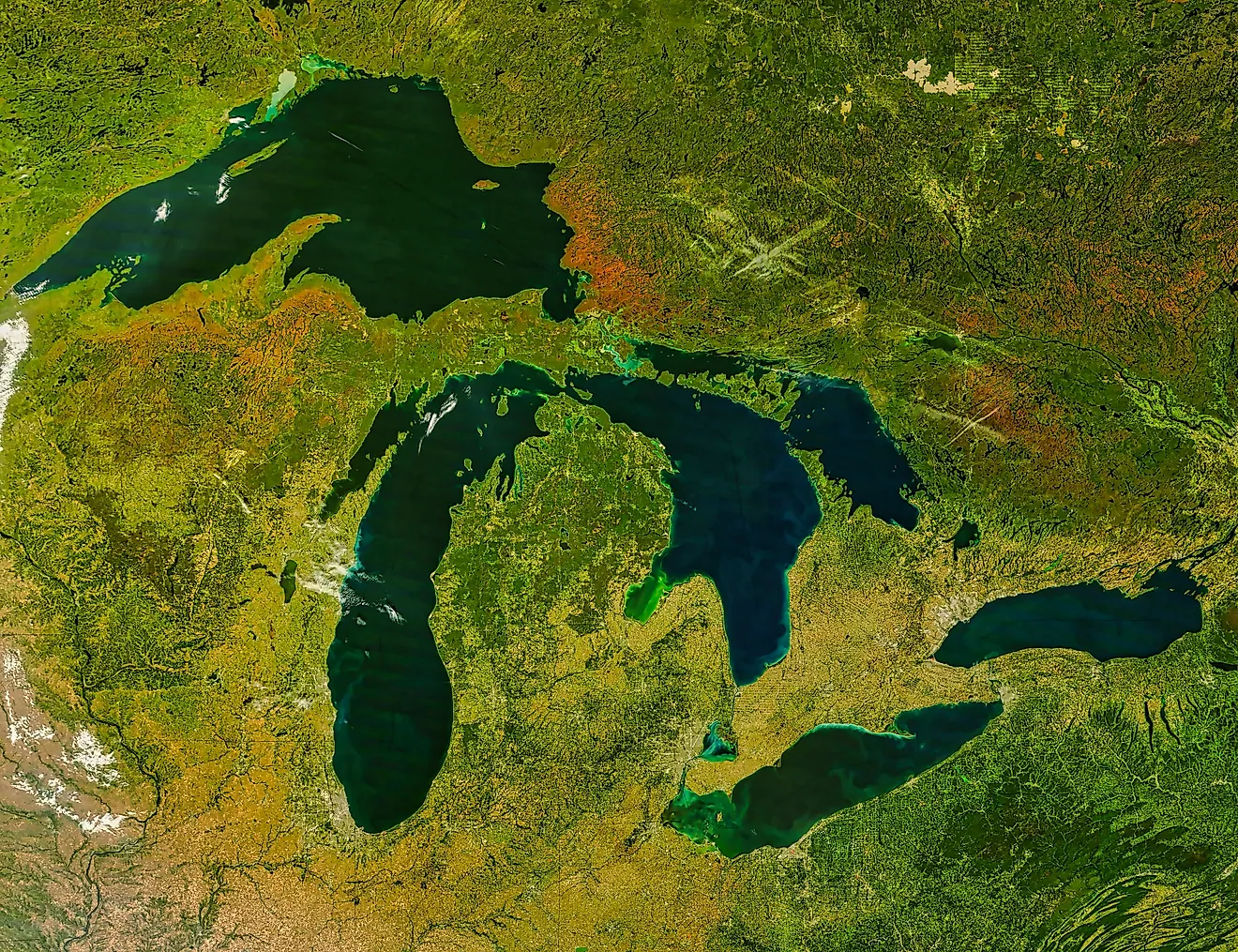
The Great Lakes hold roughly 21 percent of the world's surface fresh water across 94,250 square miles (244,106 km²), and the fisheries they support are valued at more than $5.1 billion annually. Of the over 180 established aquatic non-native species in the Great Lakes basin, 34 percent are considered invasive. Five of the most pressing threats are profiled below.
Silver and bighead carp hold a population front within 47 river miles (76 km) of Lake Michigan through the Illinois Waterway, a line that coordinated removal work has kept from advancing for more than 15 years. Hydrilla, not yet established in the Great Lakes but flagged as a high environmental risk in federal assessments, has already devastated aquatic ecosystems across the southeastern United States. Phragmites, an invasive common reed, has taken an estimated 60,000 acres (24,281 hectares) of Great Lakes shoreline habitat and continues to expand. Read on to learn more about these potentially devastating species and the threats they pose.
Silver Carp and Bighead Carp

Silver and bighead carp are among the most consequential invaders in North America's freshwater system. Both spread north through the Mississippi River basin toward Lake Michigan, and the adult population front now sits within 47 river miles (76 km) of the lake, in the Dresden Island pool of the Illinois River. That front has not advanced in more than 15 years, held in place by targeted mass removal and intensive monitoring. Both species feed on plankton, the microscopic organisms at the base of the food web that native fish depend on throughout their life cycles.
The primary threat from invasive carp is competition with other fish for food resources and the likely ability of these invaders to outcompete native desirable fish. All four invasive carp species can grow to weights approaching or exceeding 100 lbs (45 kg). Silver carp leap out of the water when startled by boat motors, reaching heights of 8 to 10 feet (2.4 to 3 m), a direct physical hazard to boaters and recreational water users. If bighead carp enter the Great Lakes and become established, they threaten a fishery that supports more than 75,000 jobs across the basin. The Invasive Carp Regional Coordinating Committee is a 26-member partnership of US and Canadian agencies. It dedicated more than $72 million to priority carp projects in 2026, covering all four invasive carp species in North America: silver, bighead, grass, and black.
Hydrilla

Hydrilla (Hydrilla verticillata) is not yet established in the Great Lakes, but federal risk assessors classify it as a potentially serious threat. Models rank southeastern Lake Ontario, the St. Clair-Detroit corridor, western Lake Erie, and southern Lake Erie as the basin watersheds most likely to carry hydrilla if it arrives.
The concern is grounded in hydrilla's track record elsewhere. It grows aggressively as dense mats that displace or shade out native submersed plants. Army Corps of Engineers research puts stem growth at about an inch (2.5 cm) a day under average conditions, and once the plant branches near the surface, the new growth it adds each day climbs steeply. It survives in water that is nearly nutrient-free as readily as in heavily enriched water, and it tolerates far lower light levels than most native aquatic plants.
The socioeconomic impact is substantial wherever it is established. Hydrilla is among the worst aquatic weeds in the southeastern U.S., damaging infrastructure and driving costly repairs to irrigation and hydroelectric projects. Despite being listed on the U.S. Federal Noxious Weed list, hydrilla is still sold as an aquarium plant online, making contaminated equipment and intentional release the primary introduction risk for the Great Lakes.
Flowering Rush

Flowering rush (Butomus umbellatus) arrived in North America from Eurasia in the late 1800s as a decorative garden plant and has been expanding its Great Lakes footprint ever since. Flowering rush was found at a third of the sampled coastal wetlands on Lake Erie and Lake Ontario, though it was never the dominant species where it turned up. Michigan and Minnesota both ban it outright, and several other Great Lakes states list it as prohibited or restricted, but enforcement of ornamental trade restrictions remains inconsistent. The plant is deceptive; it produces clusters of pink flowers that make it popular in water gardens, even as it forms invasive stands in the wild. Butomus umbellatus can displace native riparian vegetation and can be an obstacle to boat traffic. Its expansive temperature hardiness, surviving zones 3 through 10, makes it capable of colonizing virtually the entire Great Lakes basin.
In the Upper Mississippi River, where it made a widespread appearance in 2020, USGS researchers found that plant diversity declined with greater abundance of flowering rush over a four-year early invasion period, suggesting that native species were displaced. The species spread to at least 12 of 31 wetland vegetation classes, including submerged aquatic zones and wild rice habitat, within just four years of initial detection.
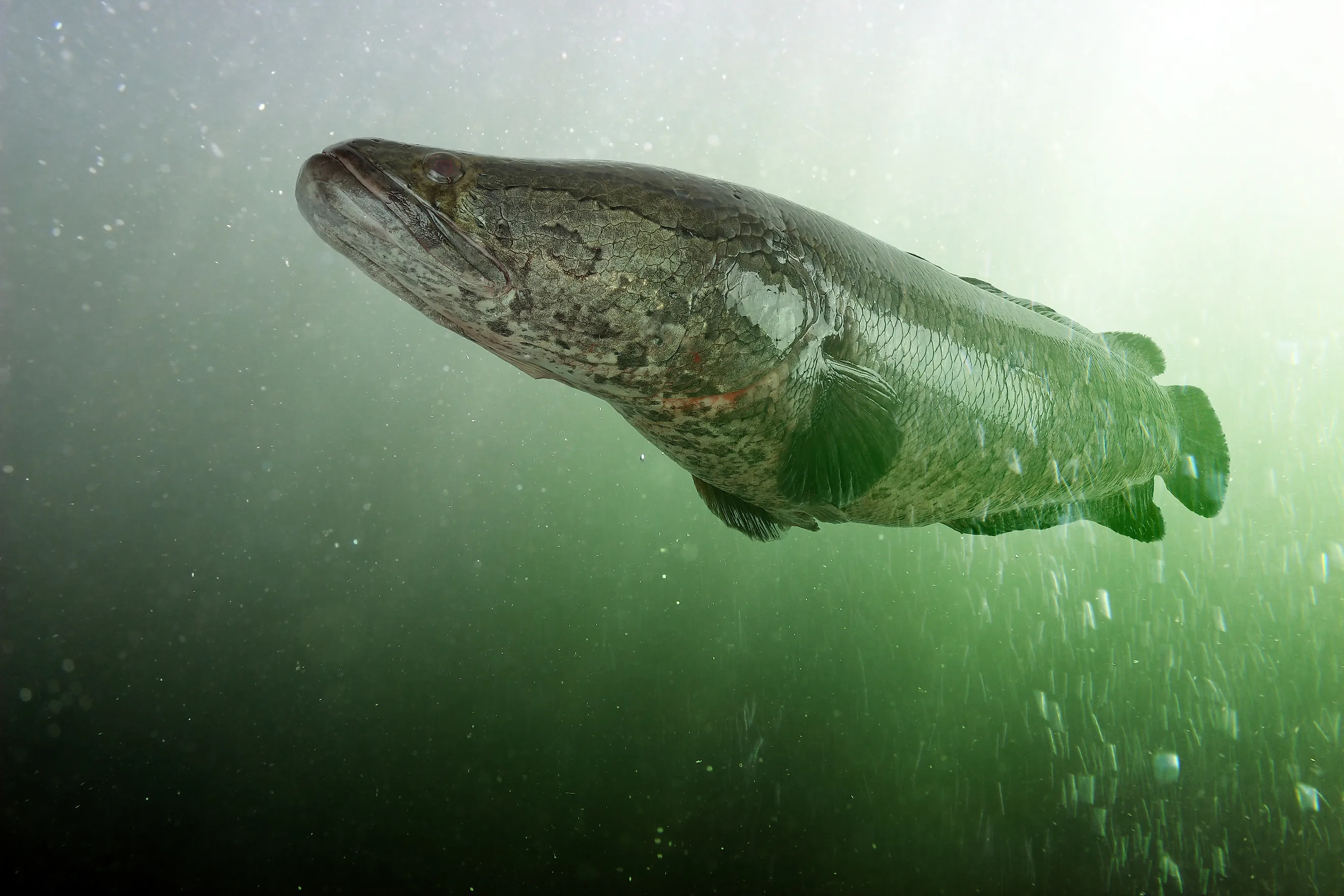
Northern Snakehead

The northern snakehead (Channa argus) is a large, predatory fish native to eastern Asia that can breathe air and survive out of water for up to four days. It has established populations on the East Coast of the United States and is a documented threat to the Great Lakes through the live fish trade. Canadian researchers rated two watersheds in the Toronto area, along Lake Ontario, as the likeliest points of entry from that trade. The Rideau River watershed and the Cedar Creek watershed, which sits between Lake Erie and Lake St. Clair, were flagged as further vectors. The species is an apex predator as an adult, consuming fish, crayfish, frogs, and even small birds. Because it has no natural predators in North American waters, an established population could disrupt the native fish ecosystem. Federal assessors put the probability of its introduction to the Great Lakes at moderate.
Its resilience and its value in live food fish markets make it particularly difficult to regulate. Unauthorized intentional release from the live food trade continues to be the primary mechanism of introduction wherever the snakehead has established new populations in the U.S.
Phragmites

Invasive common reed (Phragmites australis subsp. australis) is already well established throughout the Great Lakes basin, but the scale of what is still ahead makes it a concerning threat rather than a solved problem. Regional monitoring puts the invaded area at roughly 60,000 acres (24,281 hectares) of shoreline habitat, plus inland ground that has never been fully tallied.
The speed of that spread makes non-native Phragmites a leading threat to wetland ecosystems in North America. Dense stands close off beaches and recreational shoreline, and they degrade the habitat that both wildlife and the region's multi-billion-dollar fishery depend on. Phragmites grows in dense monocultures that can reach 15 feet (4.5 m) in height, blocking sight lines, eliminating native plant diversity, degrading fish nursery habitat, and making entire shoreline sections physically inaccessible.
Non-native Phragmites is now established across the Great Lakes basin, outcompeting native plants and degrading habitat as it goes. Control is resource-intensive, and results vary with the scale of the infestation and the conditions at the site. Rising and falling Great Lakes water levels, which have been more variable in recent decades, continue to create new habitat openings that Phragmites is uniquely positioned to colonize.
Where Things Stand
These five threats sit at different points on the same timeline. Some are still approaching; others are already inside the system and actively rewriting the ecology around them. What they share is a capacity for damage that compounds quickly once conditions favor establishment. Flowering rush turned up at a third of the coastal wetlands sampled on Lakes Erie and Ontario, and in the Upper Mississippi, it moved into at least 12 of 31 wetland vegetation classes within four years of detection. The northern snakehead, still held back mainly by gaps in live food trade regulation, needs only one unlawful release near a suitable watershed. Losses on that scale reach past the ecology and into the fishing and tourism economies that depend on a diverse basin. Phragmites shows what a multi-decade head start produces. The Great Lakes have absorbed damaging invasions before and recovered, but recovery has always taken far longer than the invasions ever did.