The Lakes Where Carp Reach Enormous Sizes
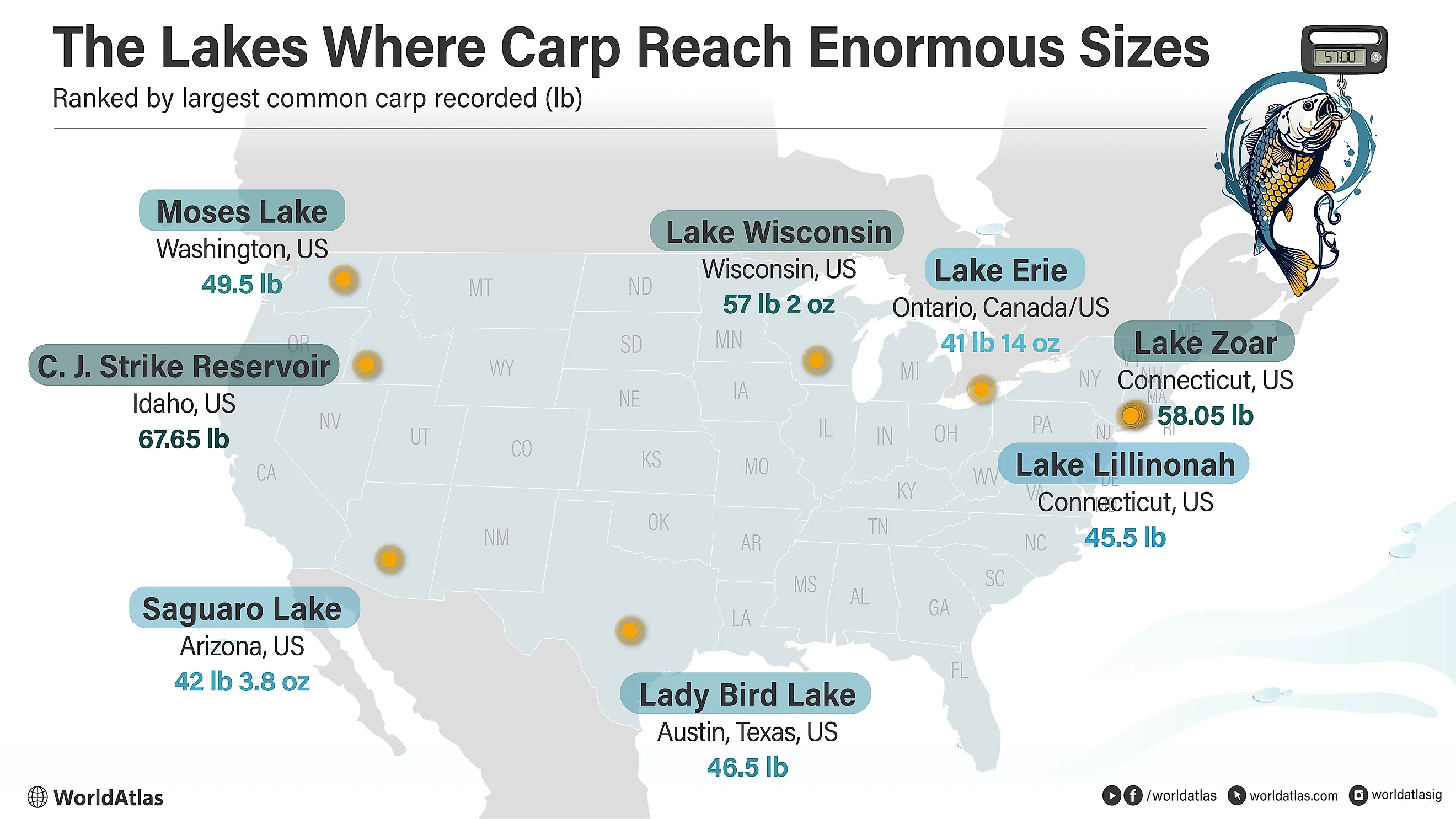
Common carp rarely receive the attention given to muskellunge, sturgeon, or trophy catfish, yet some North American waters hold specimens heavier than many adult anglers can lift comfortably. The largest verified fish have exceeded 50 pounds, with one Idaho reservoir producing a common carp approaching 68 pounds. These giants are not restricted to a single habitat type. They have appeared in desert reservoirs, Great Lakes shallows, sprawling river impoundments, and even lakes running through the heart of major cities.
This article focuses on common carp and excludes grass carp, bighead carp, silver carp, and native buffalo fish, which are frequently confused with carp in photographs and fishing reports. The records also come from different capture methods. Some fish were landed on rod and reel; others were taken by bow or spear. The figures, therefore, document each lake’s capacity to grow enormous carp, not a perfectly equal contest between anglers.
C.J. Strike Reservoir, Idaho

C.J. Strike Reservoir holds the strongest verified evidence of exceptional common carp growth on this list. Scott Frazier II took a 67.65-pound fish there on July 23, 2011. Idaho Fish and Game recorded a length of 47 inches and a girth of 34.5 inches. The fish was taken by archery, placing it in Idaho’s bowfishing record category instead of the hook-and-line record book.
The reservoir covers about 7,500 surface acres and occupies long sections of two rivers. It extends roughly 26 miles up the Snake River and another 12 miles up the Bruneau River. That shape creates extensive feeding ground, including broad river sections, protected margins, tributary mouths, and shallows warmed by the southern Idaho sun. The record fish was exceptionally thick for its length, suggesting that C.J. Strike provides enough food for mature carp to add tremendous body mass instead of simply growing longer.
Lake Zoar, Connecticut

Lake Zoar entered the top tier of North American carp waters in June 2025, when Norbert Samok landed a 58.05-pound common carp measuring 44.8 inches. He caught it on a boilie, a hardened bait closely associated with specialist carp fishing. Connecticut recognized the fish as a new state record.
The catch came from a 909-acre Housatonic River impoundment bordered by steep, wooded terrain. Its narrow form retains the character of a flooded river valley, with bends, coves, current-influenced sections, and abrupt changes in depth. Carp can feed along sheltered margins before withdrawing into deeper water. The fish exceeded Connecticut’s previous record by more than 13 pounds. Lake Zoar did not merely produce a modest improvement. It moved the state benchmark into an entirely different weight class and demonstrated that the Housatonic system can grow carp comparable with those from much larger waters.
Lake Wisconsin, Wisconsin

The common carp record from Lake Wisconsin carries particular weight because the fish was caught with hook and line. On August 28, 1966, an angler landed a 57-pound, 2-ounce carp from the reservoir. It remains Wisconsin’s official rod-and-reel record nearly six decades later.
Lake Wisconsin is a broad impoundment of the Wisconsin River rather than a conventional natural lake. Its main channel is bordered by shallow bays, slower-moving shoreline waters, islands, and backwater habitat. Those areas give carp access to soft bottom where they can search for aquatic insects, mollusks, plant material, and other food. River flow also moves nutrients through the system. Landing a carp of this weight on conventional tackle presents a different challenge from taking one with a bow or spear. Large carp make sustained runs and use their deep bodies to resist pressure, making the Lake Wisconsin record one of the continent’s most impressive traditional carp captures.
Moses Lake, Washington

Moses Lake produced Washington’s state-record common carp on June 17, 2006. Duane Fisher caught the 49.5-pound fish by hook, placing it among the largest rod-and-reel carp documented from a North American lake.
The setting is a sprawling, irregular waterbody of roughly 6,800 acres in central Washington. Moses Lake contains long arms, narrow passages, protected bays, and expansive shallows. Fisheries research has described it as a shallow, productive lake, and studies of its walleye have found rapid growth consistent with a food-rich system. Its shape gives carp several seasonal options. Fish can enter warming bays in spring, feed across shallow flats, or retreat toward deeper channels as temperatures and boat traffic rise. Much of the shoreline is developed, but the lake’s numerous arms prevent it from functioning like a simple urban pond. Its record shows that the Columbia Basin can support common carp weighing up to 50 pounds.
Lake Lillinonah, Connecticut

One trophy carp can be an anomaly. Lake Lillinonah produced two almost identical giants in consecutive years. Brian Santos caught a 45.3-pound common carp there on June 14, 2024. Rafal Wlazlo followed with a 45.5-pound fish on May 25, 2025, briefly establishing a Connecticut record before the larger Lake Zoar carp replaced it.
That repetition gives Lillinonah a stronger case than waters known only from one historic capture. The lake is a 1,547-acre Housatonic River impoundment extending through five Connecticut communities. River inflow, a flooded shoreline structure, and the Shepaug River entering the reservoir create a more complex environment than its acreage would suggest. The two fish were separated by only a few ounces. They may have belonged to the same unusually strong size class, although no available evidence confirms their age or relationship. Either way, consecutive 45-pound catches indicate that Lake Lillinonah supports more than a single oversized survivor.
Lady Bird Lake, Texas

Lady Bird Lake runs through central Austin beneath bridges, beside office towers, and along one of the city’s busiest recreational trails. That urban setting has not prevented its common carp from reaching exceptional weights. Kevin Olivier caught a 44.25-pound, 41-inch carp there on March 28, 2021, using a tiger nut. It remains the lake’s rod-and-reel record for the species.
A still larger common carp weighing 46.5 pounds was taken by bowfishing in 1996. The two records show that the 2021 catch was not the lake’s only fish to exceed 40 pounds. Lady Bird Lake is a 416-acre Colorado River reservoir formed by Longhorn Dam. It extends for more than five miles through Austin and receives moving river water despite its lake-like appearance. Its accessible banks make it one of the least remote trophy carp waters in North America. Anglers pursue enormous fish within sight of the downtown skyline instead of traveling to an isolated backcountry reservoir.
Saguaro Lake, Arizona

A desert reservoir surrounded by cactus-covered slopes seems an unlikely setting for a 40-pound carp. Saguaro Lake produced one weighing 42 pounds, 3.8 ounces in February 2022. The fish measured 40.5 inches and received Arizona’s Big Fish of the Year recognition.
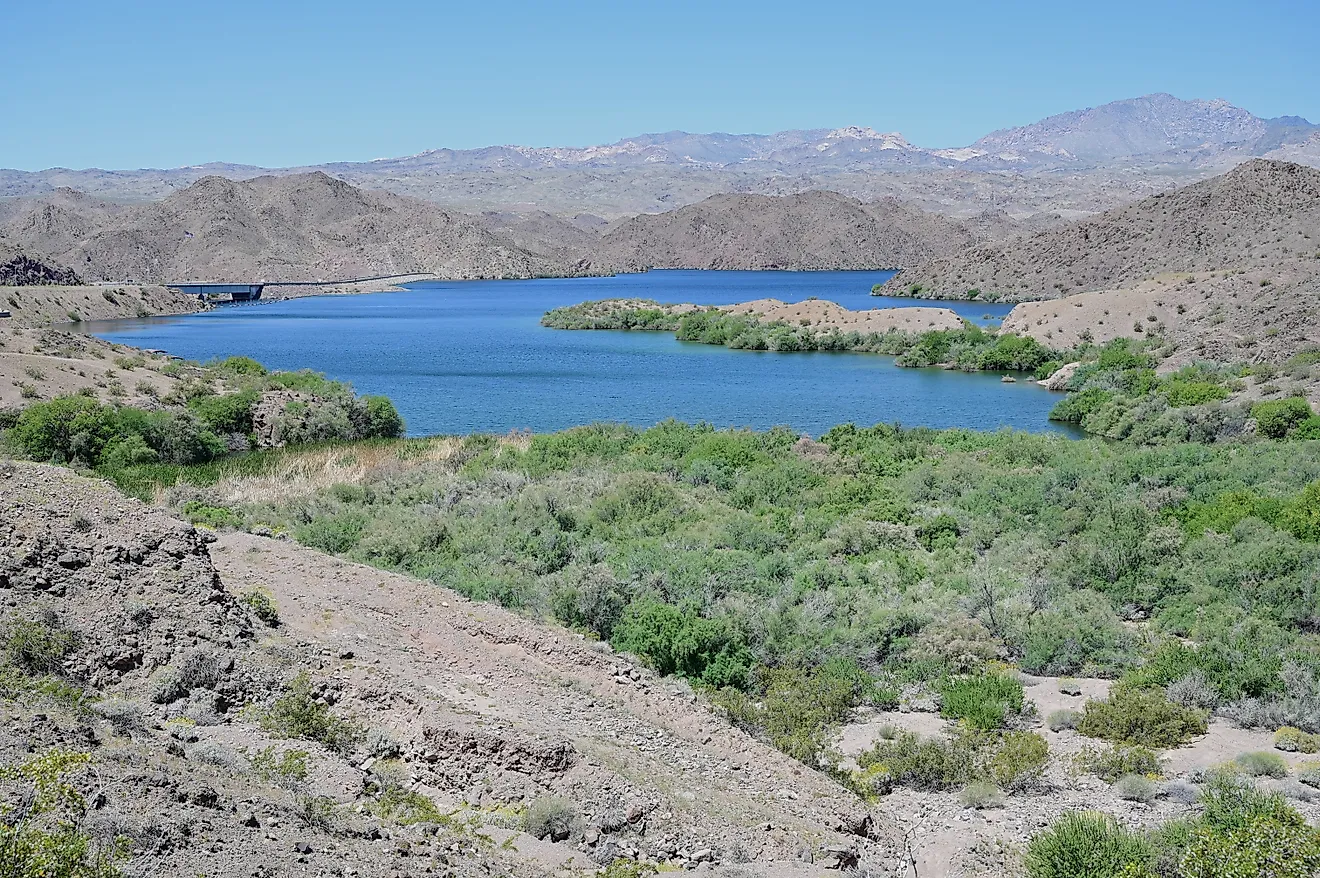
Saguaro occupies a steep section of the Salt River east of the Phoenix metropolitan area. Rocky canyon walls descend directly into much of the lake, leaving less continuous shallow habitat than broad prairie reservoirs provide. Its coves and gentler shoreline pockets, therefore, become important feeding areas for carp. The February capture also shows that Arizona’s trophy potential is not confined to the hottest part of the year. Carp remain active enough to be located during the cooler desert season. Arizona Game and Fish notes that carp exceeding 20 pounds are not uncommon in the state’s better lake fisheries. Saguaro has shown that some can grow to twice that size.
Lake Erie, Ontario, and the United States

Lake Erie’s immense size makes locating a single carp more difficult than fishing a compact reservoir. Canadian angler Allen Babakhani nevertheless landed a 41-pound, 14-ounce common carp from the Ontario side on June 2, 2018. He caught it on a fly tackle using an 8-pound tippet. The International Game Fish Association approved the fish as a men’s 4-kilogram tippet-class world record.
The catch illustrates Lake Erie’s unusual capacity for producing large warm-water fish. Erie is the shallowest and warmest of the Great Lakes, with an average depth of about 62 feet. It is also the most biologically productive of the five Great Lakes. Vast nearshore flats, river mouths, harbors, and protected bays give carp extensive feeding habitat around the lake’s international shoreline. Landing a fish exceeding 40 pounds on light fly tackle required more than finding a large carp. The angler also had to keep it from breaking a leader designed to test at only eight pounds.
Giants in Unexpected Water
The largest carp lakes in North America do not follow one simple pattern. C.J. Strike is a sprawling western reservoir, Saguaro Lake sits amid the desert mountains of Arizona, and Lady Bird Lake passes through the center of a major city. Lake Erie operates on an entirely different scale from all of them.
The records also reveal how incomplete carp data can be. Some benchmarks have survived since the 1960s, partly because relatively few anglers seriously target common carp. Connecticut’s records changed rapidly once specialist anglers began documenting fish from the Housatonic reservoirs. Similar discoveries may await in other lakes where carp are present but rarely weighed. For now, these 8 waters provide the clearest evidence that North American common carp can grow beyond 40 pounds and, under exceptional conditions, well past 60.