The Shrinking Lakes of the American West Ranked
Walker Lake in Nevada has lost more than 150 feet of water and nearly all its fish, which lands it atop this ranking. A shallow salt lake can wreck its habitat after a small drop, while a deep reservoir sheds huge volumes before its shore moves. The famous reservoirs Powell and Mead rank lower, because a reservoir is built to rise and fall. Drinking water and hydropower ride on these same basins, and so do millions of migrating birds. Mono Lake and Pyramid Lake sit near the bottom, because court-ordered limits clawed some water back. The worst case falls outside the ranking entirely: Owens Lake dried a century ago and still fouls the air today.
The Cautionary Endpoint: Owens Lake, California

Every other lake on this list is trying to avoid what already happened to Owens Lake. Around 1900, it spread across about 110 square miles and ran roughly 30 feet deep. It held fish, big flocks of birds, and the desert communities that grew up around a reliable body of water.
Then Los Angeles came for the water. Starting in 1913, the city rerouted the flow that fed Owens Lake into its aqueduct, and by 1927 almost all of it was gone. What the water left behind was a flat of fine soil, salt, and minerals sitting exposed to hard desert wind. Dust lifting off that dry bed became a serious health problem for the towns nearby.
Keeping that dust down has taken decades of expensive work: shallow flooding, gravel cover, and planted vegetation to pin the soil in place. That is the real lesson of Owens Lake. The bill did not stop when the water did. The dust, the lost habitat, the health worries, and the cleanup have all outlasted the lake by generations.
1. Walker Lake, Nevada

No natural lake in this ranking has fallen further than Walker Lake, which is why it lands at number one. Its surface dropped more than 150 feet between 1882 and 2008, and the lake gave up roughly 7.4 million acre-feet of stored water along the way. Most of the river that once fed it now goes to farms upstream before it ever reaches the shore.
Walker Lake has no outlet, so the only way water leaves is by evaporating, and the salt stays behind. As the lake shrank, the amount of dissolved material in the water climbed from about 2,500 to roughly 17,000 milligrams per liter, close to a sevenfold jump. Water that salty is a different world for the native fish that evolved in it.
As the fish declined, so did the birds and other wildlife that lived off them. There was still water in the lake in July 2026, but the damage runs deep. A century of upstream diversion lowered Walker Lake and turned it brackish, hollowing out a place that once teemed with fish and birds.
2. Great Salt Lake, Utah

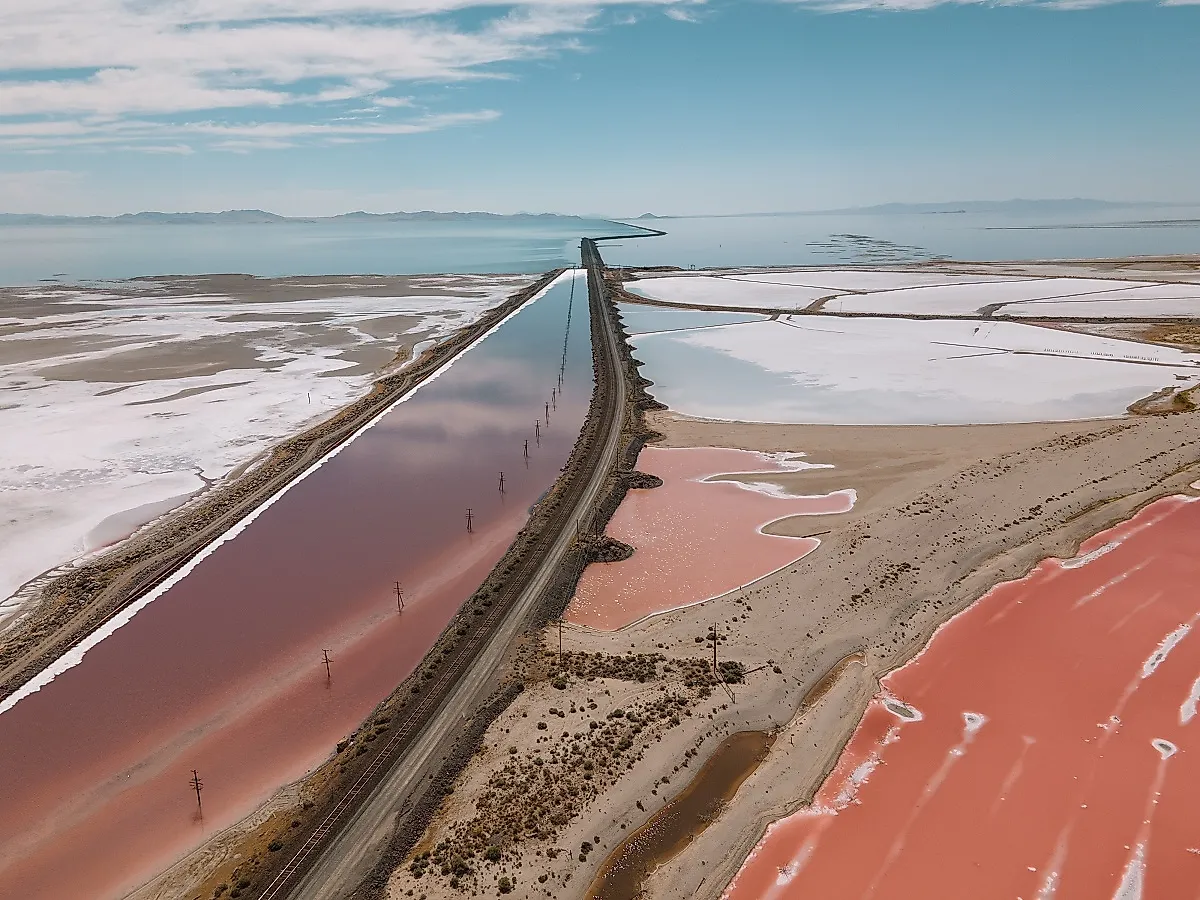
What sets Great Salt Lake apart is how many people and industries its decline touches at once. Water use across the rivers that feed it has pulled the lake down about 11 feet since the late 1800s. At its 2022 record low it covered roughly 950 square miles, less than half the 2,300 square miles it spread across during the wet years of 1986 and 1987.
Millions of migrating birds stop here to feed and rest, living largely on the brine shrimp and other tiny creatures the lake produces, which also support a commercial harvest. Salt mining, tourism, and boating all depend on the water staying at a workable level and salinity.
Every foot the shoreline pulls back leaves more lakebed for the wind to lift as dust and carry into the Wasatch Front cities. Saltier water also strains the small organisms the whole food web is built on. Conditions steadied somewhat in 2025, though the lake stayed below a healthy level. Its sheer size, its economic weight, its importance to wildlife, and its perch beside a growing metropolitan area make this one of the most consequential water problems in the West.
3. Salton Sea, California

Few of these declines are as tightly bound to human health as the Salton Sea's. Between California's 2003 baseline and March 2025 the water fell about 13 feet, and the surface shrank by roughly 57 square miles. The state has estimated the sea is still losing close to 2,400 acres a year, nearly four square miles.
The shoreline it leaves behind is ground that spent years underwater, packed with salt, farm chemicals, and other residue that runoff carried in. Wind picks up the finest particles and lifts them into the air. The towns downwind then breathe more of a dust that can irritate the lungs and worsen conditions like asthma.
The water that remains keeps getting saltier, squeezing the fish, insects, and birds that rely on it, and the fish die-offs have cut into a key food source for birds passing through. The trajectory has been a slow, steady drop with no natural floor. Each additional foot of retreat uncovers more lakebed and raises the pressure for habitat projects, dust control, and harder water-management choices.
4. Lake Abert, Oregon

Lake Abert has flirted with vanishing outright, more than once, which is what earns it fourth place. The shallow salt lake mostly dried up in 2014, 2015, 2021, and 2022. Before the water fell below what the gauge could read, it had dropped about 15 feet, and in 2022 what was left ran only one to two feet deep.
The birds noticed first. A decade ago, yearly counts topped 250,000; in 2021, volunteers tallied only about 11,000. As the water shrank and turned saltier, it choked out the brine shrimp and alkali flies that carpet the lake in good years and fuel the birds through their long migrations.
Water later crept back to the gauge, and Lake Abert was present again in July 2026. That recovery does not buy much safety. Because the lake is so shallow, a dry stretch of weather or a heavier draw upstream can flip it fast. A wet spell brings the water back, and a few years later it is nearly gone again.
5. Lake Powell, Utah and Arizona

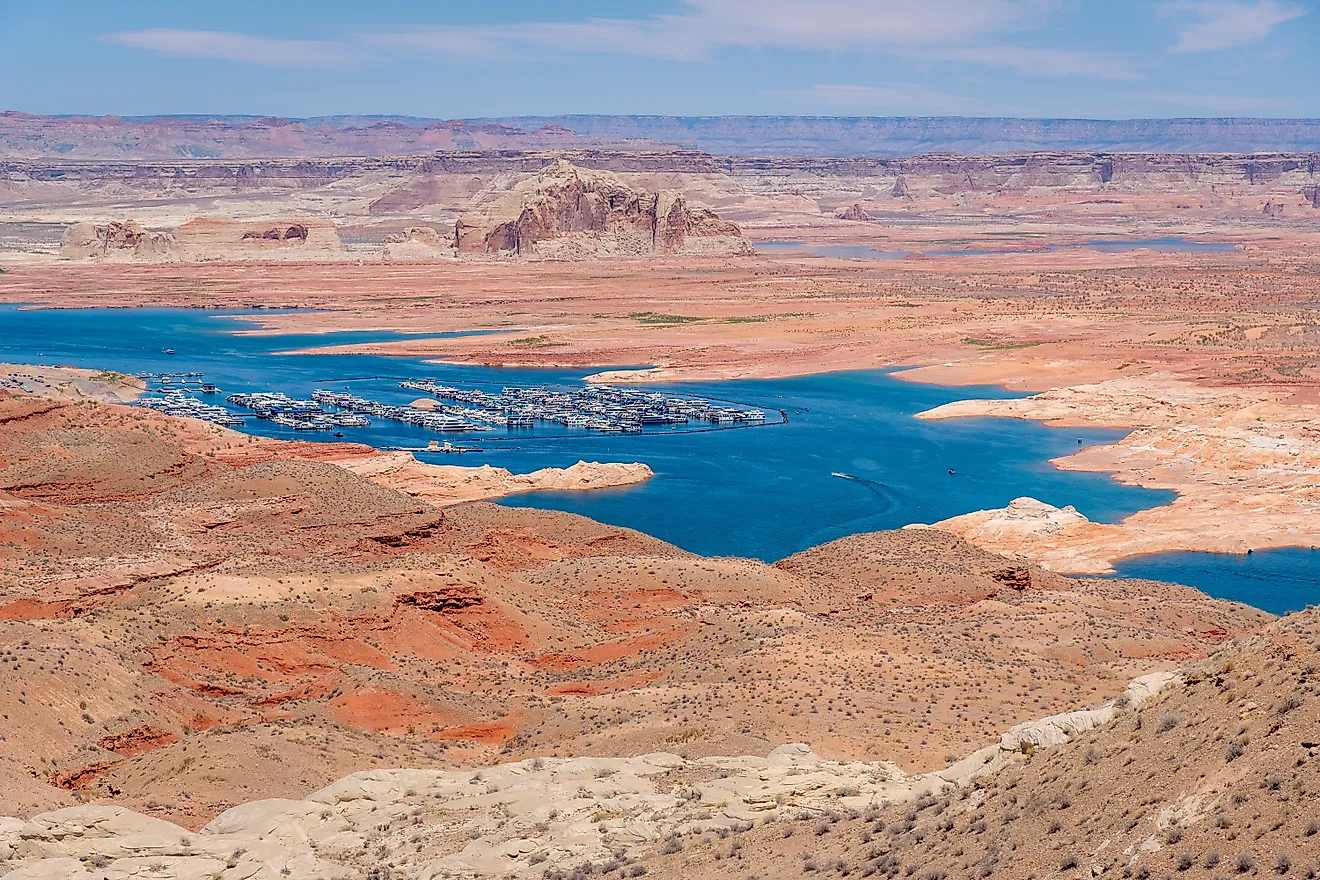
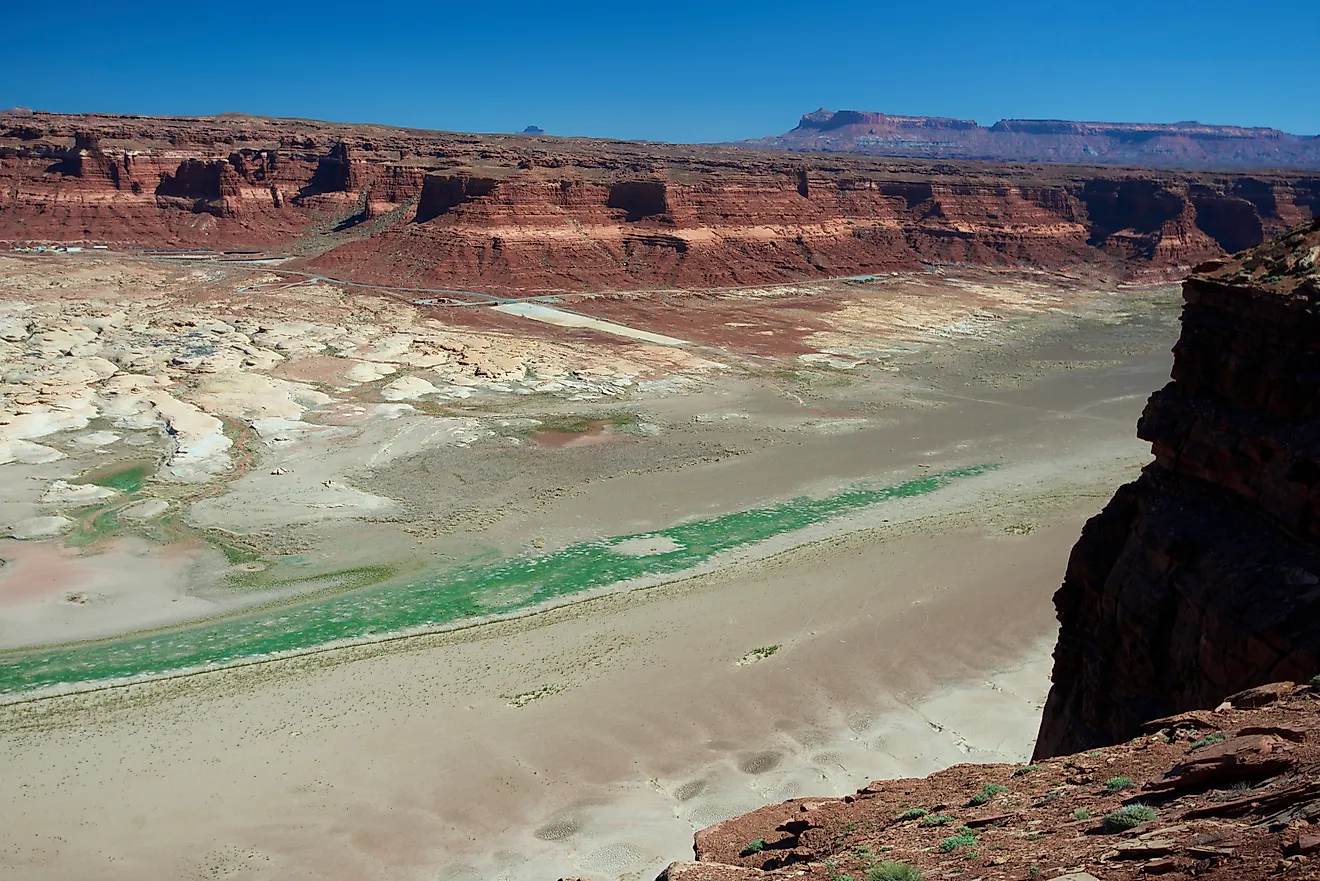
Of the two big Colorado River reservoirs here, Lake Powell is the emptier, and that puts it at number five. On July 5, 2026, it held about 5.56 million acre-feet, only about a quarter of what it can store. Its level had even slipped a little over the prior week, and that was after the spring snowmelt was supposed to be topping it up.
Powell stores water for cities, farms, businesses, and tribal nations across the Southwest, and the water released through Glen Canyon Dam also spins turbines for electricity. A low reservoir makes both jobs harder to juggle. It also strands marinas and boat ramps and squeezes the tourism and fishing that local businesses lean on.
A reservoir is built to rise and fall, so a low year is not a surprise on its own. Sitting near a quarter full is another matter. Years of heavy demand and thin Colorado River flows have drained the buffer the region would normally lean on in a drought, and recent runoff has not come close to refilling it.
6. Lake Mead, Nevada and Arizona

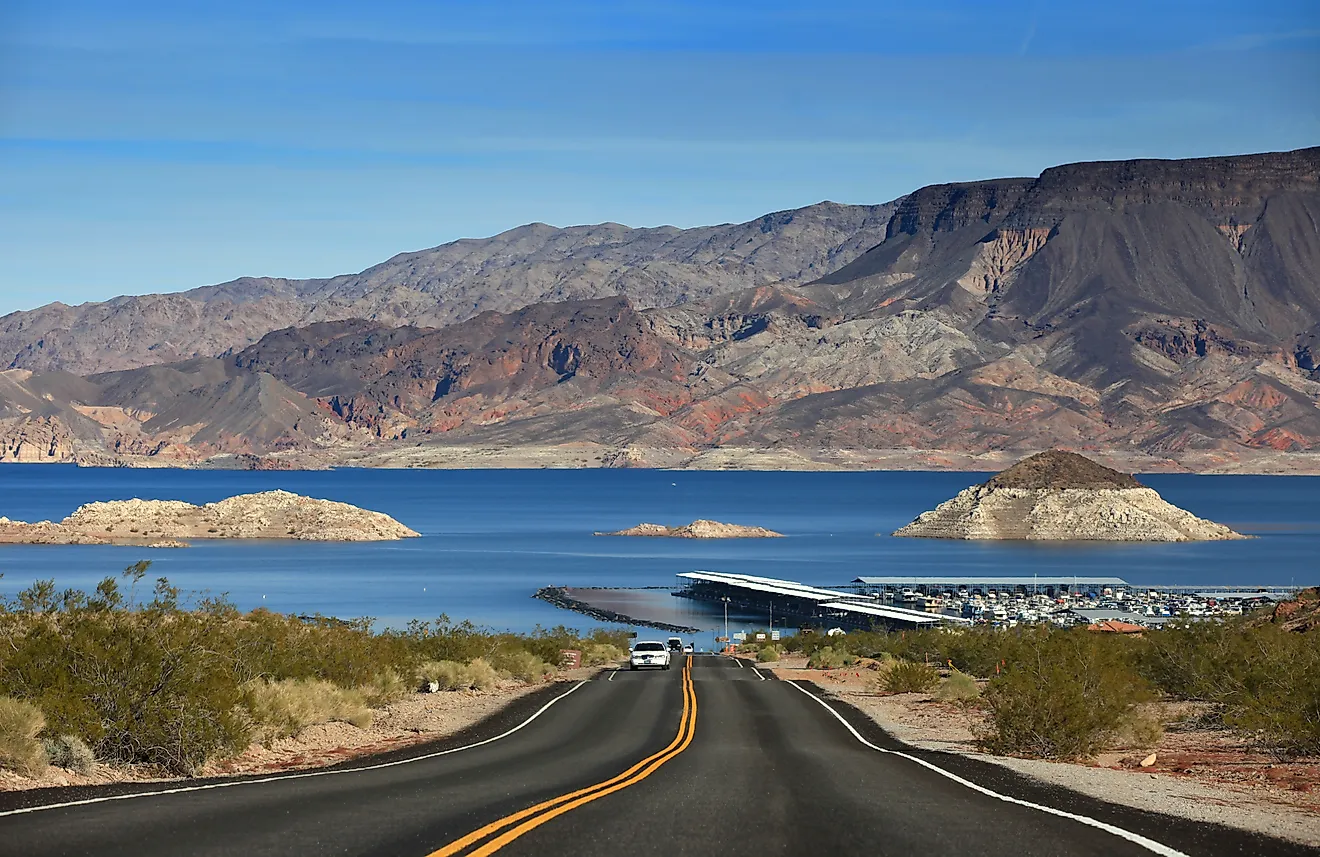
Lake Mead is in nearly the same shape as Powell, holding a hair more of its capacity, and that thin margin is the only reason it ranks a step lower at number six. On July 5, 2026, it stored about 7.23 million acre-feet and sat around 28 percent full. Together, the Colorado River reservoirs were holding roughly a third of their combined capacity.
Mead is the tap for major cities, Las Vegas chief among them, and for farms and communities across several states and into Mexico. Hoover Dam turns its releases into power. When the level drops, generation falls off, deliveries get complicated, recreation areas lose access, and managers have to brace for deeper shortages.
Mead and Powell are really two tanks on one plumbing system. Water let out through Glen Canyon Dam runs downstream to fill Mead, so a decision made anywhere in the Colorado River Basin ripples through both. Mead ranks just behind Powell because it holds that slightly larger share. The bigger signal is that both sit so low, a standing sign that demand keeps outrunning the river.
7. Mono Lake, California

Mono Lake ranks seventh because the law caught up with the diversions and gave the water a chance to come back. Sending Mono's tributaries to Los Angeles had dropped the lake more than 40 feet, and by 1990 it had lost about half its volume. The lower level bared old lakebed, spiked the salinity, and put important bird nesting and feeding grounds at risk.
California eventually set a target level for the lake of 6,392 feet above sea level, meant to protect the air, the wildlife, the water chemistry, and the shoreline all at once. On June 1, 2026, Mono Lake measured about 6,382.9 feet, roughly nine feet under that target, yet still comfortably above its 1982 low of 6,372 feet.
So Mono Lake has not reached the mark officials drew for its long-term health, but its climb back off the bottom shows what capping diversions can do. Court rulings, state regulations, and years of steady public pressure kept water in the basin. The lake is still under strain, and it still stands as proof that early, enforceable limits can slow a decline before it becomes permanent.
8. Pyramid Lake, Nevada

Pyramid Lake sits at number eight because its worst losses are decades in the past, and a good share of the water has since returned. Diversions from the Truckee River, anchored by the Derby Dam completed in the early 1900s, dropped the lake about 80 feet between 1900 and 1967. Upstream farms and towns took water that would otherwise have flowed all the way down to the lake.
The falling level chewed up shoreline habitat and endangered fish that matter deeply to the Pyramid Lake Paiute Tribe. Like the other terminal lakes here, Pyramid has no outlet and leans almost entirely on the Truckee, so a big cut to that river drops the lake and concentrates the salt in what stays.
Federal operating rules in 1967 reined in some of the diversions. By October 2007, the lake had come back up about 23 feet from its 1967 bottom. That did not undo the losses of the early twentieth century, but it proved that firmer river management moves the needle. Pyramid Lake is still exposed to dry years, and its partial rebound is what places it below the lakes still dropping or still edging toward dry.
What the Ranking Reveals
The same forces press on all of these lakes. Drought and higher temperatures speed up evaporation while shrinking the snow and rain that refill the rivers. Cities, farms, industry, and power plants all pull from the same short supply. And on the lakes with no outlet, the water gets used upstream before it can ever reach the basin.
What separates them is trajectory. Walker Lake has fallen the furthest of any natural lake here. Great Salt Lake and the Salton Sea carry the heaviest mix of risks to wildlife, local economies, and public health. Lake Abert can empty in a single dry stretch. Powell and Mead expose how thin the Colorado River's margin has grown. Mono Lake and Pyramid Lake are the encouraging cases, where rules and diversion limits actually turned some water around.
Owens Lake is the warning that outlasts them all. A dry lakebed can throw off dust, erase habitat, and demand costly upkeep for generations. Keeping a lake alive comes down to keeping water flowing into it. Once the shoreline has pulled back across miles of exposed bed, or the water has all but disappeared, getting it back is slower, harder, and far more expensive than holding on ever was.