The Ferries That Still Carry Cars Across The Great Lakes
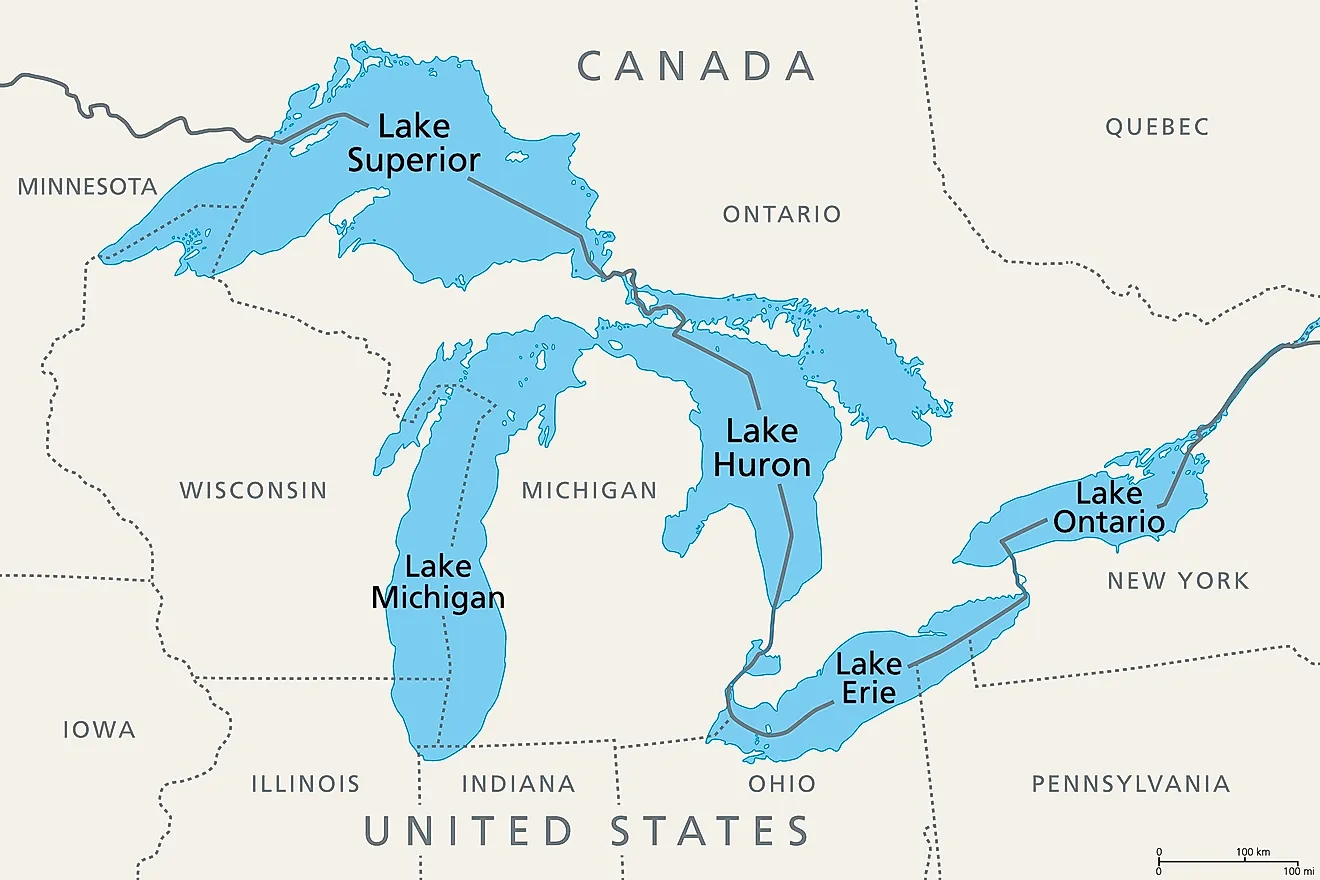
The S.S. Badger still carries cars across Lake Michigan between Ludington, Michigan, and Manitowoc, Wisconsin. Its sailing season runs roughly May through October. The crossing takes four hours, replacing a long drive around the lake with 60 miles on water. Farther south, Lake Express makes a different Wisconsin-to-Michigan crossing in about two and a half hours.
Beyond those mainland shortcuts, car ferries connect communities on islands in Lake Huron, Lake Erie, and Lake Superior. Their routes explain why the boats have survived: some shorten a road trip, while others carry vehicles to places without a bridge. Some island services continue through winter aboard ferries designed to break ice.
S.S. Badger, Lake Michigan

The Badger's enormous vehicle deck began with a different kind of car. When the ship entered service in 1953, its principal cargo was railroad cars. Loading them aboard allowed freight to cross Lake Michigan without unloading each car's contents at the waterfront. Today, the same 410-foot steamship carries road vehicles between Ludington and Manitowoc, including RVs and commercial trucks.
Coal-fired boilers still supply steam to its engines. The ship received National Historic Landmark status in 2016, decades after its original railroad business ended. Passengers can walk the outside decks or reserve a private stateroom during the crossing. The ship has room for 180 automobiles, although larger vehicles change how the deck can be filled. Its regular passenger season runs roughly May through October.
Lake Express, Lake Michigan

Lake Express uses four diesel engines and waterjets to carry cars between Milwaukee and Muskegon in about two and a half hours. The catamaran has two hulls and a drive-through vehicle deck that simplifies loading and unloading. Its top speed is about 39 mph, with regular crossings scheduled during spring, summer, and fall.
There is much less vehicle space than aboard the Badger: Lake Express was built to carry 46 vehicles and about 250 passengers. Booking a passenger ticket alone does not reserve room for a car; the vehicle needs its own ticket. Drivers take their cars aboard, then join everyone else in the passenger areas. Access to the car deck closes during the crossing, so anything needed for the ride should come upstairs.
Chi-Cheemaun, Lake Huron

Ontario's Highway 6 reaches Tobermory at the tip of the Bruce Peninsula, then resumes across the water at South Baymouth on Manitoulin Island. The Chi-Cheemaun carries vehicles between those two points, crossing Lake Huron near the entrance to Georgian Bay. It has worked this route since 1974.
Manitoulin connects to the mainland by road through Little Current. Drivers can arrive by ferry in the south and leave by road in the north. The sailing takes about one hour and 45 minutes.
The vehicle deck accommodates RVs as well as cars. Passengers travel upstairs, where a cafeteria and outdoor seating are available during the crossing. The service is seasonal, generally operating between May and October. Passengers need reservations and must check in at least one hour before sailing.
Pelee Island Ferries, Lake Erie

A car boarded in Sandusky, Ohio, can arrive on a Canadian island about one hour and 45 minutes later. The Pelee Islander serves this international Lake Erie route seasonally, with sailings that vary by date. Pelee Island also has vehicle-ferry connections to Ontario, using Leamington or Kingsville according to the seasonal schedule.
Those Canadian crossings take approximately 90 minutes, and the network includes the larger Pelee Islander II. Both Ontario ports are on the Canadian mainland; the Sandusky leg crosses the international border and requires travel documents and border processing.
The ferries also transport farm products and construction equipment, sharing their working vehicle decks with vacation traffic. On the island, drivers can follow local roads to vineyards and beaches. Ferry service stops for winter, when the transportation service operates a passenger air connection with Windsor.
Kelleys Island Ferry, Lake Erie

Kelleys Island Ferry takes cars out of Marblehead, Ohio, on a crossing of just over three miles between docks. The ride takes about 20 minutes. The boats arrive at Seaway Marina on the island's southern shore, carrying everyday vehicles alongside larger loads such as buses and dump trucks.
A car is useful for reaching the island's north shore, where glacial grooves cut through exposed limestone near Kelleys Island State Park. The park also has a campground and a swimming beach, so campers can bring their gear across in the same vehicle they drove to Marblehead. Travelers leaving their cars on the mainland can rent a golf cart at the arrival marina. Near the glacial grooves, the 0.4-mile Crusher Trail leads past a historic limestone crusher building left from the island's quarrying industry.
Miller Ferries, Lake Erie

Put-in-Bay's car connection leaves Catawba, Ohio, and reaches South Bass Island in under 20 minutes. Miller Ferry also carries vehicles to neighboring Middle Bass Island, a crossing of about 40 minutes. The two services share a mainland departure point but use different vehicle-booking rules.
For South Bass, ordinary cars load first-come, first-served. Heavy weekend demand brings an important restriction: Miller does not offer same-day vehicle round trips on Saturdays, Sundays, or holidays. Weekend vehicle travelers need proof of accommodation. Someone planning a Saturday afternoon in Put-in-Bay should therefore arrange to leave the car on the mainland.
The same weekend round-trip restriction applies to Middle Bass, where vehicles also require reservations. Drivers must be in line at least 20 minutes before departure to keep that reservation valid.
Beaver Island Boat Company, Lake Michigan

The trip to Beaver Island out of Charlevoix covers 32 miles and takes just over two hours. Beaver Island Boat Company operates the Emerald Isle and Beaver Islander on this seasonal route to the island's harbor at St. James.
Beaver Island covers about 53 square miles and has more than 100 miles of roads. A car gives visitors access beyond the harbor area. Vehicle space must be reserved by telephone, and passenger tickets follow a separate, first-come system. The company can also transport a car on a different sailing than its owner, provided someone removes it promptly upon arrival. Freight and confirmed vehicles load before standby cars, so an available passenger place does not guarantee an available vehicle space.
Washington Island Ferry, Lake Michigan

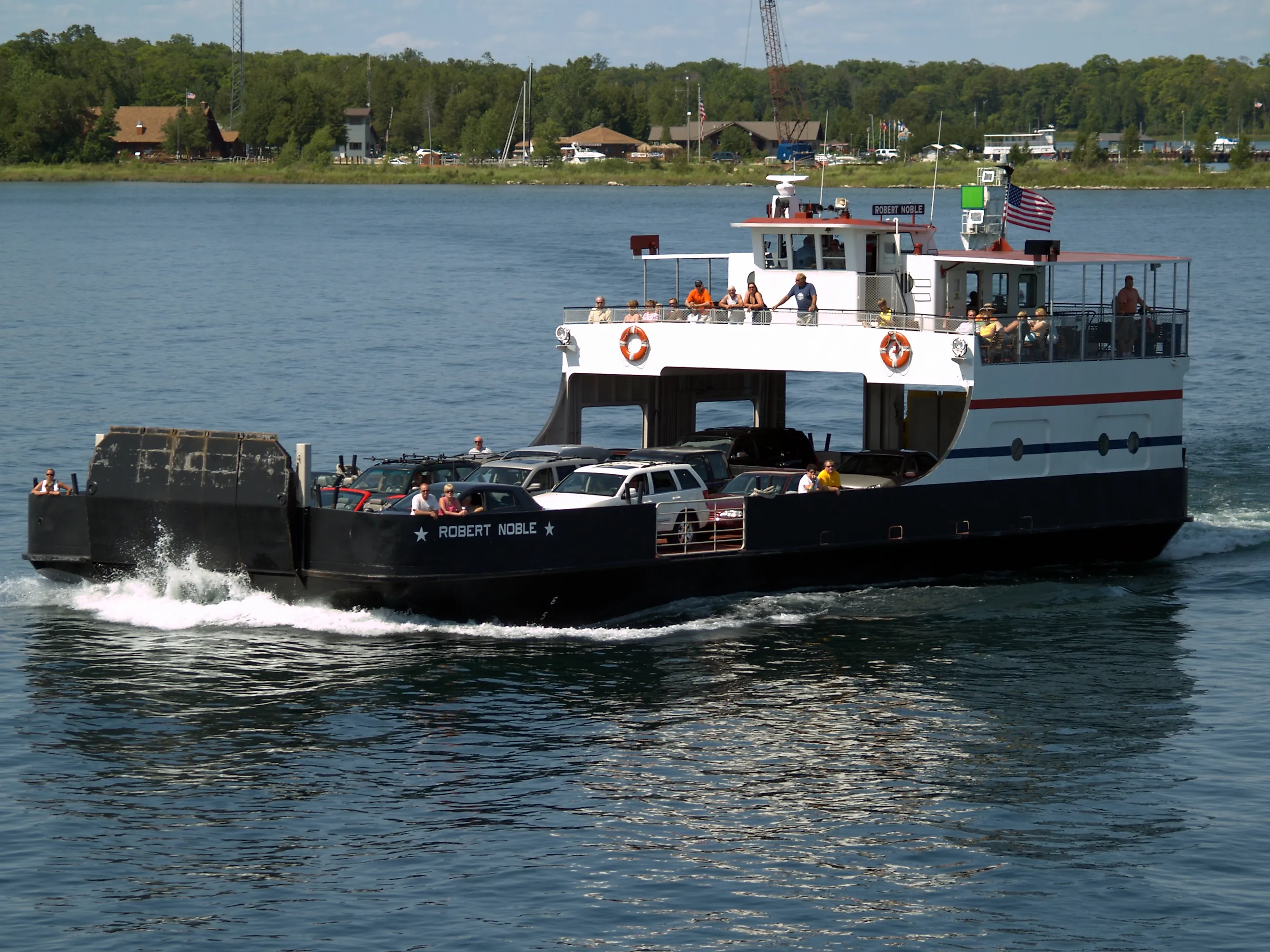
At Northport Pier, near the end of Wisconsin's Highway 42, cars board for the half-hour passage to Washington Island. The route crosses Death's Door, the channel between the Door Peninsula and the island. Unlike the long seasonal crossings farther south on Lake Michigan, this service operates year-round for an island with roughly 700 permanent residents.
Both the Arni J. Richter and Madonna have icebreaking capabilities, allowing vehicle service to continue into conditions that stop many summer ferries. Once ashore, drivers have more than 100 miles of paved roads to explore. Schoolhouse Beach, known for its rounded pieces of limestone, is about 6.5 miles from the ferry landing. Anyone continuing to neighboring Rock Island leaves the car behind at Jackson Harbor: that separate ferry carries passengers, and Rock Island does not allow vehicles.
Madeline Island Ferry, Lake Superior

The ferry between Bayfield, Wisconsin, and La Pointe carries cars across part of Lake Superior in approximately 20 to 25 minutes. Madeline Island Ferry Line covers about 2.5 miles, with vehicles loading in arrival order. La Pointe begins at the island landing. Big Bay State Park and Big Bay Town Park lie about seven miles away, making a car useful beyond the village.
Winter changes the connection. The ferries continue until ice conditions prevent operation; there is no single guaranteed closing date. When boats cannot run, a passenger-only windsled can carry people across. An ice road sometimes provides vehicle access when conditions permit, but its availability cannot be assumed. That gap matters for anyone bringing a car late in the season: the alternative transport for people cannot necessarily carry the vehicle back.
The Working Decks Behind The Routes
The Pelee Islander II can accommodate 34 cars, or 16 cars and four tractor-trailers. Carrying those trucks reduces the number of cars that fit aboard, even if passenger seats remain available. Pelee's ferries transport farm products and construction equipment as well as residents and visitors, giving the vehicle deck work beyond vacation travel. A passenger-only boat cannot carry those loaded trucks when a car ferry stops. At Madeline Island, the winter windsled provides a crossing for people after freeze-up. Cars need suitable ice-road conditions or a return of ferry service before they can make the same trip across that part of Lake Superior.