How Much Lithium Is Under The Salton Sea
The number you will see everywhere is 18 million metric tons, enough lithium for more than 375 million electric vehicle batteries, which is more cars than are currently registered in the United States. That figure comes from a real Lawrence Berkeley National Laboratory study, and it is accurate as far as it goes. What usually gets left out is that the same study puts the well-characterized portion of the reservoir at 4.1 million metric tons, and the 18 million figure only appears when the assumptions about porosity and reservoir size are widened to cover the probable extent. One is measured. The other is an educated projection about rock nobody has drilled.
The Two Numbers
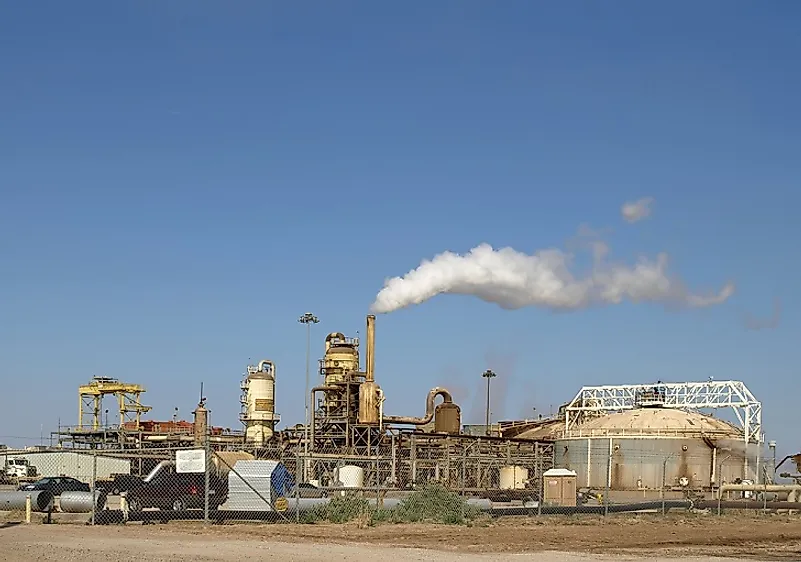
LBNL published the assessment in November 2023 as report LBNL-2001557, and the distinction it draws is the single most important thing in this subject. The proven figure is 4.1 million metric tons of lithium carbonate equivalent in the well-characterized part of the Salton Sea Geothermal Reservoir, based on a footprint of 30.8 square kilometers and a thickness of 1.1 kilometers. The probable figure of 18 million tons assumes the resource extends further than the drilled area and that the rock holds more fluid than measured.
Both numbers come from the same study and both are legitimate. They answer slightly different questions, the larger is more than four times the smaller, and headlines overwhelmingly use the larger one.
Mind The Units
A second source of confusion runs through almost all the coverage, and it swings the apparent size of the resource by roughly a factor of five.
Lithium carbonate equivalent, or LCE, is the industry's standard unit, and it measures the compound rather than the metal. Lithium metal is roughly a fifth of the mass of the carbonate. So 18 million tons of LCE is not 18 million tons of lithium, and the figure of around 3.4 million tons that appears in some reporting is the contained-metal version of a similar estimate.
Neither is wrong. Comparing one directly against the other is.
It Is Dissolved, Not Buried
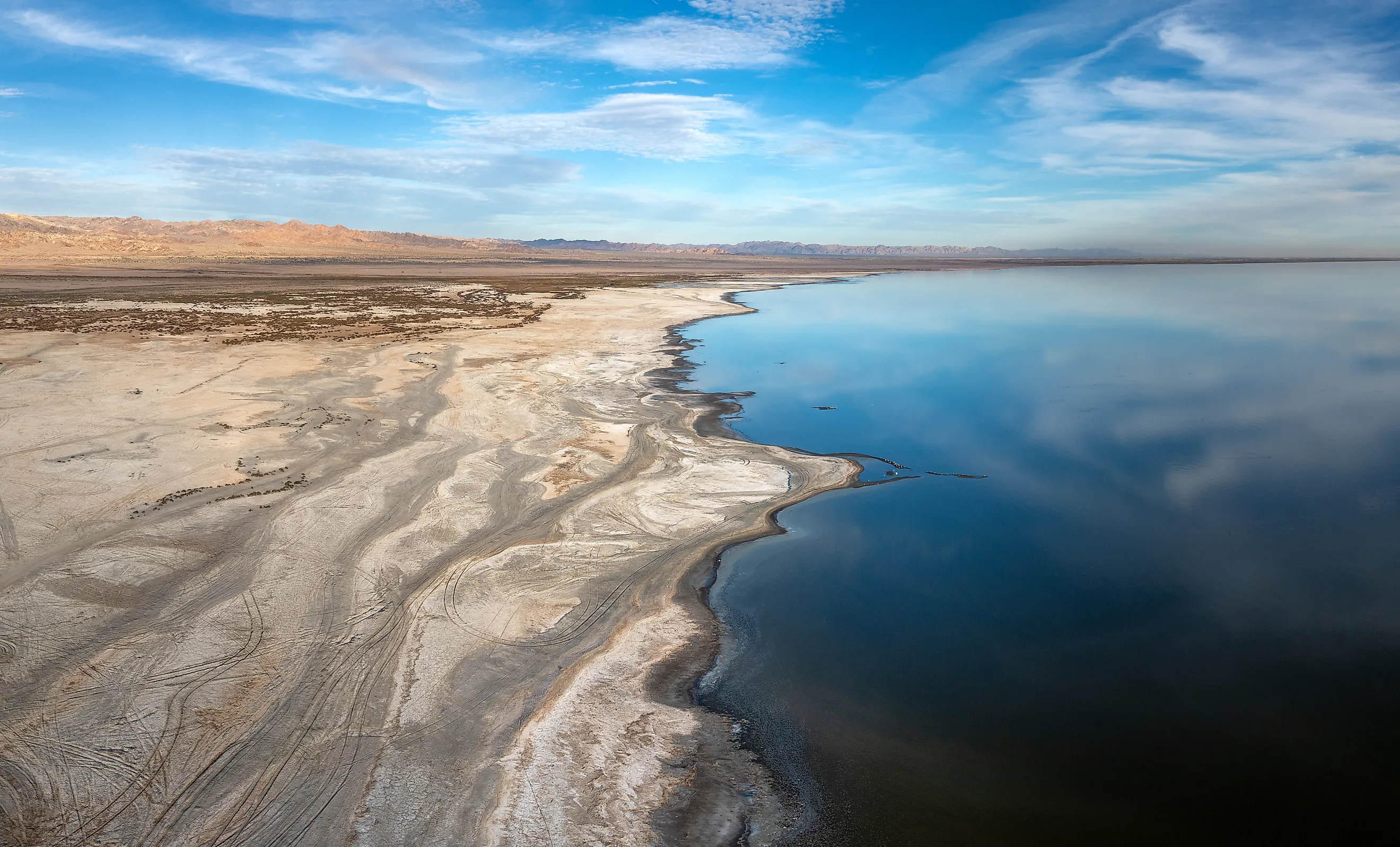
The lithium at the Salton Sea is not ore in the conventional sense, and that changes everything about how it would be produced. It is dissolved in geothermal brine, superheated saline fluid circulating through rock beneath the southern end of the lake. Measured concentrations sit around 198 parts per million by LBNL's figure, with other sources citing closer to 400 milligrams per liter, and the Salton Sea Known Geothermal Resource Area is believed to hold the highest lithium concentration in geothermal brine anywhere in the world.
There is no pit, no shaft and no ore body to break. There is hot salty water that already comes to the surface for another reason entirely.
The Plants Are Already Pumping It
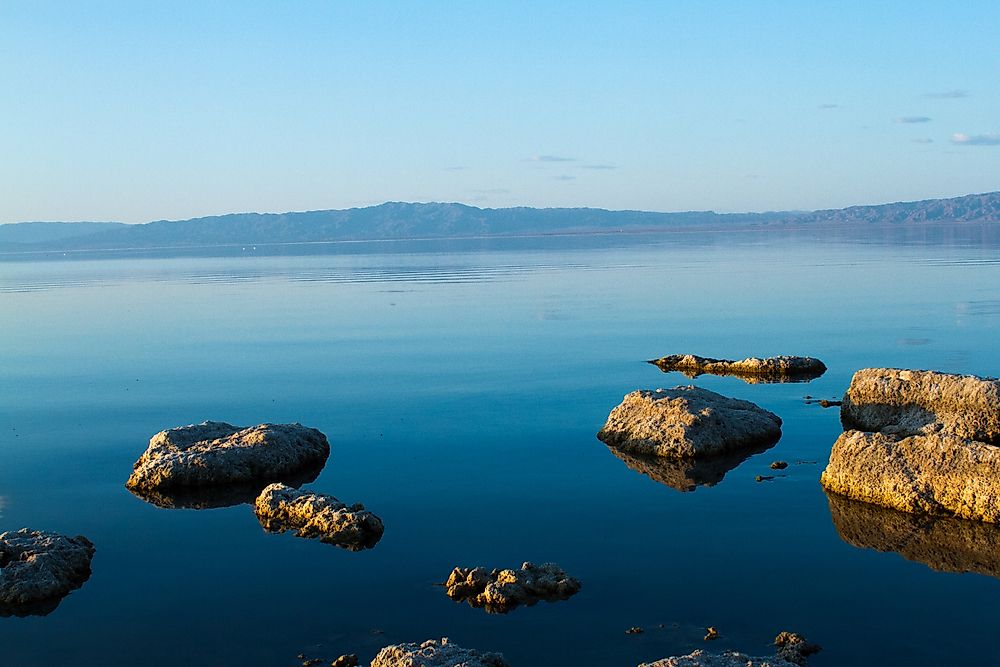
This is the part that makes the Salton Sea different from every other lithium prospect in the world. Geothermal power plants on the field have been circulating just over 120 million metric tons of brine a year since 2004, bringing it up, running it through turbines and injecting it back down. The lithium has been going round that loop the entire time, untouched.
LBNL estimates the existing geothermal capacity alone could support recovery of roughly 127,000 metric tons of LCE a year. The infrastructure to lift the resource is in place and has been for two decades, which is why the extraction is bolted onto power generation rather than replacing it.
How The Extraction Works
Direct lithium extraction, or DLE, is the technology the entire Lithium Valley proposition rests on. Brine comes up hot, the steam spins a turbine and generates electricity, and the remaining fluid passes through a process that strips the lithium out before the brine is reinjected. It is a closed loop, it produces power and lithium from the same well, and one source reports a single extraction loop recovering up to 95 percent of the lithium present.
Compared with hard-rock mining or South American evaporation ponds, which occupy enormous areas and consume years, that is a genuinely attractive proposition. The qualifier is that DLE has not yet been demonstrated at full commercial scale at this site.
The Flagship Project
Controlled Thermal Resources, an Australian company, is building Hell's Kitchen on the geothermal field in the Imperial Valley, a 1.85 billion dollar facility planned across seven phases.
Construction on the first phase broke ground on January 30, 2024, and full buildout targets roughly 650 megawatts and something approaching 100,000 tons of lithium a year. The company's demonstration facility has produced lithium chloride suitable for downstream processing, at about one fifteenth of commercial scale.
Environmental groups sued, arguing the company had not adequately addressed environmental impacts. A judge rejected the claim in January 2025 and cleared the project, though the chief executive said the litigation had disrupted financing and set the timetable back a year or more.
The Flagship May Be Drifting
The most recent development is the one that should temper expectations, and it has nothing to do with geology. In January, Controlled Thermal Resources announced a venture to supply geothermal power to data centers. Reporting in September 2026 noted this may signal a shift of focus from lithium extraction toward powering artificial intelligence, and asked directly whether California's Lithium Valley dream is fading.
That is a commercially rational move. Geothermal electricity has a buyer right now at prices data center operators will pay, and lithium extraction at scale remains unproven and capital-intensive. It also means the project most often cited as proof the resource will be developed is now partly pointed somewhere else.
What The Region Could Actually Produce
Set the resource estimate aside and look at production capacity, because those are very different numbers. The California Energy Commission has estimated the Salton Sea might eventually produce 600,000 metric tons of lithium carbonate a year, and state material has put the figure at enough to support around 5 million EV batteries annually. A UC Riverside geoscientist has noted that existing geothermal infrastructure could already support roughly 115,000 metric tons of LCE a year.
The gap between 127,000 tons from current infrastructure and 600,000 tons at full development is the entire investment question, and it will be answered by financing and engineering rather than by what is dissolved in the brine.
Why It Matters Beyond California
The strategic argument is straightforward. The United States produces very little lithium domestically and imports most of what it uses, while demand keeps rising with electrification.
A resource of this size in one county, attached to existing power infrastructure, in a region that badly needs employment, is an unusually convenient set of circumstances. Governor Gavin Newsom has called the region the Saudi Arabia of lithium, which is the kind of phrase that gets repeated rather than examined.
Imperial County is among the poorest in California, and the local argument is as much about whether the economic benefit stays in the valley as about whether the lithium comes out of it.
The Honest Answer
There are 4.1 million metric tons of lithium carbonate equivalent measured in the characterized part of the Salton Sea reservoir, and possibly as much as 18 million across the probable extent. That is a world-class resource by any standard and the largest known lithium brine concentration of its kind.
How much of it comes out is a separate question with a different answer. The infrastructure exists, the technology works at demonstration scale, the permits are largely in hand, and the flagship developer has just announced it is also selling power to data centers. The lithium is definitely down there. Whether Lithium Valley becomes a place or stays a phrase is a 2027 and 2028 question.