How Lake Michigan Compares To The Biggest Lake On Every Other Continent
Lake Michigan is the third-largest lake in North America by surface area at 22,300 square miles, and the second-largest by water volume at 1,180 cubic miles. It is surpassed by Lake Huron and Lake Superior in surface area, and Lake Superior in water volume. When compared to the largest lakes in the other 6 continents by surface area, Lake Michigan is larger than 4 of them and smaller than 2. In this story, we will take a closer look at how Lake Michigan compares to the biggest lake on every other continent.
South America: Lake Titicaca

Located on the border between Peru and Bolivia, Lake Titicaca is the highest navigable lake on Earth, at an elevation of 12,500 feet above sea level. It is 3,200 square miles in surface area in the Andes Mountains, which is significantly smaller than Lake Michigan.
It is fed by 25 rivers, including glaciers from the Andes Mountains. It has a higher average depth than Lake Michigan, between 400 and 600 feet, compared to 279 feet in Lake Michigan. Its maximum depth is 920 feet at Isla Soto, while Lake Michigan's maximum depth is 925 feet.
Unlike Lake Michigan, Lake Titicaca has a slight salt content, at 5.2 to 5.5 parts per 1,000. While Lake Michigan is known for its shipwrecks, Lake Titicaca has temple ruins hidden beneath its surface.
Africa: Lake Victoria

Lake Victoria is 26,828 square miles in surface area, making it the second-largest freshwater lake on Earth, only topped by Lake Superior at 31,000 square miles. It borders three countries in eastern Africa: Tanzania, Uganda, and Kenya. By water volume, it has 659.76 cubic miles, which is significantly less than Lake Michigan's 1,180 cubic miles.
Additionally, Lake Victoria is much shallower than Lake Michigan, with a maximum depth of 270 feet. The lake is named after Queen Victoria, although Arabs previously referred to it as Ukerewe. Today, the lake offers hydroelectric power, drinking water, and fishing, with more than 200 species of fish that live in the water.
Europe: Lake Ladoga

Lake Ladoga sits within the European portion of Northwestern Russia, 25 miles away from St. Petersburg. At 6,700 square miles by surface area, it's less than a third of the size of Lake Michigan at 22,300 square miles. Its maximum depth reaches 754 feet, shallower than Lake Michigan's 925 feet. By water volume, it contains close to 218 cubic miles of water, which is less than all of the Great Lakes save for Lake Erie. Lake Ladoga is home to rare creatures such as a freshwater seal known as the Ladoga seal.
Lake Ladoga is close to St. Petersburg, and during the Siege of Leningrad from 1941 to 1944 in World War II, it was known as the Road of Life, as it was used to send supplies and transport the wounded out of the city, especially when it was frozen over, allowing vehicles to cross the ice.
Asia: Caspian Sea
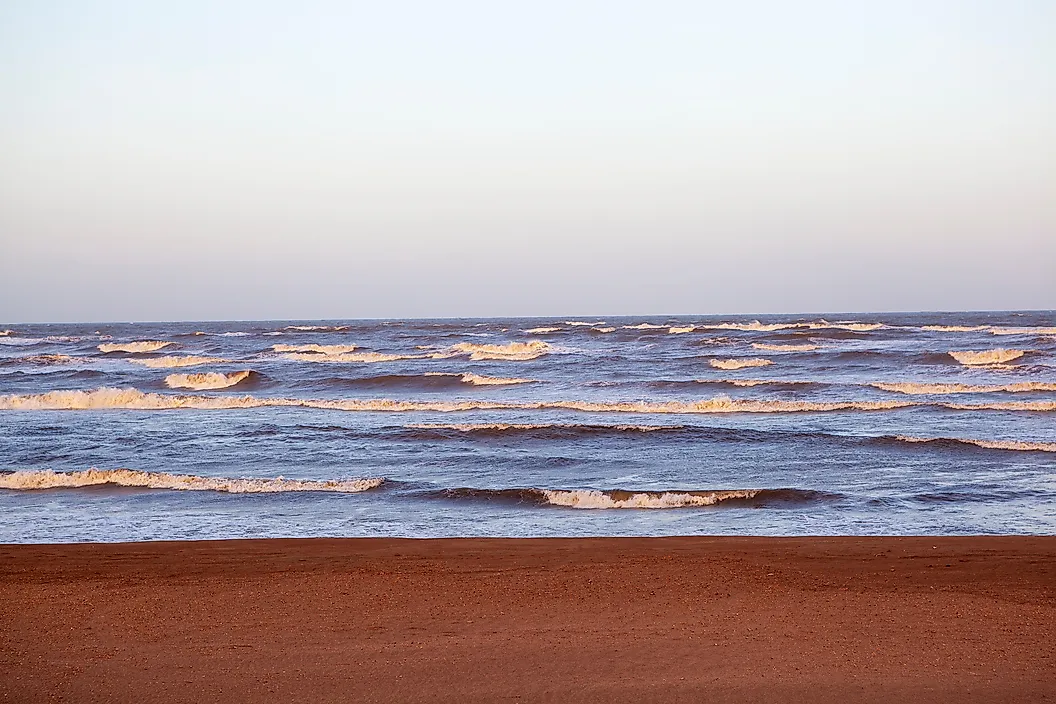
Despite its name, the Caspian Sea also qualifies as a lake, as it is surrounded by land. It covers 149,200 square miles, which makes it the largest lake on Earth, more than 6.5 times larger than Lake Michigan. It also has 18,800 cubic miles of water. It sits in Central Asia between Kazakhstan, Turkmenistan, Iran, Azerbaijan, and the Asian section of Russia.
Unlike Lake Michigan, the Caspian Sea is a salt lake, containing around 1.2% salt content, although salt content is less concentrated in the northern section with water flowing into it from the Volga River. The Caspian Sea used to be connected to the Black Sea in the late Miocene Epoch, 13.8 million years ago, and then again during the Pleistocene Epoch around 2.6 million years ago, but tectonic and glacial activity isolated it, turning it into a lake. In several ways, the Great Lakes qualify more as an inland sea than the Caspian Sea, as they have direct access to the Ocean via the St. Lawrence River from Lake Ontario.
Antarctica: Lake Vostok

Lake Vostok is buried beneath 2.4 miles of ice in Antarctica and was first discovered by Russian scientists via radio echo surveys in the 1970s and satellite data in the 1990s. In 2012, Russian scientists drilled through the ice to reach the water.
Its surface area has been measured at 4,826 square miles, and ice core samples have revealed a mixture of life forms including fungi and bacteria. Some of these life forms are psychrophiles, which live in cold temperatures, and thermophiles that can handle heat. This may explain why the lake exists in the first place, as hydrothermal vents would heat up the ice enough to melt and form this lake. The pressure in this lake equates to 5,150 pounds per square inch due to the ice sheet.
Australia: Lake Eyre

Lake Eyre is also known as Kati Thanda-Lake Eyre and is Australia's largest lake, at 4,281 square miles by land area, far smaller than Lake Michigan. It sits in southern Australia and consists of two sections: Lake Eyre North and Lake Eyre South, joined together via the Goyder Channel.
Lake Eyre is a salt lake and is usually dry due to low rainfall, with only 5 inches of rainfall a year, and high heat leading to rapid evaporation at 140 inches per year. It does fill up with water, on average, every two to three years, including in 2025. Fish that live in this lake have to hide in small water holes during dry seasons. The salt content in this lake is very high, with a 12-inch salt crust at the lake bed.
Are these lakes or inland seas?
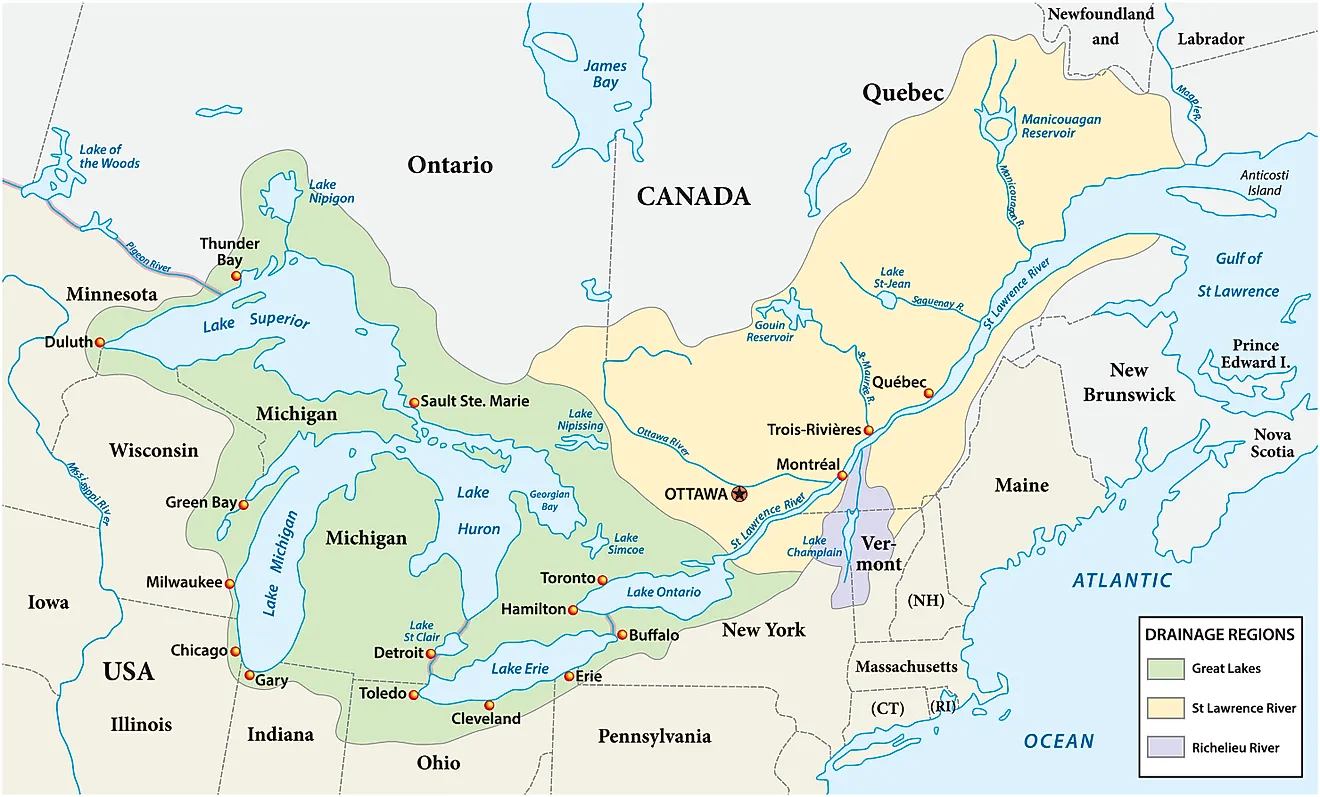
The difference between a lake and a sea typically comes down to the size, depth, and geography. Seas tend to be deeper and larger than lakes, and they drain into an ocean. Lakes, meanwhile, while they may connect to an ocean via a river, do not flow out to an ocean. This principle applies to most of these lakes, but not all. For example, Lake Victoria flows into the Mediterranean Sea via the Nile River, and Lake Ladoga flows into the Baltic Sea via the Neva River. Lake Michigan is part of the Great Lakes system, which flows east to Lake Huron, Lake Erie, Lake Ontario, and the St. Lawrence River into the Atlantic Ocean. All these lakes share in common is their large size, even if their characteristics, salt content, and geography all vary.