7 Snake Infested State Parks In The Northern United States
While the northern United States may have cooler climates, several State Parks across the region host thriving populations of snakes. In these protected landscapes, hikers will most likely encounter nonvenomous species like Eastern Garter snakes and Water Snakes. There are some exceptions, such as Brown County State Park, which does have a concentration of the region’s most notable venomous snake, the Timber Rattlesnake. The State Parks on this list are among the most snake-dense in the entire Northern United States, and provide refuge for snakes that can move as fast as six miles per hour.
Itasca State Park, Minnesota

Itasca State Park is the oldest in Minnesota, in the north of the state. Comprising over 32,000 acres of forests and lakes, this State Park stands out as the headwaters of the Mississippi River. The park is accessible year-round, with different activities varying with the seasons, including camping, hiking, biking, boating, paddling, fishing, birding, wildlife watching, cross-country skiing, snowshoeing, and snowmobiling.

The park is a known home for the Smooth Green Snake (Opheodrys vernalis), Northern Redbelly Snake (Storeria occipitomaculata), and the Common Garter Snake (Thamnophis sirtalis). These are all small species of snake, with neither of them exceeding three feet in length. They prefer forested habitats with ample areas to hide and seek shelter, and all hibernate in the winter in rocky crevices or ant mounds, sometimes with other species.
Brown County State Park, Indiana

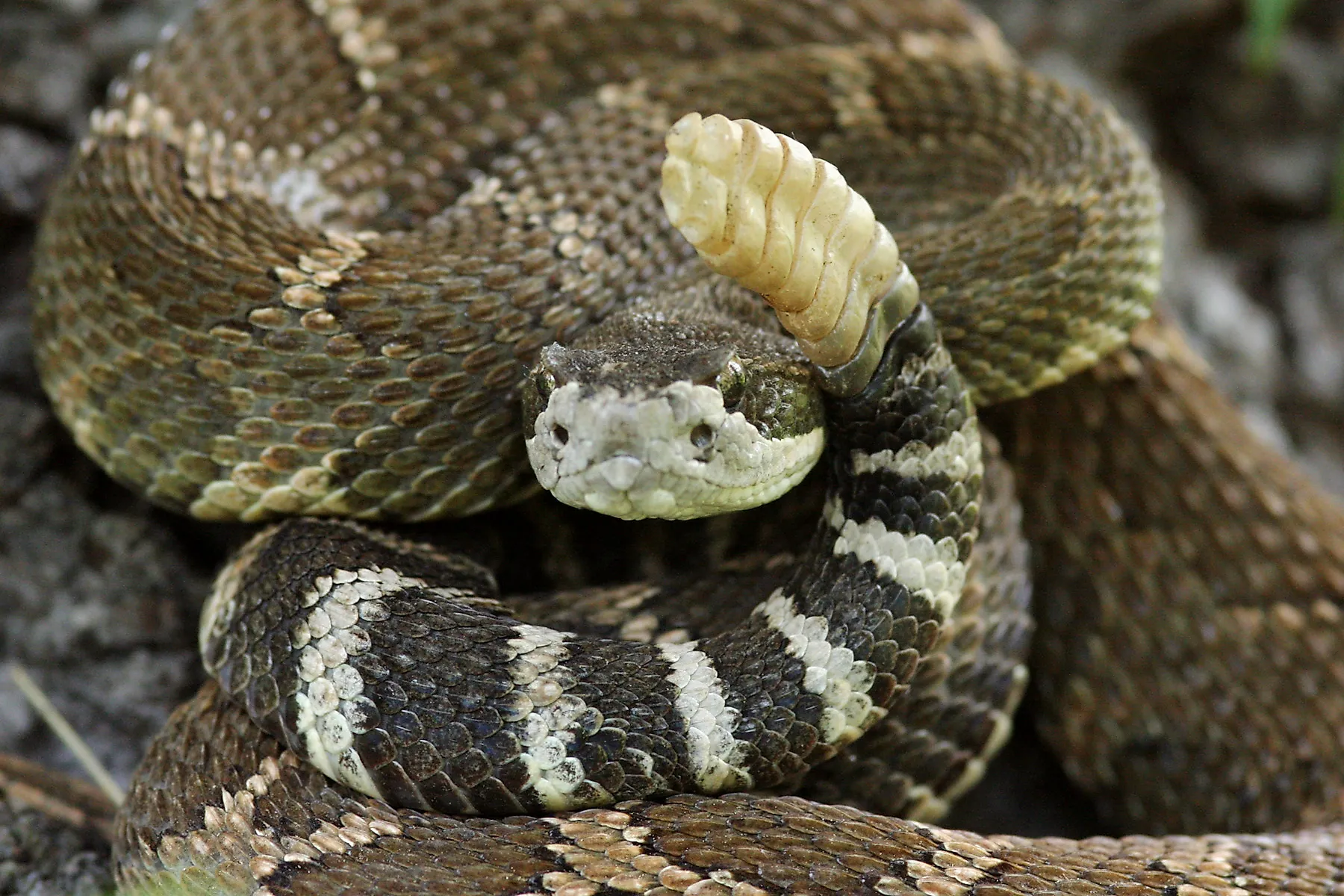
At nearly 16,000 acres, Brown County State Park is the largest state park in Indiana. Its terrain is composed of hills, forests, and valleys. It has about 37 miles of hiking and biking trails that lead to scenic vistas, there are lodging and camping accommodation options, Ogle and Strahl Lakes provide opportunities for fishing, and it is one of the only places in Indiana where you will find Timber Rattlesnakes.

Although they are considered state-endangered, 115 individuals have been marked and implanted with a Passive Integrated Transponder tag to help monitor their location and growth rate within the park. Timber Rattlesnakes are partial to the forested, hilly regions of the park. These forested areas usually have small openings that aid Timber Rattlesnakes in thermoregulation, gestation, and shedding of their skin. Timber Rattlesnakes typically hibernate communally in dens, ten of which are known within Brown County State Park, although it is known that more exist.
Salt Fork State Park, Ohio

Salt Fork State Park is the largest State Park in Ohio, comprising 17,229 acres of land and 2,952 acres of water. The park has no shortage of outdoor recreational opportunities to suit everyone’s needs. Visitors enjoy the water via two marinas and eight launch ramps, and hikers enjoy trails of varying length and difficulty, but they are not the only ones.

Salt Fork State Park’s water is enjoyed by one of the most widely distributed and most abundant snakes in Ohio, the Common Water Snake (Nerodia sipedon). Common Water Snakes enjoy basking on branches, rocks, and vegetation either on or above the water’s edge, quickly dropping in and submerging if approached or startled.
Other snakes in the park include the Common Garter Snake, which is a versatile snake that can be found in just about any habitat in Ohio, although it is most associated with water. Finally, the Gray Rat Snake (Pantherophis obsoletus) is predominantly a forest-dwelling snake and therefore most likely encountered on the trails of Salt Fork State Park.
Starved Rock State Park, Illinois

Starved Rock State Park sits atop a bluff overlooking the Illinois River. This State Park stands out for its 18 moss-covered sandstone canyons formed by glacial meltwater. Over 13 miles of trails grant visitor access to seasonal waterfalls, sandstone overhangs, and scenic lookouts. The lush vegetation provides habitat for abundant species of snakes, including the Common Garter Snake, Common Water Snake, and the Gray Rat Snake.

Other snakes within the park are the DeKay’s Brown Snake (Storeria dekayi) and the Eastern Milk Snake (Lampropeltis triangulum syspila). Both snakes are rarely seen, often spending much of their time hiding underneath rocks, logs, and other debris.
Seven Lakes State Park, Michigan

230 acres of Seven Lakes State Park’s total 1,434 acres consists of water spread across six different lakes, creating opportunities for fishing and swimming. There are also hiking and biking trails, as well as picnic areas.
The park is home to a species of special concern in Michigan, the Eastern Massasauga Rattlesnake (Sistrurus catenatus catenatus), which visitors are informed about by an informative sign in the park. The Eastern Massasauga Rattlesnake is the only venomous snake in Michigan, and only one of two Rattlesnakes that occur in the Great Lakes. However, this snake is so secretive that the chances of encountering one are very small.

More common nonvenomous snakes people may encounter in the park are the Common Water Snake, especially around the lakes in the park, the Common Garter Snake, the Common Ribbon Snake (Thamnophis saurita septentrionalis), a species very similar and closely related to the Garter Snake, and the North American Racer (Coluber constrictor), one of the fastest moving snakes in North America, capable of traveling between four and six miles per hour.
Burlingame State Park, Rhode Island

Burlingame State Park revolves around Watchaug Pond, one of the largest freshwater ponds in Rhode Island. There is a sandy beach on the shores of the pond where visitors can relax on the sand, swim, fish, and boat. Additionally, there are picnic areas fully equipped with fireplaces, picnic tables, and a large pavilion.

The park is home to the most common and widespread snake found in Rhode Island, the Eastern Garter Snake (Thamnophis sirtalis sirtalis). Eastern Garter Snakes inhabit pretty much anywhere, including wetlands, forests, rocky hillsides, and have even been known to make their way into basements in spring and autumn. The Northern Water Snake is also found in the park. They are very capable swimmers and quickly move on and below the surface of bodies of water.
Warren Dunes State Park, Michigan

Warren Dunes State Park stretches across three miles of shoreline on Lake Michigan. Totalling 1,500 acres, its dunes rise 260 feet above the lake, offering views to hikers that are second-to-none accessible from the 6 miles of hiking trails within the park. The topography is composed of forested dunes, open dunes, and interdunal wetlands.

Some of the snakes known to inhabit the park are Common Water Snakes, North American Racers, and Eastern Hognose Snakes (Heterodon platirhinos). Eastern Hognose Snakes prefer habitats with prevalent dry, sandy, or mixed soils. They can also be found along woodland edges, making Warren Dunes State Park a suitable habitat for them.
While some State Parks in the Northern United States are known to have an abundance of snakes, they are mostly nonvenomous and harmless to humans. While there are warm summers that draw snakes out of hibernation, the Northern United States is generally colder than the Southern United States, and therefore less favorable for snakes. While venomous snakes like the Eastern Massasauga Rattlesnake inhabit Seven Lakes State Park, many species of venomous snakes are of special concern or state-endangered, and therefore, humans are less likely to interact with them. This means you can safely enjoy the most scenic State Parks knowing that the snakes you see slithering by the water’s edge are harmless Garter and Water Snakes.