5 Most Snake-Filled Bodies Of Water In New Mexico
New Mexico's rivers, reservoirs, and wetland refuges are home to several aquatic and semi-aquatic snake species. The endangered plain-bellied water snake spends the majority of its life hunting across and beneath the surface. Common garter snakes hunt along the water's edge searching moist banks for small prey. While New Mexico is a largely arid and semi-arid state, scattered across this dry terrain is a network of waterways. Five bodies of water stand out for the habitat they provide several snake species.
Heron Lake

The cool, forested shoreline of the 6,000-acre Heron Lake within the Rio Grande watershed supports habitat for several snake species. Completed in 1971, it is surrounded by ponderosa pines and juniper woodlands. This environment provides ample denning opportunities and attracts a range of prey animals that support a healthy snake population.
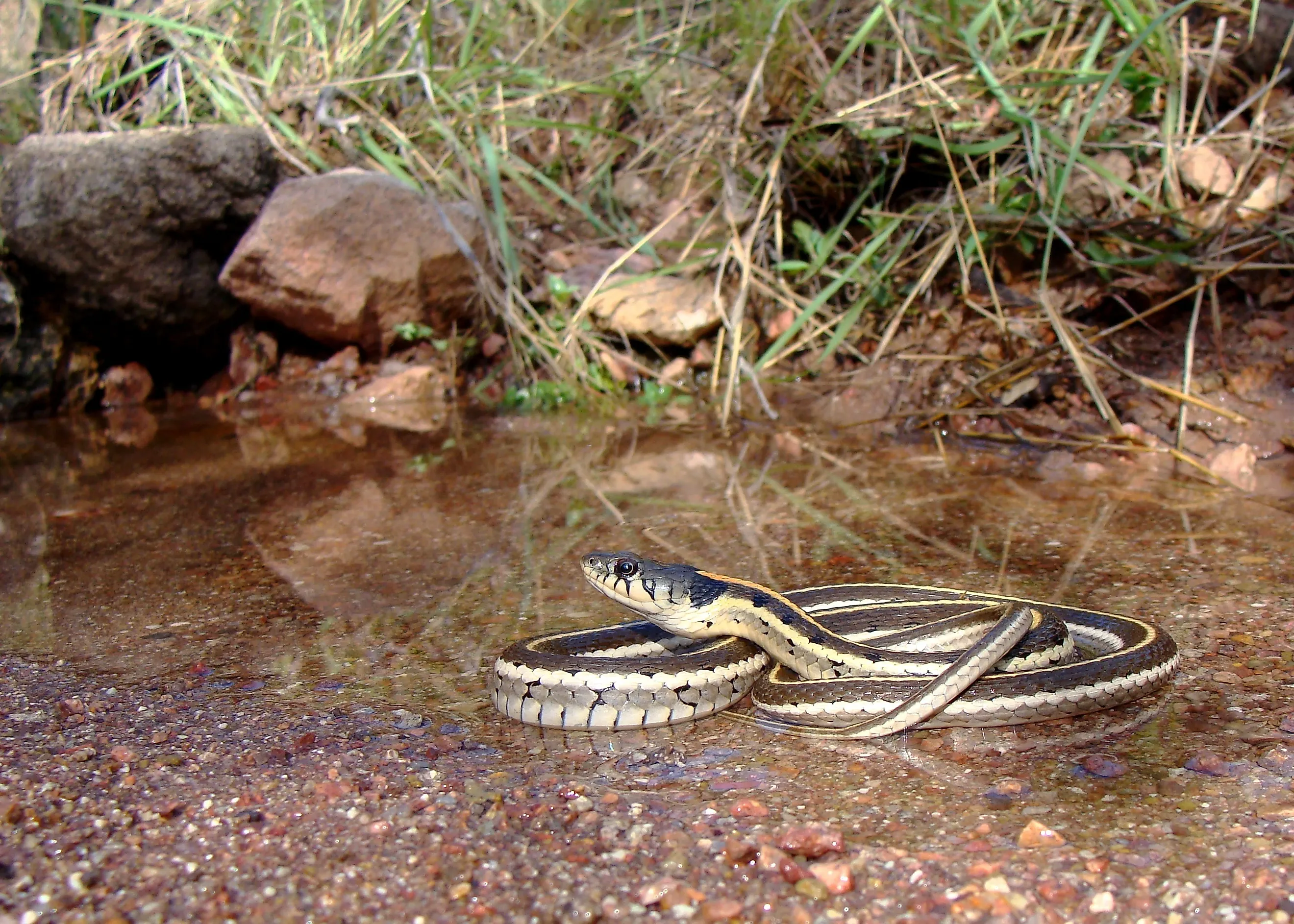
The range of wandering garter snakes (Thamnophis elegans vagrans) covers northern New Mexico, including Rio Arriba County. This species actively hunts fish and amphibians while swimming, catching prey with speed rather than relying solely on ambush tactics. New Mexico garter snakes (Thamnophis sirtalis dorsalis) also live within the riparian habitats of Rio Arriba County and swim to pursue small aquatic and amphibious prey. They retreat into water when threatened, underscoring their tie to aquatic environments.
Black-necked garter snakes (Thamnophis cyrtopsis) frequent bodies of water within the foothills, high plateaus, and mountains of northern New Mexico, making Heron Lake squarely within that territory. Their diet consists of frogs, toads, tadpoles, fish, and salamanders in and around aquatic habitats.
Elephant Butte Reservoir

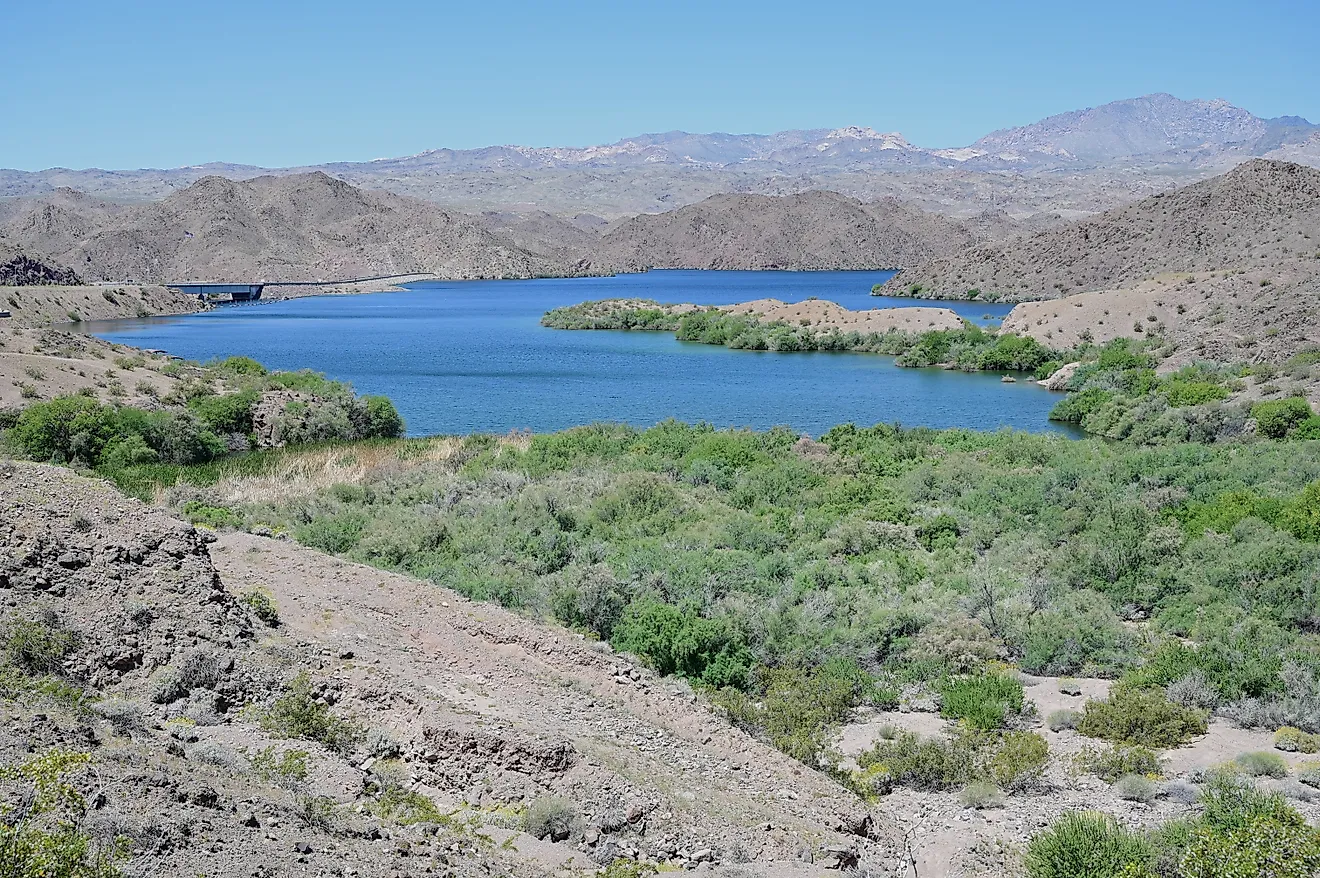
The fluctuating shoreline of Elephant Butte Reservoir creates exactly the kind of dynamic edge habitat that makes it an active snake environment. Formed in 1916 with the construction of the Elephant Butte Dam on the Rio Grande, this 36,000-acre reservoir is New Mexico's largest body of water and supports a diverse range of snake species. Shallow coves, rocky peninsulas, and fluctuating water levels expose new banks and driftwood throughout the season. This creates ideal basking, hunting, and ambush terrain. The lake's warm, southern location extends the active season for cold-blooded species well into autumn.
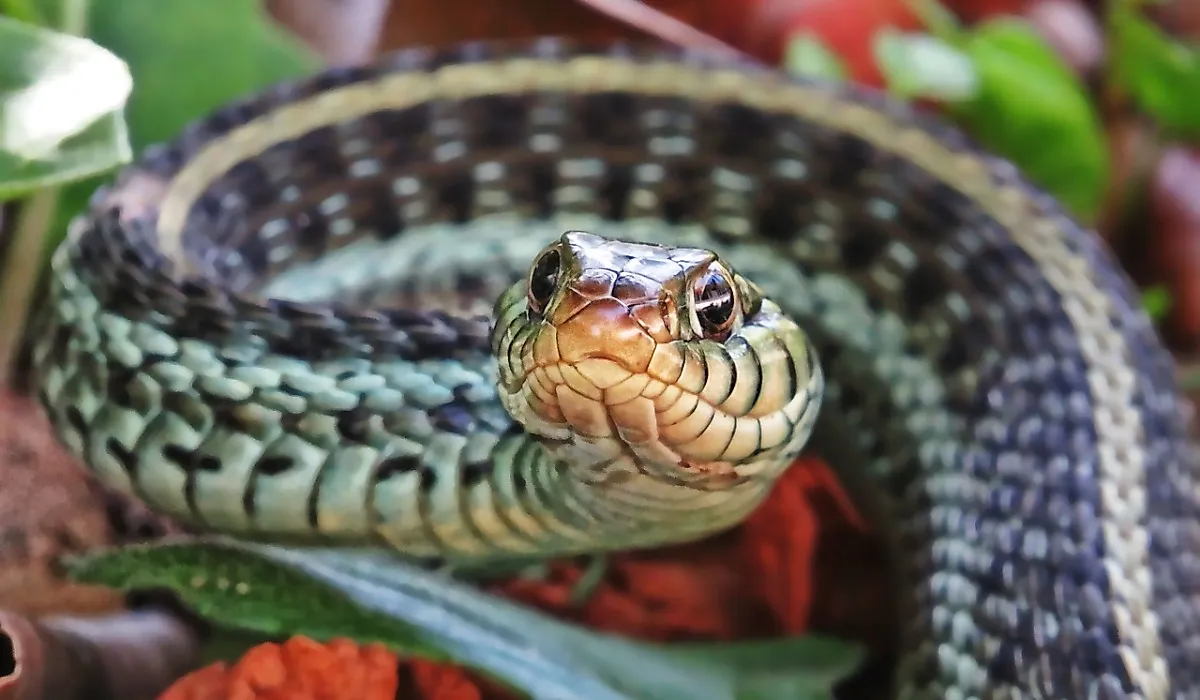
Common garter snakes (Thamnophis sirtalis) are found in and around this region and are strongly associated with water. The bulk of their diet is fish, frogs, and crayfish. They are most often seen in the spring and fall when they are diurnal. In summer, this species transitions into nocturnal behavior. Plains hog-nosed snakes (Heterodon nasicus) are well-suited to the Elephant Butte environment. They frequent floodplains, streams, and arroyos, using their distinctively upturned nose to root out toads from the moist sand and soil near the water's edge.
Rattlesnake Island, a prominent rocky landmass within Elephant Butte Reservoir, takes its name from the native populations of western diamondback rattlesnakes (Crotalus atrox) and Mojave rattlesnakes (Crotalus scutulatus) that inhabit the surrounding Chihuahuan Desert terrain. While these rattlesnakes have more of a terrestrial lifestyle, they are known to swim across bodies of water to move between hunting and denning sites.
Pecos River

Few water corridors in New Mexico support as many snake species as the Pecos River, and the reason comes down to habitat variety. The river rises in the Sangre de Cristo Mountains and flows through terrain that shifts from high-elevation forest to Chihuahuan Desert before crossing back into Texas. That gradient means the riparian zone along its banks attracts snake species from multiple ecological communities, all drawn to the same water source moving through otherwise dry terrain.
Plain-bellied water snakes (Nerodia erythrogaster) are an endangered species in New Mexico, whose range includes a small portion of the Lower Pecos River valley. They forage directly in the water column, using quick, lateral undulations of their bodies to close the distance on fish and amphibians in slower stretches of the river. These highly aquatic snakes rarely leave the water.
Attracted to vegetated aquatic zones, western ribbon snakes (Thamnophis proximus) live and hunt along the southernmost portions of the Pecos River. Their diet includes a variety of small fish, amphibians, and crustaceans. The Pecos also falls within the range of checkered garter snakes (Thamnophis marcianus). This aquatic species inhabits lowland rivers, ponds, springs, and irrigation ditches throughout arid and semi-arid regions.
Cochiti Lake

Cochiti Lake sits along the Rio Grande within the boundaries of the Cochiti Nation at the base of the Jemez Mountains. A series of wooded mesas, foothills, and narrow canyons descend to meet the river. The north arm of the lake, where the Rio Grande empties into Cochiti, produces mudflats and shallow backwater areas that create productive hunting margins for aquatic and semi-aquatic snake species. The surrounding ecosystem of sandy river delta, shallow coves, basalt outcrops, and riparian cottonwood woodland gives the lake a varied shoreline that supports several snake species.
Black-necked garter snakes frequent this kind of permanent riparian habitat. The shallow, backwater margins and mudflat areas of the north arm of the lake, where the river delta creates a slow, warm, prey-rich environment, are prime hunting grounds for this species. Common garter snakes also call this lake and surrounding region home.
Generalists in both habitat and diet, gopher snakes (Pituophis catenifer) live throughout much of New Mexico except the high mountain peaks. While primarily terrestrial, this adaptable species is known to swim in lakes such as Cochiti, streams, ponds, and rivers. When threatened, gopher snakes will mimic rattlesnakes, coiling their bodies and raising their heads into a striking position while vibrating their tails to create rattling sounds.
Bitter Lake

Permanent water in the middle of the Chihuahuan Desert acts as a magnet for wildlife, and Bitter Lake National Wildlife Refuge is one of the clearest examples of that principle at work. The lake and surrounding refuge cover around 24,500 acres, centered on a series of shallow lakes, sinkholes, and wetland impoundments fed by the Pecos River. For snakes, the warm shallow water, dense emergent vegetation, and abundant amphibian prey create an ideal riparian environment.
The western ribbon snake's protected status in New Mexico makes Bitter Lake particularly significant for this species. The refuge's permanent water in the middle of the Chihuahuan Desert represents one of the more reliable aquatic habitat patches available within its limited range. Plain-bellied water snakes inhabit this area as well. As a snake that prefers life in the water, their presence is directly tied to the year-round water source at Bitter Lake and the smaller wetland areas around the refuge.
Desert Waters, Wild Snakes

New Mexico's rivers and lakes are not simply water sources within a largely dry landscape. They are wildlife corridors, hunting grounds, and thermal refuges that support a dense community of reptiles. The rivers, reservoirs, and wetland refuges that cut through this landscape are home to a range of water-loving snake species. Some species found across these sites are primarily aquatic hunters that spend the majority of their active lives in the water. Others use the water intermittently, hunting along the edges and swimming to cross their habitat.