Towns That Reinvented Themselves After the Factory Closed
Historically, hundreds of towns around the world revolved around one business or factory. For some of them, the factory closing down spelled disaster. Others took matters into their own hands. Brevard transformed itself into a tourist town filled with natural wonders and art, and Anaconda reinvented itself as a premier golf destination. North Adams's electronics factory complex is now a massive art museum. The following towns survived by rewriting what they were originally known for.
North Adams, Massachusetts

North Adams thrived between the 1940s and the 1960s because it had Sprague Electric to rely on. The company moved to the town in 1930 and, at one time, was the largest employer there. Entire families worked in the factory, as did friends and neighbors, and Sprague was known for sponsoring scholarships and sports teams. It was the owner Robert C. Sprague's dream to create a company town where everyone would feel like part of the family. He also paid his workers well, even during the 1940s when America found itself smack in the middle of WWII. By the mid 1960s, Sprague employed more than 4,100 workers, and the electrical components business was booming. Sadly, overseas competition eventually led to a decrease in sales, and by 1985, the company had no choice but to close down its operations. This resulted in steep unemployment rates and an almost instantly decreasing population.
The economy suffered a massive blow, but business and political leaders put their heads together and tried to come up with a plan to save North Adams. At the same time, Thomas Krens, the director of the Williams College Museum of Art, was urgently looking for space to display contemporary art that did not fit into existing museum galleries. This was the start of the town's overhaul, as Mayor John Barrett III suggested that Krens use the Marshall Street complex where Sprague operated. The rest, as they say, is history. The complex now houses the Massachusetts Museum of Contemporary Art and has helped reinvigorate the town's economy. As the museum started drawing tourists, more art galleries, cultural centers, and restaurants sprang up. Artists moved into the empty mills and North Adams suddenly became a hot tourist spot. Today, people can see the light exhibitions by James Turrell and attend the Solid Sound Festival. The art is the main draw, followed by the beverages at Bright Ideas brewpub.
Maynard, Massachusetts

Amory Maynard and William Knight had an idea to build a woolen mill on the Assabet River. When they did exactly that, they had workers coming from Sudbury and Stow to work in the mill, making their endeavor highly successful. The mill produced the material used for Union Army uniforms during the Civil War. In 1871, the area where the mill stood was incorporated as Maynard, and the operations went from strength to strength. And, by 1910, census data showed that the town population had doubled in just ten years.
The mill continued to operate until 1950, when the textile industry left New England, and it had to close down. Seven years later, MIT Lincoln Laboratory engineers Ken Olsen and Harlan Anderson leased the empty mill where they founded their business Digital Equipment Corporation. They produced minicomputers and became so successful that their company employed more than 100,000 people around the world. DEC bought the mill complex in 1974 and flourished before the company was acquired by Compaq in 1998. The mill complex became an office park before it was transformed into the Mill & Main Campus by 2017. In 2026, people can visit the suburban office campus, watch a comedy show at the Sanctuary Cultural Arts Center, a movie at the Maynard Fine Arts Theater, or spend a couple of hours at a cozy outdoor micro-brewing garden.
Brevard, North Carolina

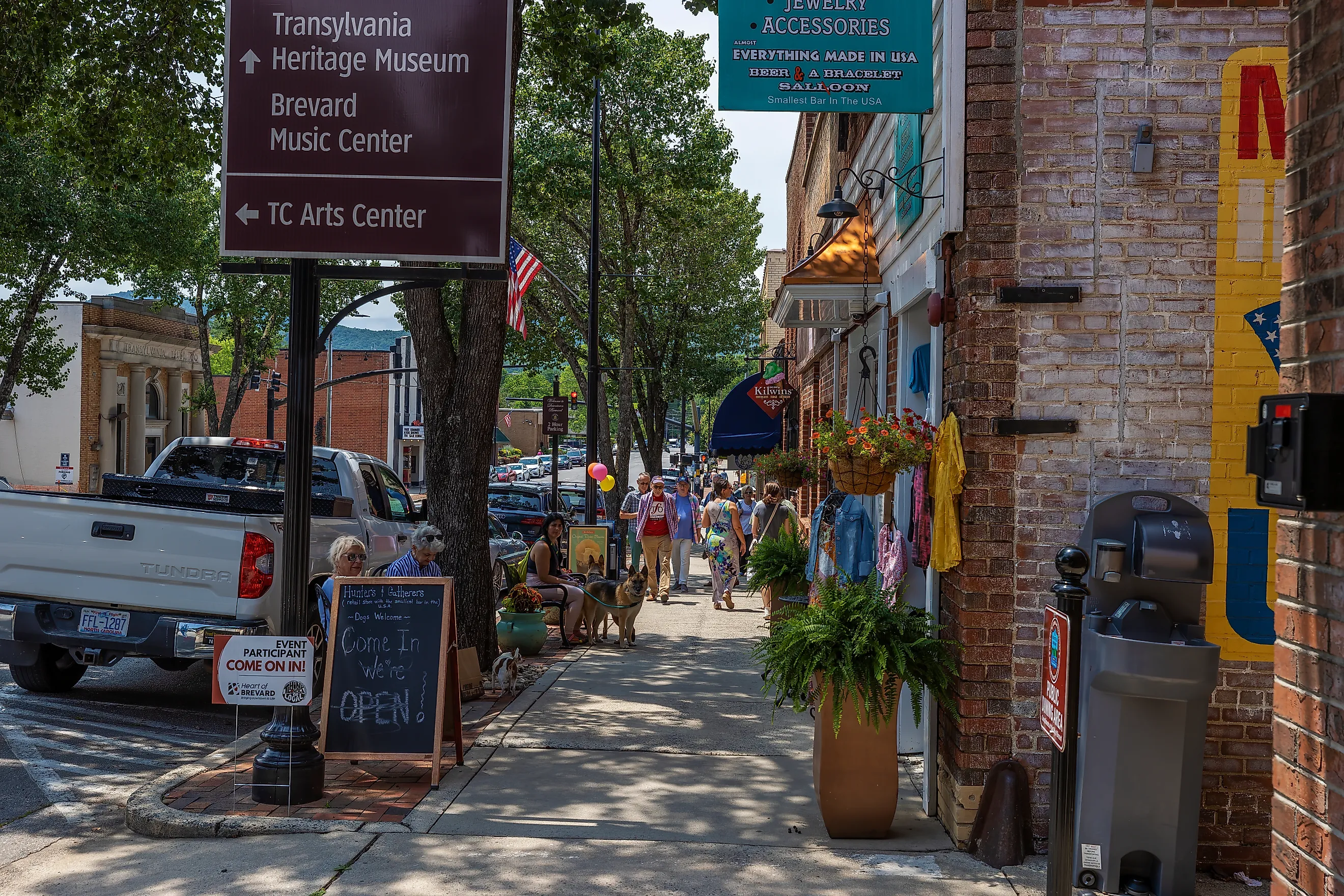
The small mountain town of Brevard sits within the Blue Ridge Mountains of North Carolina, but the scenery was not its main attraction at first. Known as Brackenville in the 18th century, Brevard got its new name after being incorporated in 1868. In 1939, the Ecusta Paper Mill was built here by the Ecusta Corporation, and almost overnight, it became the town's economic heartbeat. The mill drew its water from the Davidson River and manufactured different types of paper, including Bible paper. The mill operated for six decades, drawing people from all over, and created the opportunity for building schools, houses, and businesses.
When the mill closed down in 2002, the economy declined, and the town leaders had to find a way to reinvent Brevard. They rose to the challenge and created an arts mecca inside a setting that includes the chance to see 250 waterfalls and mountain views. Visitors can learn more about Brevard's history at the Transylvania Heritage Museum and go on Friday Gallery Walks to explore local art. The state bought DuPont's surrounding forest land in the late 1990s and turned it into the DuPont State Recreational Forest. The film plant itself closed in 2002 and was later demolished, and its site was eventually added to the forest. The forest boasts more than 10,000 acres of scenic trails for hiking and mountain biking, and people can also go horseback riding.
Beacon, New York

Beacon was two villages in 1709, before it was incorporated in 1913. The town's incorporation combined Matteawan and Fishkill Landing and also included a small part of the Hamlet of Glenham. Even before it was incorporated, Beacon was a factory town. It boasted nearly 50 hat factories, which all operated at the same time, giving Beacon the nickname of "The Hat Making Capital of the U.S." Some of the factories employed hundreds of workers and also produced hundreds of hats every day. After the dangers of top hats treated with mercury nitrate became known, the factories put their efforts into manufacturing straw hats. One of the factories also produced hats for the Women's Army Corps during WWII. But, as was the case with so many factory towns, an economic decline resulted in the closure of most of the factories, especially after the Great Depression. Beacon's economic downturn lasted until the late 1990s, when plans for Dia Beacon began to take shape. Dia Beacon is one of the largest contemporary art museums in the world, and it allowed the town to be "reborn" in 2003. The museum sits inside what used to be a printing factory for Nabisco, which closed in 1991. It still features the original skylights, which now illuminate art exhibits.
Anaconda, Montana

Anaconda was built to house the Washoe Smelter, an industrial processing factory complex that once boasted the largest non-ferrous smelting and processing plant in the world. The mining activities did not happen in Anaconda, but 25 miles away in Butte, so town life centered around the factory. The mine and smelter allowed Anaconda to thrive, and it took less than a year after the town was settled in 1883 for four hotels, 24 stores, and a bank to be built. The town also had three lumber yards, 20 saloons, a skating rink, and five barbers. By 1888, the town featured a horse racing track, a fire department, the Montana Hotel, and a population of nearly 4,000 people. Despite labor disputes and political turmoil, the Washoe Smelter continued to expand its capacity. By 1919, a new smokestack was added that stood 585 feet high.
Over the following decades, however, operations declined, and the smelter was closed in 1980 and then demolished. Only the smokestack remains, and it is now part of the Anaconda Smoke Stack State Park. After the smelter closed down, Anaconda had to do something about the polluted areas around the smelter. A cleanup operation ensued, and the effort also included plans to design a fancy golf course. The course incorporates some of the ruins in its design, with fairways winding around old smelting ovens. The bunkers also contain black copper slag leftover instead of sand. Apart from playing golf in one of the most unusual courses in the country, visitors can relax at Georgetown Lake in summer, or go ice fishing and skiing in winter in the surrounding Anaconda-Pintler Wilderness Area and Lost Creek.
The Power of Reinvention
These towns essentially had two choices. The residents could either accept defeat after the factories closed down, look for other opportunities, or leave town. Or, they could stand together with the town leaders and reinvent their home into something completely different. In the case of the towns listed above, the residents and leaders made sure that they still had something to work towards while offering something to those coming to visit. Today, not one of them has disappeared from the map. Instead, they embraced change as well as a brand-new beginning.