The Key Battles That Built The Ottoman Empire
As one of the longest-lasting world powers, the Ottoman Empire was shaped by many battles throughout its history. The early years were filled with consistent victories that established it as a major empire. This was followed by a period of mixed results, which demonstrated that the Ottomans were not unbeatable. Finally, the later years saw many defeats, but also some victories, indicating that while the empire may have been in decline, it was stronger than is often remembered.
The Battle Of Kosovo

In the late 14th century, the Ottoman Empire rapidly expanded into southeastern Europe. This culminated on June 28, 1389, in a battle between the Ottomans and a Balkan coalition mostly composed of Serbian and Bosnian troops. A lack of reliable historical accounts makes it difficult to discuss specifics. Regardless, at some point during the battle, Serbian Prince Lazar was killed, thereby breaking down the Balkan chain of command. Ottoman Sultan Murad I was also killed, but his son, Bayezid I, managed to secure control of the army. While both sides suffered enormous losses, the sheer size of the Ottoman Empire (even at that point) meant that it was able to replace its soldiers. Moreover, with the Balkan coalition fractured and broken, the Ottomans now had easier access to southeastern Europe. Thus, the Battle of Kosovo was pivotal, as it paved the way for long-term Ottoman control of the region.
The Battle Of Constantinople

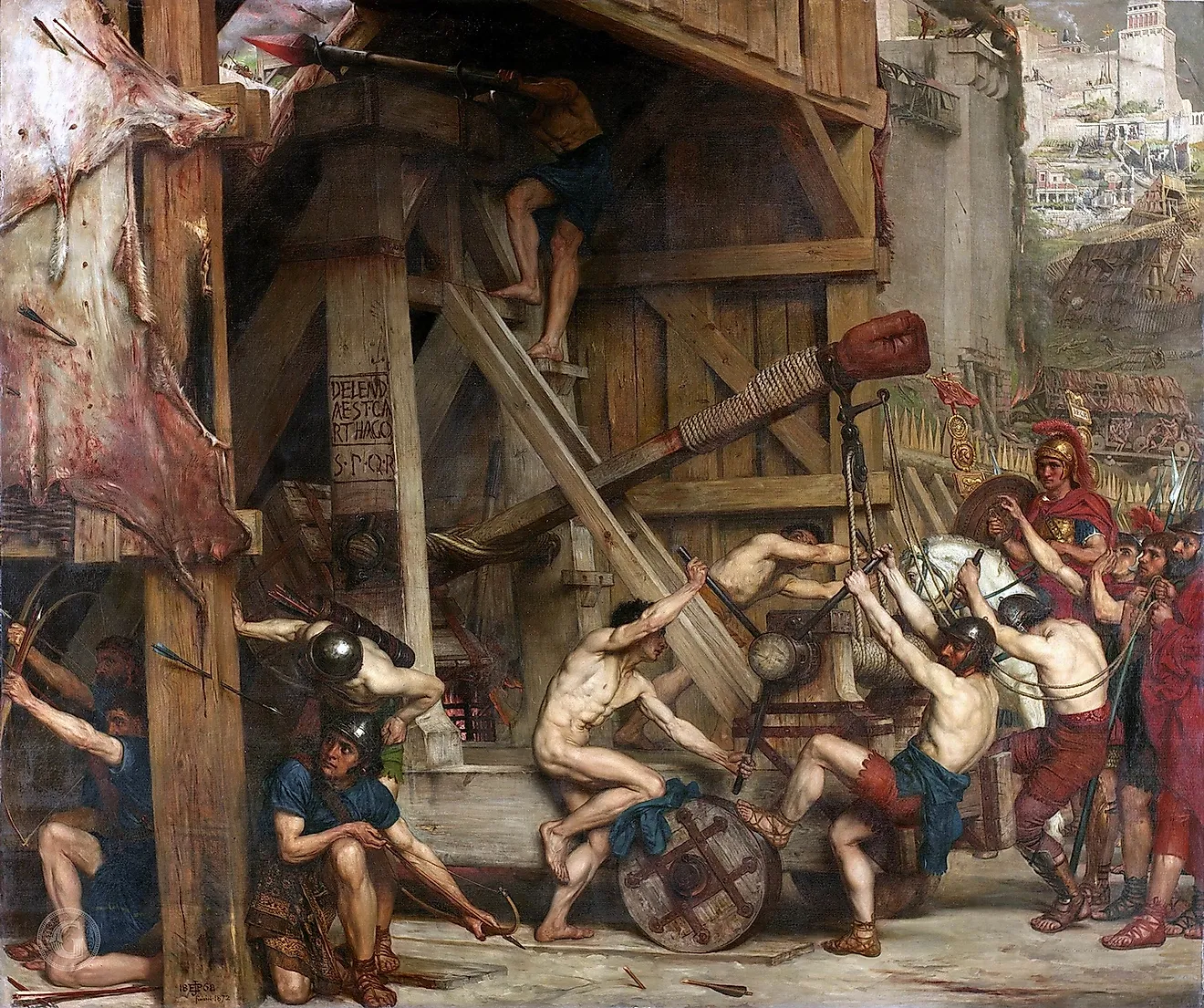
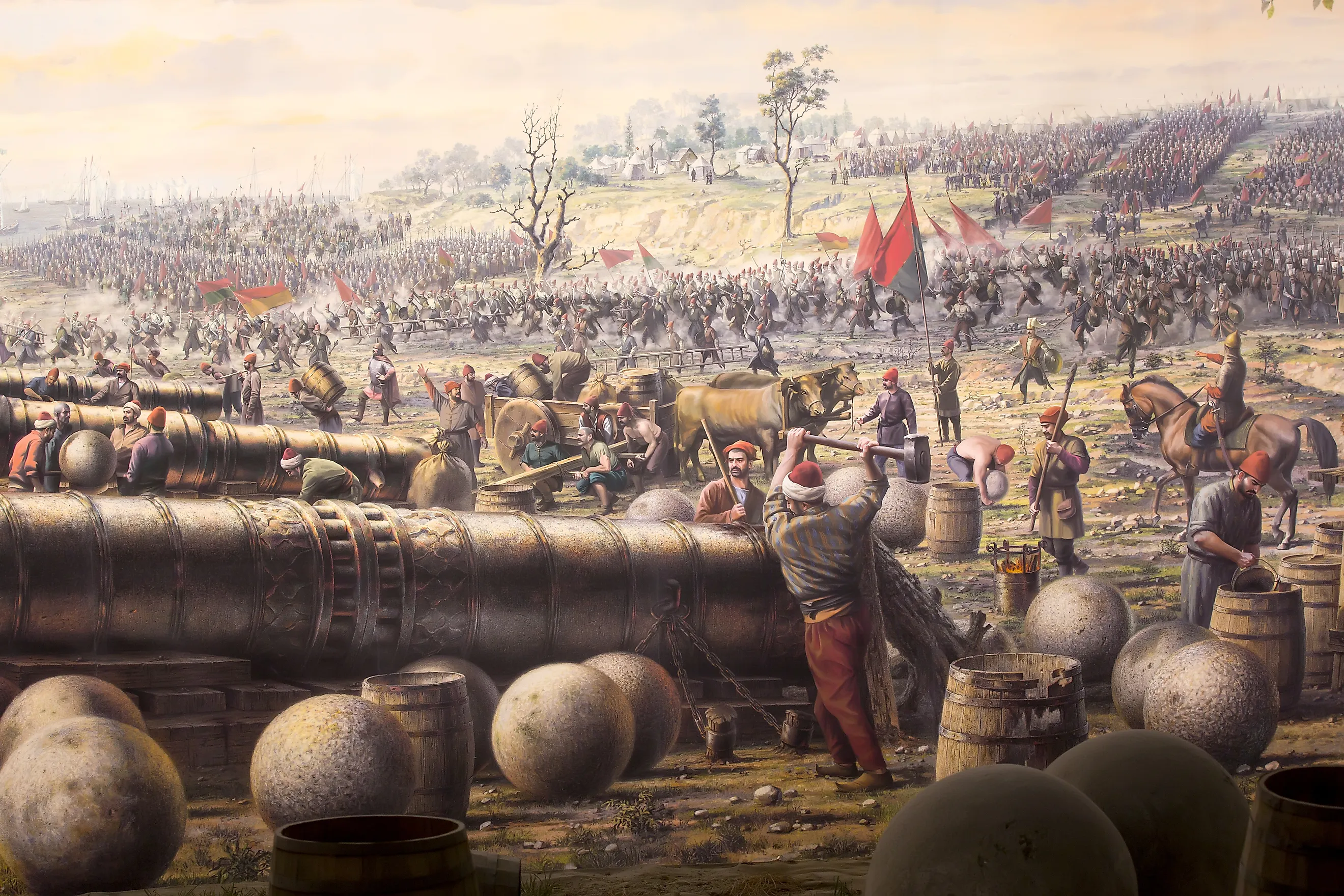
By the mid-1400s, the Ottoman Empire controlled most of Anatolia and southeastern Europe. This resulted in Constantinople, the Byzantine capital, being separated from the rest of the Byzantine Empire. Therefore, on April 6th, 1453, the Ottomans began besieging the city. The siege was brutal, with Ottoman artillery bombarding the city walls for weeks. In one particularly notable incident, the Byzantines blocked the "Golden Horn" waterway to prevent Ottoman ships from passing through. The Ottomans responded by carrying their ships over land and launching them behind the chain. Finally, on May 29th, the city fell, marking the end of the Byzantine (and Roman) Empire. Furthermore, if the Battle of Kosovo was the beginning of the Ottoman Empire's rise to prominence, the Battle of Constantinople signaled its emergence as a world power.
The Battle Of Ridaniya

The Battle of Ridaniya further cemented the Ottomans' power. Fought on January 22nd, 1517, near Cairo, the battle saw the Ottomans defeat the Mamluks. This resulted in the collapse of the entire Mamluk Empire. Therefore, Mecca and Medina, which had previously been under Mamluk control, were transferred over to the Ottomans. Now in possession of the two holiest cities in Islam, the Ottoman claim of being a "caliphate" gained much more strength. Thus, the Battle of Ridnaya helped establish the Ottoman Empire as the world's pre-eminent Islamic empire.
The Battle Of Lepanto

Fought on October 7th, 1571, between a coalition of Catholic states called the Holy League and the Ottoman Empire, the Battle of Lepanto occurred after the Ottomans invaded the Venetian-controlled island of Cyprus. One of the largest naval conflicts in world history, it was the first major European victory against the Ottomans. Admittedly, while the Ottomans lost about 200 ships and suffered approximately 30,000 deaths, they rebuilt their fleet within a year. Furthermore, they did not lose any significant territory and maintained control of Cyprus. Nevertheless, this battle demonstrated that the Ottoman Empire was not unbeatable, and thus, it was a key symbolic victory for the rest of Europe.
The Battle Of Sinop

By the 1800s, the Ottomans were facing serious problems. Whereas they once had one of the most advanced militaries in the world, centuries of stagnation meant that most European armies now outmatched it. This became apparent on November 10th, 1853, when Russian and Ottoman fleets clashed off the coast of the northern Anatolian city of Sinop. The battle was essentially a massacre; the Ottomans lost their entire fleet and suffered thousands of casualties, whereas the Russians barely experienced any losses. The sheer brutality of this affair shocked the rest of Europe and resulted in a major escalation of the Crimean War, which Russia ultimately lost. Regardless, the sheer scale of the Ottoman Empire's losses contributed to its perception of being the "Sick Man of Europe."
The Battle Of Gallipoli

Despite the Ottoman Empire's relative decline, it still had notable moments of strength. Perhaps the clearest instance of this was the Battle of Gallipoli during World War I. Occurring between April 1915 and January 1916, it saw the Allies attempt to knock the Ottomans out of the war by capturing Istanbul. However, to do so, they first needed to invade the Gallipoli Peninsula. This proved problematic, since the Ottoman Army heavily fortified the cliffs along the beaches. When combined with an underestimation of the Ottomans' abilities and the strength of the Ottoman leaders, particularly Mustapha Kemal, the battle was a complete disaster for the Allies. They failed to make any meaningful progress and retreated in early 1916 after suffering about 300,000 casualties. As for the Ottomans, the Battle of Gallipoli demonstrated that they were still capable of major military victories, even less than a decade before the end of the empire.