Why Douglas Firs Grow Taller On The Coast Than Inland
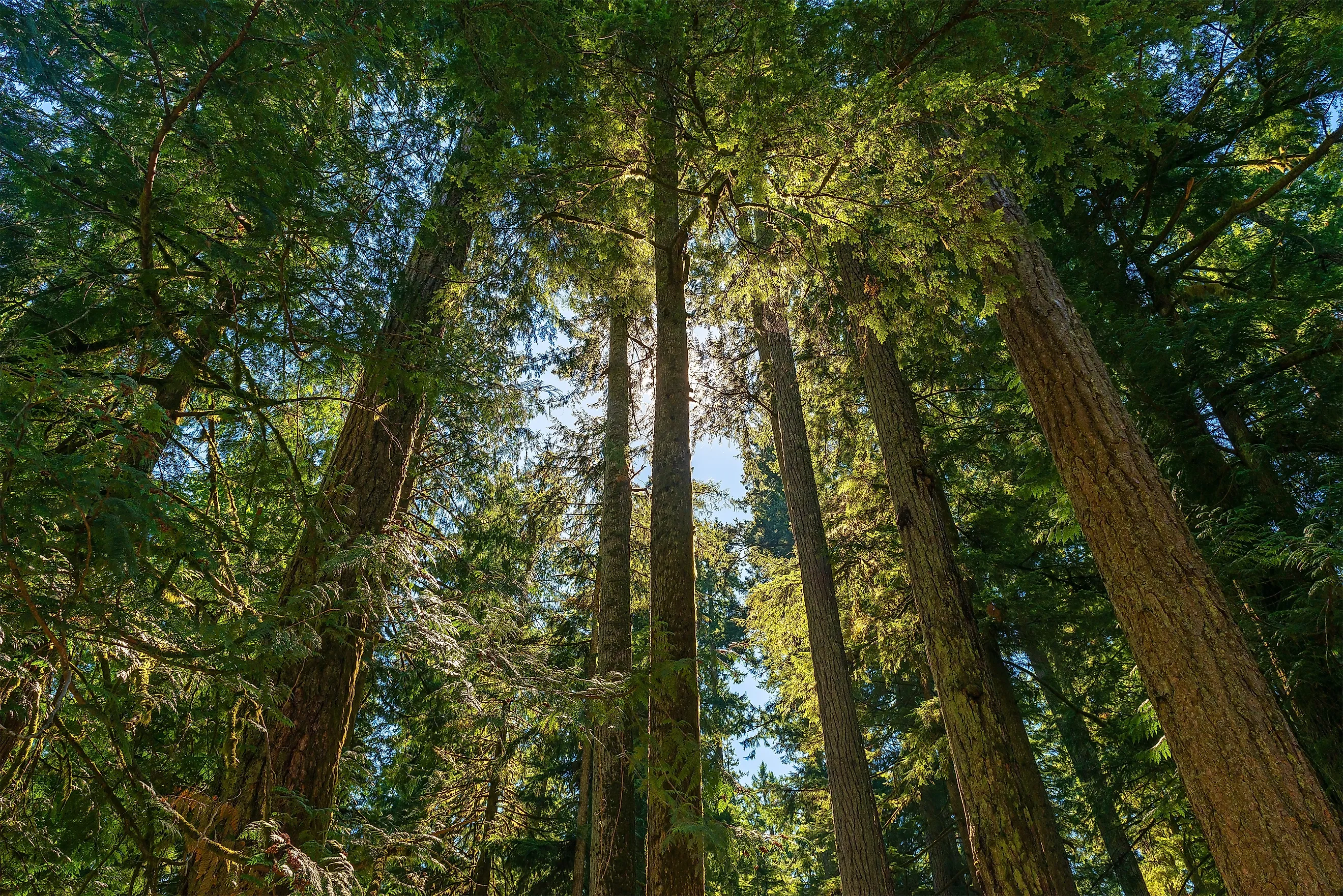
Dense old-growth forest in Olympic National Park, Washington. Credit: Galyna Andrushko/ Shutterstock.comDense old-growth forest in Olympic National Park, Washington. Credit: Galyna Andrushko/ Shutterstock.comThe coastal variety of Douglas-fir (Pseudotsuga menziesii var. menziesii) represents some of the tallest trees on Earth, and ranges from central California through central British Columbia.
Coastal Douglas-fir trees can grow 100 feet or more taller than their inland counterparts due to evolutionary adaptations and conditions unique to their environment that allow them to reach the maximum biological limit of their variety's height. These unique conditions that support the growth of massive trees include coastal moisture, temperature stability, and soil composition.
The Coastal Moisture and Fog

To grow into 250-foot or more giants, coastal Douglas-fir trees need to retain a significant amount of moisture throughout the year to sustain their growth. These massive trees require annual precipitation ranging from 40 to 100 or more inches per year.
The central and northwest U.S. West Coast, where towering Douglas-firs thrive, maintains the required rainy conditions from November through April. For the remainder of the year, dense blankets of fog roll in from the coast, allowing the trees to retain moisture even without the consistent Pacific storms of the wet season.
The moisture provided by that thick fog allows the soil and tree branches to retain much more water than they would otherwise during the dry season. In Point Reyes National Seashore in California, for example, rainfall in the fir forests averages about 40 inches, but total moisture can exceed 80 inches when counting fog drip captured by the tree boughs. Trees here commonly grow up to 250 feet and some of the old-growth specimens are over 300 years old.
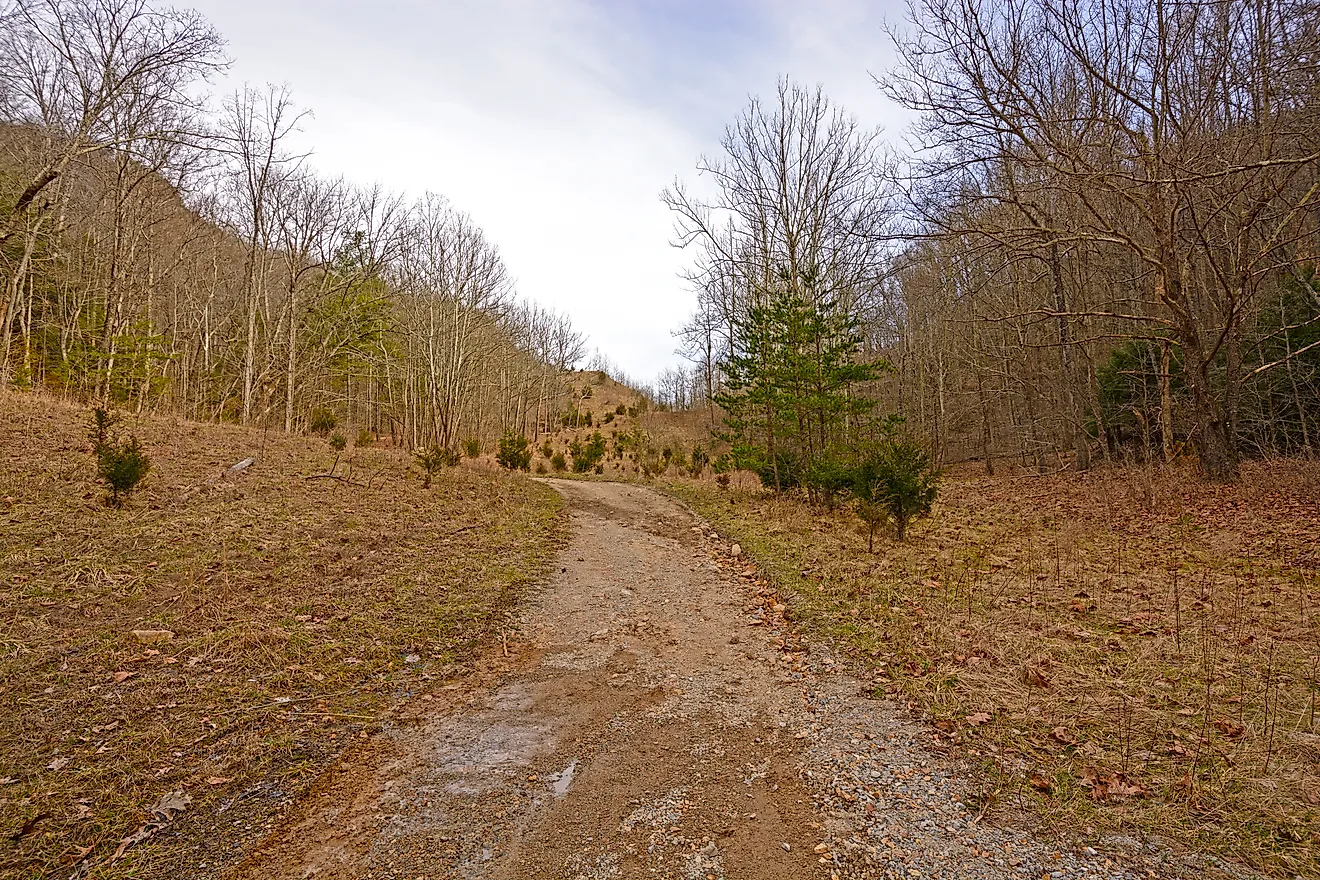
In contrast, inland Douglas-fir trees are adapted to periods of extreme drought. While they have evolved over millions of years to survive and even thrive in these conditions, their growth can be stunted as a result and the reduced moisture intake translates directly to a shorter ceiling on their maximum growth.
The Soil Composition

Coastal Douglas-firs also reach their greatest heights on the West Coast due to the favorable soil composition they grow in. Within their growing range, the soil composition is fine-textured, well-draining, and consists of marine sandstone and shale, and sandy loam.
The coastal soil also contains high amounts of organic matter, which allows the trees to absorb the nutrients they need for rapid growth. The average soil pH is moderately acidic at 5.0 to 6.0, falling right within the Douglas-fir's optimal range.
This soil composition allows for the young trees to establish deep tap roots to draw significant amounts of water and nutrients that later form into massive root systems. Once they reach about 20 years old, these trees experience their fastest and most rapid growth spurt, often averaging 24 inches per year of additional height, a growth that is well supported by the well-draining and nutrient-dense soil. By about 100 years, their growth tends to slow significantly to about six inches per year.
Mild Coastal Temperatures

Along their coastal range, Douglas-firs face milder winters than their inland relatives, with fewer and shorter spells of freezing weather. For this species, root and cambial activity stalls when soil temperatures drop below about 41 degrees Fahrenheit, so a winter that stays above that line for longer stretches means a longer working year.
Without a hard cold-weather constraint, coastal Douglas-firs experience a growing season that typically runs from the first of May through the end of October. Inland Douglas-firs are exposed to temperatures that drop below this 41-degree threshold for far longer each late fall and winter. They have evolved to survive these conditions, but remain dormant for longer periods of the year and can suffer damage from below-freezing temperatures that stunt and slow down their growth.
Water Intake Sets Their Biological Limit
Researchers have found that the reason these giants eventually stop climbing is that they simply cannot pull water any higher. Their internal water transport system consists of cells called tracheids, connected by bordered pits that act as valves, allowing water to flow between them and upward into the canopy of the tree.
As the tree grows taller, those pits must narrow to guard against embolism, and that same narrowing makes them less efficient at moving water. Air bubbles intrude and block the flow.
A 2008 study of Douglas-fir xylem put the resulting ceiling for this species at roughly 453 feet, while earlier work on coast redwoods estimated a general maximum of about 400 to 427 feet. Trees approaching these heights frequently experience dieback and breakage at the very top, where water access is most marginal. Growth finally stops and the biological limit is hit.
Coastal Adaptations for Massive Growth

Unlike the shallower roots of their inland relatives, coastal Douglas-firs establish a thick, deep, and intertwining network of roots that support their massive height, pull in more nutrients, and soak up vast amounts of water. This widespread root system is also able to anchor deeply into rocks, crevices, and far beneath the earth to act as a counterweight to a tree topping out at over 300 feet.
During their extended growth season, they not only grow upwards but develop significant girth, with some trees measuring over 15 feet in diameter. With this girth comes thick, strong bark that is especially resistant to low-intensity fires, contributing to their ability to continue growing year after year.
Coastal Douglas-firs regularly live over 500 years, and the oldest specimens exceed 1,300, while inland Rocky Mountain Douglas-firs usually do not surpass 400. However, due to mass logging operations of the past three hundred years, there are very few coastal individuals that remain over 500 years old or that surpass 300 feet.
The tallest known living example is the Doerner Fir in Coos County, Oregon, measured at just under 326 feet in 2022. Taller trees existed before the saw reached them with the best-documented Washington's Mineral Tree at 393 feet when it fell in 1930, and felling-era accounts describe Douglas-firs of 400 feet and more, though those measurements remain disputed.
Some tall individuals persist in Olympic National Park, where average rainfall ranges between 100 to 170 inches and the soil is packed with organic material, creating near-perfect conditions for giant Douglas-firs.
Douglas-firs: The Coastal Giants That Outgrow Their Inland Relatives
The remarkable growth of the coastal Douglas-fir is a direct result of their environmental conditions and evolutionary adaptations. When consistent moisture in the form of rainfall and fog, mild winters, and favorable soil conditions come together, these trees can grow into some of the tallest organisms on Earth. Protecting the few remaining old-growth coastal Douglas-fir stands ensures that these ecological marvels can persist into the centuries ahead.