Why Redwoods Only Grow In One Part Of The World
It is mind-boggling that out of the earth's 57 million square miles of land, redwood trees grow along just 3,438 square miles of coastline, a narrow band beginning in Northern California and ending just past the Oregon state line. This was not always the case, however. The eastern US has fossil evidence of redwoods having grown there millions of years ago, as well as in Canada, Greenland, and the Arctic. Changes in climate and topography through the millennia robbed those areas of the specific environmental elements redwoods need to grow and thrive, leaving this patch along the Pacific Ocean the sole spot in the world where redwoods still grow.
Three Species of Redwoods

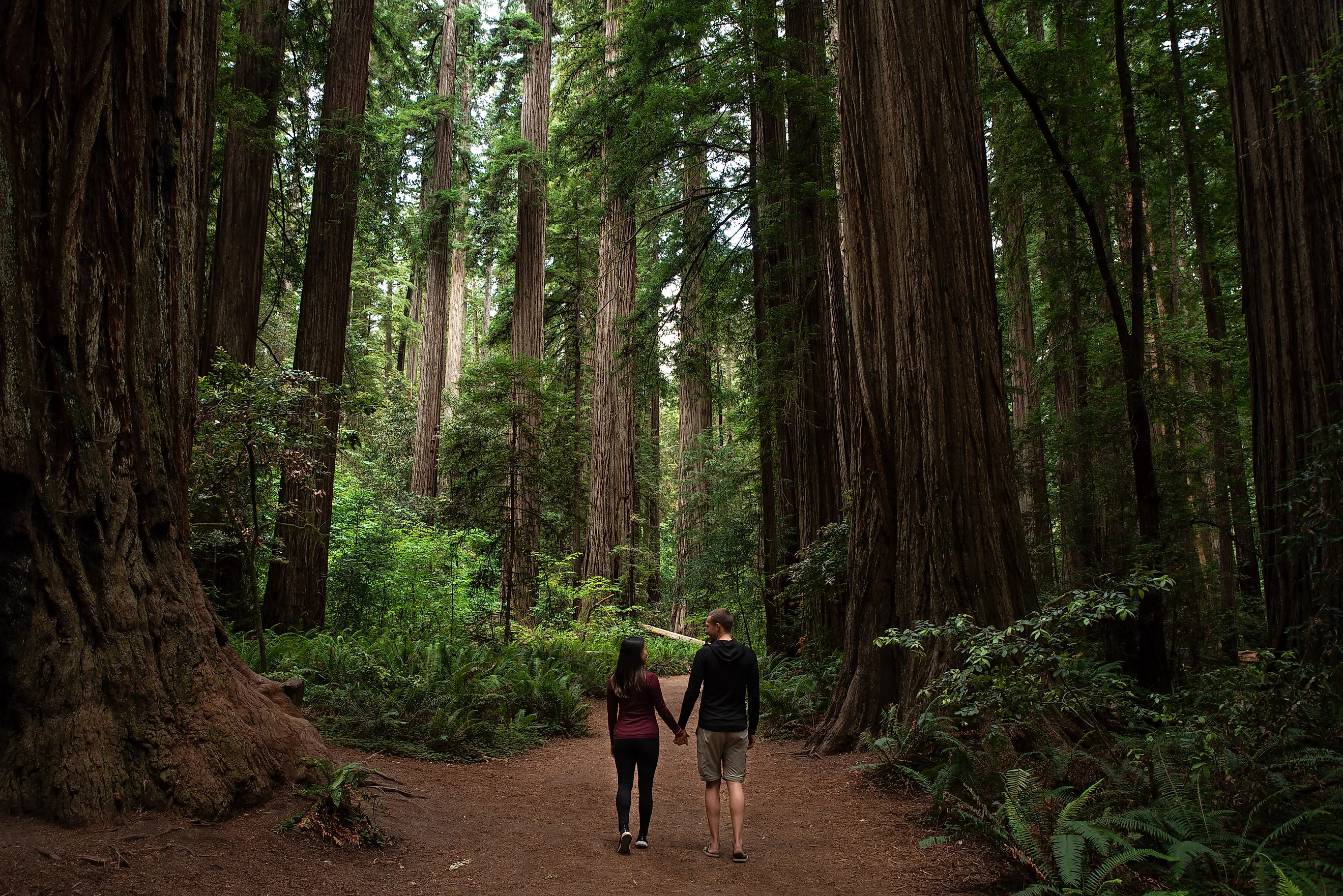
When people talk about redwood trees, they typically mean the 300+-feet-tall trees near the Pacific coast. They are primarily in central and northern California's Redwood National and State Parks (RNSP), plus a smaller amount in southwest Oregon. These are known as coast redwoods, often referred to simply as redwoods. Giant sequoias are also a type of redwood tree, but these trees are only found on the slopes of California's Sierra Nevada mountains. Giant sequoias grow to be between 164 and 279 feet tall. They are typically shorter than redwoods, but their massive trunks can have diameters ranging from 20 to 26 feet.
The third species is the dawn redwood, which was thought to be extinct until it was discovered in Sichuan and Hubei Provinces in China in the 1940s, according to Save the Redwoods League. The Chinese shared the trees' seeds with other botanical gardens, and today, dawn redwoods are found all over the world. These redwoods are deciduous; their green needles turn copper-orange in the fall before dropping to the ground.
Heavy Rain and Fog Create Humidity

Rainfall is heaviest in the winter along the Northern California coast, but also occurs in fall and spring, making the area's rainfall average 25 to 122 inches annually, according to the University of California Agriculture and Natural Resources. While this makes for a humid environment, redwoods need more than rain to survive. The problem is that their shallow roots are a maximum of 10-13 feet deep. Since the trees, the tallest in the world, can grow to over 300 feet, moving water from the soil against gravity all the way to the top is difficult.
Instead, redwoods rely on the dense fog from the Pacific Ocean to provide the necessary moisture. Particularly during the summer, when temperatures climb and the area becomes dry, fog creeps in from the ocean. As fog coats the trees' green leaves, even at the very top, it drips to the forest floor, providing about 40% of the trees' moisture intake, according to the National Park Service (NPS).
Conditions Unlike Anywhere Else on Earth

While redwoods once covered much of North America, scientists believe ice ages and glacial activity caused redwoods to be wiped out in these other locations over millions of years. Other factors probably contributed to the changes as well, including variations in the Earth's orbit, tectonic shifts from earthquakes, and volcanic eruptions that caused lava to coat the ground, destroying plants and trees in its way.
To grow and thrive, redwood trees need an area of moderate to heavy rainfall, with moist soil and air, or alternative ways to produce moisture. Coast redwoods in California and Oregon use the area's dense fog for moisture, especially during the dry season. This gives them enough water, even high up in the tree. Due to their immense size, they also breathe out moisture, as much as 500 gallons a day, creating their own fog.
Unusual Natural Features Protect the Trees

Although redwoods have shallow root systems, the roots stretch out as much as 100 feet sideways, connecting to other redwoods to form a mutual support system, the NPS explains. The trees themselves are protected by their massive width, which can be over 20 feet across, and bark as much as 12 inches thick. This fibrous bark also provides resistance to fire, which is one reason why redwood trees were so popular in home construction.
The bark as well as the inner layers are rich with tannin, which gives the trees their reddish color. Insects do not like tannin, however, so they are not attracted to redwood trees. Instead, insects seek out other conifers that produce sticky resin, which redwoods do not. It may be shocking to learn that massive redwoods can grow from a seed about the size of a tomato seed. The trees are also able to sprout, and are more likely to grow from sprouts around the base of the tree.
Fossils and other scientific evidence show that redwood trees existed millions of years ago from the Arctic Circle to Canada and across the US to the East Coast. Although scientists debate the possible reasons they disappeared from most of these regions, the consensus is a combination of glaciers and ice ages, earthquakes, and volcanic activities that killed numerous plants and trees in their path. The resulting climate and topography changes made most of these areas unsuitable for redwoods, except for the patch of inland terrain in California and southwestern Oregon. The moist soil, moderate climate, and fog that rolls in from the ocean remained the only place where redwood trees could continue to grow and flourish for many more millions of years, to the present time and into the foreseeable future.