The National Forests With The Most Moose
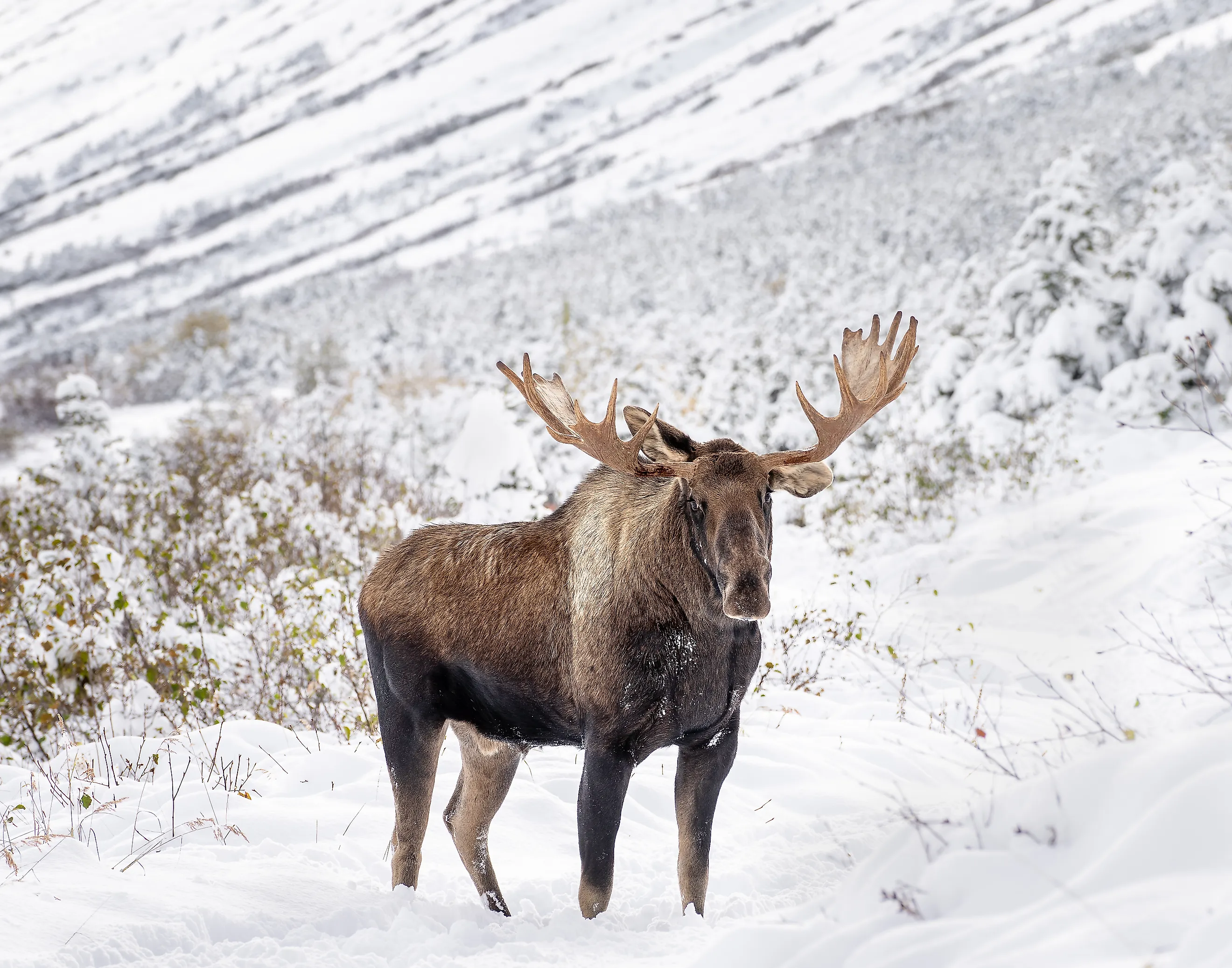
Alaska holds between 175,000 and 200,000 moose, which is more than every other state combined several times over, so the answer to this question is decided before the lower 48 gets a turn. The Chugach and the Tongass sit inside that population and have no meaningful competition. What is more interesting is what happens further south, where the national forests that still have good moose numbers tend to be the ones with a lot of young, recently disturbed forest, and the ones losing moose fastest tend to have neither. Moose are not a wilderness animal in the way people assume. They are a cut-over-country animal, and the forests that reflect that are the ones with animals in them.
Here are the forests that hold them, and the counterintuitive reason the healthiest herds are often found in the busiest woods rather than the most protected ones.
Chugach National Forest, Alaska

The Chugach covers much of the Kenai Peninsula and the country around Prince William Sound, and it sits in the middle of the densest moose habitat in the United States. Alaska's statewide population of 175,000 to 200,000 animals means that a single state holds well over half of all the moose in the country.
Alaska is also the one place where the population is growing rather than shrinking, and the reason is the same warming that is hurting moose everywhere else. Rising temperatures have allowed the shrubs moose browse on to expand northward, opening new range rather than closing it, which is a genuinely unusual case of a species benefiting from the thing killing its southern relatives.
The Kenai in particular is famous for roadside moose, which is less charming than it sounds given what a collision with an 1,800-pound animal does to a vehicle.
Tongass National Forest, Alaska

At roughly 17 million acres the Tongass is the largest national forest in the country, about the size of Ireland, and it holds moose across the mainland river valleys of Southeast Alaska rather than evenly throughout.
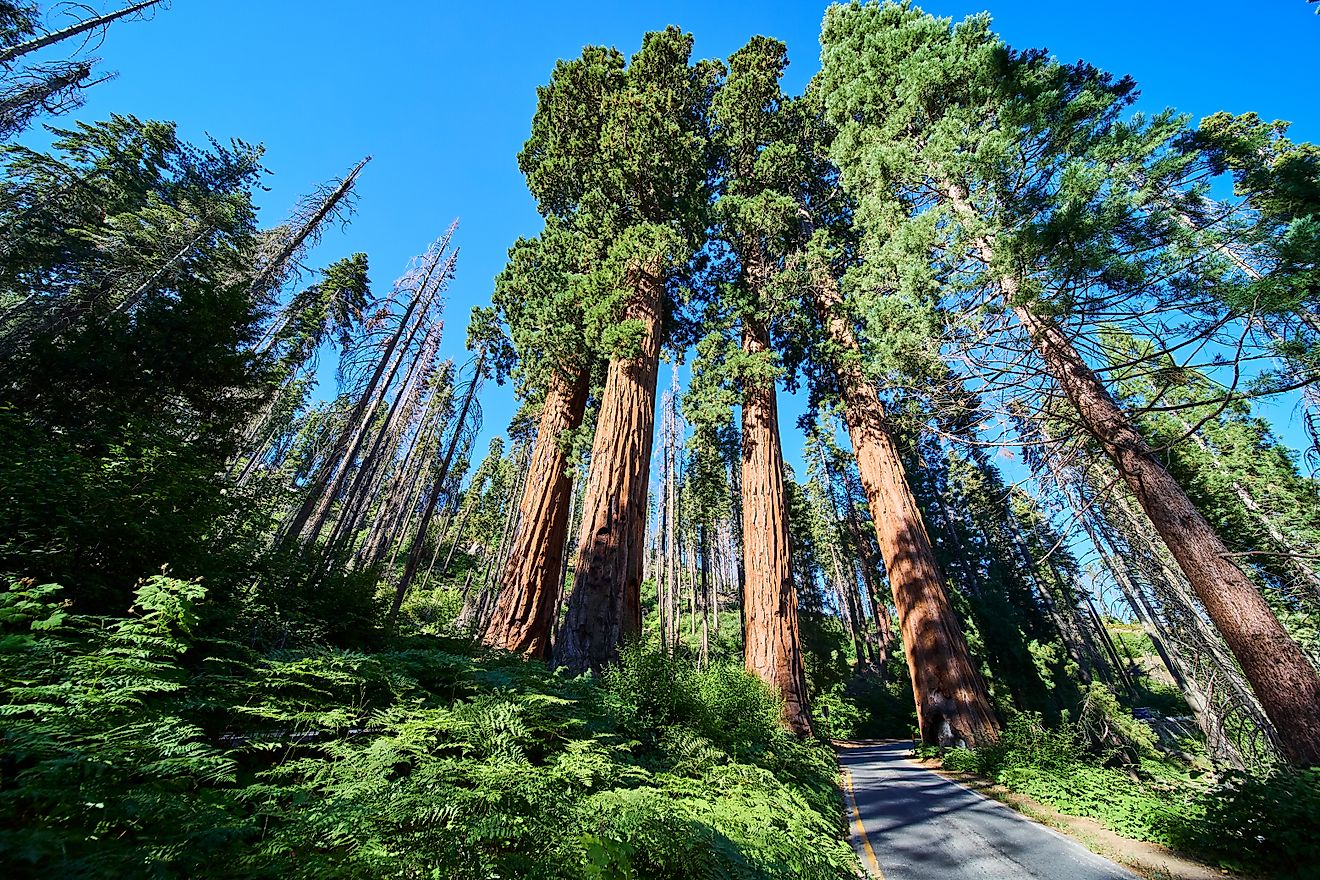
The distribution here is uneven in a way that matters for anyone actually looking. Moose concentrate in the river bottoms and estuary flats rather than in the old-growth rainforest that the Tongass is known for, because a closed canopy of ancient hemlock and cedar produces almost nothing a moose can eat.
That pattern is the whole argument of this article in miniature. The famous part of the forest, the towering old growth people fly in to see, is the part without the moose in it.
Superior National Forest, Minnesota

This is the most significant moose forest in the lower 48 and the one with the most troubling recent history. Minnesota's moose live almost entirely in St. Louis, Lake and Cook counties, which is Superior National Forest country. The population crashed from a modern high of 8,840 animals estimated in 2006 to just 2,700 by 2013, a fall of nearly 70 percent in seven years. The figure most often quoted is a 60 percent decline since 2006, which reflects the partial recovery since that low point.
The most recent aerial survey, conducted by the Minnesota DNR with the Fond du Lac Band of Lake Superior Chippewa and the 1854 Treaty Authority, put the figure at approximately 4,470, up about 400 on the previous year. The population has stabilized well below where it was and the agencies are careful not to call it a recovery.
What Is Killing Them

Two parasites do most of the damage, and both are being helped along by shorter winters. Winter ticks attach in their tens of thousands to a single animal. A University of New Hampshire study that radio-collared 179 moose calves found only 54 alive three years later, with more than 40,000 ticks counted on each dead calf, causing emaciation and severe metabolic imbalance from blood loss. Infested moose rub their hair off trying to remove them and then cannot stay warm.
The second is brainworm, Parelaphostrongylus tenuis, carried by white-tailed deer and passed through snails. It is harmless to deer and usually fatal to moose, which means moose decline wherever deer densities rise, and deer densities rise as winters soften.
In one recent year roughly 30 percent of the moose in Minnesota and the Grand Portage area died. A population losing a third of itself annually does not need any additional pressures to be in trouble.
White Mountain National Forest, New Hampshire And Maine

This is the main moose forest in New England, straddling the New Hampshire and Maine line, and it holds another population in decline. New Hampshire's moose have fallen by more than 40 percent in a decade, from over 7,500 animals to roughly 4,000, and biologists attribute much of that to parasite loads driven by shorter winters. A University of New Hampshire biologist has described three consecutive years of high tick infestation and calf mortality as the best available evidence of climate change affecting the species.
The forest itself remains excellent moose habitat, which is the frustrating part. The problem is arriving on the animals rather than in the woods.
Maine Is The Exception Nobody Can Visit

Maine holds an estimated 60,000 to 70,000 moose, more than all the other lower 48 states put together, and the population has held up comparatively well while its neighbors have declined.
The frustrating part for this particular article is that Maine has almost no national forest. Only a small portion of the White Mountain National Forest crosses the state line, so the largest moose population in the contiguous United States sits almost entirely on private timberland and state holdings rather than federal forest.
That is not a coincidence, and the reason for it is the most useful thing in this article.
Why Logging Created The Moose

Maine's moose boom has a specific and well-documented cause, and it was not a conservation program. In the late 1970s a spruce budworm outbreak tore through Maine's forest, and timber companies responded by stepping up logging to salvage the dying timber. The result, in the words of University of New Hampshire biologist Pete Pekins, was moose nirvana: an enormous flush of young regenerating forest exactly when moose needed it, producing a population explosion that swept out of Maine into New Hampshire, Vermont and briefly into Massachusetts.
Moose browse on young growth. They need shoots, saplings and shrubs at head height, which is what you get in the first fifteen or twenty years after a stand is cut, burned or blown down. A mature closed-canopy forest is, from a moose's perspective, a food desert with excellent shade.
Which Is Part Of Minnesota's Problem

The Forest Service's own research on the Minnesota decline lists maturing forests with less available food alongside heat stress and deer contact as contributing factors. That is a habitat problem rather than a parasite one, and it is the part managers can actually do something about.
That puts land managers in an awkward position. The forests where moose are struggling include large protected areas where the stands are allowed to grow old, and old stands feed fewer moose. Meanwhile the forests where moose are thriving are often the ones under active timber management.
None of that makes logging a conservation program. It makes moose a species whose numbers track disturbance, and disturbance arrives equally well from a chainsaw, a fire, a windstorm or an insect outbreak.
The Western Forests

Moose occupy a scatter of Rocky Mountain forests at much lower densities than the north woods, and the Colorado population is the interesting one because it should not be there at all.
Moose were introduced to Colorado in the late 1970s and the state now holds roughly 3,000, concentrated in the willow bottoms of North Park and the forests around it. They are thriving while native populations further east collapse, which is largely a function of low deer-borne brainworm exposure and cold dry winters that suppress ticks.
Wyoming, Idaho and Montana forests hold moose in similar willow and riparian habitat, again at low density and again concentrated along watercourses rather than spread through the timber.
The Honest Ranking

By raw numbers it is the Alaskan forests and it is not close. The Chugach sits in the densest moose country in the United States, and the Tongass holds them across its mainland river valleys.
In the lower 48 the answer is Superior National Forest in Minnesota, with a population that has halved and then partly steadied, followed by the White Mountain National Forest in New England, also well down on where it was.
And the genuinely useful point is the one about habitat. Moose numbers in any given forest depend less on how protected it is than on how much of it has been knocked down recently, which is an uncomfortable finding for everyone and is nonetheless what the animals keep demonstrating.