The National Parks With The Best Chance Of Spotting A Moose
One of the draws of our nation's national parks is the chance to observe wildlife in its natural habitat. Predators such as bears and wolves might be nice to see at a distance but knowing they are meat eaters can leave you a bit fearful. Moose seem to be a safer bet since they are strict herbivores, but their sheer size and ability to move quickly make them just as much of a potential danger. The good news is that moose do not attack for no reason, and as long as you do not provoke or corner them, you can observe them relatively safely. Do not get between a mother and her offspring, and another word of caution with moose is to keep your dog inside as moose have been known to attack dogs because they view them as predators like they do wolves. The key is to keep a safe distance from any wild animal, and since moose do not live in every national park, it helps to learn the best ones to spot them as you plan your trip.
Grand Teton National Park in Wyoming

Moose aren't the only reason to visit Grand Teton National Park. Located in the northwest area of Wyoming, this 310,000-acre national park offers beautiful lakes and rivers, views of the Teton Range, and a very large density of wildlife of various types. Choose any of the more than 200 trails, including both casual ones and more challenging ones, and you're likely to see moose, as well as potentially bison, elk, grizzly bears, gray wolves, black bears, and pronghorn. The moose population was estimated at between 400 and 500 in the Jackson Hole valley in the past. However, the number has dropped lately to just under 300 largely due to harsh winters, predator pressure, habitat degradation, and parasites. Furthermore, it is likely the estimates are more accurately determined now than in the past as well.
Rocky Mountain National Park in Colorado

Those looking for a higher elevation will likely choose Rocky Mountain National Park. Its 415 square miles are so high that a third of it is above the tree line. There are 350 miles of trails to investigate. The moose population stands at about 240, which is roughly 50% higher than it was five years ago. There is some concern that the boom in population could cause trouble for the wetland habitat, but as of yet, nothing has been done to reduce or limit the moose population. So, for now, you still stand a pretty good chance of spotting a moose in Rocky Mountain National Park.
Isle Royale National Park in Michigan

One of the risks that moose around the world experience is incidents with vehicles. However, this is not a concern at Isle Royale National Park since this park is a car-free wilderness. The park consists of one large island and 400 smaller ones. What is fascinating about Isle Royale National Park is that it's the location of the Isle Royale Winter Study which since 1958 has been observing how wolves and moose interact. The sad thing about this park is that the moose population has been plummeting in recent years. It was over 2,000 around 2019, but the latest completed survey put it at about 840. This is attributed in part to the surge in the wolf population over the same period. There has also been a serious calf survival problem. In fact, none survived in the last birthing season which has never happened before. So, while this park is on the list as one to visit for moose sightings, spotting one is going to be more challenging than in prior years.
Denali National Park in Alaska

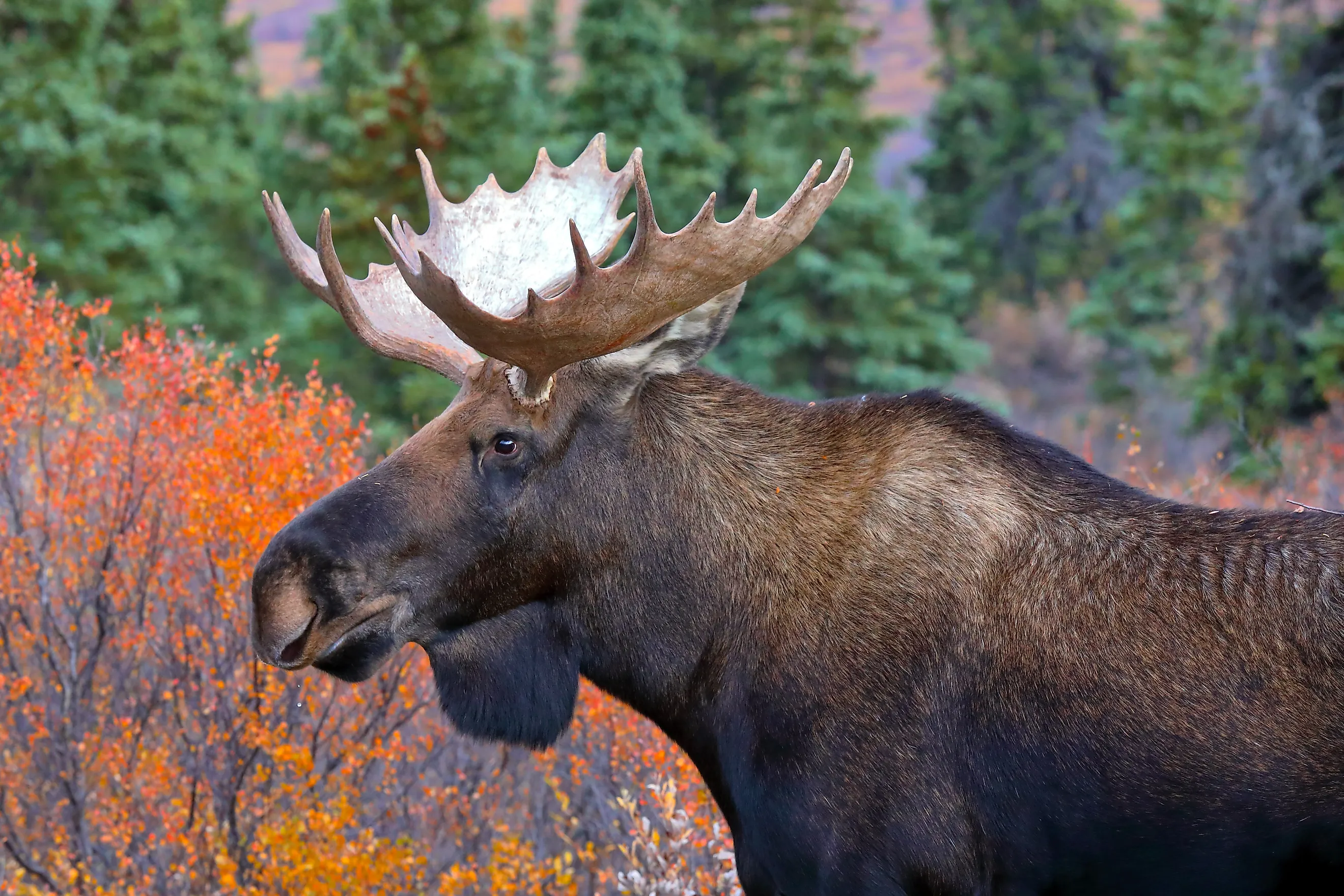
Denali National Park has between 1,800 and 2,000 moose spread over its six million acres. The thing that makes this park special is that it is home to the Alaska moose which is the largest moose subspecies. These magnificent creatures can weigh more than 1,400 pounds and have antlers measuring six feet across. One might think spotting a moose in such a large park would be unlikely, but the moose here consistently bring their calves to graze beside a 15-mile section of the main road, Denali Park Road. This area has a lot of willow trees which seem to be a favorite of moose.
Glacier National Park in Montana

While Glacier National Park is known for being the park with the highest density of grizzly bears of any of the lower 48 states, it also has a stable population of moose. The moose here are more solitary so it is less likely to see a full herd. To improve your chance of spotting a moose in this park, head to Many Glacier Valley. There are approximately 100 to 150 moose in Glacier National Park. Besides spotting moose, this park provides more than 700 miles of hiking trails and 25 active alpine glaciers.
A Final Word on Moose Watching
Whether exploring glacial lakes, expansive tundra, delicate wetlands, or mountain valleys as the backdrop to your moose viewing endeavor, nothing compares to watching wildlife in its own habitat. The first time you lay eyes on one of these grand animals will be something you'll never forget. The fact that we have national parks that give moose and other animals the opportunity to live without fear of hunters is something we can all be proud of.