The Last American Chestnuts Left Standing
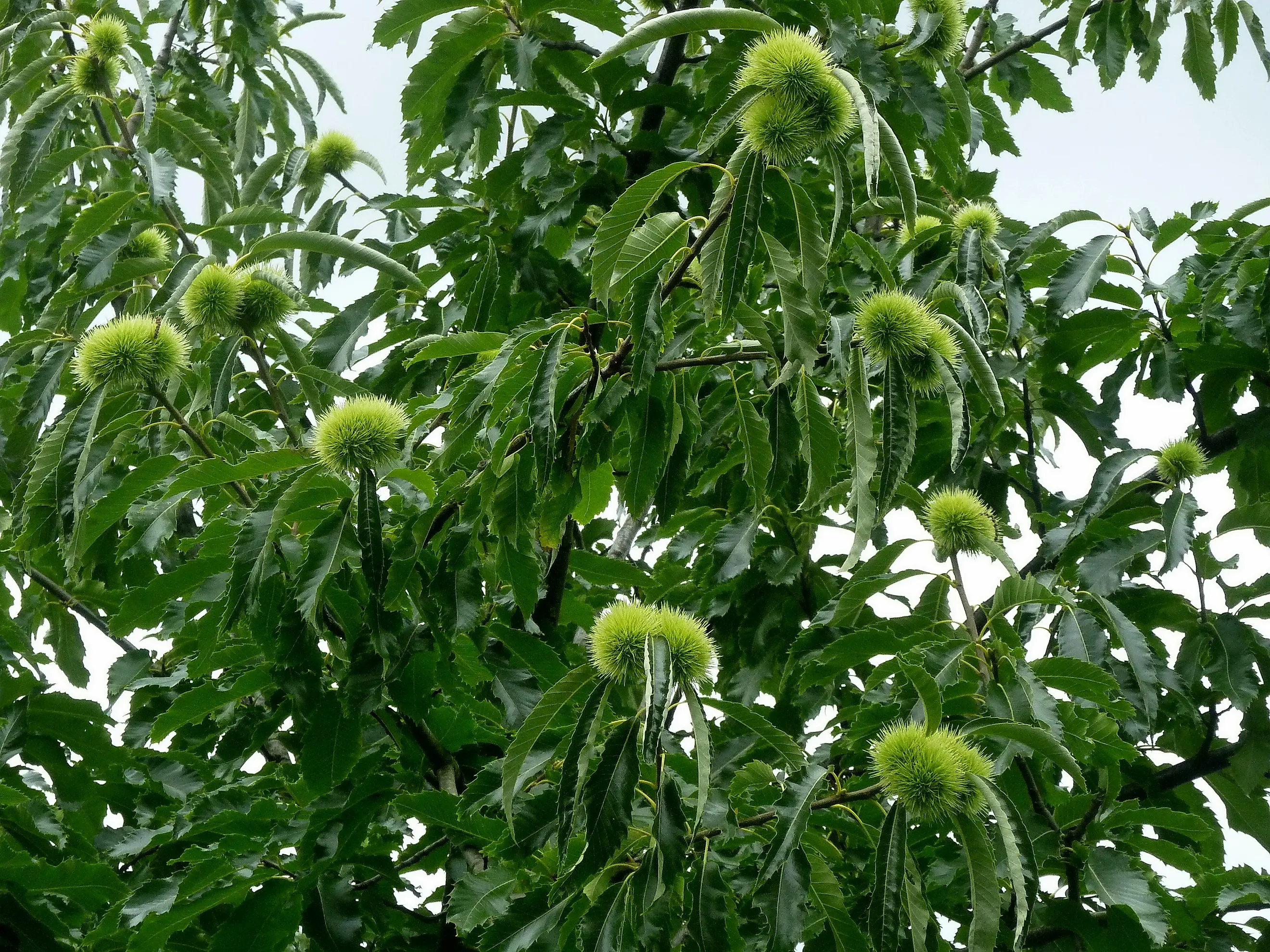
An old saying suggests that a squirrel could travel from Maine to Florida along an unbroken American chestnut canopy without touching the ground. Before 1904, about four billion of these trees existed in eastern forests, constituting 40 to 50 percent of the canopy in some areas and nearly a third of Pennsylvania’s woods. They reached 100 feet in height, had a trunk nearly ten feet in circumference, and produced heavy nuts annually, unlike oaks which have boom-and-bust cycles. Within approximately forty years, an imported fungus wiped out almost all of them, marking one of the most drastic changes ever seen in a natural plant population, according to plant pathologists. Remarkably, the species is not extinct, and a few mature trees still survive. Here, I will explain where they are, why they managed to survive, and what ongoing efforts are underway to restore the species.
How It Happened

The blight fungus, Cryphonectria parasitica, was first observed in 1904 at the Bronx Zoo in New York, almost certainly arriving on imported Japanese chestnut stock. Asian chestnuts had evolved alongside it and were tolerant. American chestnuts had no defense at all.
The mechanism is simple and total. The fungus attacks the cambium, the thin living layer just under the bark, and produces sunken cankers that expand until they girdle the trunk. Everything above the canker dies. It spread through the eastern forest in roughly four decades, killing between three and four billion trees.

The ecological impact extended beyond the trees. At least seven moth species that relied solely on chestnut feeders went extinct. Early twentieth-century reports detail collapses in squirrel populations, and likely affected turkeys, deer, and other nut-eaters as well, because the chestnut's consistent annual mast supported the entire ecosystem in a way that acorn boom-and-bust cycles never did.
Why It Is Not Actually Extinct
The fungus cannot infect the roots due to soil microorganisms that outcompete it underground. When the trunk dies, the root system survives and produces new sprouts. These sprouts grow strongly in sunlight, sometimes reaching about twenty feet, become infected, and then die back. The roots then produce new sprouts again. Currently, millions of American chestnuts live in eastern woods, continuously sprouting and dying, which is why they are considered functionally extinct rather than fully extinct. They continue to survive, but they cannot reach reproductive maturity or perform their original role in the canopy.
Hikers on the Appalachian Trail walk past them constantly without recognizing them, because a chestnut that never gets above sapling height does not look like the tree in the photographs.
West Salem, Wisconsin

Interestingly, the largest stand of mature, genetically pure American chestnuts in the world isn't found in Appalachia. Instead, it's located on farmland in western Wisconsin, thousands of miles outside the tree's natural range. Back in the 1880s, a settler named Martin Hicks planted about eight or nine chestnut seedlings, supposedly sent from Pennsylvania, along a fencerow. Squirrels played their part in spreading the trees. By the 20th century, this planting grew into a forest of around 2,500 trees. Thanks to its location so far from the infected east, it remained untouched by the blight for many decades.
That protection eventually fell short. Blight reached the stand and took hold, transforming West Salem from the largest uninfected population into the most carefully studied one instead. The American Chestnut Foundation now manages a roughly 90-acre area across two family farms, where each year, scientists from the University of Wisconsin-La Crosse, Michigan State, and West Virginia University visit to sample and treat the trees.
They are exploring hypovirulence, a virus that infects the blight fungus and weakens it enough for a tree to isolate the canker and survive. This approach has been successful in Europe. However, in North America, spreading it across a population has proved much more challenging, and West Salem stands as the best natural testing ground for understanding why.
The Scattered Survivors

The common thread among almost every mature survivor is their distance. Trees planted west of their natural range by settlers who brought nuts with them are the ones that have endured. In the Longenecker Horticultural Gardens at the University of Wisconsin Arboretum in Madison, four mature chestnuts continue to thrive and remain clean. Other stands planted elsewhere in California, Washington, and Oregon also survive. Strict restrictions on shipments of chestnut material from the east are in place specifically to preserve this. Within the native range, isolated large trees still occasionally appear, including a well-known survivor in Adair County, Kentucky. These trees are often found because someone reports them, and they are incredibly important to breeders—since a mature tree that has survived in blight-affected regions for decades could carry valuable traits worth breeding for.
Three Ways To Beat The Blight

Three methods have been pursued in parallel for decades, and they work in completely different ways.
Backcross breeding has been around the longest. It involves crossing an American chestnut with a blight-resistant Chinese chestnut, then repeatedly breeding the hybrid back to a pure American chestnut. During this process, only the offspring that resist infection are kept. After several generations, you end up with a tree that is mostly American but still carries some Chinese resistance. The challenge is that because resistance is influenced by many genes, it becomes weaker with each backcross.
Hypovirulence specifically targets the fungus instead of offering protection to the tree. It involves a virus infecting the blight, which weakens it enough for a chestnut to fend off the canker and endure. This approach has been part of the West Salem work, and it has seen notably more success in Europe compared to North America.
Transgenics is an exciting new development! Researchers have introduced a wheat gene that produces oxalate oxidase, an enzyme that breaks down the oxalic acid the fungus secretes to kill living tissue. While the tree may still be susceptible to infection, it no longer succumbs to it as easily, offering new hope in protecting our trees.
The Transgenic Tree Fell Apart
The engineered chestnut, known publicly as Darling 58, was the approach closest to federal approval and the one that got the headlines.
In October 2023, a lab error was discovered at the State University of New York College of Environmental Science and Forestry. The trees used in the field trials weren't Darling 58 as initially thought—they were actually a different line called Darling 54. This mix-up might go back to 2016, which means that years of trial data were describing the wrong tree.
On December 8, 2023, the American Chestnut Foundation decided to withdraw its support after about ten years of working together. Their concerns went beyond just the labeling mistake; they also pointed out issues with the trees themselves, including inconsistent blight resistance, a missing gene, slower growth, and lower survival rates compared to their non-engineered siblings.
SUNY-ESF disagreed and continued its efforts. It submitted a corrected petition to deregulate Darling 54, and the USDA's initial assessment indicated that the tree probably does not present a higher plant pest risk than a natural chestnut. The review remains ongoing.
There is a third objection that is not technical at all. Several Indigenous organizations have opposed releasing genetically engineered trees into forests on food sovereignty grounds, arguing the decision is not solely a scientific one. The dispute over how to bring the chestnut back is now genuinely three-sided, and none of the sides has conceded.
What Comes Next
The American Chestnut Foundation is now focusing on recurrent genomic selection, a technique that uses DNA to identify seedlings with blight resistance early on, instead of waiting years to test them through inoculation. In February 2026, the foundation shared exciting news in a Science paper, led by its science director Jared Westbrook, showing that this DNA-based method can accurately predict resistance in chestnuts. This is a huge step because the biggest challenge has always been the lengthy time needed for breeding—trees take many years to reveal if they survive. Although this breakthrough speeds things up, nobody expects it to be instant. The draft environmental impact statement for the transgenic tree mentions that even in the best case, restoring chestnuts to the wild could still take centuries, since the nuts don’t travel far naturally and would need to be planted intentionally for many decades to come.
What Is Actually Standing

When you add it all up, the remaining mature American chestnuts are like happy little surprises scattered across the landscape. There’s a fencerow in Wisconsin planted by a farmer who loved the nuts, four trees in a Madison arboretum, and some orchard plantings in the Pacific states that settlers carried westward. Plus, a few lone giants inside the native range that, somehow, haven't been found by the fungus. Everything else is just roots, millions of them still sending up shoots into eastern forests that haven't seen a mature chestnut in eighty years. They get girdled at twenty feet but keep trying. Whether we see that as a species surviving or slowly dying is really a matter of perspective. One thing is certain: the tree is still there, underground, patiently waiting for the fungus to be overcome by breeding, biotechnology, a virus, or some yet-to-be-figured-out combination.