These 12 Towns In California's Sierra Nevada Were Ranked Among US Favorites In 2026
Gold Rush camps, lakeside resorts, and desert outposts all share the same mountain range in California's Sierra Nevada. On the west side, old mining camps grew into brick-and-balcony main streets lined with wine rooms and theaters. Up high, resort towns sit beside some of the clearest lakes in the country. On the steep eastern side, desert towns stare up at granite walls that Hollywood made famous. The towns travelers keep returning to in 2026 each pair big scenery with a story or landmark found nowhere else. Every one of them earns its reputation the moment you step out of the car.
South Lake Tahoe

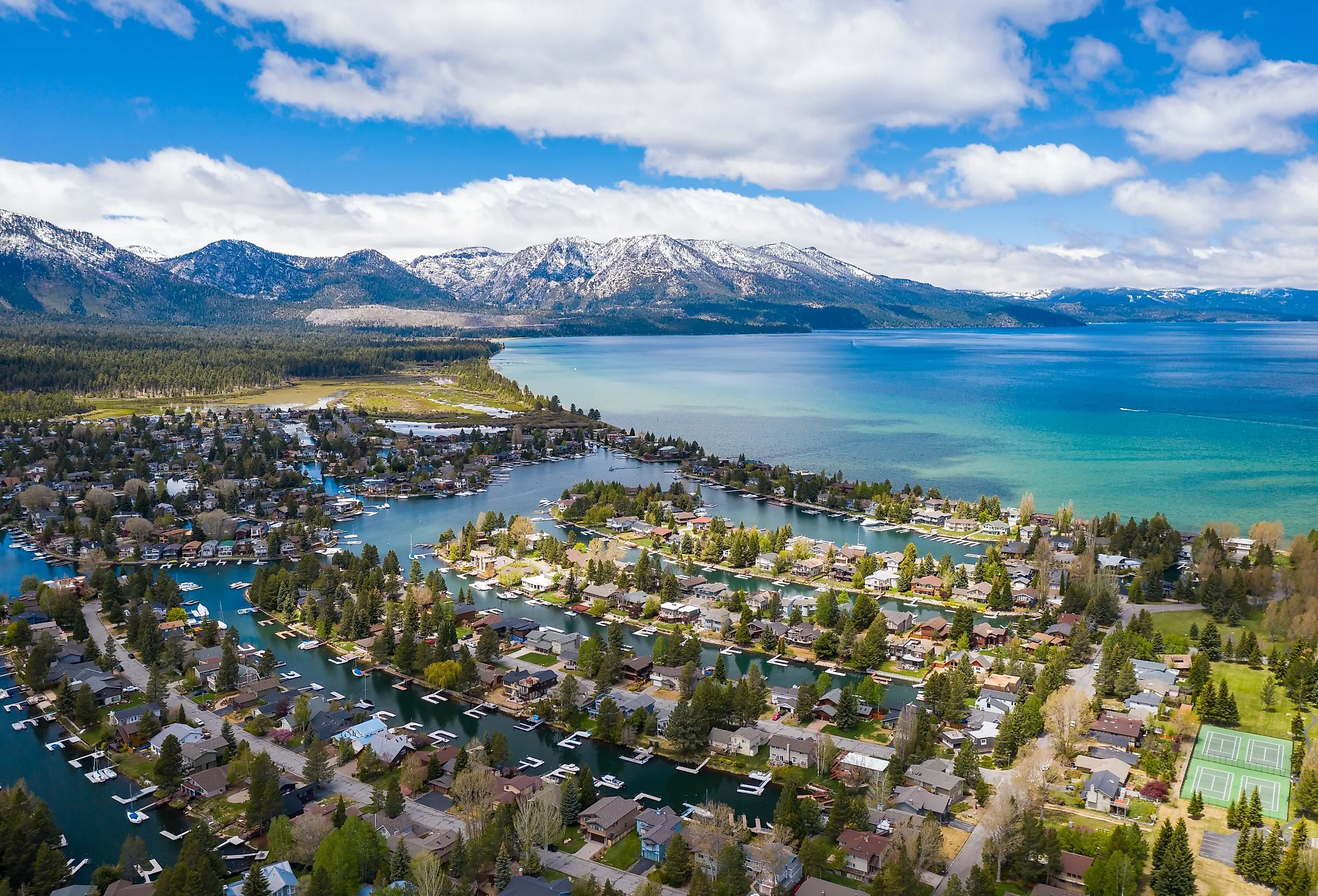
South Lake Tahoe gets the headliner spot for good reason. It sits on the shore of Lake Tahoe, a lake so clear and blue it looks retouched. In summer, beaches, paddleboards, and lakeside bike paths fill the days, while winter turns the slopes above town into one of the West's busiest ski scenes, with a gondola climbing straight out of the city center. A short drive north, Emerald Bay State Park frames the lake's most famous view, and Vikingsholm, a Scandinavian-style mansion completed in 1929, sits at the water's edge below. History lovers can also wander the Tallac Historic Site, where the summer estates of early Tahoe high society still stand among the pines.
Tahoe City

On Tahoe's quieter northwest shore, Tahoe City trades high-rise energy for small-town charm. Its landmark is Fanny Bridge, which crosses the spot where the Truckee River leaves Lake Tahoe beside a historic dam. From there, rafters drift lazily downstream on one of the region's favorite summer floats. The Gatekeeper's Museum, set in a log cabin by the lake, tells the story of the Washoe people and early lake life, while lakeside lawns host summer concerts and farmers markets. Hikers can also pick up the Tahoe Rim Trail, which loops around the entire lake.
Truckee

Truckee looks like an Old West railroad town, because it is one. Commercial Row's historic storefronts face the tracks where trains still roll through, and the Old Truckee Jail Museum is one of the few 19th-century jailhouses still standing in the West. Just west of town, Donner Memorial State Park tells the harrowing story of the Donner Party, the emigrants trapped by snow here in 1846, on the shores of sparkling Donner Lake. One of the snowiest towns in the country, Truckee is a winter sports hub, but summer brings kayaking, mountain biking, and street festivals that fill downtown with music.
Nevada City

Gas lamps, Victorian brick, and a creative spirit make Nevada City one of the best-preserved Gold Rush towns in California. Broad Street is lined with historic buildings, galleries, and cafes, and the Nevada Theatre, opened in 1865, still stages plays and concerts. Outside town, the emerald swimming holes of the South Yuba River draw crowds on hot summer days. The town's cultural calendar is just as busy, from the Wild & Scenic Film Festival each winter to a Victorian Christmas celebration that fills the streets with carolers in period dress.
Placerville

Once known as "Hangtown," Placerville wears its rough-and-tumble Gold Rush past with a wink. Its historic Main Street centers on the Bell Tower, where a bell that arrived in 1865 once called volunteer firefighters to duty. At city-run Gold Bug Park and Mine, visitors can walk deep inside a real hard-rock gold mine. Each fall, the orchards of nearby Apple Hill draw huge crowds for fresh-picked apples, cider, and pies, making Placerville one of the Sierra's most popular autumn day trips.
Murphys

Nicknamed the "Queen of the Sierra," Murphys pairs Gold Rush history with a thriving wine scene. Its tree-shaded Main Street is lined with tasting rooms, galleries, and the Murphys Historic Hotel, which opened in 1856 and once hosted Mark Twain and Ulysses S. Grant. Beneath the hills, Mercer Caverns leads visitors through glittering crystal-filled chambers. A short drive up the highway, Calaveras Big Trees State Park protects towering giant sequoias that rank among the largest living things on Earth.
Sonora

Founded by miners from Sonora, Mexico, this "Queen of the Southern Mines" packs Victorian storefronts, antique shops, and cafes along lively Washington Street. At its north end, the bright red St. James Episcopal Church, built in 1859, is one of the most photographed buildings in Gold Country. The Tuolumne County Museum, set in the town's old jail, fills in the backstory. Just 4 miles (6.4 km) north, Columbia State Historic Park preserves an entire Gold Rush town where stagecoaches still roll down car-free streets, and nearby Railtown 1897 State Historic Park in Jamestown offers rides behind vintage locomotives.
Mariposa

Mariposa is the gateway to Yosemite National Park, but it is far more than a pit stop. Its Mariposa County Courthouse, built in 1854, is the oldest courthouse still in use in California. At the California State Mining and Mineral Museum, visitors can see the Fricot Nugget, a crystalline mass of gold weighing more than 13 pounds (5.9 kg). The town's compact downtown is packed with galleries and cafes, and the drive into Yosemite along the Merced River canyon ranks among the most scenic in the state.
Mammoth Lakes

At 7,880 feet (2,402 m), Mammoth Lakes is a full-blown mountain resort town, and Mammoth Mountain looming above it is the highest lift-served peak in California, with a ski season that can stretch into early summer. When the snow melts, the Lakes Basin opens up a string of alpine lakes for fishing, paddling, and hiking. Nearby Devils Postpile National Monument shows off a striking wall of columnar basalt, formed as lava cooled and cracked into near-perfect six-sided columns. The walkable Village at the heart of town keeps the après-adventure scene buzzing.
June Lake

June Lake may be small, but the scenery around it is anything but. The 16-mile (26-km) June Lake Loop winds past four sparkling lakes, June, Gull, Silver, and Grant, beneath the 10,909-foot (3,325-m) Carson Peak. The village is a favorite base for anglers in summer and skiers in winter, but autumn steals the show, when golden aspens light up the canyon and photographers line the roadsides. Its alpine setting has earned it the nickname the "Switzerland of California."
Bishop

Bishop is the beating heart of the Eastern Sierra, set in the Owens Valley beneath peaks that soar above 13,000 feet (3,960 m). Climbers from around the world come for the bouldering in the nearby Buttermilks and on the Volcanic Tableland, while anglers and hikers head into the mountains west of town. Every Memorial Day weekend, Mule Days turns Bishop into the mule capital of the world, with parades, packing contests, and rodeo events. History buffs can explore the Laws Railroad Museum, a preserved railroad depot and village just north of town.
Lone Pine

Few towns have a backdrop like Lone Pine, where Mount Whitney, the tallest peak in the contiguous United States at 14,505 feet (4,421 m), rises straight above Main Street. Just west of town, the boulder-strewn Alabama Hills have starred in hundreds of films, including classic Westerns and modern blockbusters, and natural rock arches frame perfect views of the Sierra crest. The Museum of Western Film History celebrates that Hollywood legacy, and each fall, the Lone Pine Film Festival brings movie fans to town to tour the famous filming locations.
Why These Sierra Nevada Towns Keep Winning Hearts
Taken together, these 12 towns show off every side of the Sierra Nevada, with Lake Tahoe's blue water at one end and the granite crown of Mount Whitney at the other. Gold Rush streets in Nevada City, Sonora, and Murphys keep history alive, while Mammoth Lakes, June Lake, and Truckee deliver four-season adventure. Together, they prove that California's mountain towns are not just places to pass through on the way to the wilderness. They are destinations in their own right.