11 Welcoming Towns to Retire on the Pacific Coast
The Pacific Coast makes a strong pitch for retirement: mild ocean air, walkable downtowns, and a front-row seat to the sunset most nights. The catch is cost, since the marquee cities run expensive, so the smart move is the small towns, where the same coastline comes with a lower price tag and a tighter community. These eleven, spread across Washington, Oregon, and California, each balance scenery, amenities, and a genuine welcome for newcomers settling in for the long haul.
Port Angeles, Washington

The largest town on the Olympic Peninsula, Port Angeles is the practical anchor of the whole coast up here, home to the regional Olympic Medical Center and the services, shopping, and ferry links the smaller towns nearby lack. It sits on the Strait of Juan de Fuca with Olympic National Park at its back, so glaciers, old-growth forest, and more than 70 miles of wild beach are minutes away, and the waterfront Olympic Discovery Trail is made for easy walking.

For retirees the numbers work: the cost of living runs below the national average and home prices stay well under Puget Sound's pricier markets. The Port Angeles Fine Arts Center and its sculpture garden cover the culture, and a ferry crosses to Victoria, British Columbia, for a day in another country. It is nature and real amenities in one affordable package.
Sequim, Washington

Sequim is the sunniest spot on the Washington coast, tucked in the Olympic rain shadow where it collects only about 17 inches of rain a year, a rarity on the soggy peninsula and a big part of why retirees flock here. That mild, dry weather makes for easy outdoor living, and the town has built the retirement infrastructure to match, with senior-friendly amenities, healthcare, and a reasonable housing market by coastal standards.

The valley is lavender country, drawing crowds each July for a festival among the purple fields at farms like Purple Haze. Beyond the lavender, the Dungeness National Wildlife Refuge protects the longest natural sand spit in the country, and the cafes and restaurants downtown keep the pace social and unhurried.
Ocean Shores, Washington

On a peninsula where Grays Harbor meets the open Pacific, Ocean Shores trades the peninsula's bigger towns for six miles of flat, drivable beach and a grid of canals and freshwater lakes you can fish or paddle right from a backyard. The former resort community is quiet, walkable, and mild year-round, which makes it one of the more affordable ways to own a place near the water in Washington.
Retirees here get easy beach walks, birding at Damon Point and the Oyhut Wildlife Recreation Area, and a small-town pace, with the larger Aberdeen area about 20 minutes inland for bigger errands and medical care. Like the whole outer coast, it sits in a tsunami zone, so newcomers learn the evacuation routes, but for attainable oceanfront living, few Washington towns compete.
Astoria, Oregon

Founded in 1811, Astoria is the oldest American settlement west of the Rockies, and it wears that history in blocks of restored Victorian homes stacked up the hillside above the Columbia River. The walkable downtown and riverfront draw a creative, welcoming crowd, and the Columbia River Maritime Museum tells the story of the treacherous river mouth sailors call the Graveyard of the Pacific.

For retirees, the appeal is a real working town with culture built in: the Liberty Theatre hosts performances, the Astoria Column rewards a short climb with panoramic views, and the flat Riverwalk runs for miles past ships and the Astoria-Megler Bridge. Home prices are reasonable for a historic coastal town, though the river mouth stays cool and damp most of the year.
Florence, Oregon

Florence pairs a restored Old Town on the Siuslaw River with the surreal Oregon Dunes right at its doorstep, 40 miles of towering sand where retirees can hike, ride a dune buggy, or just watch the light. Just up the coast, the Heceta Head Lighthouse throws the brightest beam on the Oregon coast, and the nearby Sea Lion Caves, the largest sea cave in the country, shelter wild Steller sea lions.
Old Town's walkable grid of locally owned shops, galleries, and seafood spots keeps the social calendar full, backed by the Siuslaw Pioneer Museum and a couple of small history museums. Best of all for a fixed income, Florence's home prices sit well below the pricier stretches of the coast, making it one of the better values in coastal Oregon.
Brookings, Oregon

Tucked in the far southwest corner of Oregon near the California line, Brookings sits in a pocket of unusually mild weather locals call the "banana belt," regularly the warmest spot on the Oregon coast and a major reason retirees settle here. The Chetco River meets the sea at the harbor, Harris Beach State Park stacks sea stacks and tide pools just north of town, and Azalea Park blooms through spring.
The surrounding Curry County coast grows most of the country's Easter lily bulbs, and the town keeps an easygoing, outdoorsy rhythm built around fishing, beachcombing, and gardening in that forgiving climate. Home prices run below California's coast just over the border, which has long made Brookings a value-minded landing spot for retirees who still want sun.
Crescent City, California

The largest town on California's Redwood Coast, Crescent City offers big-tree, big-ocean scenery at prices well below the rest of coastal California, with home values under the national average and a low crime rate. The Battery Point Lighthouse still guards the harbor, Pebble Beach is scattered with colorful agates, and the Smith River nearby runs thick with salmon and steelhead.

With about 7,000 residents, it keeps a small-town feel and a strong community, including the living traditions of the Tolowa Dee-ni' people. One caveat worth knowing: Crescent City is the most tsunami-exposed town on the West Coast, hit hard in 1964, so retirees here keep an eye on the warning sirens and evacuation routes. For affordable, uncrowded coast among the redwoods, it is hard to match.
Pacific Grove, California

Pacific Grove is the quiet, residential counterpoint to flashier Monterey and Carmel next door on the Monterey Peninsula. Strict rules ban development on the ocean side, so the shoreline stays open to everyone, traced by the Pacific Grove Coastal Recreation Trail for walking and biking right along the water. The Point Pinos Lighthouse, lit in 1855, is the oldest continuously operating lighthouse on the West Coast.

Nicknamed Butterfly Town USA, the town draws thousands of monarchs to its Monarch Grove Sanctuary each winter, and the Monterey Bay Aquarium sits right next door for anyone who loves marine life. It is one of the pricier towns on this list, firmly in Monterey Peninsula territory, but for a safe, walkable, nature-rich retirement, it is a classic.
Morro Bay, California

Morro Bay is the Central Coast at its most laid-back, a working fishing town built around the harbor and dominated by Morro Rock, a 576-foot volcanic plug rising straight out of the water. The bay itself is a protected estuary and one of the best birding spots in California, home to sea otters, herons, and migrating shorebirds, with a walkable Embarcadero of seafood shacks and kayak rentals.
The climate is mild and cool year-round, the pace is slow, and prices, while not cheap, undercut Santa Barbara and the Monterey Peninsula to the south and north. Morro Bay State Park adds a marina, a natural history museum, and heron rookeries, giving retirees an easy, nature-first routine within a short drive of San Luis Obispo's bigger-city services and hospital.
Carpinteria, California

Ten miles south of Santa Barbara, Carpinteria (locals just say "Carp") keeps the same gentle climate and golden beaches with a fraction of the big-city bustle. Carpinteria State Beach is famously calm, nicknamed the "World's Safest Beach," ideal for gentle walks and swims, while the Carpinteria Bluffs Nature Preserve offers easy coastal hiking and a seal rookery you can watch from the trail.

Linden Avenue, the walkable main street, runs on independent shops, cafes, and old-school institutions like Robitaille's Fine Candies, all shaded by rare Torrey pines. The town leans hard into preserving its small-town, community feel, and while Santa Barbara County prices are never low, Carpinteria remains the more down-to-earth, neighborly address on this stretch of coast.
Encinitas, California

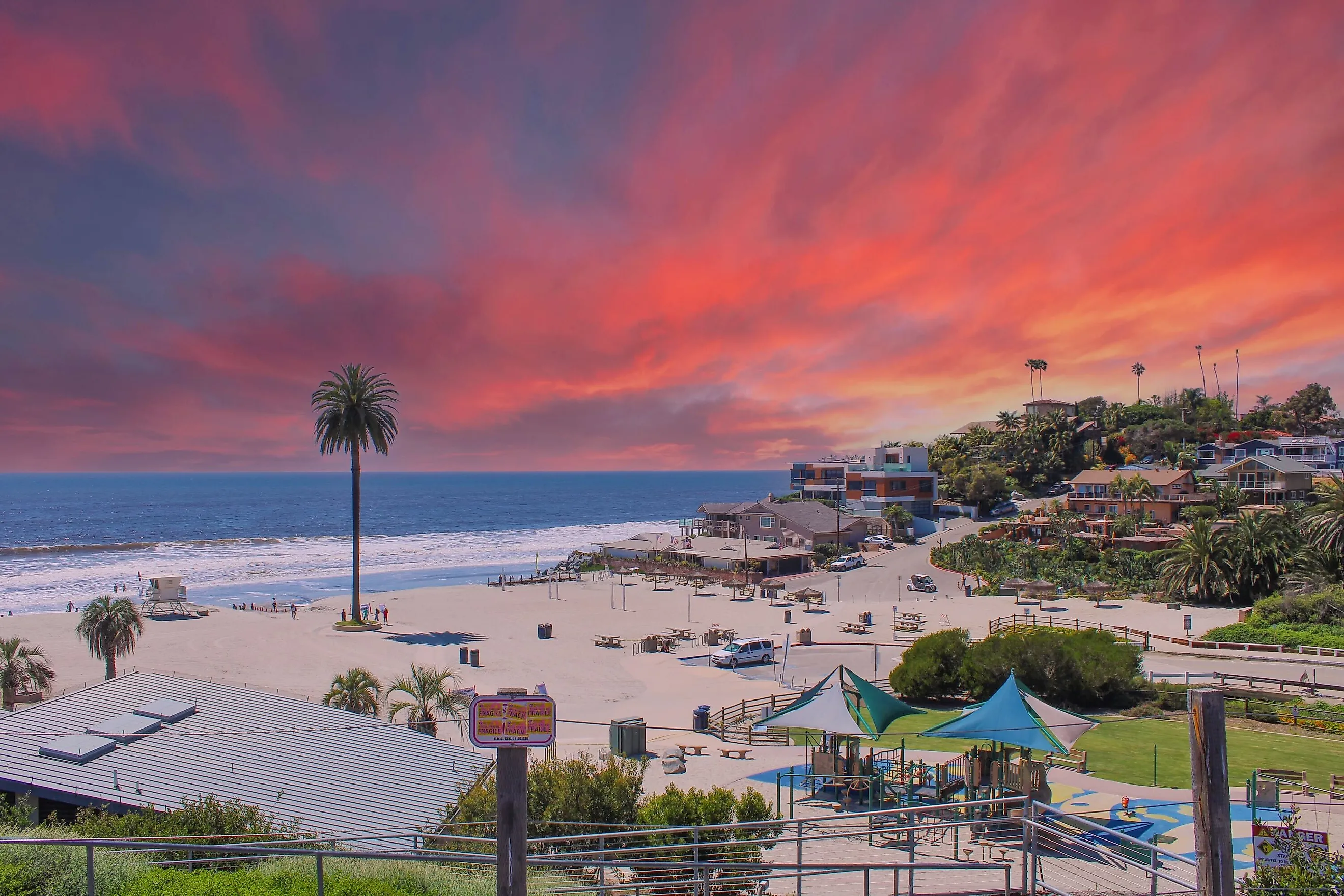
At the north end of San Diego County, Encinitas keeps a mellow, 1960s surf-town spirit along Historic Highway 101, anchored by Moonlight State Beach and the clifftop breaks at Swami's. It is also a garden town: the San Diego Botanic Garden spreads 29 themed gardens and the nation's largest bamboo collection across the hills, and the area's nurseries earned it the nickname "Flower Capital of the World."

The downtown mixes boutiques, cafes, and a year-round calendar of street fairs and festivals, giving retirees an easy, social pace with San Diego's full range of healthcare and services a short drive south. The trade-off is cost: Southern California beach living commands a premium, so Encinitas suits retirees with the budget to match its considerable quality of life.
Finding Your Place on the Coast
The Pacific Coast rewards retirees who know where to look. The famous cities price most people out, but these eleven towns deliver the same ocean air, walkable downtowns, and slower rhythm at a range of budgets, whether affordable like Crescent City and Ocean Shores or premium like Pacific Grove and Encinitas. Match the town to your budget and your climate, cool and misty up north or warm and sunny down south, and the hardest part of retirement will be choosing just one.