US Towns Built Entirely Around a Military Base
Most towns grow the slow way, one trading post or river crossing at a time. A handful across the United States skipped all of that. They were conjured into existence by federal order, drawn up on blueprints, and populated almost overnight because the country needed somewhere to build tanks, train pilots, or, in a few world-changing cases, build the atomic bomb. In these places the line between "town" and "base" barely exists: the street grid, the population, and sometimes the whole reason for being all trace back to a single military decision. Here are seven American towns that owe their existence, more or less entirely, to the installation next door.
Los Alamos, New Mexico

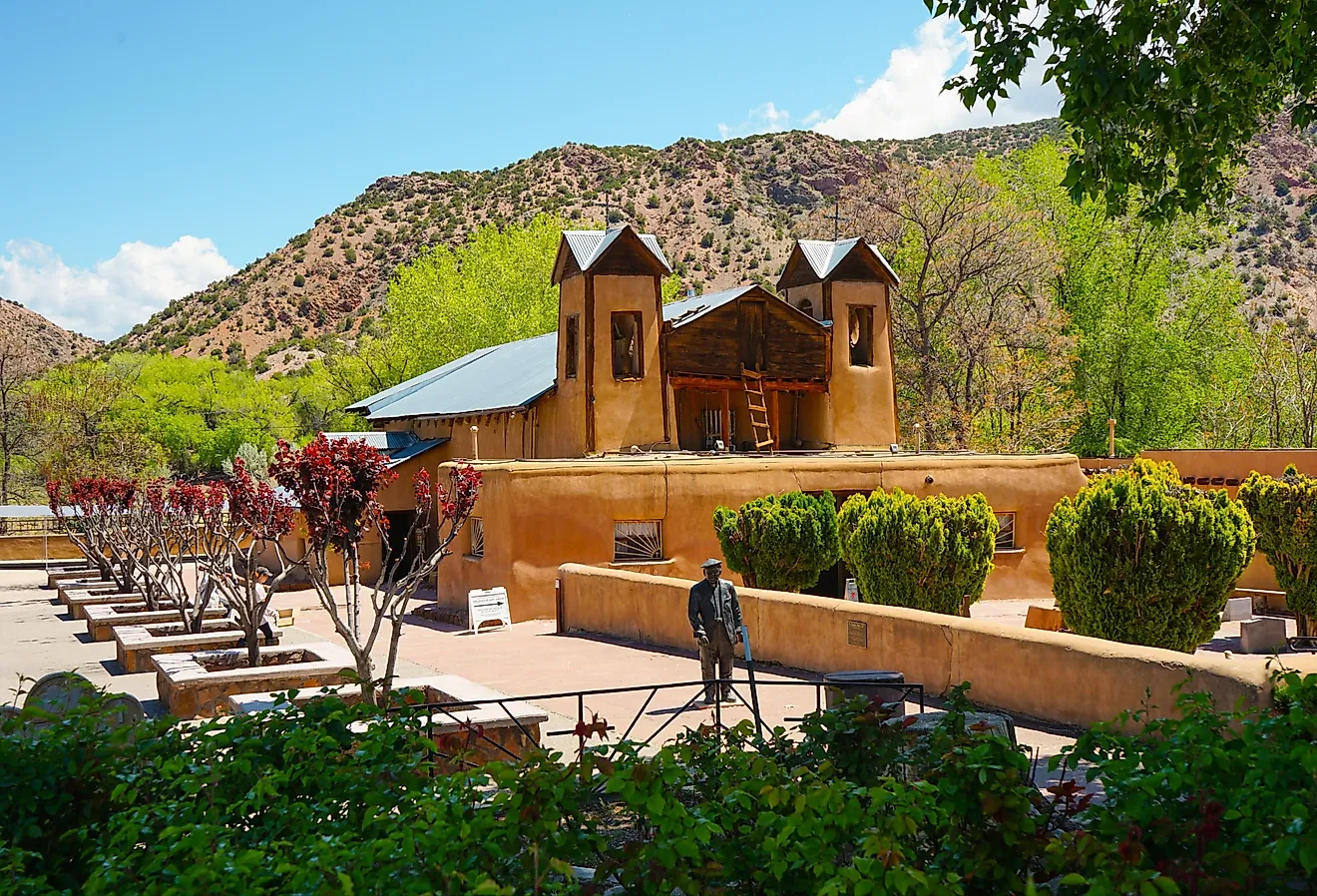
Los Alamos may be the most secret town the United States ever built. In 1943 the government seized 54,000 acres of a remote mesa in northern New Mexico, shut down the boys' ranch school that stood there, and launched the top-secret Manhattan Project, the World War II effort that produced the first atomic weapons. Scientific director J. Robert Oppenheimer and General Leslie Groves chose the spot precisely because it was hard to find and easy to guard. The finished town was fenced, patrolled, and effectively erased from the map, hiding behind a single mailing address in nearby Santa Fe. Some 8,000 people lived there without officially existing. Today about 13,000 residents share its 11 square miles, Los Alamos National Laboratory still anchors the economy, and the US government owns more than 90% of the surrounding county.
Oak Ridge, Tennessee

If Los Alamos was where the bomb was designed, Oak Ridge was where much of its fuel was made. Established in 1942, this Tennessee city was another key Manhattan Project site, and it was enormous. The Army Corps of Engineers took 60,000 acres and threw up a "temporary" city that swelled to 75,000 residents almost overnight, complete with military-run stores, prefab houses, and armed checkpoints at every gate. Most workers had no idea what they were actually building. Oak Ridge stayed under military control until it was finally allowed to govern itself in 1959. It remains a federal research hub today, with about 32,000 residents living beside the Oak Ridge National Laboratory and the Y-12 National Security Complex, both on land owned by the US Department of Energy.
Richland, Washington

Before 1943, Richland was a farming village of about 250 people on the Columbia River in Washington. Then the Army Corps and the DuPont Company took 586 square miles to build the Hanford plant, which made the plutonium for the Manhattan Project. Strictly speaking, this was not a military base but a federal industrial reserve, and the town beside it was engineered to match. Architect G. Albin Pehrson drew up a complete planned community, and the federal government built and owned every house, store, and school until it handed the keys to residents in the late 1950s. Richland grew to about 15,000 during the war, though DuPont reserved its homes for white-collar white employees, a segregation policy that shaped the town for years. The Army also ran nearby Camp Hanford from 1951 to 1961. Today about 63,000 people live in Richland, and the old Hanford Site is now one of the largest environmental cleanup projects in the country.
Daleville, Alabama

Daleville is the rare town here that existed first and got adopted by the military later. Founded in 1827 as Dale Court House, it served as the county seat until the 1840s, took its current name in 1848, and dozed along as a small Alabama farm town even after the railroad arrived in 1900. Its fortunes changed when the government bought up the surrounding land, first for New Deal conservation in the 1930s, then for what became Fort Rucker, now Fort Novosel, home of the Army's aviation school. Daleville reinvented itself as the self-proclaimed "Gateway to Fort Novosel," shaping its shops, housing, and roads around the rhythm of helicopter flight training. The US Army Aviation Museum on post, with more than 160 aircraft, pulls in a steady stream of visitors, and just under 5,000 people, many of them veterans, call the town home today.
Sierra Vista, Arizona

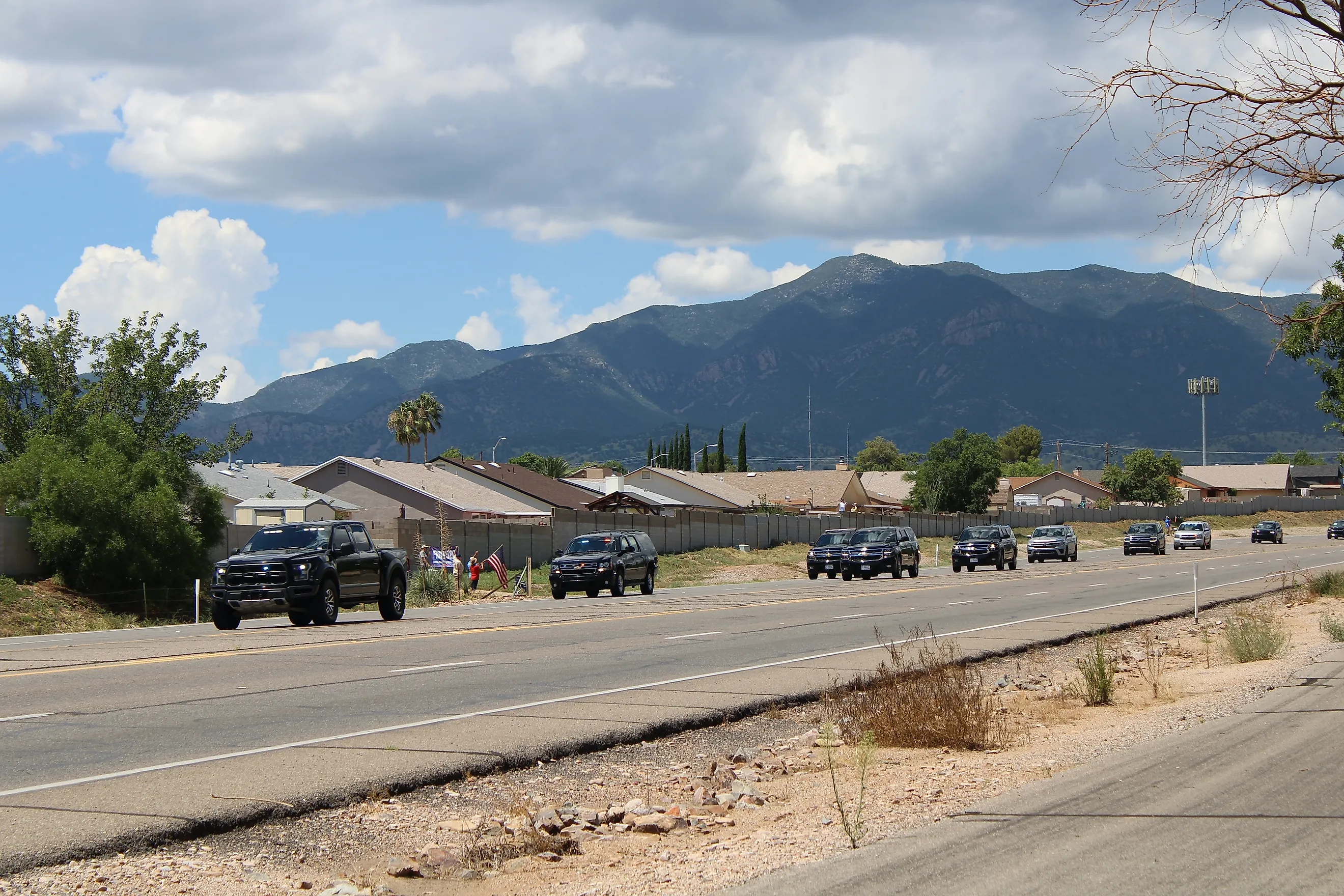
During World War II, Sierra Vista did not exist. What existed was Fry, a tiny unincorporated settlement in southeastern Arizona, 15 miles from the Mexican border, next to Fort Huachuca, where the Army trained the 92nd and 93rd Infantry Divisions. When the post boomed after the Korean War, planners deliberately built a town outside its gates to house soldiers and, above all, the military intelligence personnel stationed there. Fry and the new grid incorporated as Sierra Vista in 1956 with just 1,600 people. Then, in a neat reversal of the usual order, the town annexed the fort in 1971. Today Fort Huachuca is a hub for Army intelligence and cybersecurity as well as a national landmark, and Sierra Vista, at 152 square miles, is the largest city in Cochise County, home to around 45,000 residents.
Lawton, Oklahoma

Lawton grew up in the shadow of Fort Sill, and the two have never really separated. Fort Sill opened in 1869, and when the government threw open the Kiowa-Comanche-Apache reservation to settlement in 1901, it deliberately plotted the new town of Lawton three miles south of the fort to serve as its commercial hub. The plan worked: Lawton became the Comanche County seat and grew from about 35,000 people in 1950 to roughly 90,000 today, not counting the soldiers on post. Town and base are now so intertwined that people simply say "Lawton-Fort Sill." Together they cover about 227 square miles, and Fort Sill, home of the US Army's Fires Center of Excellence, actually takes up more of that than the city does.
Fort Irwin, California

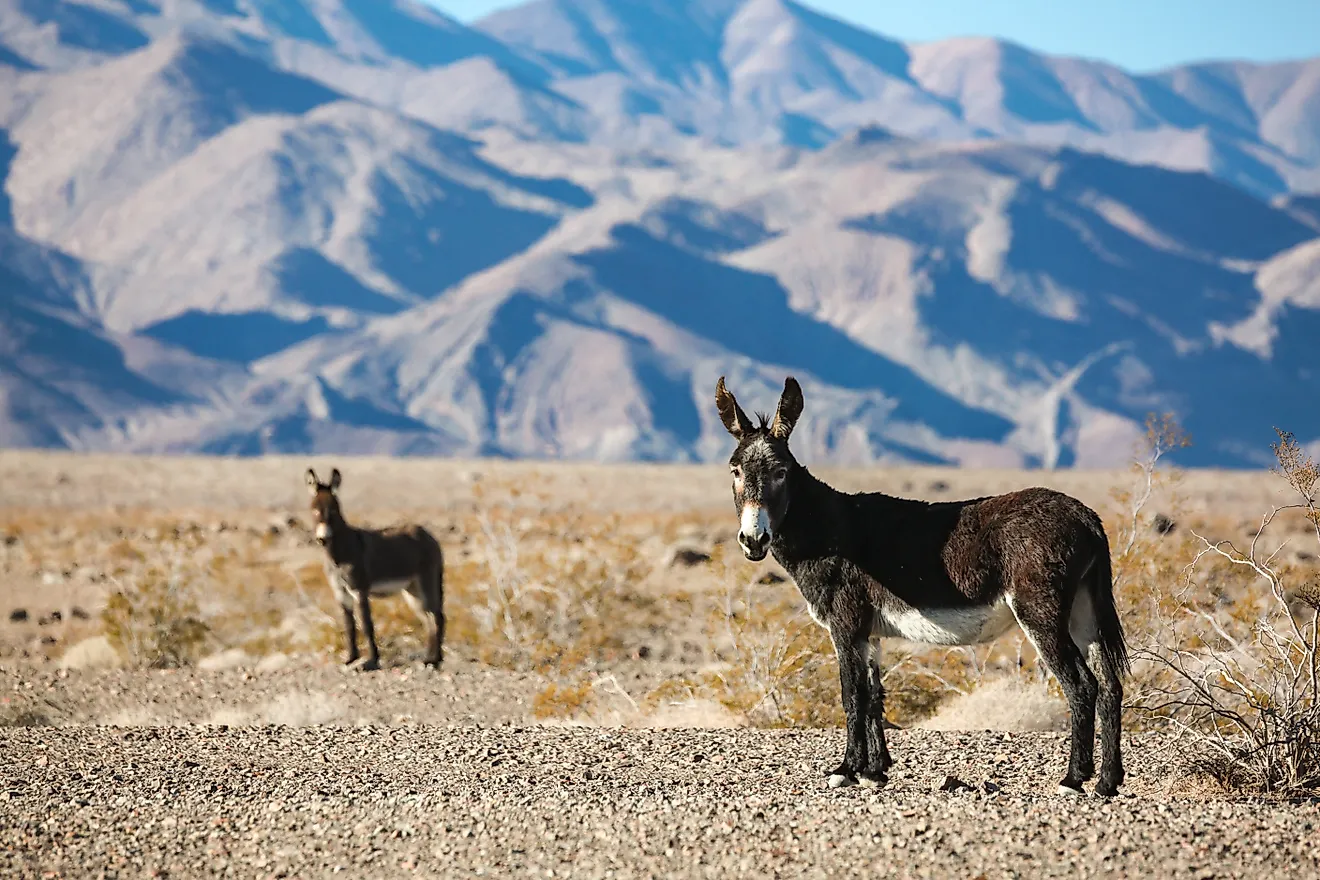
Fort Irwin takes the whole idea to its logical extreme: here, the town basically is the base. Spread across an area roughly the size of Rhode Island, in California's Mojave Desert, it is a working Army installation with a full residential community inside the wire. The government took over about 1,000 square miles here in 1940 as Camp Irwin, renamed it Fort Irwin in 1961, and in 1981 turned it into the Army's National Training Center. Its strangest feature is a collection of full-scale fake towns, like the one called Razish, built with multi-story buildings and marketplaces to rehearse urban combat. Roughly 8,000 people are permanent residents, but the base's total population climbs well past 20,000 whenever rotating units arrive to train.
Towns the Government Willed Into Being
These seven places break the usual rule that geography comes first and people follow. Here it worked the other way around: a federal need, a map, and a deadline came first, and the town appeared to serve it. Some were secret, some were segregated, and some ended up bigger inside the fence than out, but all of them make the same odd point. Given enough money and enough motive, the United States can drop a fully working town almost anywhere it likes, whether on a hidden mesa, a stretch of desert, or a quiet bend in the Columbia River.