The Most Underrated Towns In New Mexico
These smaller communities offer everything from red-rock landscapes to hot springs, Route 66 nostalgia, and ancient archaeological sites. Each has a distinct personality, whether that means wandering the historic plaza before settling in for a meal in Las Vegas or soaking in geothermal waters in Truth or Consequences. This selection looks at what makes each community interesting as a destination in its own right, and the local businesses that make spending a few hours or an entire weekend there worthwhile.
Las Vegas

Las Vegas sits in northeastern New Mexico at the meeting point of mountain scenery, historic architecture, and the wide-open landscapes of the Mora and Gallinas valleys. The town is especially interesting for travelers who enjoy places where the historic core remains part of the community rather than existing solely as a preserved attraction.
The centerpiece is the Las Vegas Plaza, a traditional Spanish Colonial-style plaza that dates to the community's origins as a Santa Fe Trail town. Historic buildings surround the plaza, creating a compact area to explore on foot. One of those buildings is the Plaza Hotel, a restored 1882 landmark overlooking the plaza. Today, the hotel combines historic accommodations with the Plaza Grill and Plaza Sip & Savor, where visitors can stop for a meal, coffee, pastries, or dessert without leaving the historic center.
Coffee lovers have another local option at Cafe Colibri, located directly on Plaza Street. The cafe is listed by the city's tourism organization alongside several other locally oriented coffee stops, making it an easy addition to a stroll around the historic center.
Beyond the center of town, the landscape changes quickly. The Gallinas River and nearby mountains provide opportunities to experience the higher-elevation scenery of northeastern New Mexico, while Montezuma Hot Springs, just outside town, offers a very different setting with naturally heated mineral water surrounded by the foothills.
Las Vegas is particularly appealing for travelers who want a destination where historic architecture, local dining, coffee, and outdoor scenery can all fit into the same day. Instead of simply passing through the northeastern corner of the state, visitors can linger around the plaza before venturing into the surrounding mountain and high-desert country.
Silver City

Farther southwest, Silver City provides a gateway to some of the most rugged landscapes in New Mexico. The town sits near the Gila National Forest, and its surroundings are defined by forested mountains, high-desert canyons, and the dramatic terrain of the Gila country.
The biggest reason to put Silver City on a less-traveled New Mexico itinerary is its proximity to Gila Cliff Dwellings National Monument, home to preserved cliff dwellings associated with the Mogollon people. The monument lies about 44 miles north of town along NM 15, but the journey is part of the experience as the highway becomes narrow and winds through the picturesque mountains.
Silver City itself gives visitors plenty of reasons to stay after returning from the forest. Historic Downtown Silver City is a hub of galleries, studios, retail shops, restaurants, murals, and events. The district's art scene is particularly prominent, with galleries and working artists spread throughout the downtown area.
For entertainment, the restored Silco Theater offers first-run movies, classic films, locally made documentaries, and community events inside a restored Art Deco building. The theater is part of the downtown commercial scene, making it easy to pair a movie with dinner or an evening spent browsing local businesses.
Food is another reason to linger. Downtown options include Javalina Coffee House, a coffee and tea shop with a lovely patio, as well as locally owned restaurants and bakeries throughout the historic district.
This backdrop of beautifully untamed scenery makes Silver City particularly noteworthy. Travelers can spend the morning surrounded by the Gila's mountain landscapes and return to a downtown filled with art, food, shopping, and entertainment, a mixture that gives the town more depth than a simple gateway to the forest.
Socorro

Located in the Rio Grande Valley, Socorro occupies an unusual position between desert landscapes, wildlife habitat, mountain ranges, and some of New Mexico's most interesting scientific sites.
One of the town's strongest draws is Bosque del Apache National Wildlife Refuge, south of Socorro along the Rio Grande. The refuge is especially notable during the colder months, when thousands of sandhill cranes and snow geese gather in its wetlands and agricultural fields. A 12-mile auto tour loop allows visitors to experience much of the refuge without turning the visit into a strenuous outdoor excursion.
Another very unique experience lies west of town on the plains of San Agustin: the Karl G. Jansky Very Large Array, where 27 radio telescopes stretch across the landscape in a distinctive Y-shaped formation. The enormous dishes are visible against the open plains, making the drive itself part of the experience.
Back in Socorro, the historic plaza provides a natural place to transition from sightseeing to local entertainment. The city's tourism organization highlights shops, boutiques, restaurants, a coffeehouse, and a historic pub around the plaza, with several venues also offering live music. The nearby Socorro Farmers Market adds another distinctly local experience, with vendors selling produce, baked goods, crafts, jewelry, soaps, and other products.
For a more traditional museum stop, the Mineral Museum at New Mexico Tech displays more than 5,000 mineral specimens, including gems, fossils, gold, and silver.
Together, the wildlife refuge, scientific landscape, historic downtown, local shopping, and food scene give Socorro a surprisingly varied itinerary. It is a particularly interesting choice for travelers who like their small-town trips to combine natural scenery with science, culture, and locally owned businesses.
Raton

At the northern edge of New Mexico, Raton sits where the Great Plains meet the Rocky Mountain foothills. That location gives the town an unusually varied landscape, with grasslands and volcanic terrain opening toward higher mountains.
A short drive from town leads to Sugarite Canyon State Park, where forested hills surround beautiful lakes, creeks, and meadows. The area also provides access to Capulin Volcano National Monument, where an extinct cinder cone rises from the surrounding plains.
Raton's downtown provides a different way to experience the town. The historic district contains Victorian-era buildings, galleries, restaurants, and entertainment venues, including the Old Pass Gallery, located in a former Wells Fargo building near the historic railroad depot.
For an evening out, the Shuler Theater remains the centerpiece of Raton's performing-arts scene. The historic theater hosts live performances and other events throughout the year and serves as the home of the Santa Fe Trail School for the Performing Arts. The nearby El Raton Theatre offers another entertainment option, showing movies in a historic theater setting.
This enchanting mix of small-town history with dramatic topography makes Raton more than a convenient stop along I-25. Travelers can spend the day among breathtaking mountains, lush forests, impressive volcanic formations, and whimsical historic landscapes, then return downtown for a gallery visit, dinner, or a show.
Tucumcari

For anyone interested in New Mexico's Route 66 history, Tucumcari is one of the state's most recognizable small-town stops, but it can still be easy to pass through without really seeing it.
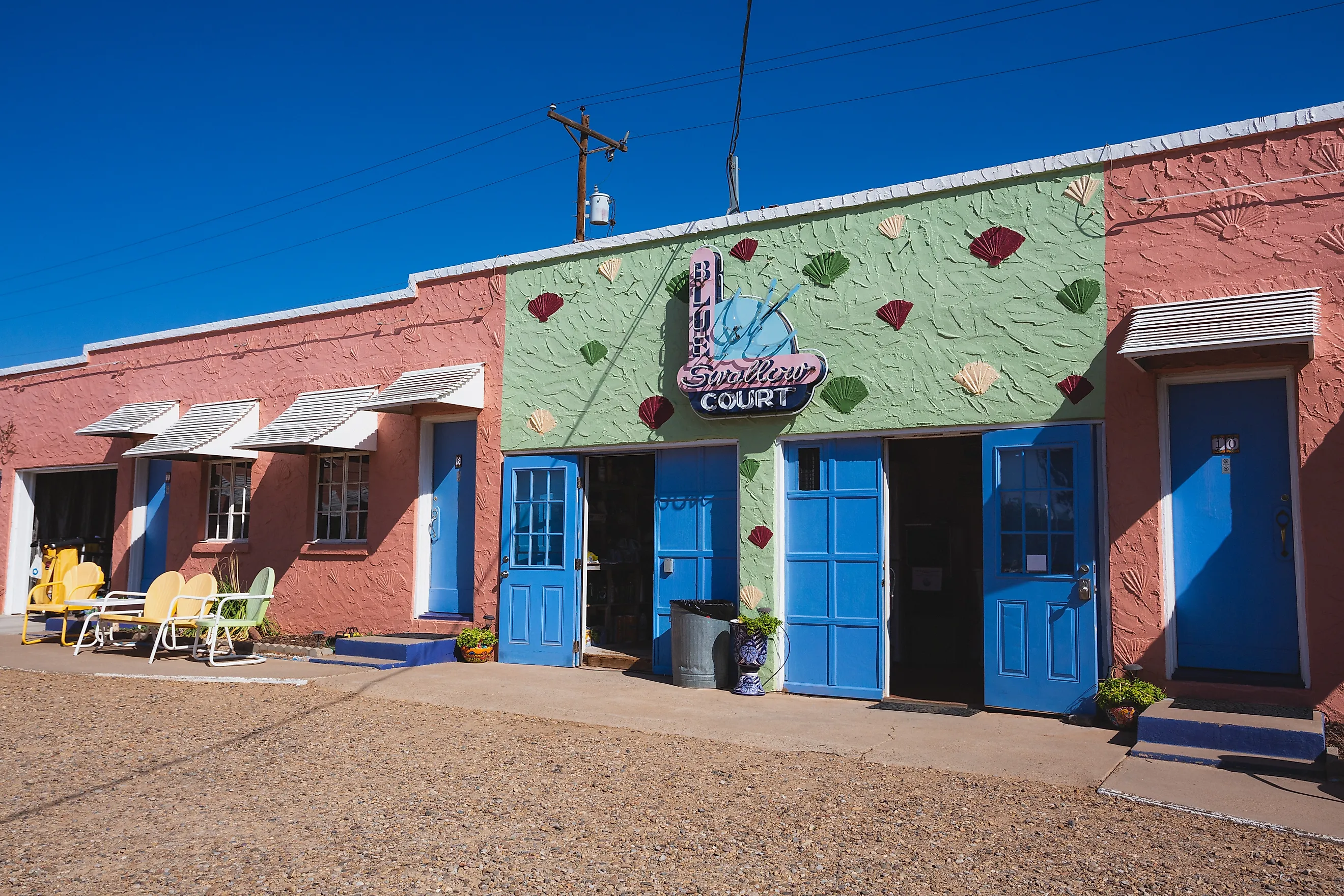
The town's identity is tied closely to the historic highway, which survives in the form of vintage motels, neon signs, murals, roadside buildings, restaurants, shops, and other remnants of the classic American road trip. The city's tourism organization also currently highlights nearly 100 murals throughout the community, transforming parts of Tucumcari into an informal outdoor gallery.
The commercial side of Route 66 is just as important. Del's Restaurant is a longstanding Route 66 dining stop listed in the current visitor guide, while Carlson's Coffee Shop provides a more casual coffee break. Travelers looking for a sweet stop can also visit Frost 5 Lemonade, while Kandel's Street Sips is another locally owned spot featuring teas and specialty coffees.
For entertainment, the historic Odeon Theatre provides another reason to stay after the sun goes down. The theater is among the downtown's Route 66-era landmarks, alongside its murals, neon signs, and museums.
The timing is particularly relevant in 2026, when Route 66's centennial is being celebrated. Tucumcari's union of vintage roadside architecture, food, shopping, entertainment, murals, and neon lights makes it a town worth experiencing rather than merely photographing from the highway.
Clovis

Eastern New Mexico's landscape is much different from the mountains and high desert associated with other parts of the state, and Clovis provides a useful introduction to that side of New Mexico.
The town is closely associated with Blackwater Draw, an archaeological site where evidence of some of North America's earliest known inhabitants was discovered. The surrounding Llano Estacado landscape is broad and relatively flat, creating a strong contrast with the mountainous terrain found farther west.
Clovis also has a surprisingly strong connection to American music. The Norman Petty Recording Studio, where artists including Buddy Holly and Roy Orbison recorded music, can be visited by appointment. The studio preserves the setting associated with the development of the famous "Clovis Sound."
The city's entertainment scene extends beyond its music history. Red Arrow Entertainment offers activities including gaming, bingo, and dining, while Zonkers adds laser tag, mini golf, arcade games, and other family-oriented activities. The city also highlights local breweries, antique shops, boutiques, and restaurants as part of its growing downtown scene.
Food is another part of the experience. Clovis features restaurants serving New Mexican and Mexican food alongside classic drive-in fare and Texas-influenced cuisine, such as the Cotton Patch Cafe, reflecting the town's location near the Texas border.
For travelers interested in archaeology, music, food, and the wide-open scenery of the eastern plains, Clovis offers a different perspective on New Mexico. It is less about dramatic mountain vistas and more about discovering the culture that developed across the state's broad eastern horizon.
Truth or Consequences

Few New Mexico towns have a name as memorable as Truth or Consequences, but the town's appeal goes beyond its unusual title. Located along the Rio Grande in southern New Mexico, it is best known for the geothermal waters beneath the community and the hot-spring culture that developed around them.
The town's Hot Springs Bathhouse and Commercial Historic District preserves part of that identity, while commercial bathhouses continue the tradition of soaking in naturally heated mineral water. One example is Riverbend Hot Springs, located directly on the Rio Grande, where visitors can book access to shared or private mineral pools.
Another option is Blackstone Hotsprings, a lodging and soaking destination in the historic downtown hot-springs district. Its themed rooms incorporate private hot-spring baths, while separate outdoor baths are also available for visitors.
The commercial character of downtown extends beyond the relaxing soak. T or C Brewing Company operates in the historic hot springs district and hosts live music, open-mic nights, and other lively events, giving visitors an enjoyable place to spend an evening after exploring the springs. Downtown also hosts a recurring Second Saturday Art Hop, when galleries and local businesses stay open for art, shopping, and community events.
Nearby Elephant Butte Lake adds a completely different landscape, with a large reservoir surrounded by the dry mountains and desert scenery of southern New Mexico.
This peaceful locale makes Truth or Consequences especially suited to travelers looking for a slower-paced destination where natural geothermal waters, local businesses, art, food, and entertainment all revolve around the same distinctive hot-spring identity.
Aztec

In northwestern New Mexico, Aztec combines Animas River Valley scenery with a significant concentration of ancestral Pueblo history. The town's most important cultural landmark is the Aztec Ruins National Monument.
The monument preserves the remains of an ancestral Pueblo community constructed beginning in the late 1000s. The West Ruin includes hundreds of interconnected rooms, while the reconstructed Great Kiva provides one of the site's most recognizable features, a massive, semi-subterranean circular building measuring roughly 48 feet in diameter. A short self-guided trail allows visitors to explore the archaeological site without requiring a lengthy hike.
The surrounding Animas River Valley adds another dimension to the visit. The river helped make agriculture possible for the community that developed here centuries ago, and the valley remains an important feature of the landscape.
Aztec also has a growing downtown entertainment scene. 550 Brewing Company, located in the historic downtown area, serves as a community gathering place with live music, artisan markets, games, food trucks, and other fun events. Its indoor and outdoor spaces give visitors a casual way to experience the town after exploring the archaeological sites and surrounding landscapes.
For something quieter, local dining options include Tuanjai Thai Noodle, while the city also features other locally owned restaurants and businesses welcoming visitors.
Aztec is also positioned near the recreational landscapes of northwestern New Mexico, including the Navajo Lake area. That blend of archaeology, river-valley scenery, local dining, and downtown entertainment makes Aztec an especially useful stop for travelers exploring the Four Corners region.
What connects these eight towns is not a single landscape or type of attraction. Instead, each reveals a different side of New Mexico. Instead of treating the state as one continuous desert landscape, travelers can move between forests, volcanic formations, and archaeological sites that give each town its own distinct personality.
So, the next time you are planning a New Mexico getaway, consider giving one of these towns more than a quick pass on the highway. Browse a gallery, soak in a hot spring, or simply spend an afternoon getting to know the local restaurants and businesses alongside the landscapes and landmarks that first brought you there.