7 Must-See Historic Forts In Colorado
During the United States' westward expansion, frontiersmen and soldiers settled in Colorado amid the gold rush and rapid railroad construction. Forts went up as trading hubs and military bases for the people moving west. Places like Bent's Old Fort along the Santa Fe Trail and Fort Garland in the San Luis Valley played important roles in shaping the territory's early history. Although most have since been decommissioned, some remain standing and open to visitors. Tour the state's history and learn what life was like at these seven must-see historic forts in Colorado.
Fort Uncompahgre

Located in Delta, Fort Uncompahgre was a central trading hub established roughly two miles downstream from the confluence of the Gunnison and Uncompahgre Rivers. Built by Antoine Robidoux in 1828, it was the first fur-trading post on Colorado's Western Slope. Today the reconstruction at Confluence Park serves as an interpretive site and living history museum, with costumed interpreters demonstrating frontier trading post life. Visitors can tour the rebuilt fort and walk a section of the Old Spanish Trail. Each summer the museum hosts Thunder Mountain Lives Tonight, featuring Ute dancers in traditional buckskin attire.
Bent's Old Fort National Historic Site

Strategically placed along the Santa Fe Trail, Bent's Fort served traders, trappers, travelers, and the Southern Cheyenne and Arapaho tribes. The adobe trading post was founded in 1833 by brothers William and Charles Bent together with Ceran St. Vrain. It was built on the north bank of the Arkansas River, which at the time formed the international boundary between the United States and Mexico. The fort quickly became a center of cultural exchange among American settlers, Mexicans, and Native Americans. For much of its sixteen years of operation, it was the only major permanent American settlement on the Santa Fe Trail between Missouri and the New Mexico settlements.
The reconstruction sits on the original footprint about eight miles east of La Junta. The site features an extensive network of rooms and corridors surrounding a central plaza, giving visitors a vivid sense of life in one of the American Southwest's most important trading posts. Explorers including Kit Carson and John C. Frémont are known to have visited the fort during its heyday.
Bent's New Fort

The Mexican-American War brought heavy U.S. Army movement through Bent's Old Fort and discouraged Native Americans from trading there. After the death of his brother Charles and the cholera epidemic of 1849, William Bent abandoned the old fort and eventually built a replacement. Bent's New Fort went up in 1853 about nine miles west of present-day Lamar. The stone trading post featured sixteen-foot walls and twelve rooms arranged around a central courtyard, overlooking the Arkansas River and the Mountain Route of the Santa Fe Trail. The new fort proved less successful as a trading venture and was leased to the U.S. Army in 1860, becoming the military outpost later renamed Fort Lyon. Today the structural remains have largely disappeared, leaving earthworks and stone monuments on the bluff above the river. The site sits on private property but allows daytime access to visitors.
El Pueblo Fort

El Pueblo Fort sat at the site of present-day Pueblo, where the Arkansas River meets Fountain Creek. The independent adobe trading post was built in 1842 and arranged as a roughly square plaza of rooms around a central courtyard, dealing primarily with the Ute and other plains tribes. The Muache Ute attacked the fort on Christmas Day 1854 after a smallpox outbreak the Muache attributed to contaminated trade goods. The attack killed most of the men at the post and ended the fort's commercial life. After the attack the fort was largely abandoned, though travelers occasionally used the ruins as shelter during the Pike's Peak Gold Rush. Local historians have since reconstructed sections of the fort on the original site, and a history museum at the location includes the archaeological excavation of the 1842 trading post.
Fort Vasquez

Fort Vasquez was founded in 1835 as a fur-trading post on the South Platte River and operated for seven years before its owners sold it. Established by mountain men Louis Vasquez and Andrew Sublette, the adobe fort traded with trappers, fur traders, and Native American groups including the Arapaho and Cheyenne. After the trading post disbanded, the structures briefly served as a way station for wagon trains and later as a school and post office before being absorbed into a ranch. The Works Progress Administration rebuilt the adobe fort on the original site in the 1930s, and the reconstruction now operates as a regional museum next to U.S. Highway 85 in Platteville.
Fort Garland Museum & Cultural Center

Fort Garland was built in 1858, ten years after the Treaty of Guadalupe Hidalgo. Constructed as a U.S. Army outpost active during the Civil War, the fort protected settlers of the San Luis Valley and served as an enlistment and rendezvous point for Colorado volunteers heading south to fight Confederate forces in New Mexico. Troops from the fort took part in the Battle of Glorieta Pass in 1862, which ended the Confederate campaign in the Southwest. Kit Carson commanded the fort in 1866 and 1867, and the 9th Cavalry Buffalo Soldiers were stationed at Fort Garland from 1876 to 1879. After the U.S. Army decommissioned the post in 1883, the buildings fell into disrepair. Of the original 22 adobe buildings, only five remained intact when the property was preserved, and those five now form the Fort Garland Museum & Cultural Center. The parade grounds are surrounded by restored quarters and exhibits, and the gift shop sells locally crafted goods.
Fort Lupton

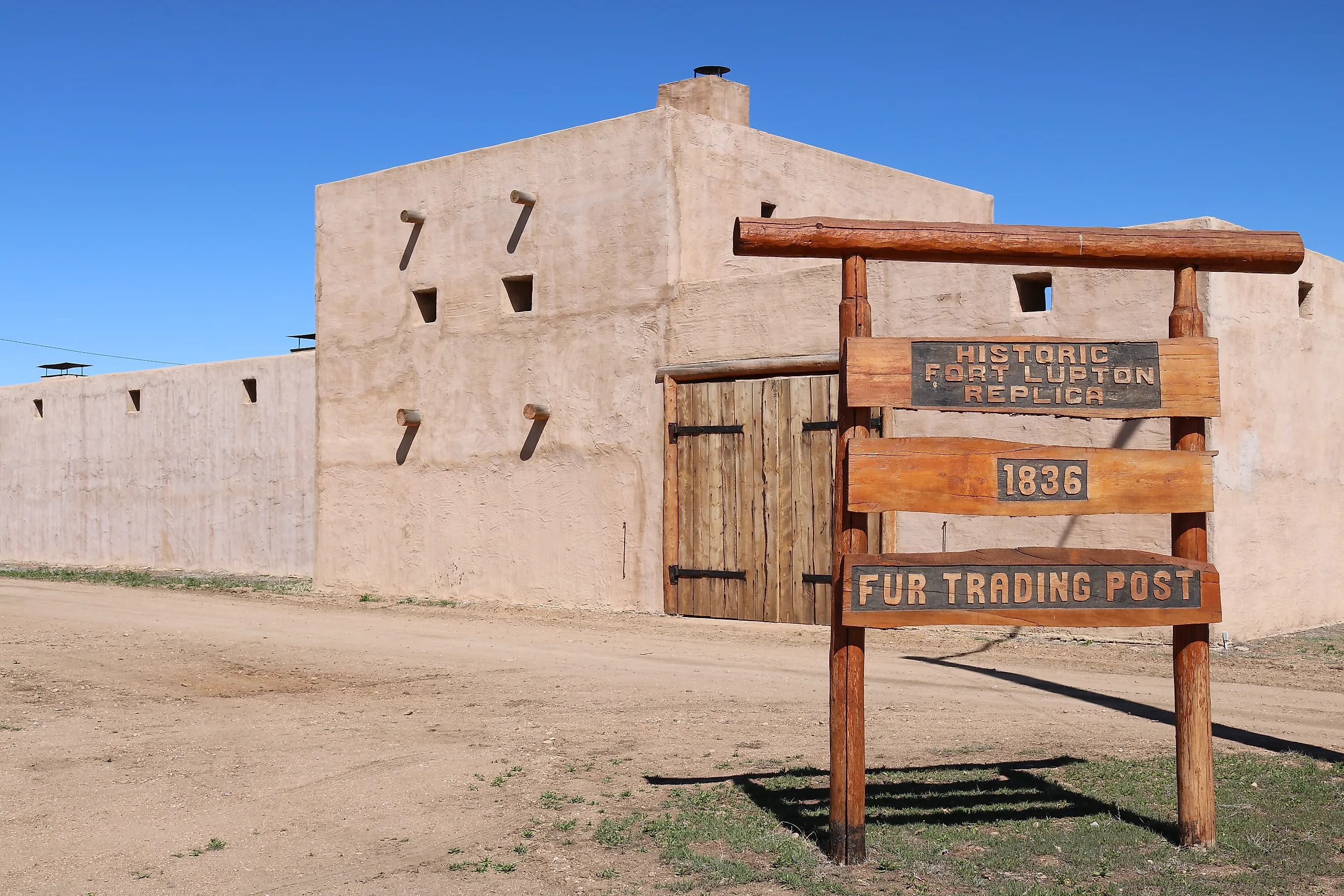
Originally constructed as a trading post in 1836, Fort Lupton later served as a stagecoach station and a residence before crumbling to a single wall. The fort was the project of Lancaster Lupton, a West Point graduate and former U.S. Dragoons lieutenant who resigned his commission after seeing the South Platte Valley on a military expedition. First known as Fort Lancaster and modeled after Bent's Old Fort, the trading post handled exchanges with the Arapaho and Cheyenne tribes. A reconstructed replica sits at the South Platte Historical Park and is open for visitors to explore the blacksmith and carpenter shops, living quarters, kitchen, food preparation rooms, trade rooms, cantina, and storage room of historic artifacts.
Historic Forts In Colorado
Every fort was built with a purpose in mind, and those purposes varied with the needs of each region. War, trade, and refuge were the primary reasons for fort construction in Colorado. Although the forts have long since become obsolete in the practical sense, several still stand and represent an era when individuals had to make a life for themselves on the frontier. Explore the history and significance of Colorado's Westward Expansion era through these seven historic forts.