The US Towns That Burned Down And Were Never Rebuilt
American towns typically rebuild after destruction. For example, Chicago burned in 1871 and expanded within ten years. Peshtigo, Wisconsin, lost between 1,200 and 2,500 residents to a firestorm on the same night but managed to recover. Similarly, Hinckley, Minnesota, after 1894, and Cloquet after 1918, rebuilt because, throughout much of American history, fires would damage the buildings but leave the town's core intact. However, some locations did not experience this renewal, either because the environment became less hospitable or because economic reasons prevented rebuilding. Several of these sites have burned recently enough that discussions about their future are ongoing. It’s important to note that “never rebuilt” has a nuanced meaning here. Some are truly abandoned, while most are only partially inhabited now, at a fraction of their former size, which itself signifies a kind of end.
Greenville, California

The clearest modern case, and the numbers are stark.
On August 4, 2021, the Dixie Fire swept through this Gold Rush town in Plumas County, California, destroying approximately 75% of its buildings in a single evening. The library, town hall, sheriff's station, gas station, church, hotel, museum, and most of the downtown area were all lost. Firefighters managed to save roughly 25% of the structures.
Greenville had a population of 1,026 according to the 2020 census. Four years later, estimates suggest it is now around 200 residents, with approximately 35 to 45 homes rebuilt from nearly 400 properties enrolled in the state debris removal program. The state cleared 96,000 tons of debris in one of its fastest operations, and most of the cleared lots have remained untouched since. Context is important: Plumas County was losing about five percent of its population annually before the fire, with an aging demographic and incomes below the state average. The fire did not cause the decline but rather eliminated the last reason to oppose it.
Malden, Washington

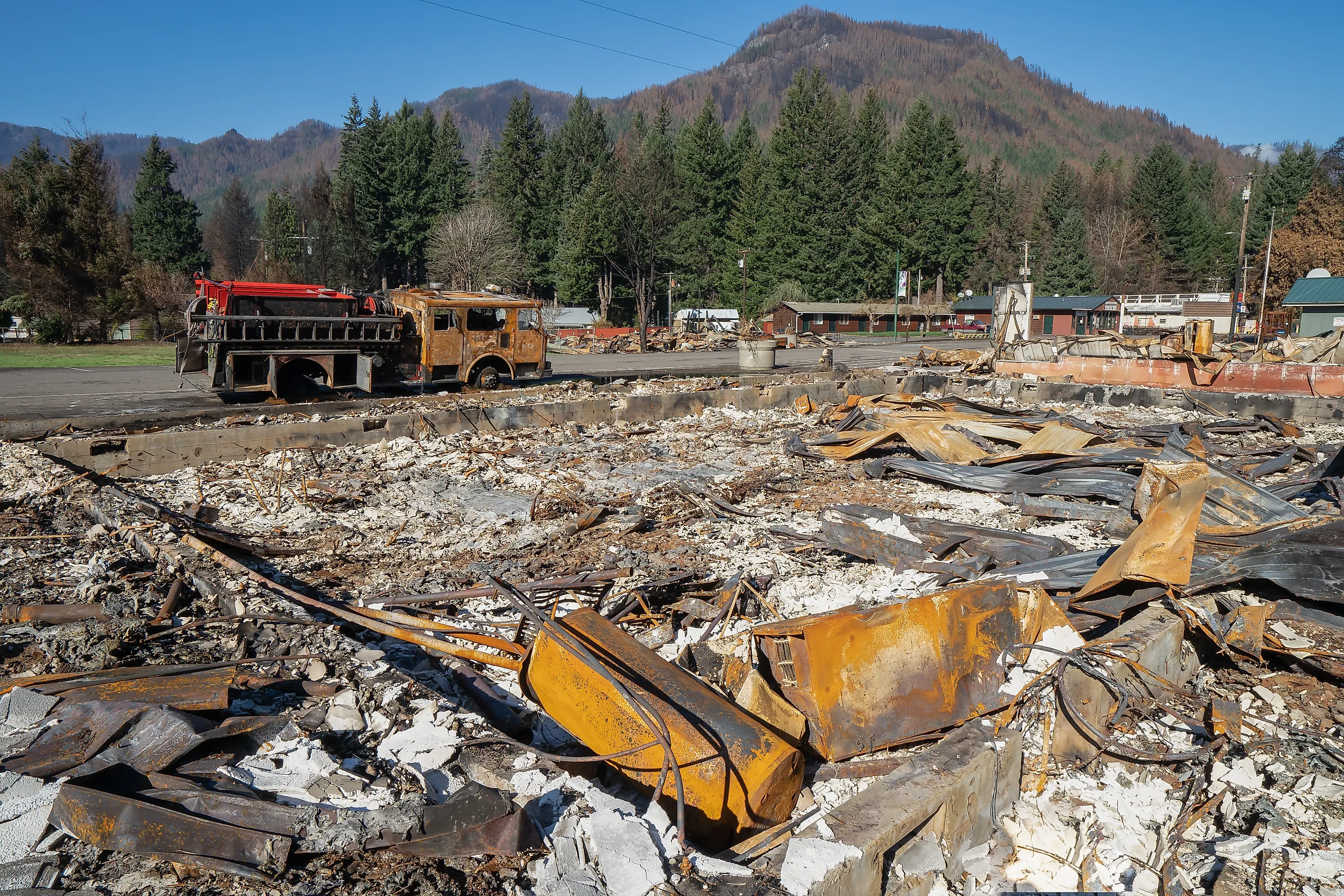
Malden is a railroad town in eastern Washington's Palouse region, incorporated in 1909 and named by railway officials after Malden, Massachusetts. On September 7, 2020, a wind-driven wildfire destroyed about 80% of Malden and nearby Pine City within hours. The fire claimed the fire station, post office, city hall, library, Masonic Lodge, and most homes. Residents evacuated before the fire, but re-entry was delayed due to a leaking propane tank.
What makes Malden different from Greenville is scale. It was a town of a few hundred people before the fire, small enough that losing the post office and city hall meant losing the administrative existence of the place, along with the buildings.
Centralia, Pennsylvania

This is the most famous American town that will never be the same, and it's the only place on this list where the fire continues to burn. On May 27, 1962, a trash fire at the borough landfill set off an exposed coal seam, spreading into the abandoned mine workings beneath the town in Pennsylvania. No one has managed to put it out, and at the current rate, it could burn for another 250 years.

The decline occurred gradually and then became complete. In 1980, approximately 1,000 people lived here, a decrease from the peak of 2,761 in 1890. In 1984, Congress approved a $42 million voluntary relocation program; most residents accepted the buyout, and the state tore down the houses as it acquired the property. In 1992, Pennsylvania condemned the remaining properties through eminent domain. The Postal Service eliminated the ZIP code in 2002. A 2013 settlement provided seven holdouts with a total of $349,500 and allowed them to stay for life, after which the property reverts to the state. In the 2020 census, only five residents were recorded.
Bodie, California

Bodie represents an earlier chapter of this story from a century ago, and its significance lies in the fires occurring after the town's decline, not causing it. Around 1880, it was a thriving gold town with about 7,000 residents in the eastern Sierra. As the mines dwindled and the population dwindled, two fires destroyed the remaining structures, one in 1892 and a more devastating one in 1932 that burned through most of what remained.
Nobody rebuilt because there was nothing to rebuild for. What survived became Bodie State Historic Park, maintained in what the state calls arrested decay, meaning the remaining buildings are stabilized but never restored. It is the rare American ghost town preserved precisely as the fire left it.
The 2020 Labor Day Towns In Oregon
In September 2020, wind-driven fires rapidly spread through multiple river canyons in Oregon over two days, severely impacting small communities. Blue River and Detroit saw most of their structures destroyed by the Holiday Farm and Beachie Creek fires. Further south, Phoenix and Talent faced the Almeda Fire, which wiped out many manufactured homes that contributed to the affordability of those towns.
Recovery here has been genuinely mixed rather than absent, and that is the honest framing. Some rebuilding has happened. What has not returned in most cases is the low-cost housing stock, because replacing a manufactured home park with new construction changes who can afford to live there. The buildings can come back without the community doing so.
Why Some Towns Come Back And Others Do Not

Three factors determine it, and only one concerns the fire.
The first consideration is whether the town's reason for surviving remained. Chicago still maintained its rail junction and access to the lake. Peshtigo still possessed timber resources. Greenville's timber industry was already active, and Centralia's coal was what ultimately ignited interest.
The second factor is insurance and land value. In much of the interior West, rebuilding costs more than a rural lot is worth, so a payout often funds a move rather than reconstruction. That single piece of arithmetic explains most of the empty foundations in Plumas County.
The third is administrative. A town that loses its post office, school, and municipal building loses the infrastructure that makes it a place rather than an address, and that infrastructure is hard to justify rebuilding for a population that has already scattered.
What Is Left To Visit
Bodie is a state historic park with regular hours and is the only one of these you would visit for its own sake.
Centralia is legally a borough with a handful of residents and is not a tourist attraction, whatever the internet suggests. The ground is unstable, the state has buried the old Graffiti Highway, and the cemeteries are still in use by families. Visiting respectfully means staying on the road.
Greenville, Malden and the Oregon towns are inhabited communities in the middle of a slow recovery. They are worth understanding and they are not ruins to tour.