Florida's 11 Most Underrated Beach Towns
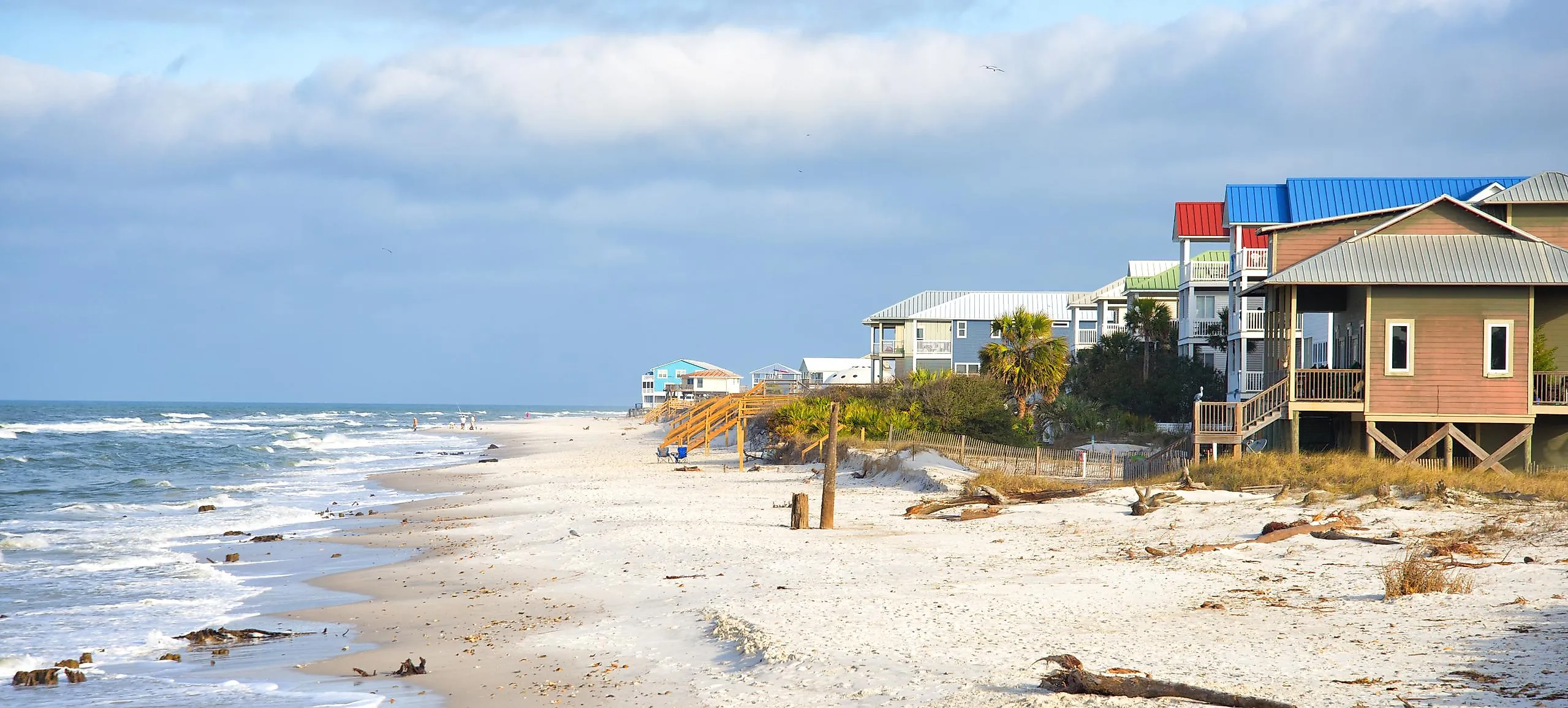
Every beach town in Florida gets called 'underrated' at some point. The label means less here than almost anywhere, because the state is mostly coastline and the locals ran out of beaches to be surprised by decades ago. The fix is a shortlist of quieter places for the Saturday when the usual spot is already full. These eleven never bothered to get famous, and a couple still run on oyster boats and bait shops. All of them leave room to put a chair down.
Holmes Beach

In Holmes Beach, the little airstrip that once flew people onto Anna Maria Island closed in 1973. The land became parks and ball fields. The town covers under two square miles of the island it shares with Bradenton Beach and Anna Maria, close enough to Bradenton for a weeknight visit. John Holmes carved the planned community out of the brush after World War II, and a lot of those first homes still rent out today.
Grassy Point Park, a pocket of bayou crossed by wooden footbridges, makes a shady break from the open sand. The Gulf side runs shallow and warm, the kind of turquoise that holds little kids for hours. The main access is Manatee Public Beach, and a free trolley loops the whole island, so parking is rarely the headache it is elsewhere on the coast.
New Smyrna Beach

Long before it was a surf town, New Smyrna Beach was the site of one of the largest colonization attempts in British North America. In 1768 a Scottish doctor named Andrew Turnbull landed about 1,400 settlers, recruited across Minorca, Greece, and Italy, to grow indigo here. When the venture fell apart, the survivors walked roughly seventy miles north to St. Augustine, where their descendants still live. You can find traces of that era in the coquina ruins at Old Fort Park downtown.
National Geographic ranks it among the world's top surf towns. The same dependable break earns it a wryer title, the Shark Bite Capital of the World, from the spinner and blacktip sharks that chase baitfish close to shore. The bites are common but rarely serious. Local surfers shrug them off. Behind the break lie seventeen miles of wide Atlantic sand. The town is also a real arts colony, with galleries on Flagler Avenue and the long-running Atlantic Center for the Arts.
Boca Grande

Gasparilla Island skips gas stations almost entirely. The seasonal millionaires idle their golf carts at the same crossings as the year-round fishing crews. The town spreads across the island's south end on some of the whitest sand on the Gulf, named for the wide pass that lets boats slip inland. Boca Grande means big mouth in Spanish, a nod to that opening.
Just across the pass is Cayo Costa State Park, an undeveloped barrier island you can only reach by boat. The Calusa fished these waters first and had largely vanished by the 1700s. Boca Grande itself was built on phosphate, exported through the deep-water port at the island's south end until that trade ended in 1979. What is left now is tarpon, hammocks, and quiet.
Perdido Key

In 1693 a Spanish cartographer named Carlos de Sigüenza y Góngora spent weeks hunting for the entrance to the bay west of Pensacola and could not find it. A storm blew him off course, and an Indigenous chief finally pointed him to the pass. He named the water Perdido, Spanish for lost, and the name stuck to the barrier island that had hidden it from him. Perdido Key is now the westernmost beach in Florida, a thin strip of white quartz sand reaching about sixteen miles to the Alabama line.
Most of the island never got developed. The eastern end belongs to the Gulf Islands National Seashore, where Johnson Beach honors a local soldier killed in the Korean War and its sand was one of the few stretches open to African Americans under segregation. The middle is Perdido Key State Park, all dunes and sea oats. The whole island is the only home of the endangered Perdido Key beach mouse. At the far western tip, right on the Florida-Alabama line, the Flora-Bama roadhouse has thrown its mullet toss every spring since 1985.
Anna Maria

When Bradenton tried to absorb Anna Maria in 1963, the town held a vote and shut it down hard, 297 against and 9 in favor. Anna Maria holds the north end, all low buildings and old-Florida quiet, with none of the high-rise condos you find farther down the coast.
The City Pier has had a rough century. Charles Roser, the candy man widely credited with the Fig Newton recipe, built the first pier in 1911 to ferry steamboat tourists. Hurricane Irma wrecked it in 2017, the rebuilt concrete-and-ipe version reopened in 2020, and Helene and Milton tore the walkway off again in 2024. The town is once more rebuilding what it plainly refuses to lose.
Apalachicola

A local doctor in Apalachicola built the grandfather of the air conditioner. Trying to cool yellow-fever patients in the 1840s, John Gorrie made a machine that produced ice. In 1851 he earned the first US patent for mechanical refrigeration. A replica runs at the John Gorrie Museum State Park, set in a downtown of more than nine hundred historic buildings on a street grid borrowed from Philadelphia.
Apalachicola is the heart of the Forgotten Coast, an oyster town that once supplied around ninety percent of Florida's oysters and a tenth of the country's. The wild bay fishery collapsed and closed in 2020. A tightly limited harvest returned only in early 2026. The working waterfront is rebuilding, and farmed oysters still stock the raw bars downtown. The beach is across the bridge on St. George Island, a barrier island of quiet dune-backed sand with a state park on its eastern end.
Vero Beach

Storms still wash Spanish gold onto the beach at Vero Beach, leftovers from the 1715 treasure fleet that went down in a hurricane just offshore. The McLarty Treasure Museum on the barrier island tells that wreck story. The Atlantic surf here is consistent enough that several surf schools operate year-round.
The 1715 wreck gave the whole region its name, the Treasure Coast, and Vero is the quiet end of it. There is also one quirk for beachcombers to know. Since 2014 the military has been clearing unexploded ordnance from roped-off zones, left over from World War II bombing practice on this stretch of coast.
Fort Walton Beach

Right in downtown Fort Walton Beach, a flat-topped earthwork rises twelve feet above the sidewalks, the largest prehistoric earthwork on the Gulf Coast. Native people raised it as a ceremonial platform centuries ago. The archaeological period that produced it, the Fort Walton culture, takes its name from this spot. The Indian Temple Mound Museum stands beside it, with artifacts from more than twelve thousand years of life along this coast.
The sand here is the same sugar-white Appalachian quartz that draws crowds to Destin next door, except Fort Walton Beach is the quieter, less flashy neighbor. The beach is minutes from downtown on Okaloosa Island, where a fishing pier reaches more than a thousand feet into the Gulf. The Gulfarium opened on that shore in 1955, the second-oldest marine park in the country.
Fernandina Beach

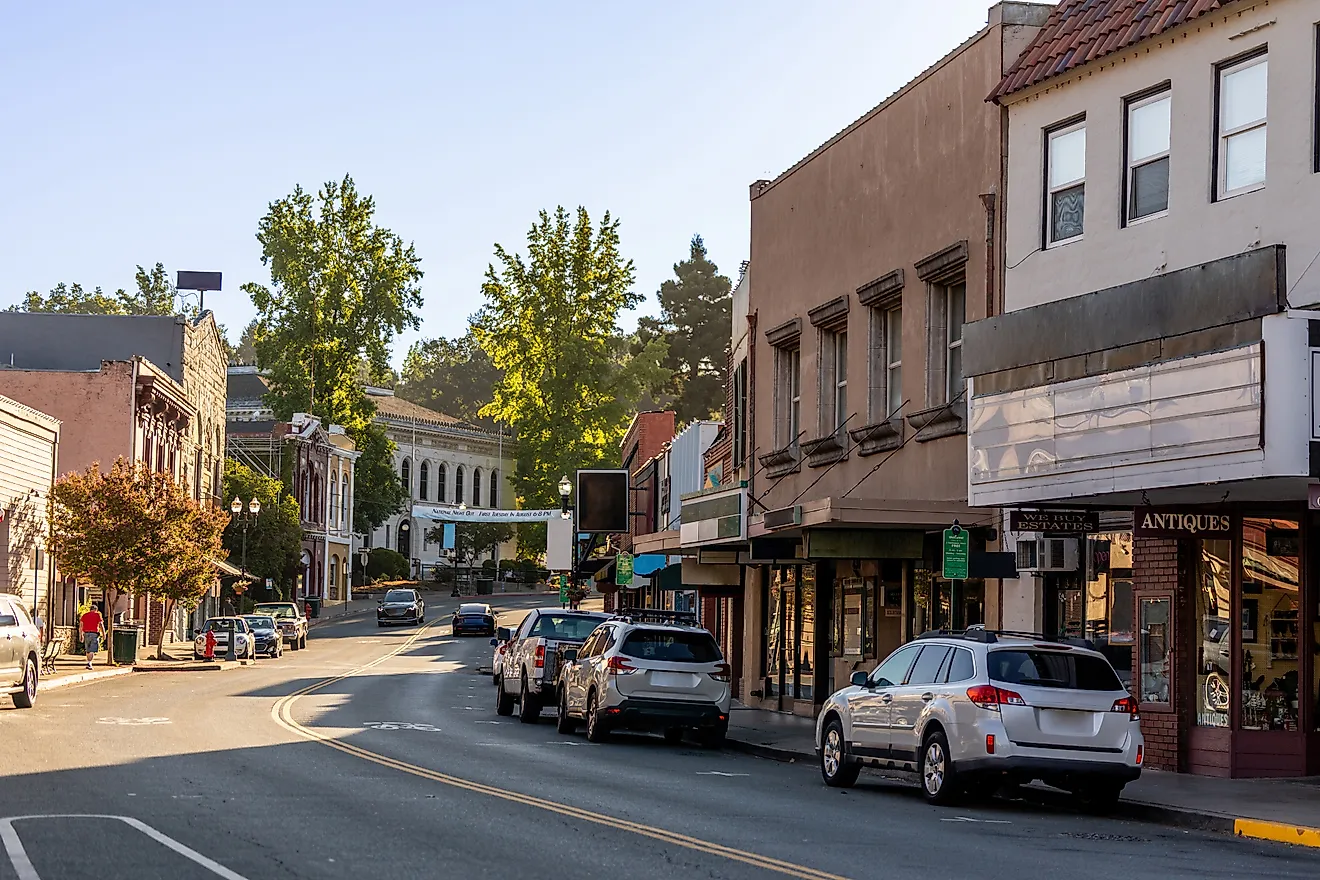
Fernandina Beach has flown under eight national flags since 1562, more than anywhere else in the country. Spain, France, and Britain each held it. So did a pair of one-man pirate takeovers in 1817. Henry Flagler then did the place a backhanded favor, routing his 1890s railroad and its wealthy tourists past Amelia Island and farther south. The Victorian seaport he skipped never got rebuilt into anything bigger, so Centre Street still carries about fifty blocks of 1800s storefronts and the Palace Saloon has poured drinks there since 1903.
The island earned its keep on shrimp. In the early 1900s local crews here were among the first to drag power-driven nets behind motorized boats, the method that built the modern shrimping industry. Every May the town still throws the Isle of Eight Flags Shrimp Festival. Fort Clinch holds the island's north tip, a brick fortress begun in 1847 that never saw a battle and now belongs to a state park with some of the quietest beach access on Amelia. The Atlantic sand is a couple of miles east of downtown, thirteen miles of it.
Dunedin

Dunedin takes its name from the Gaelic word for Edinburgh, a nod to the Scottish merchants who settled this stretch of the Pinellas coast in the 1880s. Street signs read Scotland Street and Highland Avenue, the high school marches a bagpipe corps, and every spring the Highland Games fill downtown with kilts and caber tosses. It is one of the oldest towns on Florida's Gulf coast.
The beaches are not in town but a causeway away. Honeymoon Island is the most-visited state park in Florida, with four miles of sand. A ferry from its tip reaches Caladesi Island, an undeveloped barrier island that has topped best-beach-in-America lists. The old rail corridor is now the Pinellas Trail, which threads a walkable downtown thick with craft breweries.
Deerfield Beach

North of Miami, Deerfield Beach earned its name the obvious way, from the deer that once crowded the ground. The town tacked on the Beach in 1939, when it decided tourism was worth chasing. Farmers had settled it back in 1890 to grow pineapple, tomatoes, and squash. The fishing crews followed close behind.
The beach itself carries a Blue Wave flag for clean water and sand, and the 976-foot International Fishing Pier marks its center, busy with anglers before sunrise. A reef lies close enough to the north end that snorkelers reach it on a short swim out. The Deerfield Beach Arboretum, a few blocks inland, holds a dense collection of native and rare trees. For this stretch of the southeast coast, the beach rarely feels crowded.
What The Label Misses
Underrated is not quite the right word for these eleven. They are not overlooked so much as occupied with something other than the beach. A few were working ports before they were anything else. One was carved whole out of the brush after a war. The rest simply outlasted the boom that paved everywhere around them. The sand, in every case, is almost incidental to why the town exists. That independence is the point, and it is also why the parking lot is rarely full.