The First Skyscraper Ever Built
The Home Insurance Building in Chicago, completed in 1885, is widely considered the first skyscraper ever built. Architect and engineer William Le Baron Jenney designed the building. It stood 10 stories tall at the corner of Adams and LaSalle Streets and was expanded to 12 stories and 180 feet (54.9 meters) in 1891. Its weight rested on a skeleton of iron and steel rather than on thick masonry walls. The building lasted only 46 years before it was demolished in 1931.
Why Is the Home Insurance Building Considered the First of Its Kind?

Historical consensus defines a skyscraper as a building with multiple stories and an iron-frame skeleton. This metal frame helps hold up the weight of the skyscraper, as opposed to relying on load-bearing walls. The Home Insurance Building contained such a frame and was the first high-rise building of its kind to have one. If you look at different definitions of the oldest or "first" skyscrapers, other candidates also make the list. The Ditherington Flax Mill in England was the first building designed with an iron frame. New York's Equitable Life Building was the first tall office building to incorporate passenger elevators. But for this article, the Home Insurance Building takes the number one spot because it is the earliest structure to transfer floor loads and exterior curtain-wall weight onto a full skeleton of iron and Bessemer steel.
Engineering and Construction of the Home Insurance Building
William Le Baron Jenney took out a permit on March 2, 1884, with the intention of building a 10-story office building with a basement. The construction would cost $300,000, which was to be paid by the Home Insurance Company of New York. Jenney promised that the finished building would be first-rate and fireproof. In May 1884, Mortimer & Tapper won the contract to build the world's first skyscraper. When construction got underway, the first story and basement were built out of Jonesboro rose granite, and the rest of the building eventually consisted of Trenton pressed brick and Vert Island red sandstone trimmings. The Dearborn Foundry supplied the ironwork.
The Home Insurance Building was completed in 1885 and occupied by the Home Insurance Company. Those who passed by the skyscraper marveled at its Italian marble court, blue steel lacework, and onyx and bronze bars. The windows were French plate glass, and its exterior was of Eastern brick and brown stone. The plumbing work included twenty closets, three wash basins, and five compartments. The building plans included a drinking fountain in the hallway of each floor, and one of the floors even had a barber shop. In addition to being occupied by the staff of the Home Insurance Company, the skyscraper also became the home of the law offices of Bisbee, Ahrens & Decker, among others. In total, the building consisted of 235 offices that served 1,250 occupants. The total cost far exceeded the initial estimates, landing at around $800,000. In 1891, the Home Insurance Company added two more floors to the top of the building, bringing the height to 180 feet (54.9 meters).
Steel Skeleton Construction
Before construction commenced, Jenney proposed a "radical" idea. He suggested that the building process should forgo exterior masonry for load-bearing. Traditionally, brick walls were used to support a building's weight. Considering that this building would initially be ten stories tall, Jenney decided most of its weight should be carried by a steel skeleton instead. He designed a self-supporting cage of iron columns and horizontal girders, allowing the brick and terracotta to hang from the metal frame almost like a curtain. While the brick and terracotta did not support the weight of the building, they did insulate the interior from the wind and rain. The steel skeleton was also designed to be fireproof, with a cover of masonry and fire-clay tiles protecting it from thermal damage.
When Jenney proposed this to the Home Insurance Company, they were initially skeptical because no other building had such a frame. Jenney presented his designs and calculations, earning the approval of General A.C. Ducat, one of the managers of the company. The steel frame was then built out of wrought iron and cast iron, and it supported the Home Insurance Building until it was demolished. During construction, Jenney was offered a supply of structural Bessemer steel by the Carnegie-Phipps Steel Company. He modified his blueprints so that he could incorporate the steel and at the same time created another piece of construction history. His skyscraper would also be the first structure in civil engineering history to incorporate structural steel beams into a building frame.
What Happened To The Home Insurance Building?

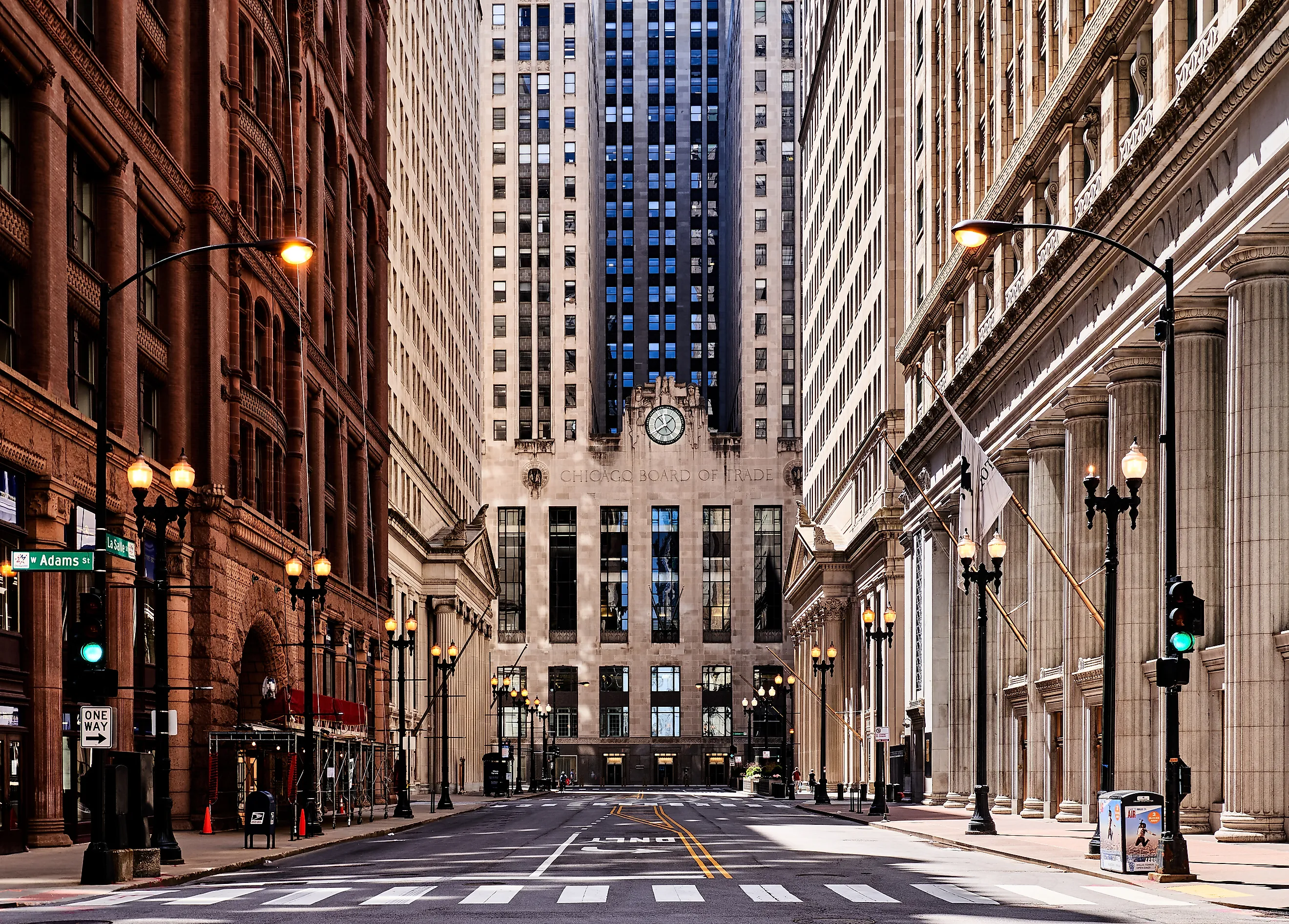
The Home Insurance Building stood tall for only 46 years. It was demolished in 1931 to make room for a gigantic 45-story Art Deco office tower originally called the Field Building. The tower was later known as the LaSalle Bank Building and has been renamed several times since. During the demolition, structural engineers oversaw the process to ensure the framework was carefully dismantled. Workers extracted some of the metal joints after stripping back the brick exterior. The engineers tested and performed load analyses on the metal, and the results proved that the iron and steel skeleton had held up the building for its entire 46-year lifespan without relying solely on the bricks and stone. Those visiting the Field Building today will find a commemorative plaque in the lobby marking the location of the old skyscraper.
More Contenders for First Skyscrapers
There is something of a debate around whether Jenney truly did build the world's first skyscraper. Other historic buildings are often cited as being the first, in different ways. For example, the Ditherington Flax Mill in Shrewsbury, England is often called the "Grandfather of Skyscrapers." The mill was the first building in the world to feature an internal cast-iron framework. It was designed by Charles Bage, who used iron columns and beams to make the mill fireproof, creating the forerunner of the modern skyscraper. At the same time, the structure was only 52 feet (15.8 meters) high and relied entirely on external brick walls to carry its load after it was completed in 1797.
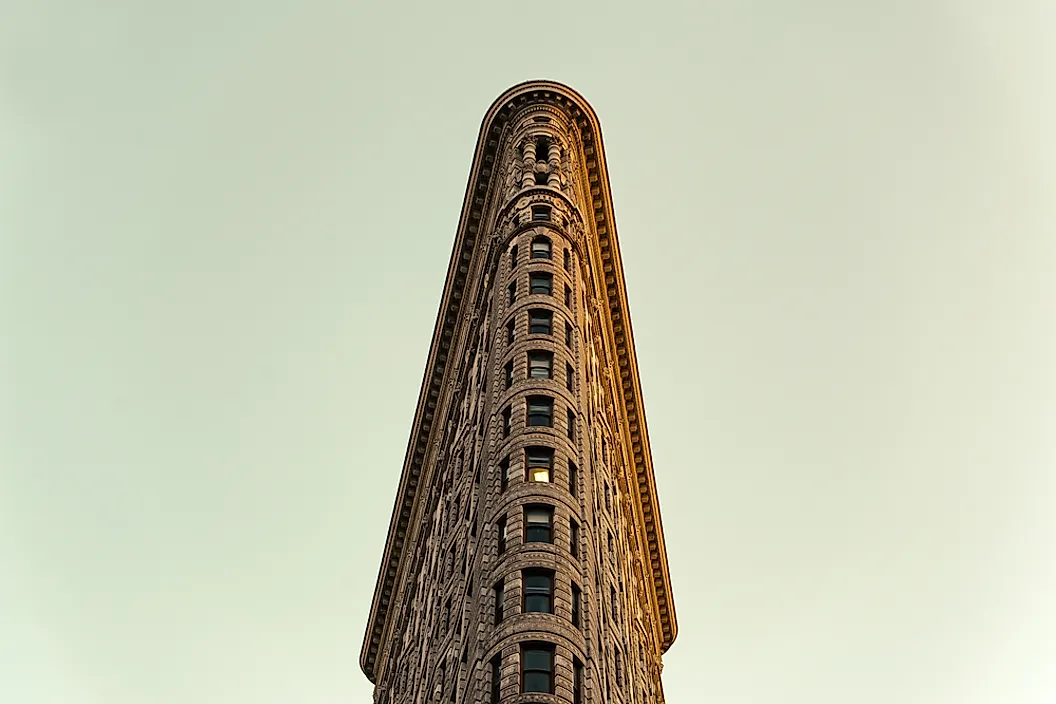
The Jayne Building in Philadelphia was completed in 1850 and was an eight-story landmark that reached a height of 130 feet (39.6 meters). It featured vertical granite piers that looked a lot like some of the skyscrapers being built today. But, again, it was masonry-heavy with load-bearing brick walls. It also did not have an internal metal frame. Another building that relied on traditional granite and brick is the Equitable Life Building in New York. This Manhattan office building was the first high-rise to incorporate passenger elevators and rose seven stories to a height of 142 feet (43.3 meters).
The Home Insurance Building Left an Architectural Legacy
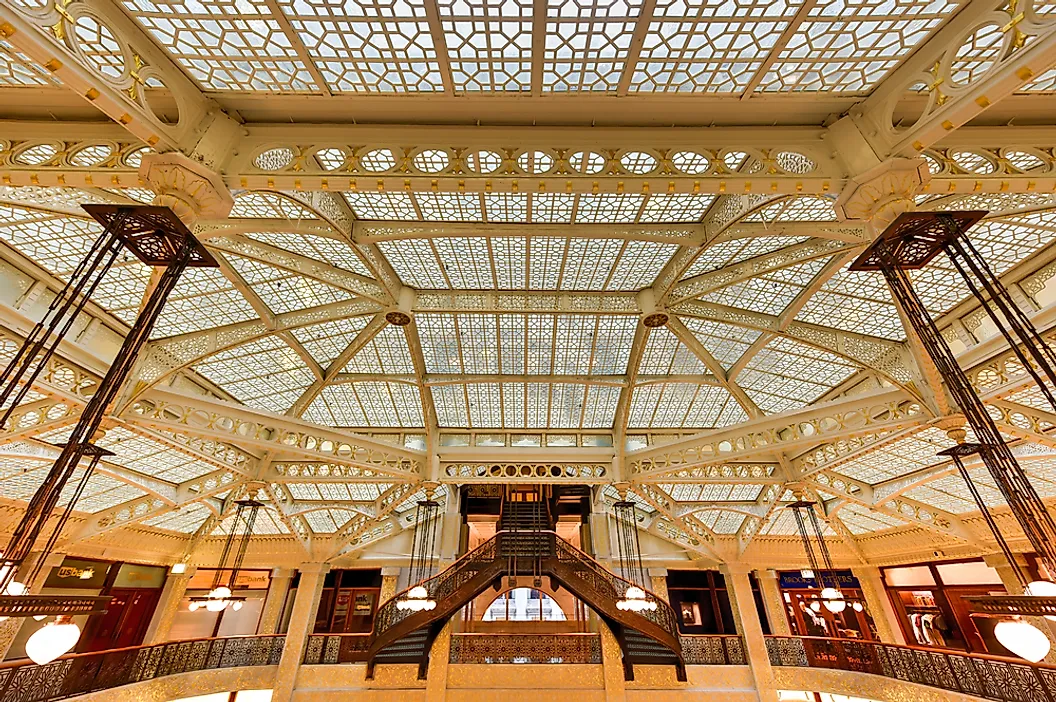
William Le Baron Jenney's steel skeleton design proved that bricks are not needed to hold a tall building up above the ground. The Home Insurance Building established the technical blueprint for the Chicago School of Architecture and created a way for builders and architects to design more vertical buildings, essentially the skyline we see today. Designers took Jenney's ideas and ran with them. They refined outer glass curtain walls, focused on standardizing steel manufacturing, and learned how to develop deep concrete foundations. Without Jenney's "radical" experiment at Adams and LaSalle Streets nearly 150 years ago, today's city skylines would most likely have looked a lot different.
The Birth of the Modern Skyline
The construction of the Home Insurance Building not only changed how people built, but it transformed how they worked and lived in big cities. The building was more than just iron and glass. It proved that ambition and innovation did not have to be limited to stone and brick. The original structure may have stood for less than 50 years, but the idea behind it became a permanent part of construction processes. Every time a new skyscraper breaks ground, it relies on the principles thought up for a corner of Chicago back in 1885.