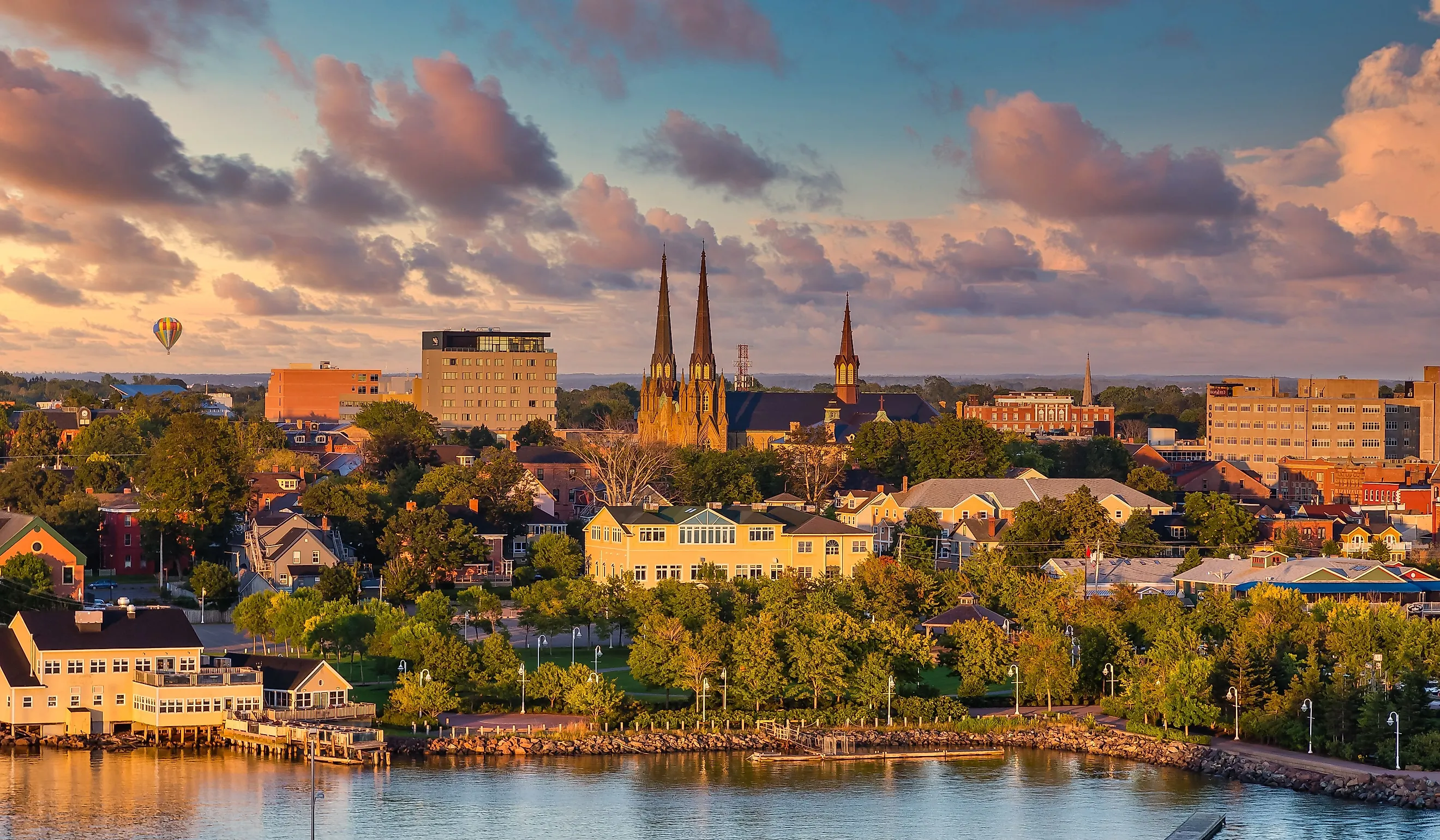
Where People Are Moving To In The Maritimes In 2026
The Maritimes just came off their strongest stretch of population growth in half a century. Nova Scotia crossed a million people for the first time, and Prince Edward Island and New Brunswick posted their fastest growth since the 1970s, powered by immigration and, for a while, a wave of Canadians moving east. But that growth never spread evenly across the lobster boats and quiet coves of the postcard. It pooled in the places that do a job for the region: a Halifax shipyard, a Moncton rail junction, a Fredericton cybersecurity park. Every town on this list runs on a real economic engine, a hospital, a campus, a government office, or a working port, and that is exactly why people keep landing in them.
Halifax, Nova Scotia

Nobody moves to Halifax to save money. They move here for work that does not exist anywhere else in the Maritimes. Defence contractors staff the naval dockyard and Irving Shipbuilding, longshore crews work the port, and hospitals, universities, government offices, and a fast-growing ocean-technology sector fill careers no smaller town can match. Buyers pay for that depth: Halifax is comfortably the most expensive housing market in Nova Scotia, well above anywhere else in the province. Newcomers are buying a real city as much as a house. The payoff shows up on an ordinary Tuesday. Catch a ferry across the harbour, eat on the waterfront, or walk the 39 kilometres of wooded paths in Point Pleasant Park out to the headlands and Black Rock Beach. With the Public Gardens, the North End music rooms, Citadel Hill, and the Atlantic beaches all in reach, nobody waits for tourist season to find something to do.
Moncton, New Brunswick

Highways and rail lines converge just outside Moncton, and that geography is most of the story. Distribution and transportation firms sit a short haul from every market in Atlantic Canada, healthcare and insurance employers hire year-round, and bilingual workers fill roles that demand both French and English. Employers recruit graduates straight out of the Universite de Moncton. Housing is generally easier on the wallet than Halifax, though several years of fast growth have pushed rents up and cleared out the old bargains. For its size, Moncton keeps residents busy. The tidal bore rolls up the Petitcodiac past downtown, cyclists ride the Riverfront Trail, and the Saturday market fills early. Magnetic Hill books concerts and family attractions all summer, and Parlee Beach and Shediac are close enough for a spur-of-the-moment evening on the Northumberland Strait.
Dieppe, New Brunswick

Dieppe is where you land if you want a strongly francophone community without giving up a big-city job market. More than three-quarters of residents speak both official languages, and children enrol in French- or English-language schools. Students train at the local CCNB campus, with the Universite de Moncton minutes away. Most people work in Greater Moncton, though a growing cluster of distribution, commercial, and airport employers hire inside Dieppe itself. The Greater Moncton Romeo LeBlanc International Airport sits within the city limits, a real edge for anyone in transportation or on a plane often. Newer subdivisions once made Dieppe the obvious budget pick; strong demand has narrowed that gap, but buyers still get more space here than in Halifax. Acadian culture runs through daily life. At Rotary St-Anselme Park, residents walk the trails, use the sports facilities, and gather for big community events, and the summer builds toward National Acadian Day and its outdoor stages.
Fredericton, New Brunswick
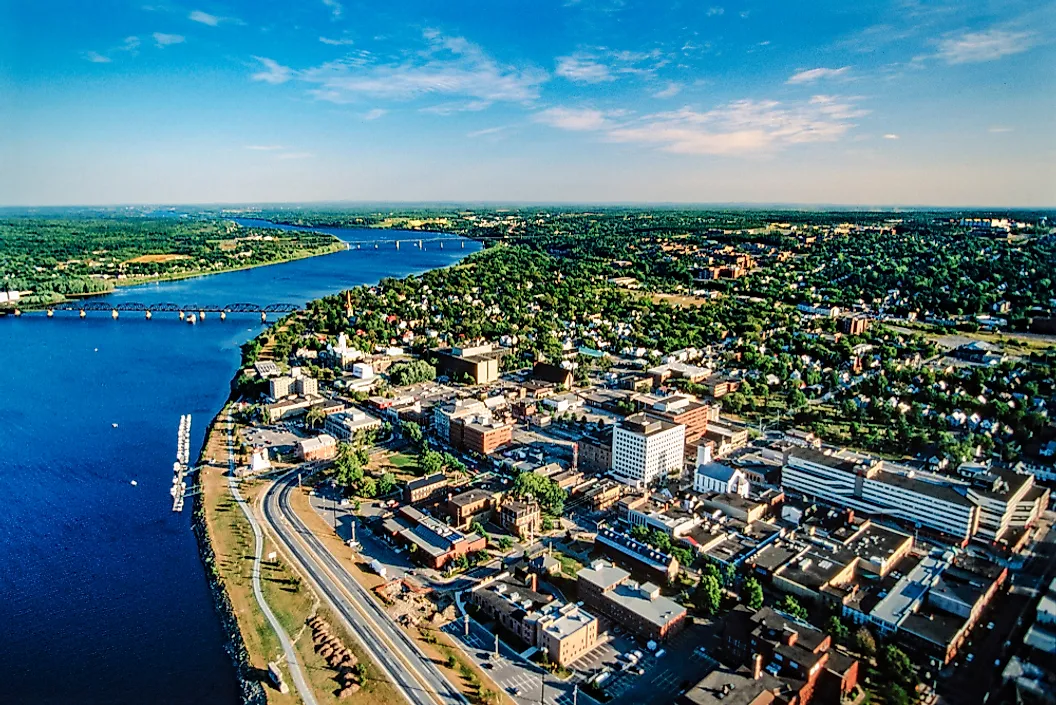
If your career runs on knowledge rather than heavy industry, Fredericton is the New Brunswick city calling your name. The provincial government anchors a stable base of jobs, and research, engineering, and technology firms hire out of the University of New Brunswick. Cybersecurity in particular has dug in, with dozens of advanced-technology and defence-innovation companies working alongside the Cyber Centre at Knowledge Park. As professional demand hit a thin housing supply, prices climbed, and Fredericton is no longer the province's easy bargain, though it stays below Halifax and the hops between neighbourhoods, campuses, and offices stay short. Free time here happens along the Saint John River. Walking and cycling routes line both banks and cross the Bill Thorpe Walking Bridge, and Odell Park and Killarney Lake sit inside the city. Downtown pulls its cultural weight from the Beaverbrook Art Gallery, and every September the Harvest Music Festival puts stages in the streets.
Saint John, New Brunswick

Households that want a city but cannot stomach Halifax prices keep landing on Saint John. CMHC's 2025 rental survey put the average purpose-built apartment rent below Fredericton's, though rents keep climbing and cheap units are hard to lock down. The work here is industrial: logistics and manufacturing firms ring the port, and the regional energy sector runs major refining and utility operations. A substantial health and education cluster has grown around Saint John Regional Hospital, Dalhousie Medicine New Brunswick, UNB Saint John, and NBCC. The Bay of Fundy is never far. Walk the brick streets of Uptown, grab lunch under the rafters of the Saint John City Market, and follow Harbour Passage out to the Reversing Falls Rapids. Rockwood Park drops lakes and long trails right beside central neighbourhoods, and a short drive reaches Irving Nature Park and its rough run of coast.
Charlottetown, Prince Edward Island

Charlottetown has the widest choice of professional work on Prince Edward Island. Provincial departments sit beside UPEI, Holland College, and the Island's largest concentration of medical services, and bioscience employers hire thousands across PEI, most of that research clustered around the capital. All of it has made Charlottetown pricier than its small population suggests, as limited land and steady demand from students, newcomers, and public-sector workers press on both sales and rentals. What buyers get is a compact city where much of daily life happens near the harbour. Through the busy season the town closes Victoria Row to cars and lets restaurant tables and live music spill onto the pavement. Walk the Victoria Park boardwalk, catch a play at the Confederation Centre of the Arts, or ride straight onto the Confederation Trail, with the central north-shore beaches an easy weekend away.
Stratford, Prince Edward Island

Stratford grew up around the bridge into Charlottetown. Residents commute to the capital's hospitals, government offices, and colleges, then come home to detached houses and new townhomes. That arrangement has made the town a favourite with families and newcomers, and council is rewriting its planning rules to allow more multi-unit construction. Planners have mapped a new community campus, a high school, sports fields, active-transportation routes, and future recreation facilities, all sized for a town that expects to keep growing. Stratford lacks the job base of a standalone city, and its fast expansion means housing is not automatically cheaper than Charlottetown. The trade-off is immediate access to the Hillsborough River and a surprising amount of open space. Fullerton's Creek Conservation Park runs woodland routes and wetland boardwalks, Tea Hill Park has a small red-sand beach, and the trail network reaches the Hillsborough Bridge, a direct cycling route back to the capital.
Summerside, Prince Edward Island

Summerside is not a discount Charlottetown, because it runs on a different engine. Aerospace firms at Slemon Park employ technical and manufacturing workers, and the municipal utility has poured money into renewable energy and smart-grid technology. Prince County Hospital is the healthcare hub for western PEI. Holland College runs several facilities in the area, including its Aerospace and Motive Power centres, and students there step straight into local industry. Home prices generally sit below Charlottetown's, which pulls in first-time buyers and families happy to trade a smaller job market for the difference. Days here orient around the shoreline. Walkers and cyclists use the 6.5-kilometre Baywalk past beaches and green space, and Credit Union Place keeps a pool, rinks, and event space busy all year. On summer evenings the crowd gathers at Spinnakers' Landing, and the instructors and pipers at the College of Piping keep the Island's Celtic music and dance in plain view.
Truro, Nova Scotia

Highway 102 meets the Trans-Canada at Truro, and that crossroads is why the town became Nova Scotia's inland distribution centre. Nearly 70 companies in warehousing, manufacturing, processing, and transportation run out of its business park. Across the river in Bible Hill, faculty at the Agricultural Campus of Dalhousie University teach and research crop science, animal science, and agricultural technology, while the regional hospital and local government employ people in work that owes nothing to tourism. Housing stays more reachable than Halifax's, and people who work locally skip the long commute that comes with the cheaper towns on the capital's edge. Few towns keep their best outdoor space this close to the core. Victoria Park covers roughly 1,000 wooded acres, its trails climbing past Lepper and Joseph Howe Falls into a steep gorge. Cyclists take the flatter Cobequid Trail through the countryside, and the Bay of Fundy tidal bore rolls up to viewing points nearby.
Bridgewater, Nova Scotia

Bridgewater is the working capital of the South Shore. Michelin is the best-known employer, but the regional hospital, professional services, retail, and the NSCC Lunenburg Campus account for most of the rest. Campus students train for trades and technical careers, from marine diesel repair to environmental technology. The town sits under an hour from Halifax, close enough for businesses to reach the provincial market without paying capital-region property costs. Housing usually runs cheaper than Halifax, though demand across the South Shore has lifted prices and thinned the rental supply. Life here happens along the LaHave River rather than a crowded oceanfront. The Centennial Trail crosses town and ties the neighbourhoods to the commercial centre, and the Lunenburg County Lifestyle Centre handles skating, swimming, and indoor events. A weekend might mean Rissers Beach, a walk through Lunenburg, or the LaHave islands, none of it requiring life in a seasonal resort.
Wolfville, Nova Scotia

Wolfville puts the lie to the idea that a small Maritime town has to be cheap. Almost everything here turns on Acadia University: its payroll, its students in the rental market, its academic calendar, and the shops those students keep alive downtown. Students make up a large share of the population, university staff form a steady professional base, and winery and food-tourism jobs spread across the surrounding Annapolis Valley. Limited land and competition for housing keep Wolfville expensive for its size, yet academics, retirees, and remote workers keep choosing it for a way of life that is genuinely hard to find nearby. Independent restaurants and shops line Main Street within walking distance of the Acadia campus. Waterfront Park looks across the historic dykes to Cape Blomidon, and the Harvest Moon Trail starts near the town centre, with several wineries close enough to reach by bicycle or shuttle. Acadia sporting events and the Devour Food Film Fest fill a cultural calendar fuller than in towns several times the size.
What the 2026 Pattern Shows
The Maritime communities gaining residents are rarely the scenic towns that empty out when summer ends. People are collecting where a place does a clear regional job. Halifax has the deepest labour market. Moncton and Dieppe have bilingual business and transportation links. Fredericton runs on government, universities, and technology, while Saint John carries the region's strongest industrial base. On PEI the gains track the capital region and Summerside's specialized economy. In Nova Scotia, Truro and Bridgewater are the hospital, college, and commercial hubs for wide rural areas, and Wolfville draws people willing to pay more for a university town wrapped in vineyards and Fundy tides. Affordability still matters to these buyers. It just matters most next to a dependable employer, useful local services, and somewhere they actually want to spend the hours after work.