9 Most Walkable Town Centers In The Rockies
One of the benefits of small towns is that cars are typically optional. These lively town centers across the Rocky Mountains are no exception, with arts, culture, and history all contained within a few short blocks. The natural beauty of the west is celebrated by local artists at events like the Whitefish Arts Festival in Montana or Meyer Gallery in Park City, Utah. History is ubiquitous in these towns, too, like the bright yellow tour buses preserved in Red Lodge that once visited Yellowstone National Park, or the Oasis Bordello Museum in Wallace, Idaho. If you're looking to lessen your carbon footprint and increase your actual steps, these nine small towns in the Rockies are some of the most walkable.
Leadville, Colorado

At almost 2 miles above sea level, Leadville, Colorado, is the highest incorporated city in the United States and overlooks Colorado's two highest mountains, Mount Elbert and Mount Massive. Leadville launched Colorado's gold rush in 1860 when Abe Lee found a vein in nearby California Gulch, but silver eclipsed gold production after the carbonate ore was identified in 1877. Silver mining tycoon Horace Tabor built the Tabor Opera House in 1879, and today the building sits at the heart of Leadville's walkable downtown. The venue hosts film nights, concerts and musical acts, and live stage shows.
On Harrison Avenue through the center of town, you'll find local shops like Elevation Goods, offering home goods, paper products, and apparel inspired by the surrounding Rocky Mountains. The stock comes from Colorado makers. On 4th Street, half a block from Harrison Avenue, the House With the Eye Museum is a Victorian-era home named for the stained-glass window over the door. The house looks as though it has an eye staring out. It has operated as a museum, off and on, since the 1960s, and today it is filled with 19th-century decor and local artifacts, such as a horse-drawn hearse. The Leadville, Colorado & Southern Railroad, known locally as the Leadville Railroad, leaves from the brick depot at 326 East 7th Street. The train climbs roughly 1,000 feet above the valley floor through the San Isabel National Forest, offering open-air seating and vintage cars, and it offers specialty excursions like a barbecue buffet train.
Crested Butte, Colorado

Mountain biking in Crested Butte started with klunkers, old one-speed bikes rebuilt with road and motorcycle parts to survive the unpaved mining roads around town. In 1976, a group set out on the 38-mile route over Pearl Pass to Aspen, and the town is widely credited with opening the country's first mountain bike shop that same year. Those bikes are a core exhibit at the Crested Butte Museum at the center of this walkable downtown. The museum documents local history with a collection of items dating back to the 1880s and displays rotating exhibits on topics such as food and drink, mining, and the area's railroads, including a model town with a miniature train.
Elk Avenue, running through the center of town, is lined with local independent shops. Zoning restricts formula businesses, so instead of a national coffee chain, try A Daily Dose, across the street from the Crested Butte Museum. The shop's menu includes fruit smoothies, lunch burritos, organic pastries, and coffee. Further down Elk Avenue, the Trailhead Children's Museum is built for families. The interactive exhibits are built around sensory play, like the art bar and the STEM Lab for experiments. The museum also hosts events with live music and story time.
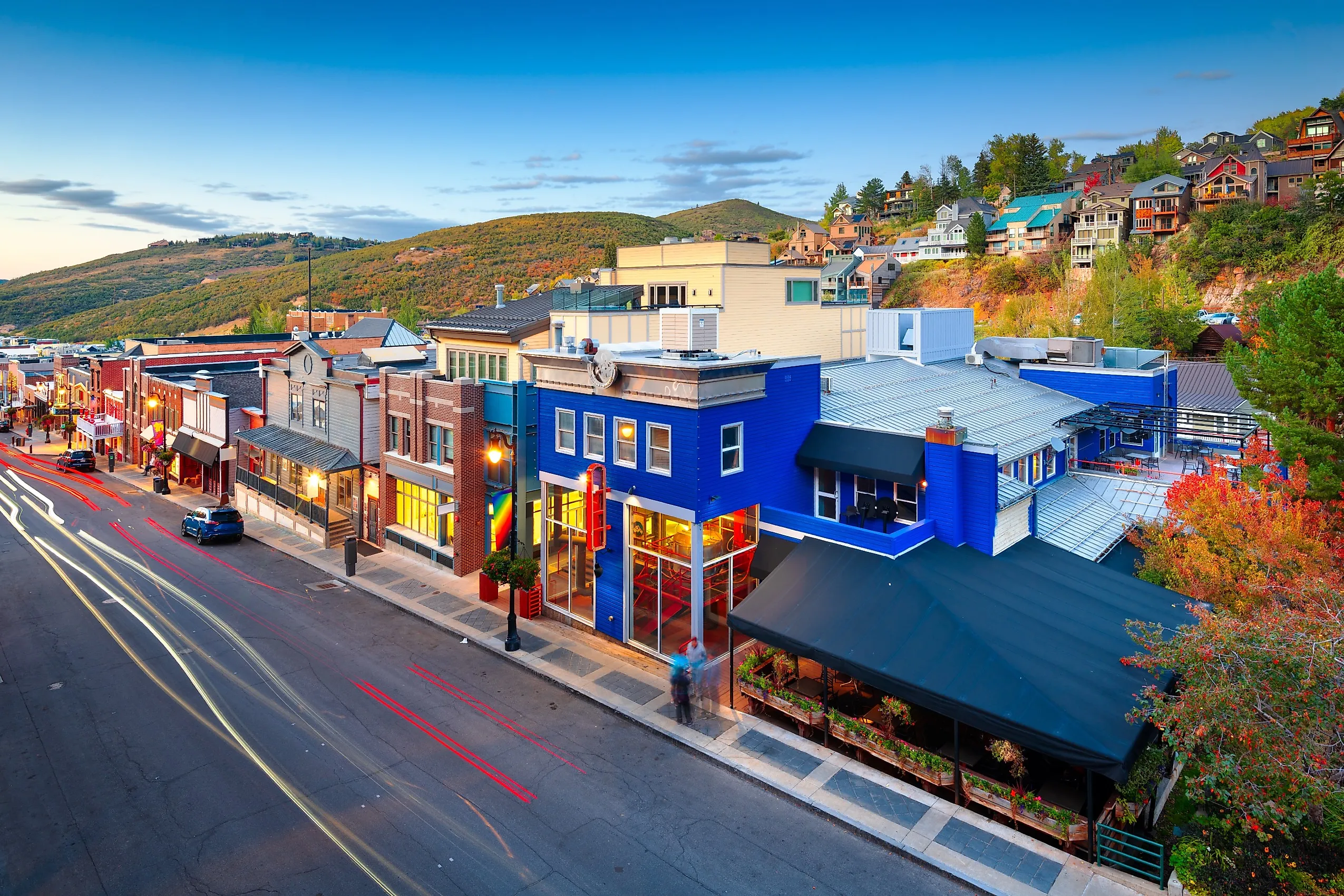
Park City, Utah

In the mid-1960s, the skier's subway operated in Park City, Utah, using the old Spiro mining tunnel to carry skiers into the mountain in retrofitted mine cars before a hoist lifted them to the slopes. The ride took 45 minutes. Prospectors turned up silver above town in 1868; the Ontario claim followed in 1872, and mining drove the economy for decades. By the 1960s, winter recreation had come to dominate, and the old tunnels briefly found a second life in tourism. Today, a conventional lift has replaced the subway, but the Park City Museum still has one of the old cars on permanent display. Located on Main Street in the center of this walkable town, the museum covers Park City's history with temporary and permanent exhibits.
On Main Street, Banksy's Camera Man and Flower remains on the exterior wall beside Java Cow Coffee & Ice Cream, protected behind heavy glass. The artist left as many as seven pieces around town during the 2010 Sundance Film Festival, which screened his documentary Exit Through the Gift Shop. Three of them survive. For more conventional art, galleries line Main Street. On the south end, the Meyer Gallery features contemporary artists in a historic building, focusing primarily on artists residing in the Intermountain West. On the north side of Main Street, across from Town Lift Plaza, Trove Gallery emphasizes Utah artists. Town Lift Plaza is a public space in the middle of the shopping district with lift access to the mountain above. The plaza also has shops and restaurants, such as The Bridge Cafe and Grill, which serves American bistro cuisine with Brazilian influence.
Jackson, Wyoming

The elk antler arches at the corners of Jackson, Wyoming's Town Square, each hold about 2,000 antlers. An internal steel frame supports them, but otherwise they are stacked antler. The Jackson Hole Rotary Club built the first arch on the southwest corner in 1953, and the other three went up between 1966 and 1969. Local Boy Scouts still collect the sheds each spring at the National Elk Refuge.
Located in the center of Jackson's walkable downtown, Town Square is home to the Jackson Hole Farmers Market, where local ranchers and food producers sell fresh produce on summer Saturday mornings. The square also hosts festivals like the Million Dollar Music Fest, with live music on a main stage right in the center of town. It is also the venue for the Town Square Shootout, a staged western gunfight featuring cowboys, outlaws, and saloon girls that has played here since 1957. The performance lasts about 20 minutes and includes singing and dancing.
The shootout performers are actors from the Jackson Hole Playhouse, two blocks west of Town Square on Deloney Avenue. The venue claims the title of longest continuously operating professional theatre in Wyoming and stages musical theatre and holiday shows. For a less dramatized look at the Old West, check the Jackson Hole History Museum, two blocks east of Town Square on East Broadway Avenue. The museum hosts exhibits of historic photos and artifacts, plus walking tours through downtown that cover the events and people who passed through Jackson.
Cody, Wyoming

Buffalo Bill Cody established Cody, Wyoming, in 1896 as a destination for tourists, hoping to take advantage of the nearby eastern approach to Yellowstone National Park. Today, the Buffalo Bill Center of the West sits on the western edge of this walkable downtown, a complex of five museums dedicated to the art and culture of the West. The complex includes the Whitney Western Art Museum, which houses traditional and contemporary works by American artists who depicted the region. The Plains Indian Museum covers the culture, art, and traditions of the native peoples of the Great Plains. The Draper Natural History Museum focuses on the wildlife, plant life, and landscapes of the Greater Yellowstone ecosystem. These and the rest sit in the single complex on Sheridan Avenue, a few blocks from the center of town.
From the Buffalo Bill Center, heading down Sheridan Avenue four blocks, the Cody Theatre hosts events throughout the year. The Art Deco building, once a cinema, has been converted for live theatre. Through the summer, it stages Wild West Spectacular the Musical, a dinner show with dancing, singing, comedy, and history rolled into a single western production. The resident company also produces musicals, and the venue is equipped to host films. Small shops fill the rest of Sheridan Avenue, and Cody is a practical place to outfit yourself for ranch country, like at the Custom Cowboy Shop, another block down. It carries saddles, stirrups, coats, and hats.
Red Lodge, Montana

Further north in Red Lodge, Montana, coal miners turned to cough syrup. The mines around this small town at the base of the northern Rockies began closing in the 1920s, and after the Depression, the town found another product to export: bootleg liquor, labeled as cough syrup and shipped to the Midwest and the California coast. Red Lodge's mining history can be explored at the Carbon County Historical Society and Museum, at the north end of this walkable town. Housed in the 1909 Labor Temple on Broadway, built by the Red Lodge Miners Local No. 1771, the museum hosts exhibits on the local mines and their history, the Crow people, and a basement mine immersion featuring an interactive simulation of a coal-mining tunnel.
Down Broadway, the Buses of Yellowstone Preservation Trust display motorized buses once used to tour the park in the years before World War II. Housed in a former downtown garage, the vehicles had traveled the Beartooth Highway. The collection includes several models of preserved buses and touring cars, support vehicles, and artifacts from the period. Continuing down Broadway, bars and restaurants line the street, like Piccola Cucina Ox Pasture serving Italian American cuisine and Bogart's Restaurant with a Tex-Mex menu. But for something more inspired by the surrounding landscape, head over to Black Canyon Bistro, where the menu includes western game animals like elk, bison, and steelhead trout.
Livingston, Montana

The Northern Pacific Railway reached Livingston, Montana, in 1882, helping to open Yellowstone National Park to visitors. Created in 1872, the park was remote enough that only a few hundred people a year made the trip in its first seasons. The arrival of the train in Livingston and a subsequent spur line to the north entrance at Gardiner ferried tourists to the park by the carload. Today, the Livingston Depot Center serves as a museum and an event venue for celebrations like weddings.
From the depot museum, head down Main Street, where shops, bars, and restaurants pack both sides of the historic downtown street. The Historic Preservation Commission oversees protections for the character of the buildings in the business district. Wheatgrass Books hosts author conversations among shelves of new releases, and the shop's community space also holds art exhibitions during the Livingston Gallery Association's art walks. The art walks highlight Livingston's galleries along Main Street. Visions West Contemporary shows exhibitions on animals, nature, environmental concerns, and the West as a whole. Across the street, the Livingston Center for Art and Culture provides a venue for classes and workshops. The center's gallery also hosts exhibitions with local artists, and regularly calls for submissions.
Whitefish, Montana

Heading further north, Whitefish, Montana, was once known as Stumptown. The name came from the many stumps left behind after the arrival of the Great Northern Railway led to the clear-cutting of the trees for lumber. Today, the rail depot remains active for freight, Amtrak service operates from the historic building, and an old Great Northern Railway diesel engine is on display outside. Across from the historic depot building, Depot Park hosts the Whitefish Farmers Market seasonally on Tuesdays, and the annual Whitefish Arts Festival, where local and regional artists display their work and vendors line the sidewalk with food.
Across Central Avenue from Depot Park, the Whitefish Theatre Company and O'Shaughnessy Cultural Arts Center provide the community with ongoing entertainment, including comedy shows and tribute band concerts. A block down Central Avenue, Thirty Eight is an open-air bar and community space. The yard hosts live music, a rotating selection of food trucks, and a Wednesday community market with local artisans and artists. On Giving Thursdays, local nonprofits connect with the community and share information about their goals and needs. The bar serves craft beer and cocktails. Another block down Central Avenue, Stumptown Art Studio hosts classes and art programs for adults and children. In addition to painting classes, workshops in the clay studio cover ceramics, and the studio has electric pottery wheels and kilns to fire the work.
Wallace, Idaho

Heading west, a manhole cover in Wallace, Idaho, marks the exact center of the universe. Mayor Ron Garitone made the claim by proclamation in September 2004. The reason: federal regulators had declared the area a Superfund site over lead contamination from the surrounding mines, and the town had spent years disputing the finding. The mayor answered by declaring the corner of 6th and Bank Street the center of the universe, on the grounds that nobody could prove otherwise. If not the center of the universe, the manhole cover is at least at the center of Wallace's walkable town center. Cogs Gastropub overlooks the corner of a historic storefront. The bar hosts live music and karaoke nights, and serves lunch and dinner with rotating, house-made specials.
Along 6th Street, vintage shops fill the rest of the block. The Haberdashery, easily identified by the large metal hat outside the shop, has an assortment of home decor, furniture, and odd objects. Across the street, Past Present Shoppe has collectible toys, glassware, and mineral samples. A block up on Cedar Street, the Oasis Bordello Museum documents the brothel trade that survived in Wallace through most of the 20th century. The town ordered its brothels closed in 1973, and they carried on quietly until January 1988, when word of a federal raid reached the Oasis and the women left in a single night. The museum shows the rooms as they were found, including personal items and the price list posted for customers.
Walking Is The Best Way To See The Small Towns Of The Rocky Mountains
The nine town centers of the Rocky Mountains all keep it simple, with the museums, galleries, and kitchens gathered onto a single street or square. In Leadville, the Tabor Opera House, the shops, and the House With the Eye Museum sit on Harrison Avenue, or half a block off it, and the railroad depot is a few streets further. Crested Butte lines Elk Avenue with its museum, a coffee counter directly across the street, and a children's museum a little further down. In Jackson, the playhouse stands two blocks west of Town Square and the history museum two blocks east.