12 Storybook Towns In Wyoming
Wyoming's smallest towns punch above their weight on history and setting. Pinedale sits in the shadow of the Wind River Range with the Museum of the Mountain Man and a downtown that still works for the outfitters and ranchers who run the local economy. Buffalo's Main Street Historic District anchors a town where the Occidental Hotel has been hosting guests since the 1880s. Dubois runs on the upper Wind River with log-style architecture, working guest ranches, and a walkable Main Street. Twelve Wyoming destinations follow that prove the smaller towns often tell the most concrete stories.
Cody

Cody, founded by the showman Colonel William F. "Buffalo Bill" Cody, sits 52 miles from Yellowstone National Park's eastern entrance and blends stories of the American frontier with small-town pace. The starting point for every visitor in this Park County seat is the Buffalo Bill Center of the West complex, a group of five museums and a research library covering frontier art, Plains Indian cultures, Wild West history, Yellowstone ecosystems, and the life of Buffalo Bill himself. To get an idea of how the town looked during Buffalo Bill's time, explore Old Trail Town, a frontier replica with original 1890s buildings, blacksmith shops, saloons, and homestead cabins lining the streets. Downtown Cody, anchored by the Irma Hotel & Restaurant (built by Buffalo Bill), has eateries like The Blanca Tatanka serving tasty food and cocktails, art galleries like Timmer Gallery, and souvenir shops like Yellowstone Gift Shop.
Thermopolis

Hot Springs County's government seat and its largest community, Thermopolis sits near the northern end of the Wind River Canyon and the Wedding of the Waters and is best known for its natural hot springs, an American bison herd, and dinosaur skeletons. Visitors come to Hot Springs State Park to soak in the mineral waters at the State Bath House, walk the travertine terraces, traverse the suspension footbridge across the Bighorn River, and observe the small bison herd. The neighboring Wyoming Dinosaur Center houses over 50 mounted dinosaur skeletons, pre-Mesozoic fossil displays, a working preparation lab, and active dig sites, all accessible by museum transportation within a 10-minute drive. The National Register-listed Downtown Thermopolis Historic District holds numerous Victorian-style properties, the jewelry and fossil-selling Ava's Silver & Rock Shop, and a large collection of pioneer memorabilia at the Hot Springs County Museum and Cultural Center.
Pinedale

Set against the western slopes of the Wind River Range, Pinedale is a major hunting-outfitting town whose ties to mountain-man history shape the local identity. Pinedale's most frequented point of interest is the Museum of the Mountain Man, the summer-season museum spotlighting artifacts related to the trappers who scoured the region across the early and mid-19th century. For time outdoors, Fremont Lake, just 3.2 miles from Pinedale, is the go-to place for water-based recreational activities and annual events like the Fremont Lake Sailing Regatta and the Big Fish Winter Derby. Downtown Pinedale's outdoor sports stores like The Great Outdoor Shop and clothing stores like Cowboy Shop, along with the spicy-burger-serving Wrangler Café, cater to residents as well as mountaineers heading to the Wind River Range.
Sheridan

Sheridan sits at the foothills of the Bighorn Mountains, equidistant between Yellowstone National Park and Mount Rushmore National Memorial. Visitors come for unspoiled scenery, frontier roots, and a community-focused daily pace. Main Street, featuring old-school saloons like The Mint Bar WYO, Western-themed gift shops like High Mountain Mercantile, art galleries like Ballard's Fine Art, and restaurants like Frackelton's Fine Food & Spirits, runs an active yet unhurried atmosphere. The Sheridan Inn holds original furniture, artifacts, and the restoration of each of the 22 rooms that tell individual histories of the inn's celebrated resident, Buffalo Bill, and 21 other important characters from his life. The King's Saddlery Museum holds the Western leatherwork collection. The Sheridan WYO Rodeo & World Championship Indian Relay Races run at the Sheridan County Fairgrounds in mid-July.
Kemmerer

Founded in 1897 by Irish immigrant Patrick J. Quealy, Kemmerer, the Lincoln County seat in the high desert of southwestern Wyoming, has a storied past bridging coal mining, railroad building, and bootlegging. About 15 miles west of town, the Fossil Butte National Monument highlights immaculately preserved fossiliferous strata of Cenozoic aquatic communities within an ancient lake bed. During summer, take part in hiking, fossil quarry collections, and ranger programs, and view interactive exhibits at the Fossil Butte Visitor Center. In town, Herschler Triangle Park is an attractive green space with walking paths and lawns for picnics and short walks. Close to this triangular park is the J.C. Penney House, the residence of businessman James Cash Penney and a contributing property of the J.C. Penney Historic District. Nearby is the J.C. Penney Company Mother Store, serving customers since its early-1900s opening.
Dubois

A Fremont County town on the upper Wind River, Dubois is one of Wyoming's smaller communities with a quiet setting and authentic Western character. Surrounded by the Absaroka and Wind River ranges, outdoor lovers visiting the town can enjoy hiking, big-game hunting, and mountain biking in the warm months, as well as ice climbing, skiing, and snowmobiling in the winter months. The Dubois Museum preserves the history of the Upper Wind River Valley via permanent exhibits on the Native American tribes, early settlers, and local life. Filled with carefully restored U.S. military ground vehicles, artifacts, and a vast number of firearms, the National Museum of Military Vehicles is one of Dubois's must-see spots. Additionally, Dubois Town Park is a 13-acre recreation area with several facilities including walking paths along the Wind River, a playground with picnic areas, public restrooms, and a covered shelter.
Lander

This Fremont County government seat sits at the base of the Wind River Range and adjacent to the Middle Fork of the Popo Agie River, which has drawn adventurers worldwide for its abundant outdoor recreation. Roughly 6 miles southwest of Lander is Sinks Canyon State Park, where visitors can enjoy undisturbed picnic spots, rock formations, and hiking trails, as well as witness the strange phenomenon of the Popo Agie River disappearing underground into a limestone cave and reappearing downstream in a pool. The walkable downtown has multiple time-honored brick buildings, cafes like Lander Bake Shop, and restaurants like The Lander Bar & Grill, all favorite haunts for both residents and travelers. History buffs cannot miss a tour of the Fremont County Pioneer Museum, packed with preserved artifacts spanning prehistoric times through the 1920s.
Jackson

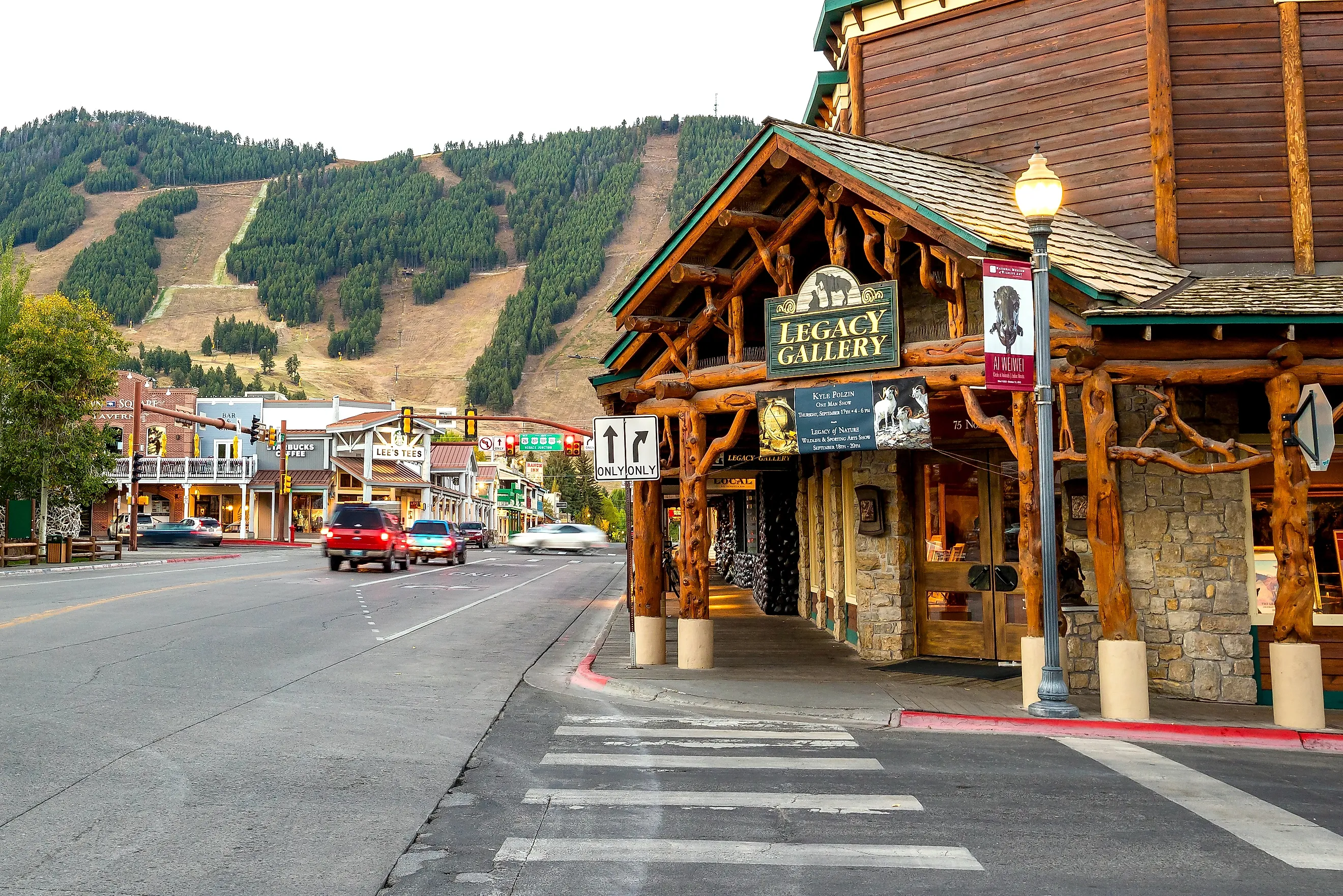
Hemmed in by the craggy peaks of the Teton and Gros Ventre ranges, Jackson acts as a gateway community for both the Grand Teton and Yellowstone National Parks. Bordering the town on the southwest is the National Elk Refuge, which provides a habitat for one of the country's largest elk herds, together with American bison, bighorn sheep, mule deer, coyotes, and red-winged blackbirds. The National Museum of Wildlife Art, overlooking the elk refuge, has a permanent collection of more than 5,000 cataloged wildlife artworks and a three-quarter-mile Sculpture Trail. The Jackson Town Square, formally called the George Washington Memorial Park, is the center of daily life here with its elk antler arches and old-style storefronts. In both summer and winter, the Jackson Hole Mountain Resort invites thrill-seekers to hike, ski, mountain bike, snowboard, paraglide, bungee trampoline, and rock climb.
Gillette

Occupying the Powder River Basin and flanked by the Black Hills in the east and the Bighorn Mountains in the west, Gillette is Campbell County's major economic hub and promotes itself as the "Energy Capital of the Nation." Visitors can gain firsthand insight into the fossil fuel industry with a tour of the Eagle Butte coal mine, just 7 miles north of town. The Rockpile Museum is one of Gillette's most well-known sites, exhibiting fossils, horse-drawn vehicles, rifles, Native American artifacts, saddles, and other ranching and energy industry machinery. Take a solo walking tour through the Gillette Downtown Historic District, observing landmark properties like the Montgomery Bar & Hotel, constructed in 1911, and the Gillette City Hall, constructed during the Great Depression. Also participate in the Avenues of Art Walking Tour in the downtown, with over 100 public sculptures by native and national artists. Plan a perfect day at the well-maintained Dalbey Memorial Park, which features a lake with fishing docks, paths along the water, designated picnic areas, and sports fields.
Laramie

Established as a "tent city" in the mid-1860s close to the Overland Trail, Laramie is Wyoming's only university town and is shaped by its railroad past and abundant outdoor recreation. Encompassing the town's historic core, the Laramie Downtown Historic District comprises numerous railroad-related structures in addition to boutiques like 307 Roots Boutique, nearby coffee shops like The Human Bean, and delectable American fare served at The Railyard Restaurant that line Grand Avenue. History buffs can step back in time at the Laramie Plains Museum in the Victorian-style Ivinson Mansion. Outdoorsy types should take a short drive to the Medicine Bow-Routt National Forest, where snowy peaks, alpine lakes, serene campgrounds, and hiking trails offer rewarding outdoor experience.
Buffalo

A town deeply tied to the Old West and mountain wilderness, Buffalo, the administrative center of north-central Wyoming's Johnson County, sits at the foot of the Bighorn Mountains. The opening stop for visitors here is the Main Street's Occidental Hotel. As one of the town's publicly acclaimed hotels, "The OX" has hosted prominent figures like Buffalo Bill Cody, Calamity Jane, and President Teddy Roosevelt, and still houses original interiors, the Virginian Restaurant, a 1908 saloon, and Busy Bee Breakfast Café. The Jim Gatchell Memorial Museum is the best place to delve deeper into frontier life, Native American heritage, and the many historical events that occurred along the Bozeman Trail. Play a round of golf with golfing buddies at the multi-award-winning 18-hole public course of the Buffalo Golf Club.
Ten Sleep

Home to only 246 inhabitants as per the 2020 US Census, Ten Sleep occupies the Bighorn Basin in north-central Wyoming's Washakie County, exactly 64 miles west of Buffalo. An erstwhile American Indian rest stop at the western foothills of the Bighorn Mountains, the town's principal attraction is the awe-inspiring Ten Sleep Canyon, a short drive along the Cloud Peak Scenic Byway. The byway winds through steep canyon walls, wooded areas, and clear streams, with a wealth of opportunities for hiking, rock climbing, camping, boating, and fishing. The Ten Sleep Brewing Co, in the old Smith Family barn, has been a meeting place for locals and tourists, offering patrons a unique brewery experience. Learn about the town's cultural and natural history at the Ten Sleep Pioneer Museum, and stay comfortably in the renovated duplexes and motel rooms of the Meadowlark Lake Lodge in the Bighorn National Forest during summer season.
Twelve Towns, Twelve Different Wyomings
The twelve communities above prove that the state offers much more than grand vistas and federal lands. These are places where wide-open landscapes, century-old buildings, historic downtown streets, and small-town atmosphere shape daily living. Jackson's elk antler arches in the Town Square anchor easy access to Grand Teton; Cody's rodeo culture and Buffalo Bill museums hold their own near Yellowstone's east entrance; Thermopolis's therapeutic hot springs draw a different visitor entirely. Twelve towns, twelve different versions of Wyoming.