Why This Connecticut Town Deserves More Attention
Madison sits on the Connecticut shoreline along Long Island Sound, east of Guilford and west of Clinton. Set off from neighboring Guilford in 1826, the town grew through the 19th century as a coastal port and shipbuilding village, and its combination of beaches, historic homes, and an intact village center still defines it today. Hammonasset Beach State Park covers much of the eastern shore, the Madison Green Historic District anchors the downtown, and Boston Post Road threads between them with restaurants, shops, and the landmark RJ Julia Booksellers. For a town often passed through on the way to somewhere else, Madison rewards a closer look.
Natural Beauty

Hammonasset Beach State Park is the largest draw on the eastern side of town. The park takes its name from an Algonquian word roughly translating to "where we dig holes in the ground," a reference to the indigenous agricultural practice in the area. Its two miles of beach and large campground make it the most popular state park in Connecticut by attendance, and the sites sit within a short drive of local restaurants such as Donahue's Madison Beach Grille and Lenny and Joe's Fish Tale.

Inside the park, Meigs Point Nature Center runs exhibits and programs on the coastal ecosystem, including live displays of native reptiles and regular walks for school groups. The adjacent Gardens at Meigs Point cultivate native and pollinator plants as a teaching resource. Together, the nature center and gardens give visitors a clearer picture of what lies behind the beach.

West of the park, Field House Farm runs as a working goat dairy on Green Hill Road. The farm sells raw goat milk soaps, cheeses, and seasonal goods directly from the property, and the calendar includes farm dinners, workshops, and seasonal programs that introduce families to the agricultural side of the shoreline.
Historic Buildings

The Madison Green Historic District is listed on the National Register of Historic Places and forms the historic core of town. The district grew up around the meetinghouse, and a walk along Boston Post Road passes 18th- and 19th-century homes set on deep lawns, a pattern that has been preserved largely intact.
The Deacon John Grave House, built in 1685, is one of the oldest buildings in Madison and was occupied by the same family for more than 300 years. Guided tours point out a concealed compartment in the attic whose original purpose is still debated. Nearby, Lee's Academy now houses the Madison Center for History and Culture, and the former Academy School building remains a landmark downtown even as its future use continues to be a subject of local planning.

The Allis-Bushnell House, built around 1785, sits on Boston Post Road and now operates as a museum owned by the Madison Historical Society. Next to it, the 1813 Lyman Dowd House adds another Federal-era property to the district. Taken together, the cluster of preserved houses along the road gives a clear sense of the town's layout in the early republic.
Downtown

The downtown core is anchored by the E.C. Scranton Memorial Library and the town green, with lodging running from the village-based Scranton Seahorse Inn to the waterfront Madison Beach Hotel. Boston Post Road is walkable through the village center, and RJ Julia Booksellers has been the district's best-known commercial landmark since opening in 1990. A few doors down, Café Allegre and Bar Bouchée have carried much of the dinner traffic for years, and James Madison House serves American fare a short drive north on Old Toll Road.

The Scranton Seahorse Inn occupies an 1833 Greek Revival house on the Post Road, with rooms that keep the bones of the original building while adding modern conveniences. Its location at the village center means the green, the library, and most of the restaurants are within a few minutes on foot.
Resort Community

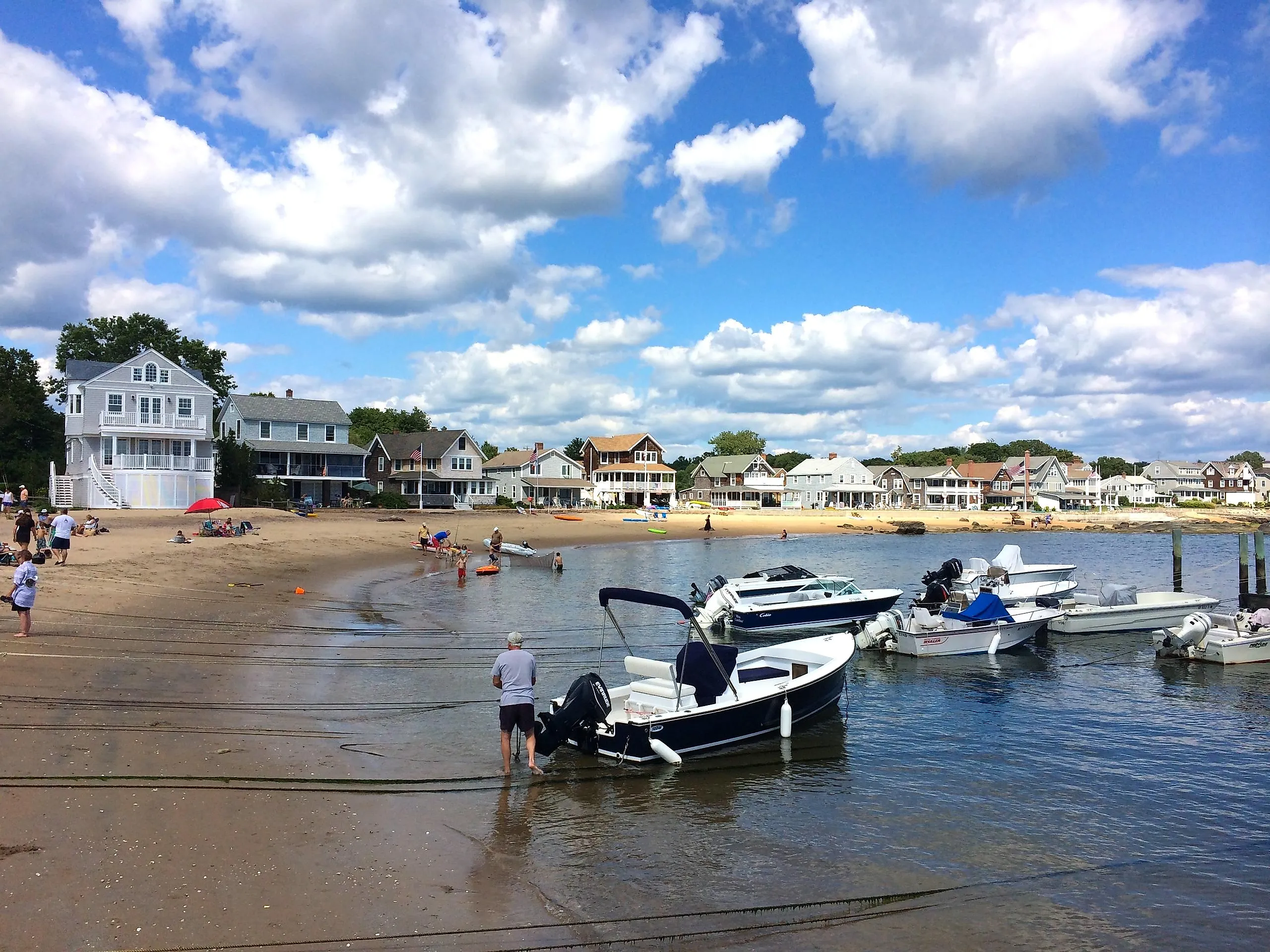
Beyond Hammonasset, Madison operates several smaller beaches that give the town its shoreline character. East Wharf, West Wharf, and Surf Club Beach each have their own access points, picnic areas, and rules, and residents tend to have strong opinions about which one works best for what. All three face Long Island Sound, with views across to the North Fork of Long Island on clear days.

The town enforces a few specific rules worth knowing before visiting. Boaters are required to observe 100-yard safe-swim zones off the town beaches. Alcohol is allowed in the Surf Club's designated picnic grove until 9 p.m. but is not permitted on the beaches themselves, the athletic fields, or the parking areas. The rules are posted at entry points and regularly enforced during summer weekends.
Madison's mix of beach, history, and an intact village is not unusual on the Connecticut shoreline, but it is unusually well preserved. Between a functioning downtown, one of the busiest state parks in New England, and a historic district that has stayed largely in place, the town holds more in a compact area than many of its better-known neighbors. For visitors working their way along the coast, a stop here is worth the time.