8 Sweden Towns With Unforgettable Main Streets
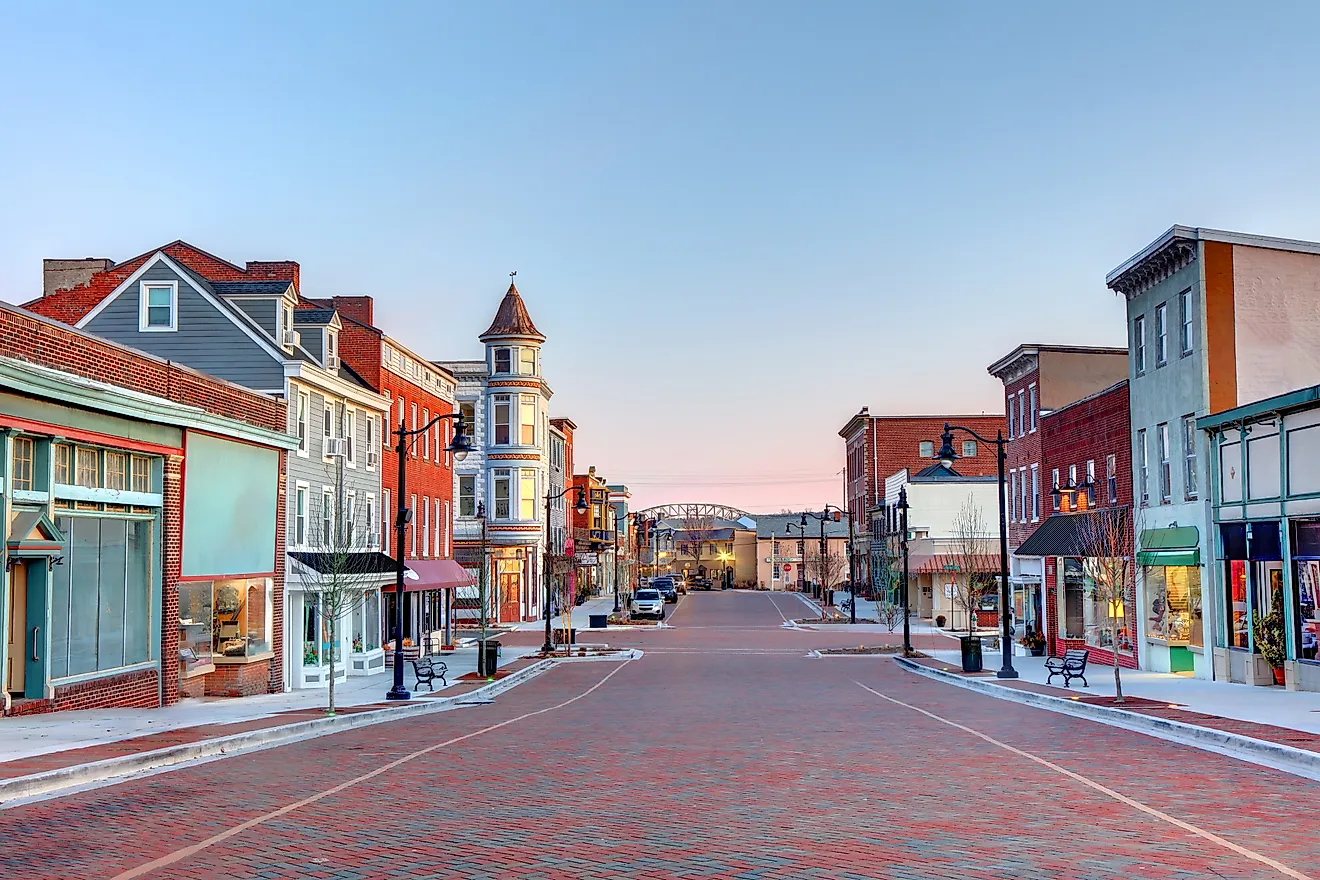
The main streets that crisscross many Swedish towns are filled with memorable sights. In historic Ystad, Stora Östergatan winds past wooden houses toward the brick tower of Sankta Maria Kyrka, the town's tallest and most significant historical landmark. Farther inland, Eksjö's Norra Storgatan showcases some of the country's best-preserved 17th-century wooden façades alongside the Eksjö Museum. Mariefred's main street leads to Gripsholm Castle, a 16th-century fortress built under Gustav Vasa and later expanded in the early 18th century. These are eight unforgettable Storgator (literally "large streets," or main streets) in Swedish towns.
Ystad (Stora Östergatan)

Ystad sits on the southern coast of Sweden, about 60 kilometers (37 miles) southeast of Malmö. The main street, Stora Östergatan, leads naturally toward Sankta Maria Kyrka, whose brick tower rises above the rooftops. Dating to the 13th century, the church blends Baltic Gothic lines with vaulted ceilings, carved wooden details, and heavy brickwork.
A few steps away is Stortorget, the town's historic main square, ringed with well-preserved medieval and early-modern buildings. Visitors who work up an appetite after sightseeing can stop at one of the cafés and bakeries, such as Graffiti Café Ystad, that spill onto the street with outdoor tables in summer.
Visby (Adelsgatan)

On the island of Gotland, Adelsgatan runs through the heart of Visby toward Södertorg, the historic square that has long served as the town's main gathering place and southern entry point. Along the street, shops such as Solkristallen stock everyday essentials, while courtyard cafés such as Babka Café serve Scandinavian coffee and pastries. At the southern end of the street, Söderport is a late-medieval gate tower, likely constructed during the first half of the 14th century when the city wall was heightened.
Eksjö (Norra Storgatan)

Norra Storgatan features Krusagården, one of Eksjö's most atmospheric heritage courtyards and a well-preserved 18th-century wooden farmstead. The buildings are arranged around a grassy inner yard, with red-painted façades, steep roofs, and hand-crafted details that reflect Småland's traditional architecture. The site hosts summer events, concerts, and craft demonstrations, making it a living cultural space rather than a static museum.
Farther along the street, the Eksjö Museum anchors the block with exhibits that explain how the town survived repeated fires while keeping its wooden-town character intact. The museum occupies a two-story brick industrial building from 1900, originally built for Felix Aschan's leather factory and later used by a textile mill. Its riverside courtyard, planted with historic species by landscape-architecture students, doubles as a summer stage for concerts, theater, and community events.
Vadstena (Storgatan)

Vadstena sits in central Sweden on the shore of Lake Vättern. The main street, Storgatan, runs toward the imposing Vadstena Abbey Church, a stone hall church completed in the 15th century and designed in the tradition of Saint Bridget's order. It features a three-aisled plan with 15 cross-vaults, whitewashed walls, and few decorative elements, reflecting the Bridgettine emphasis on restraint.
A short stroll brings visitors to Vadstena Castle, one of Sweden's best-preserved Renaissance castles. Built between 1545 and 1620 on the shore of Lake Vättern, it began as a defensive stronghold commissioned by King Gustav I Vasa to protect Stockholm from southern threats, then evolved into a richly appointed residence under his sons.
Mariefred (Storgatan)

Mariefred sits 70 kilometers (43 miles) west of Stockholm on the shore of Lake Mälaren. Storgatan leads to Gripsholm Castle, a site that began as a medieval manor, later became a Carthusian monastery, and was seized during the Swedish Reformation in 1526. King Gustav I Vasa demolished the monastic buildings and began the brick Renaissance castle in 1537, complete with circular corner towers and defensive walls.
Train enthusiasts can visit the Mariefred Steam Railway. Trains run between Mariefred, Läggesta, and Taxinge Näsby from May to September. The steam locomotives date to the early 1900s, and a preserved 1895 wooden station, complete with its original ticket office, still stands on site.
Nora (Storgatan)

Nora's Storgatan is a showcase of 19th-century wooden architecture, and the long-running Nora Glass shop draws steady traffic with its ice cream. Just beyond the wooden town center, Nora People's Park is a green, old-fashioned gathering ground shaped by Sweden's early 20th-century folk-park tradition. Tall trees frame a cluster of historic pavilions, dance floors, and open lawns. Railway enthusiasts can continue to the NJOV Railway Museum, where sheds, signal boxes, and open-air tracks line the grounds.
Falkenberg (Storgatan)

Falkenberg lies on Sweden's west coast. The Ätran River runs through town before reaching the Kattegat, an arm of the North Sea between Sweden and Denmark. For history-minded visitors, the Falkenberg Museum covers local design and craftsmanship in a building with clean lines and generous windows. Bakeries, restaurants such as Restaurang Gustaf Bratt, and boutiques fill early-20th-century storefronts.
The main street leads to Tullbron, an 18th-century stone-arch bridge and one of Falkenberg's most recognizable landmarks. The five-arched span crosses the Ätran and links Gamla Stan with the riverside parkland of Vallarna. Built between 1756 and 1761, it is one of Sweden's most admired historic bridges and is protected as a national monument for both its engineering and its place in the town's story.
Söderköping (Storgatan)

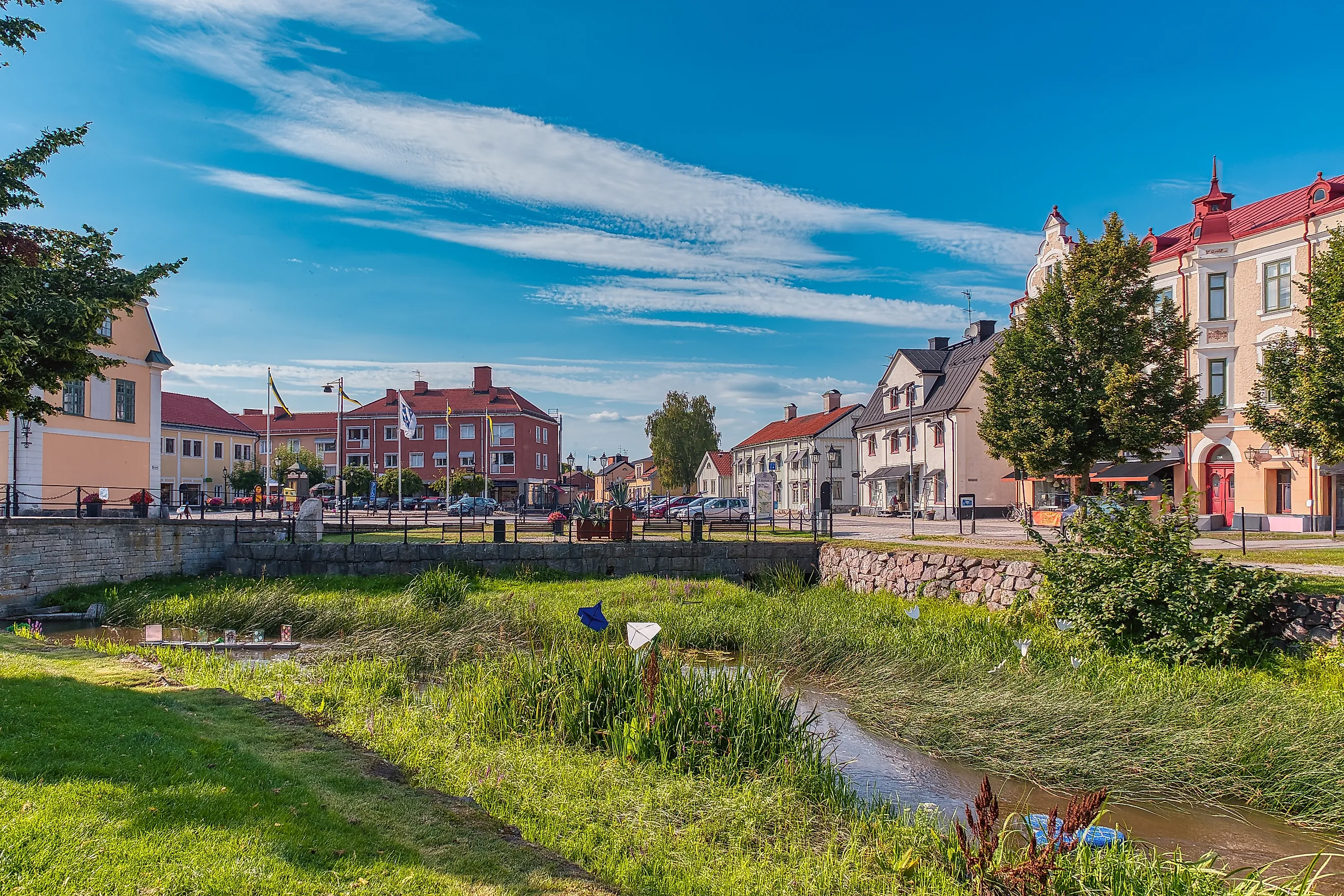
Söderköping sits in central-eastern Sweden, about 15 kilometers (9 miles) southeast of Norrköping. The main street, Storgatan, flows toward the Göta Canal just a few steps away. The canal is a 190-kilometer (118-mile) waterway carved through southern Sweden in the early 19th century, linking lakes, rivers, and coastlines into what became known as Sweden's Blue Ribbon. It was built between 1810 and 1832 by a workforce of roughly 58,000 soldiers.
Just across the canal, art-minded visitors can stop at Galleri Rådhuset blandArt, an artist-run gallery inside the town's early-18th-century former town hall. It is operated collectively by eight regional artists who use the two-story space for exhibitions and sales.
Storgatan
Taken together, these eight towns show what small-town main streets look like at their best in Sweden. A single walk down Storgatan can feel like stepping through centuries of craft, trade, and history, from Ystad's medieval timber frames to Visby's limestone alleys, from Falkenberg's arched bridge to Söderköping's quiet bend toward the Göta Canal. Each street has its own character, and each town is worth the time it takes to walk slowly.