8 Most Hospitable Towns In Croatia
Croatia is a country of breathtaking contrasts that is best experienced in the many hospitable towns sprinkled across the country. In Rovinj, visitors can enjoy swimming or biking in the Golden Cape Forest Park during the day. Evenings can be spent browsing the open-air art galleries in its historic streets. Motovun is a storybook hilltop town where visitors can feast on delectable truffles and wine while admiring scenic countryside views. Požega is known for its vibrant festivals and historical landmarks including churches, galleries and historic cellars. For those planning to visit this beautiful country, here are the 8 most hospitable towns in Croatia, unpacked.
Rovinj

Whether you want to wander the warren of streets that define the old town, sail out to the Rovinj Archipelago islands, famous for their crystal-clear Adriatic waters, explore the Golden Cape Forest Park for cycling and swimming, or browse the open-air art galleries lining Grisia Street, Rovinj will strike you as beautiful and bubbly in almost equal measure. St. Euphemia's Day, a three-day celebration around September 16 dedicated to Rovinj's patron saint, features the best of the town's warmth, especially with a traditional Great Feast organised in the open air. Restaurant Giannino is a beloved local institution where seafood lovers meet to eat, mingle, and just revel in the community’s inviting personality. Giannino is one of Rovinj's oldest restaurants (it has been in business since 1972), and is tucked away in the Old Town’s cobblestone streets.
Trogir

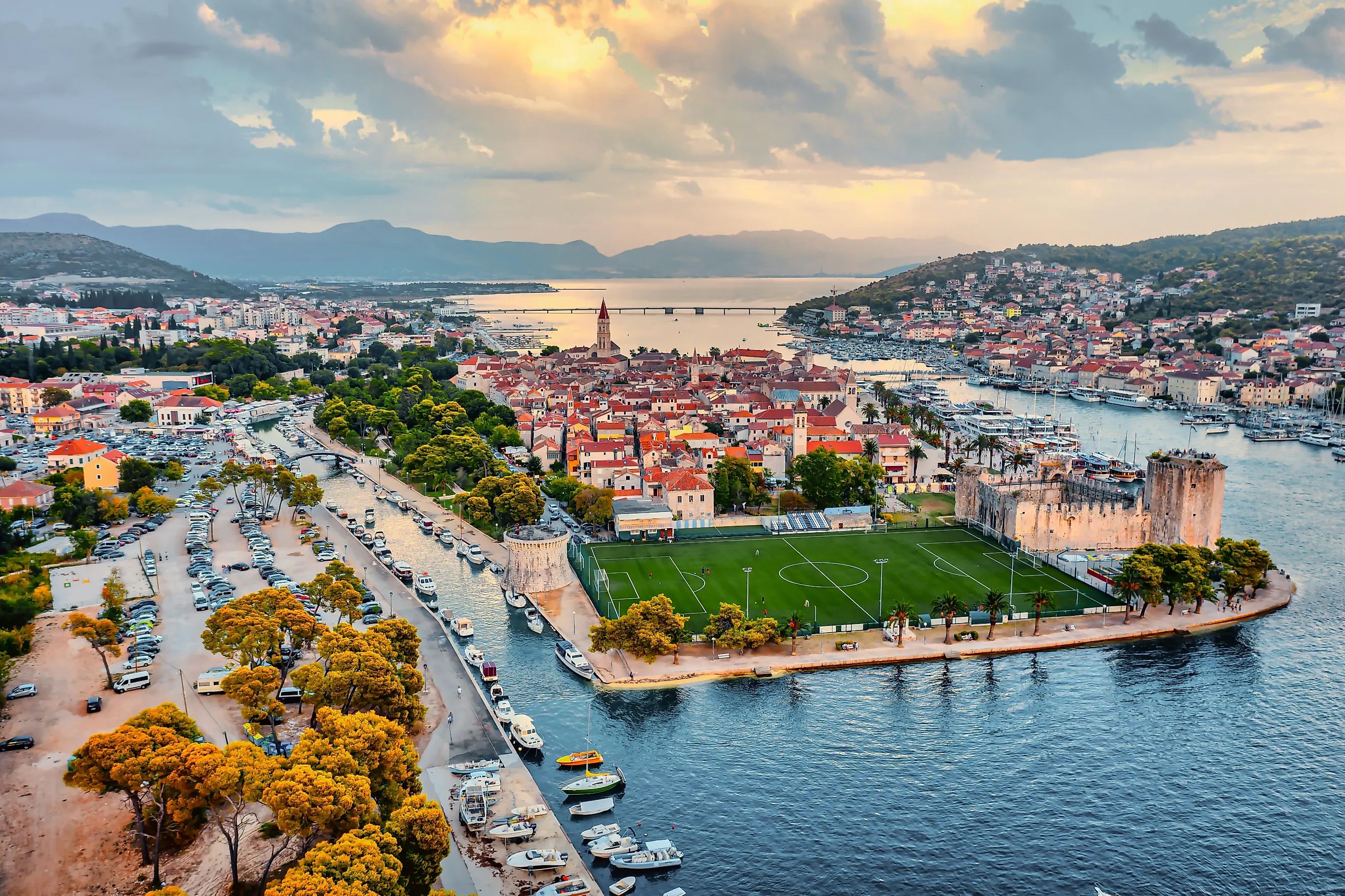
Trogir represents an ancient melting pot of European peoples, and its architectural and cultural landscape comes out as a physical timeline of European history. Croatians, Normans, Venetians, and Bosnians were among the rulers of the region for about 1,400 years, before it became a part of the new Yugoslav state in 1920. Kamerlengo Castle, from where people enjoy panoramic views of the historic Old Town, and St. Mark’s tower, a 15th-century circular fortress famous for its strategic role in defending the city against Ottoman invasions, both survive from the Venetian period. The Cathedral of St. Lawrence, Gothic in style with Renaissance additions, is regarded as among the most beautiful in Dalmatia. Trogir was designated a UNESCO World Heritage site in 1997
People enjoy taking boat trips to the islands of Šolta and Brač. Konoba Škrapa is a beloved institution, attracting tourists and locals alike with its famous free grappa, served on a little tray to the tinkling of a bell, alongside honest, affordable Dalmatian classics on red-and-white checked tablecloths. Meanwhile, Glorijet maršala Marmonta, built by the French during the Napoleonic occupation of Dalmatia, s offers visitors a glimpse into the architectural marvels of Croatia.
Motovun

White buildings with salmon-coloured roofs spiral up a hill to a double-walled castle in Motovun, a remarkably preserved medieval hilltop town, globally renowned for its world-class truffles, premium Istrian wines, spectacular countryside views, and its vibrant summer film festival. Motovun Film Festival is one of the most popular and prominent film events in Croatia and one of the best-known festivals in Southeast Europe. It was established in 1999 and has been screening about a hundred films every year. The world's largest white truffle, weighing 1,310 grams, was found in nearby Motovun Forest in 1999, earning it a place in the Guinness World Records.
The free-to-visit Secret Garden is lovely and has interesting information about truffles and the village's most famous son, Mario Andretti, one of the most successful and versatile race car drivers in history. From walking the medieval ramparts for panoramic valley views to joining a truffle-hunting tour in the Motovun Forest with trained dogs to tasting Malvazija and Teran wines at local cellars (check out Fakin Winery), a vacation here can easily turn out to be one of life's most memorable experiences.
Samobor

A picturesque town between Zagreb and the Slovenian border, Samobor was a cantonal centre under Napoleon and later the hub for Croatian poets, writers, and politicians during the 19th-century Illyrian movement. You will admire eye-catching baroque architecture around King Tomislav Square, wander through well-curated museums (Samoborski muzej is in the family house of Ferdo Livadić, one of the iconic figures of the Croatian National Movement), and then probably hike through the Žumberak-Samoborsko Gorje Nature Park, home to dense forests, towering peaks, and sparkling waterfalls.
Japetić Hill is the highest peak in the park and, on clear days, provides a view of various peaks in Croatia's mountainous region all the way to Triglav in Slovenia. The Samoborski Fašnik Carnival, one of the oldest in Croatia, is the town's most exuberant display of hospitality, drawing tens of thousands of visitors each February with masked parades, live music, and the town's irresistible pastries at every corner. There's Samobor Castle, a medieval fortress on a forested hilltop, offering sweeping views of Samobor and the surrounding area.
Cavtat

Pebble beaches await to soothe the careworn tourist in this small, picture-perfect town with a deep-rooted cultural tradition of welcoming seafarers. About 20 kilometres southeast of Dubrovnik, Cavtat is a relaxed, crowd-free alternative to the bustling tourist hubs of the Dalmatian coast. You will enjoy ambling through a lively promenade lined with cafés and seafood restaurants. Caffe Bar Amor, for example, known for dreamy sunset views by the water, serves amazing cocktails, amid fantastic background music.
People come to visit the Bukovac House Museum, the birthplace of Croatia's most celebrated painter, now a small, interesting museum devoted to his work. The house itself was Vlaho Bukovac’s first canvas, and is where, aged just 17, Bukovac painted a series of decorative frescoes on the walls and ceilings which were only uncovered in the late 1990s. Still on museums, you should conjure up any excuse to visit Cavtat’s Shell Museum, a small but incredibly educational place, housing an impressive collection of shell specimens from all over the world’s oceans. It’s remarkable how many fascinating examples are displayed within such a compact space.
Omiš

Omiš sits at the mouth of the Cetina River on the Dalmatian coast, where a dramatic canyon meets the Adriatic. The old town is filled with stone houses, remains of city walls, and a maze of narrow, cobblestone alleys winding between traditional stone and pastel-colored Venetian-era buildings. Its history as a pirate stronghold, feared across the medieval Adriatic, still animates the town's identity and festivals. Come raft the Cetina River canyon, but if that’s not your cup of tea, climb to Peovica, interesting ruins of a hilltop fortress reached by a steep trail and ladder, providing panoramic views of the sea and the old town. The Festival of Dalmatian Klapa, typically held around July, fills Omiš's churches and squares with the haunting harmonies of traditional a cappella singing, their sounds echoing against ancient walls.
Fažana

Fažana sits at the southwestern tip of Istria, about 113 kilometres southeast of Trieste, and is the mainland ferry port for Brijuni National Park, a 14-island archipelago holding Roman and Byzantine archaeological sites, a botanical garden, and a Safari Park keeping exotic South American, African, and Asian fauna. You will see the llama, the South American camel, which, according to the native legend, was domesticated in the very beginnings of human existence. There are zebras, Indian sacred cows, ostriches, and the former summer residence of Yugoslav president Josip Broz Tito.
The village itself is a working fishing community, but with almost no tourist sprawl. Relax on the pebble beach at Stara Fažana, and grab every opportunity to chat with locals, eat at a konoba by the boats where the fishermen unload in the morning, then spend a memorable night at Boutique hotel Villetta Phasiana, a 16th-century mansion, immaculately restored to a small boutique hotel with rooms, lavishly enveloped in their artisanal rustic furnishing.
Požega

Each September, the Golden Strings of Slavonia (Zlatne žice Slavonije) festival fills Požega with the sound of traditional tambura music, regional wines, and celebratory feasting. Squares and streets become an open-air gathering place where local identity is proudly displayed, and visitors are heartily welcomed, often less as tourists than as guests invited to share in the table, the music, and the traditions of Slavonia. People come to stroll the baroque historic core around the Holy Trinity Column, explore the churches and galleries on the main square, taste high-quality local cuisine at places like Blagaja Restaurant, and visit nearby wineries serving some of the best wines in this part of Europe.
The nearby Kutjevo Winery, for instance, famous for its historic cellars, vast archive, and premium Graševina selections, is Croatia's oldest winery, with a history that dates back to the 1200s. If spending the night, Hotel Požega is in the center of town, meaning everything is close. Otherwise, Šetnica uz Orljavu Babin Vir is a peaceful hiking area that offers the opportunity to escape from the daily hustle and bustle and a beautiful view of Požeška Gora, a picturesque, forested mountain range just south of town.
The truth is, Croatia will give you scenery you'll spend the rest of your life trying to describe. From the Adriatic's impossible blue to the weight of a thousand-year-old stone beneath your palm to a cave so silent, it feels almost haunted, Croatia's attractions travel the whole gamut. Yet, none of that is what you'll remember 10 years down the line. Instead, you'll remember the waiter who drew you a hand-sketched map to an attraction no guidebook has ever named. You’ll remember the shopkeeper who wouldn't let you leave without a glass of homemade Rakija. These eight towns may not make you feel like a local celebrity returning home. But they are often quite hospitable. There's only one way of finding out. Go, and experience it for yourself.