11 Most Welcoming Towns In New Mexico's Countryside
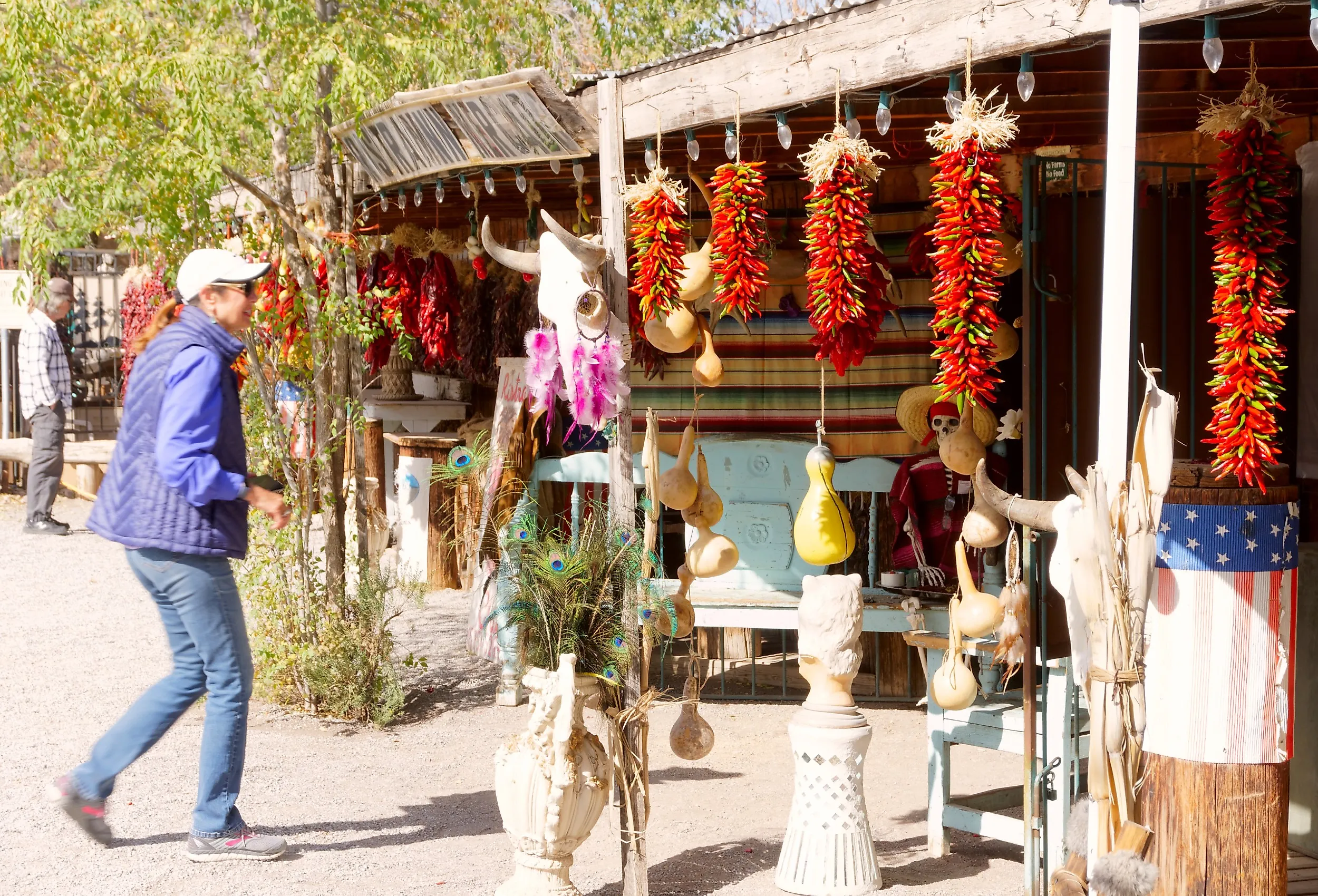
In New Mexico, a stranger in Cimarron can get pulled into a barstool argument about Wild West history within minutes. Chimayó families still press chiles into ristras on their porches every fall. Española fills Main Street with candy-colored lowriders on summer weekends. Down in Truth or Consequences, a few dollars buys a soak in spring water that has drawn people here for generations. These eleven towns share a plain kind of hospitality that a visitor feels within a block of arriving.
Taos

No proper visit to Taos skips Taos Pueblo. Just north of town, it is a continuously inhabited adobe complex that has housed Tiwa-speaking people for over a thousand years, and it is the only site in the United States that UNESCO recognizes for the significance of a living Native American culture. Back in town, the Historic Taos Inn is the hub of a gallery district that still works in the oil, bronze, and ceramic traditions associated with the Taos Society. About eight miles west on US-64, the Rio Grande Gorge Bridge is an engineering feat to behold, 650 feet straight down to the river. In winter, Taos Ski Valley draws experts who have skied everywhere else and haven't found anything like the Highline Ridge terrain.
Silver City

At 5,900 feet in the state's southwest corner, Silver City has a climate of cool mornings, real monsoons in July and August, and actual fall color. The historic downtown along Bullard Street features Victorian commercial buildings, turquoise jewelry made by craftspeople rather than imported, and a local restaurant scene that punches well above the town's size. The Gila Cliff Dwellings National Monument, 44 miles north on the winding NM-15, remains one of the least crowded significant archaeological sites in the Southwest; the Mogollon people built and occupied these cave rooms around 1280 AD and abandoned them within a generation. Make sure to visit The Western New Mexico University Museum, which holds the world's largest permanent collection of Mimbres pottery.
Mesilla

Mesilla is technically a village, but it carries the historical weight of somewhere much larger. The Mesilla Plaza, shaded by old cottonwoods and ringed by 19th-century adobe buildings, is where the Gadsden Purchase became official in 1854, when troops lowered the Mexican flag and raised the American one over a strip of what is now southern New Mexico and Arizona. Billy the Kid was tried and convicted at the old courthouse on the southeast corner of the plaza in 1881, and the surviving building now houses the Billy the Kid Gift Shop. The Basilica of San Albino on the north side of the plaza has been holding services in some form since 1851. Stroll down Calle de Guadalupe toward the old acequia, and you are in a neighborhood where the architecture and the pace of life haven't changed much in a very long time.
Española

Sitting at the confluence of the Rio Grande and the Rio Chama, Española grew near the site of San Gabriel. Don Juan de Oñate led his colonists into the region in 1598, predating the Pilgrims by 22 years, and established San Gabriel at the confluence the following year. The lowrider culture centered in Española is nationally recognized and locally serious: customized vehicles with hydraulics and candy-colored paint fill Main Street on summer weekends and appear in the Smithsonian's collection. The former settlement of San Gabriel de Yunque-Ouinge near the confluence of the Rio Chama and Rio Grande was excavated by University of New Mexico archaeologists in the 1960s and is now commemorated by a historical marker.
Chimayó

The drive to Chimayó is lined with small farms and orchards producing the famous Chimayó chiles harvested every fall. El Santuario de Chimayó, a small adobe church completed in 1816, draws tens of thousands of pilgrims each year, some of whom walk dozens of miles on Good Friday to reach it. Inside, a small room called the pocito holds earth that believers consider miraculous, and the walls are lined with crutches, photographs, and handwritten notes left by those who say it helped them. Ortega's Weaving Shop represents nine generations of New Mexico weaving and sells rugs, blankets, clothing, and accessories. Rancho de Chimayó has been welcoming hungry travelers with authentic New Mexican cuisine for more than 50 years.
Ruidoso

Ruidoso occupies a canyon in the Sacramento Mountains at nearly 7,000 feet, surrounded by a ponderosa pine forest. Ski Apache, operated by the Mescalero Apache Tribe, is one of the southernmost ski resorts in the country and reaches 11,500 feet at the summit. In warmer months, hikers explore the forested ridges and canyons of the White Mountain Wilderness about 10 miles northwest of Ruidoso. Ruidoso Downs Race Track and Casino normally stages Thoroughbred and Quarter Horse racing, but its 2026 meet and the All American Futurity have been relocated to Albuquerque Downs because of continuing flood risks at the Ruidoso venue.
Truth or Consequences

Yes, the name is real, and yes, there is a story. The town voted in 1950 to rename itself from Hot Springs to Truth or Consequences in exchange for hosting the radio game show's tenth anniversary broadcast, a decision that divided locals for decades and now defines the brand entirely. But the original name pointed to the very real geothermal springs accessible at several bathhouses along Foch Street in the historic district, where you can soak for a few dollars. Sierra Grande, a Ted Turner Retreat on McAdoo Street, has the most polished version of the experience, with private soaking tubs fed directly by the same 107-degree water that bubbles up along the riverbank. Elephant Butte Lake State Park, just north of town, is New Mexico's largest body of water and welcomes boaters and anglers from across the region.
Las Vegas

Not Nevada, but Las Vegas, New Mexico, sits on the eastern slope of the Sangre de Cristo Mountains, where the high plains begin, and its historic downtown is one of the most intact Victorian commercial districts in the Southwest, with over 900 buildings on the National Register of Historic Places. The Plaza Hotel opened on the Old Town Plaza in 1882, following the railroad-era growth of Las Vegas, and currently operates as a historic hotel and event venue. Storrie Lake State Park, just north of town, offers camping and windsurfing against a backdrop of mesa and sky. History buffs will appreciate the City of Las Vegas Museum and Rough Rider Memorial Collection on Grand Avenue, which tells the story of the Las Vegas men who rode with Theodore Roosevelt in Cuba in 1898.
Cimarron

Cimarron, situated in the foothills of the Sangre de Cristo range in the northeast corner of the state, carries a Wild West history that is documented, footnoted, and occasionally still argued about in the local bar. The St. James Hotel, built in 1872, hosted Jesse James, Buffalo Bill, Annie Oakley, and Wyatt Earp at various points, and now it welcomes tourists to stay in its storied rooms. Philmont Scout Ranch, a roughly 140,000-acre Scouting property south of Cimarron, welcomes the public to its Base Camp, museums, visitor facilities, and store, while its backcountry treks are organized programs for registered crews. To the west, Cimarron Canyon State Park cuts through volcanic rock formations along the Cimarron River with fishing and wildlife viewing along an eight-mile stretch of road.
Aztec

Aztec was named by early Anglo settlers who assumed the nearby ruins were built by the Aztecs, when they were actually built by the Ancestral Puebloans, and the town has lived with the misnomer ever since. Aztec Ruins National Monument on Ruins Road is the real reason to come: a 400-room great house built between 1100 and 1130 AD, including the only fully reconstructed great kiva in the Southwest, a circular ceremonial room 48 feet in diameter whose acoustics and dim light leave many visitors describing the space as otherworldly. The Animas River runs through town and connects to Riverside Park via trail, a local gathering spot that feels thoroughly un-touristy. Along Main Street, Rubia's Fine Mexican Dining greets guests with good times, cold margaritas, and aromas of warm tortillas.
Gallup

Gallup is the kind of place that rewards slowing down. The town sits at the edge of the Navajo Nation and near Zuni and Hopi territories, and its trading post economy has made it one of the most important markets for Native American art in the country. Walk into Richardson Trading Company on West Historic 66, and you are in a working trading post that has been buying and selling Navajo rugs, turquoise, and silverwork since 1913. A free Navajo Code Talkers exhibit inside the Gallup Cultural Center at the historic Santa Fe Railroad Depot recounts how Diné Marines used their language to transmit military messages during World War II. El Morro National Monument, 43 miles southeast on NM-53, is a sandstone bluff covered in inscriptions left by Spanish conquistadors in 1605, American emigrants in the 1800s, and Ancestral Puebloans centuries before, an outdoor archive that puts everything in perspective.
What Ties These Towns Together
New Mexico countryside towns share a willingness to let you in and a warmth that is hard to forget. What connects Chimayó's Good Friday pilgrims, the lowrider crowds on Española's Main Street, and the volunteers who still run the bathhouses in Truth or Consequences is a habit of treating a visitor as someone worth talking to. The history is deep and the landscapes are dramatic, but it is the people who decide whether a place feels like somewhere you belong, and in these towns they have made up their minds.