7 Rockies Towns With A Slower Pace Of Life
Most people come to the Rockies to move fast. They ski the steeps and raft the whitewater and race to bag another summit. There is also a quieter kind of mountain trip for anyone ready to slow down. It looks like a long morning soak and an easy walk down a historic Main Street. You find that pace in old mining camps and ranch towns and railroad stops. Here are seven Rockies towns where slowing down is the whole point.
Red Lodge, Montana

Coal miners and ranchers built Red Lodge, and its brick storefronts along Broadway are a legacy of that working past. The town sits at the mouth of Rock Creek Canyon in southern Montana, where the prairie runs straight into the wall of the Beartooth Mountains. That setting keeps life slow and close to the ground. The Roman Theater on Broadway has shown movies since the 1910s, and the Carbon County Historical Museum lays out the coal and ranch history in one small, walkable stop.
The Beartooth Highway starts at the south edge of town and climbs almost to 11,000 feet on its way toward Yellowstone, a two-to-three-hour drive that many people rate among the best in the country. Closer in, the Yellowstone Wildlife Sanctuary cares for rescued bears, bison, and birds of prey that cannot live in the wild. Rock Creek runs through town for fly-fishing and an easy streamside walk. To settle in for the night, the Pollard Hotel has stood on Broadway since 1893 and once put up guests from Buffalo Bill to Calamity Jane.
Island Park, Idaho

Island Park's main street runs for roughly 33 miles, a quirk of old Idaho liquor law that makes the town feel more like a long ribbon of forest than a downtown. It sits just west of Yellowstone National Park, close enough to reach Old Faithful and the Grand Canyon of the Yellowstone on a day trip. The town itself sits inside the Henry's Fork Caldera, a volcanic basin about 23 miles across whose curved rim is visible from all over the area. All that room means you rarely feel hemmed in.
Henrys Lake State Park anchors the fishing, with cutthroat, brook, and hybrid trout that make it one of the Mountain West's better-known lakes for the sport. You can take a boat, kayak, or paddleboard out on the same water. On foot, the trails of Caribou-Targhee National Forest climb toward the high country, and the push up Mount Jefferson opens onto the Continental Divide and the forests of Idaho and Montana below. For a night outdoors without the setup, Wander Camp pitches furnished tents with real beds so you can sleep in the woods and skip the hassle.
Cody, Wyoming

Buffalo Bill founded Cody in the 1890s, and that frontier history still runs through this Wyoming town. It sits a short drive east of Yellowstone's quieter entrance, which makes it a calmer base than the park's busier gateways. Much of the past is preserved in plain sight around town. Old Trail Town, the outdoor museum pictured above, is a collection of more than two dozen original frontier buildings from the 1880s and 1890s, moved here from across Wyoming and Montana and rebuilt on the spot Buffalo Bill first laid out.
The Buffalo Bill Center of the West fills a full day on its own, with wings on regional Native American history, frontier figures like Annie Oakley, and Western painters such as Remington and Russell. For a heavier chapter, Heart Mountain preserves the site of one of the largest camps where Japanese Americans were confined during World War II, its exhibits telling the stories of the families forced to live there. To wind down, guest ranches like Blackstone Creek Lodge trade a hotel lobby for horseback rides, fishing outings, and long views of the Shoshone National Forest.
Midway, Utah

Swiss immigrants settled Midway in the 1850s, and the chalet-style buildings and alpine trim earned it the nickname Little Switzerland. The town lies on the back side of the Wasatch Range in Utah's Heber Valley, with mountains closing in on most sides. Locals still celebrate that heritage at the Swiss Days festival on Main Street every Labor Day weekend, a tradition since the 1940s, with a parade, a craft fair, and food stalls.
The town's oddest attraction is the Homestead Crater, a geothermal spring inside a 55-foot limestone dome where the mineral water holds near 90 degrees all year for a soak, a swim, or a scuba dive. Wasatch Mountain State Park spreads out beside town with trails for hiking and biking, and its Soldier Hollow venue hosted cross-country events at the 2002 Winter Olympics. The Heber Valley Railroad runs vintage steam trips through the surrounding farmland. Historic Main Street ties it all together, quiet enough to walk end to end at an easy pace.
Salida, Colorado

The Denver and Rio Grande Railway founded Salida in 1880, and the brick downtown it left behind is the largest National Historic District in Colorado. Roughly 111 Victorian storefronts fill it, a legacy of the fires that pushed the town to ban wooden construction in the 1890s. This is a working town of artists and outdoor guides rather than a resort, and it keeps an unhurried feel. The Arkansas River runs straight through the center, with a downtown whitewater park where locals wade, paddle, and watch the kayakers.
Salida sits in the Upper Arkansas Valley between the Sawatch and Sangre de Cristo ranges, ringed by fourteeners yet mild enough to log more than 300 sunny days a year. The old 1887 power plant now runs as the SteamPlant event center, and the Salida Museum walks through the town's mining and railroad past. Monarch Mountain, a low-key ski area with no snowmaking, sits about 20 miles west up the pass. In June the FIBArk festival, the country's oldest whitewater event, fills the riverbanks with paddlers and spectators.
Ouray, Colorado

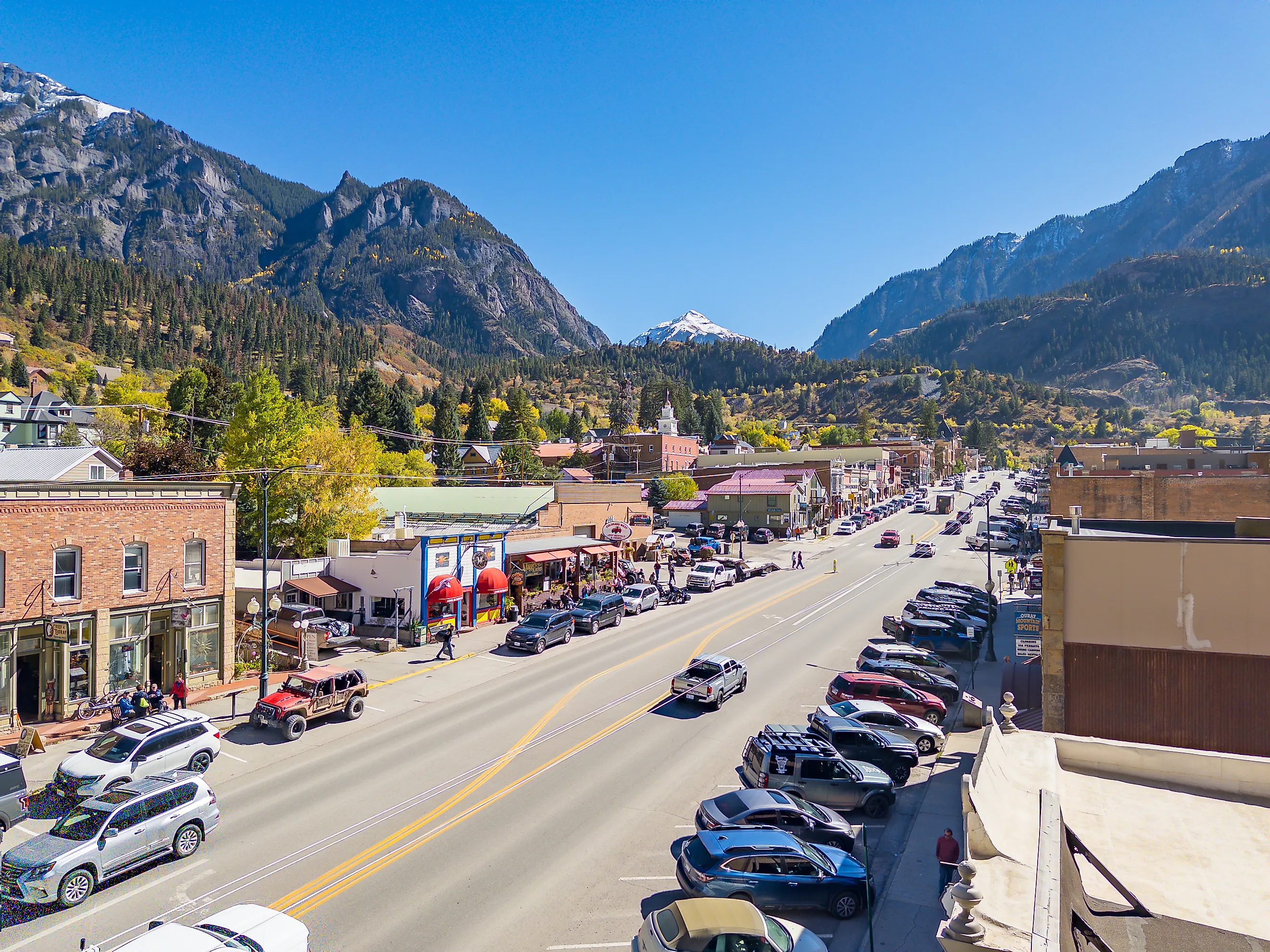
Prospectors platted Ouray in 1875 inside a natural amphitheater, with the walls of the San Juan Mountains rising on three sides. The town took its name from the Ute leader Chief Ouray, and its Victorian main street has no traffic lights and no chain stores. That is much of the appeal. After the silver crash the population fell to a few hundred, and it has climbed back to only about a thousand, so the pace stays gentle.
The mineral hot springs are the heart of the place, and the municipal Ouray Hot Springs Pool has been open to soakers since 1926. On foot, the Perimeter Trail makes a rugged loop above town, and the short walk into Box Canyon Falls follows a narrow slot to a thundering cascade. Old mining roads climb into the high country for backcountry drivers, and the Million Dollar Highway runs south toward Silverton. Locals borrowed a nickname that fits the whole scene, the Switzerland of America.
Taos, New Mexico

People have lived at Taos Pueblo for more than a thousand years, which puts the pace of modern life in perspective the moment you arrive. The town sits in the Sangre de Cristo Mountains of northern New Mexico, the range usually counted as the southern end of the Rockies. Tiwa Puebloan people began building the adobe complex around a thousand years ago, and it stands today as a UNESCO World Heritage Site that welcomes visitors on guided and self-guided tours. To see more of the region's Native American and Hispanic art, the Millicent Rogers Museum holds a deep collection of turquoise jewelry, pottery, and paintings.
The art scene keeps the whole town moving at an easy, creative clip. The Taos Art Museum at Fechin House occupies a 1927 artist's home, the Couse-Sharp Historic Site preserves studios that painters first set up around 1915, and the Harwood Museum of Art rounds out the picture with modern and contemporary work. When you have had your fill of galleries, the historic Taos Inn makes a comfortable place to sit a while, long known around town as the living room of Taos.
Finding The Slower Pace In The Rockies
What ties these seven towns together is scale more than geography. Each one stayed small, with its own reason for being. Red Lodge and Salida grew up on coal, silver, and railroads, and their brick main streets remain from those days. Swiss farmers settled Midway, and Ouray sits quiet in a mining-era amphitheater. The Rockies are big enough to rush through, and these towns are the argument for slowing down instead.