7 Offbeat Towns In The Rockies To Visit
For decades, Eureka, Montana, answered to the title Christmas Tree Capital of the World. A coal-fired steam train still climbs to a 10,000-foot pass outside Chama, New Mexico, on tracks first laid in the 1880s. Carbondale, Colorado, is home to the world's first inn built inside a working whiskey distillery. Each of these towns has a draw this strange and specific, all of them set deep in the Rocky Mountains and well off the usual routes.
Chama, New Mexico

Near the northern edge of New Mexico, Chama grew up around the railroad and still moves to its rhythm. The town is the western end of the Cumbres and Toltec Scenic Railroad, the longest and highest narrow-gauge steam line in the country, which climbs over the 10,015-foot Cumbres Pass on its 64-mile run to Antonito, Colorado. Across the tracks, the Rio Chama gives fly anglers a quieter kind of morning. North of town, the Edward Sargent Wildlife Area spreads over some 20,000 acres of meadow and aspen where elk and deer move through, laced with trails for hiking and riding.
Carbondale, Colorado

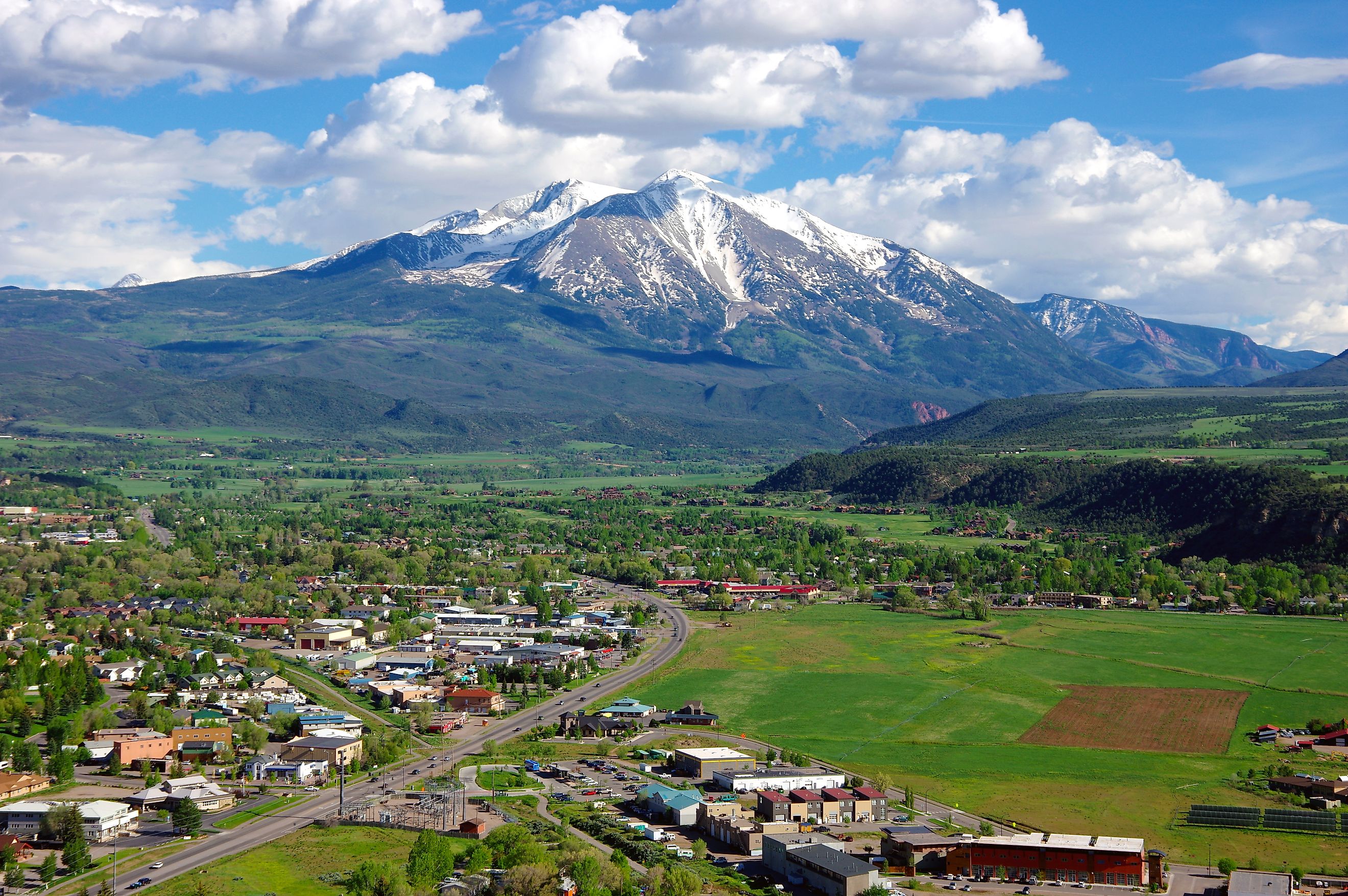
Aspen pulls the crowds in Colorado's Roaring Fork Valley, but Carbondale, downvalley, has the same mountains at a fraction of the price. Every July, the town turns its main street over to Mountain Fair, a community arts festival of live music, local makers, and contests like baking and wood splitting. The twin summits of Mount Sopris rise close to 13,000 feet over the valley, and bike trails and the soaking pools at Penny Hot Springs and Avalanche Ranch lie within easy reach. Marble Distilling headlines the creative district downtown, home to the first inn in the world built inside a working distillery.
Driggs, Idaho

Most visitors to Grand Teton National Park base themselves in Jackson, Wyoming, on the busy eastern side of the range. Driggs takes the opposite approach, about 30 miles west over Teton Pass, looking up at the same peaks from the quieter Idaho side. The Teton River brings floaters, kayakers, and fly anglers to spots like Big Eddy, and Grand Targhee Resort is a short drive up the road. Each Fourth of July weekend, the Teton Valley Balloon Rally lifts around twenty hot air balloons off the county fairgrounds at sunrise, with the Tetons sharpening behind them.
Eureka, Montana

Set in the Tobacco Valley near the Canadian border, Montana's town of Eureka once shipped so many evergreens that it became known as the Christmas Tree Capital of the World. The Tobacco Valley Historical Village preserves homestead-era buildings from the 1880s through the 1920s, and the nearby Stonehenge Air Museum displays about two dozen vintage aircraft, including the only airworthy Supermarine Mk 47 Seafire left anywhere. The Kootenai National Forest wraps around town with boating on Lake Koocanusa, rock climbing at Stone Hill, and backcountry camping at Rock Lake. The turquoise reservoir and larch-gold hillsides make the fall drive along the lake one of the quietest in the state.
Fernie, British Columbia

Fernie lies in a bowl of Canadian Rockies peaks in southeastern British Columbia, with a century-old brick downtown at its center. Fernie Alpine Resort built the town's reputation on deep winter powder, then opened its lifts in summer for mountain biking and hiking. Just outside the center, Mount Fernie Provincial Park protects old-growth cedar and the waterfall on Lizard Creek, with a trail network that links the park to both town and resort. The Elk River threads right past downtown, a clear freestone river known across the region for native cutthroat and bull trout.
Canmore, Alberta

Canmore lies just outside Banff, close enough to share the same peaks but far enough to skip the worst of the crowds and prices. The easy Grassi Lakes Trail climbs to a pair of turquoise pools below the cliffs, while the steeper Ha Ling Peak trail takes hikers up the town's most recognizable summit. South of town, Bow Valley Provincial Park adds fishing on the Bow River, paddling on Lac Des Arcs and Gap Lake, and trail views of the Three Sisters peaks. Golfers play Stewart Creek, and the mountain inns around town trade resort polish for a quieter kind of comfort.
McBride, British Columbia

In the Robson Valley of British Columbia, McBride is ringed by the Rockies on one side and the Cariboo Mountains on the other. The heart of the village is its 1919 Grand Trunk Pacific railway station at the head of Main Street, rebuilt after a fire and still served by VIA Rail. Inside, the Whistle Stop Gallery shows work by local artists, and a cafe shares the building. The Fraser River passes the town for jetboating, canoeing, and seasonal fishing, and the surrounding country opens onto the climb to the McBride Peak viewpoint, the swimming at LaSalle Lakes to the west, and miles of winter snowmobiling.
The Rockies Beyond The Resort Towns
These seven towns share a sense of room. McBride measures its days by the freight trains rolling through the Robson Valley, Fernie counts its winters in feet of powder above a brick downtown, and Driggs watches the Tetons from the side of the range most visitors never see. Canmore puts the Three Sisters in view and a pair of turquoise trail pools within a short walk of downtown. None of them carries a marquee name, and that absence is the point. The Rockies are wide enough to reward a wrong turn.