The Small Towns Californians Are Moving To
Census Bureau migration data records about 77,161 Californians moving to Texas in a year, 53,289 to Nevada, 52,383 to Arizona and 15,385 to Idaho. What it does not record is which towns they land in, because state-to-state flow estimates stop at the state line. The town-level picture has to be assembled from housing markets, population estimates and moving-search data, and when you do that two patterns show up. One of them points out of California. The other one does not.
The State-Level Numbers Are Solid

Before any town gets named, it is worth knowing what is actually measured.
The most recent complete federal state-to-state migration figures cover moves made in 2024 and were released in January 2026. They put Texas first at roughly 77,161, followed by Nevada, Arizona, Washington at 43,938 and Florida at 36,194.
Texas, Nevada and Arizona together account for around 27.6 percent of California's total interstate outflow. Tennessee takes about 19,670 and Idaho about 15,385.
Idaho Is The Small-Town Destination

One state comes up repeatedly in connection with towns rather than cities.
Idaho has attracted households specifically seeking smaller communities and different housing costs, and moving-search data suggests nearly one in four searches for moves to Idaho in early 2026 began in California.
Census data ranks California among the top sources of new Idaho residents. At about 15,385 a year it is a fraction of the Texas figure, but it is concentrated in far smaller places.
North Idaho Is Four Towns

Within Idaho, the panhandle gets named more consistently than anywhere else.
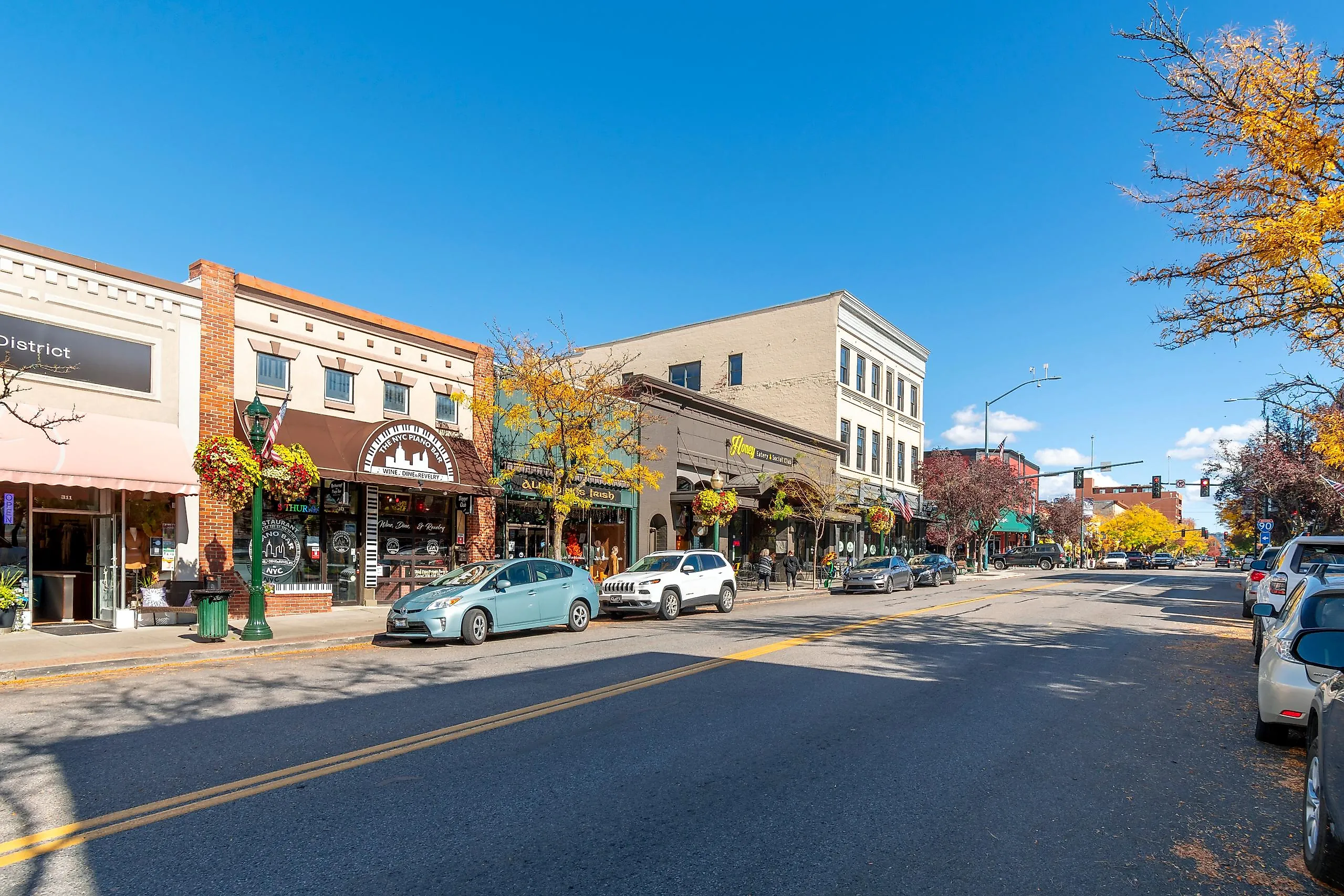
Coeur d'Alene, Post Falls, Hayden and Sandpoint appear together across relocation guidance as the North Idaho landing spots. Post Falls has around 38,000 residents and Hayden about 16,000, both functioning as lower-cost alternatives to Coeur d'Alene.
Coeur d'Alene itself is the largest, sitting on its lake about 30 miles east of Spokane, with median home prices running around 575,000 to 600,000 dollars through early 2026.
Sandpoint Shows The Effect In Prices

The clearest evidence that out-of-state buyers are reshaping a small town is what happened to its housing.
Sandpoint sits on Lake Pend Oreille with Schweitzer and its 2,900 acres of terrain above it. Out-of-state buyers from Washington and California are credited with driving home values up nearly 100 percent in five years.
It carries roughly a 9 percent premium over Coeur d'Alene, which is unusual for a smaller town and tells you who is bidding.
The Treasure Valley Has Its Own Small Towns

Southern Idaho draws a different kind of mover to a different kind of place.
Meridian and Eagle are named as having drawn large numbers of California transplants, with Star described as the fastest-growing small town in the valley and almost entirely new construction.
Ada County, which contains Boise and its satellites, is described as one of the hottest destination counties for people leaving California. That is county-level evidence rather than town-level, which is as close as the data gets.
The Pacific Northwest Takes A Share

Washington receives nearly 44,000 Californians a year, and some of it lands outside the metros.
Census estimates and moving-search data point to momentum in Vancouver, Ridgefield, Redmond, Spokane, Bend and Eugene. Ridgefield and Vancouver are growing on outward spread from Portland rather than on their own employment.
Bend attracts people specifically for its outdoor lifestyle, which is the same motivation driving the North Idaho numbers at a larger scale.
Many Of Them Never Leave California

This is the part the exodus framing tends to miss, and it has its own data.
A San Francisco Chronicle analysis identified seven rural and suburban California towns that each grew more than 25 percent over 15 years, bucking the state's population loss: Roseville, Manteca, Chico, Irvine, Menifee, Clovis and Dublin.
Roseville alone grew 15 percent since 2020 to 165,455. The stated drivers are cheaper homes, good schools and proximity to job centers, which is the same list people give for leaving the state entirely.
Small Southern California Towns Are Growing Too

Even inside the state's most expensive region, the growth is in smaller places.
Buellton rose from 5,077 residents to 5,353 while its housing stock climbed 6.7 percent, which is a housing story in a very small city. Montclair grew inside a tight footprint through apartments and transit.
The strongest draws for movers are not the places with the most famous names, which is a conclusion that applies in both directions.
A Lot Of Them Come Back

The outflow figures look different once return migration is counted.
Texas is simultaneously the top destination for Californians leaving and the top source of people moving to California, which is the clearest available signal that boomerang migration is a meaningful share of inbound flow.
Return rates are highest for moves to neighboring western states like Nevada, Arizona and Oregon, where distance and cost make reversal cheap, and lowest for Texas and Florida.
The Honest Limit Of The Data

Anyone publishing a definitive list of small towns receiving Californians is working beyond what the figures support.
The Census state-to-state flows are robust and stop at the state line. Below that, the evidence is county estimates, local housing data and moving-company search figures, each useful and none of them a census.
Which is why the towns named most confidently, in North Idaho and the Treasure Valley, are the ones where several independent sources happen to agree.
The Short Answer

Californians leaving the state mostly go to Texas, Nevada and Arizona, and mostly to metros. The ones choosing small towns concentrate in North Idaho, where Coeur d'Alene, Post Falls, Hayden and Sandpoint come up repeatedly, and in Treasure Valley satellites like Star, Eagle and Meridian. Bend and Ridgefield take a share further west.
But the towns growing fastest on Californian arrivals are often in California. Roseville, Manteca, Chico, Menifee and Clovis have each added more than a quarter of their population in fifteen years, for the same reasons people give for leaving: cheaper houses, better schools and a shorter distance to work.