6 Old-Timey Mining Towns In Utah
In Park City, Utah, the silver-era headframes still stand among the ski runs, and a winter tour runs right past them. Eureka's timber Bullion Beck gallows frame rises above a Main Street of turn-of-the-century storefronts. Inside an old hotel in Helper hang coal-camp photographs, and a 1918 caboose sits parked out front. Above Moab, the uranium mansion Charlie Steen built is now a restaurant where you can eat dinner. A pioneer foundry bell survives in a Cedar City museum, and copper-roofed company houses ring the working pit at Copperton.
Park City

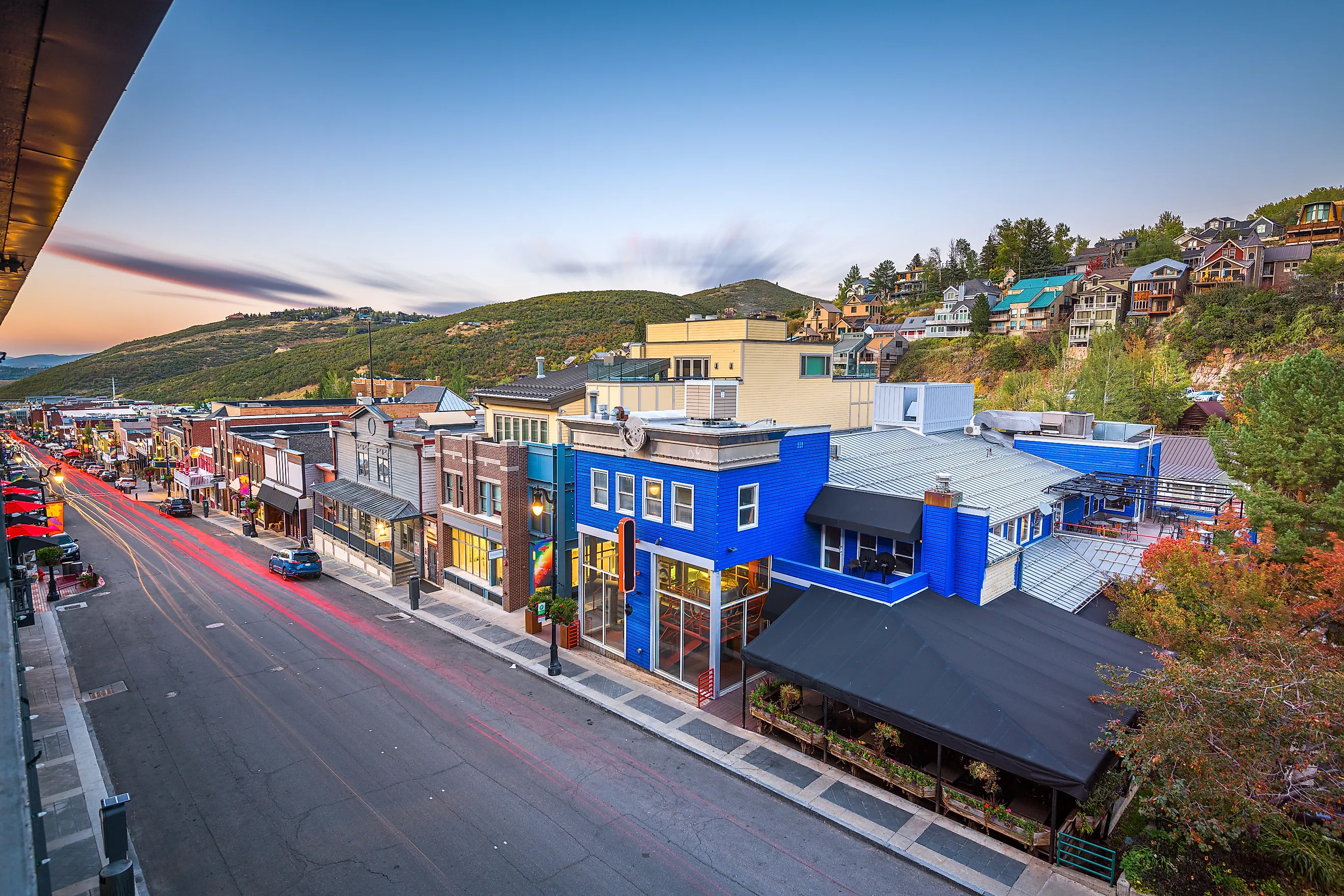
Prospecting soldiers found silver in the mountains here in 1868, and the mines that were dug ended up producing silver, lead, and zinc for nearly a century. Those who made their fortunes in Park City included George Hearst, the mining magnate whose Ontario Mine ranked among the richest silver producers in the world. When mining eventually wound down in the 1950s, the town reinvented itself, with Treasure Mountains Resort opening on former mine property in 1963.
Now known as Park City Mountain, several mining structures still stand among the ski runs there and at neighboring Deer Valley Resort. The best way to see them in winter is to take the free Silver to Slopes Historic Mining Tour. Suitable for intermediate-level skiers, it departs daily from Park City Mountain Village. Along the way, guides share the stories behind the Silver King Mine, while over at Deer Valley, you'll see the headframe of the Daly West Mine, a steel tower once used to hoist ore and miners from the shaft below.
Each September, the Park City Museum offers visits to Glenwood Cemetery. Costumed re-enactors tell the stories of the 900 or so of the town's earliest residents who have been interred here since 1885. The museum also features a replica of the town's underground mine tunnel network as it would have looked in 1901. Time a visit for Labor Day to participate in the Miners Day Celebration with its parade and old-fashioned drilling contests.
Helper

The Denver & Rio Grande Western Railway opened up Utah's coal country in the 1880s and gave the town of Helper its unusual name. Steam locos hauling coal out of Price Canyon needed extra "helper" engines to push them up the steep grade to Soldier Summit, the high mountain pass on the route east of town. Mine agents recruited workers from across Europe and Asia, and Italy, along with Greeks, Japanese, and citizens of more than 20 other nationalities, to fill the coal camps of surrounding Carbon County.

It's a fascinating story and is told in detail at The Helper Museum. Set in the old Helper Hotel, displays include a mock-up of a coal mine, photographs by Depression-era documentary photographer Dorothea Lange, and a room dedicated to the Winter Quarters Mine explosion of 1900, one of the deadliest mining disasters in American history. Outside, a park full of old mining machinery surrounds Caboose No. 55, built in 1918.
Helper Main Street is also full of fun stuff to do. Big John, an 18-foot fiberglass coal miner made in 1964, stands outside the Helper Civic Auditorium, a Depression-era building project. The Helper Arts Festival takes over the entire street on the third weekend of August, while December sees Helper transformed into "Utah's Christmas Town," complete with a parade of lights.
Eureka

Prospectors knew this corner of the Tintic Mountains as Ruby Hollow until 1870, when a run of silver strikes convinced them Eureka was a better name. The Tintic Mining District, named for Chief Tintic, a Ute leader who resisted settlement of the region, was created in December 1869. Its "Big Four" mines, the Bullion Beck and Champion, Centennial Eureka, Eureka Hill, and Gemini, made it one of the richest mining districts in the nation by 1899.

The Big Four supported well over 5,000 residents by the turn of the century, and by 1910 Eureka ranked as the ninth-largest city in Utah. Mining wound down in the 1950s, and today Eureka is often described as a semi-ghost town. The Tintic Mining Museum tells the town's story in a former railroad depot, its displays of mining artifacts, mineral specimens, as well as historical photos showing just how things looked during the town's heyday.
The most photographed structure in town, the Bullion Beck headframe is a timber gallows frame that lowered miners hundreds of feet below ground. Nearby, St. Patrick's Catholic Church, built in 1885, remains in use, while the Elks Lodge building, completed in 1902, still bears an original painted Levi's advertisement. Pop into the Eureka Company Store for local goods and tourist info.
Moab

It was uranium that put Moab on the map in 1952. It was then that a broke geologist from Texas named Charlie Steen was drilling in Lisbon Valley southeast of town when his drill bit broke 197 feet down. The core from that hole, tested weeks later against a friend's handheld radiation detector, revealed one of the biggest uranium deposits ever found in the United States. Named Mi Vida (Spanish for "my life"), the strike set off a prospecting rush that earned Moab the title "Uranium Capital of the World."

The federal Atomic Energy Commission, then desperate for domestic uranium to supply America's nuclear weapons program, guaranteed prices, and the town's streets filled with prospectors almost overnight. The Moab Museum does an excellent job of explaining the importance of the find with Geiger counters, glowing uranium glass, and old photos that bring the atomic 1950s back to life. The museum also runs occasional guided tours of the Mi Vida site.
Head up the hill to the Sunset Grill, the restaurant that now occupies the mansion Steen built, complete with a greenhouse, servants' quarters, and a swimming pool. Many of the backcountry roads now ridden by mountain bikers and four-wheel-drive enthusiasts in and around Moab were originally bulldozed by Steen and uranium prospectors.
Cedar City

It was iron that gave Cedar City its start in 1851. Mormon leader Brigham Young, anxious to make his isolated settlements self-sufficient, established an "Iron Mission" beside Coal Creek, close to newly discovered iron ore deposits. Within ten months, the colonists had built a small blast furnace and were producing iron. However, floods, freezes, and repeated furnace failures dogged the operation, and the foundry closed in 1858. A second attempt, this time by the Union Iron Company, launched in 1868, lasted into the 1870s.
Frontier Homestead State Park Museum on North Main Street does a great job of telling the story. Highlights include a 250,000-pound steam shovel from the region's later iron mines and the town bell, the only known surviving artifact produced by the original foundry. The grounds also feature Hunter House, Cedar City's oldest remaining brick home, and the George Wood cabin, built in 1851 and one of the oldest structures in Utah. The museum also manages Old Iron Town, the ruins of the Union Iron Company works.

Cedar City's other claim to fame is the Utah Shakespeare Festival. Founded in 1961, its first season consisted of just three plays and 300 seats a night. Today, it welcomes more than 100,000 guests a year. A highlight for many is seeing Shakespeare staged under the stars in the Engelstad Shakespeare Theatre, an open-air replica of the Globe, the London playhouse where many of his plays premiered.
Copperton

The Utah Copper Company laid out the community of Copperton in 1926 at the mouth of Bingham Canyon, 17 miles southwest of Salt Lake City. Designed as a model town for workers at its enormous open-pit copper mine, 18 houses were built the first year and 204 by 1941, many of them finished with copper roofs, rain gutters, and window frames. Utah Copper used the community as a showplace, and Copperton Park and the surrounding homes are now all part of the immensely strollable Copperton Historic District.

Bingham Canyon Mine is still a going concern and has been in production since 1906. Now operated by mining giant Rio Tinto under the Kennecott name, its pit runs three-quarters of a mile deep and 2.5 miles across, one of the largest man-made excavations on the planet.
The Rio Tinto Kennecott Visitor Experience operates shuttles to an overlook on the rim, a unique mine-related experience you'll not soon forget. Be sure to book ahead as overlook capacity is limited and busy days sell out fast.
Utah's Small Town Mining Stories
Silver, coal, copper, iron, and uranium each left a mark on Utah, and each town carries it in a different form. In Park City the old shafts sit among ski runs, in Eureka the Big Four headframes stand over a quiet Main Street, and in Copperton the model houses line the lip of a working pit. Around Moab the prospecting roads now serve mountain bikers, while Helper and Cedar City hold their history in museums full of original equipment. The ore ran out decades ago, but the buildings, the machinery, and the stories are still here to walk through.