2026's 12 Best Small Towns To Visit In The Northern United States
Up here, the mountains and the water are always the point, and only what you do with them changes with the season. The ridge you hike in September is a ski run by January, and the lake you swim in July is the ice you skate in February. These are small towns that never had an off-season, only a different one. Off Bar Harbor, Maine, the tide drops twice a day and opens a gravel road out to Bar Island for about three hours before the tide covers it again. In Bayfield, Wisconsin, kayakers slip into red sandstone sea caves on the days Lake Superior lies flat. Farther out, in Sitka, Alaska, Tlingit totem poles stand a short walk from a Russian bishop's house older than most of the country.
Bar Harbor, Maine

Twice a day, the outgoing tide drops far enough to open a gravel land bridge from the edge of Bar Harbor out to Bar Island, and you get roughly three hours on the exposed seafloor before the water closes the route again. The town is also the gateway to Acadia National Park, more than 47,000 acres of granite coast and spruce forest laced with about 158 miles of hiking trails. Some of those trails climb Cadillac Mountain, the tallest summit in the park, which rises straight above town. For a shorter, steeper option, the Acadia Mountain Trail runs a couple of miles up to a 681-foot summit above Somes Sound, the deep glacial inlet that nearly splits Mount Desert Island in two. Drivers take the 27-mile Park Loop Road past the lakes and headlands instead, and in summer and early fall the free Island Explorer bus makes the whole circuit, which spares you the worst of the parking crush.
Bayfield, Wisconsin

The Apostle Islands sit just offshore from Bayfield, twenty-one forested islands inside a National Lakeshore on Lake Superior. Wave action has cut sea caves into the red sandstone along the mainland and the islands, leaving arches and honeycombed passages you can paddle straight into when the lake is calm; guided kayak outfitters in town run trips out on the settled days. For a drier look at the same water, the Apostle Islands Cruises boat leaves the Bayfield docks and loops past the islands and their old lighthouses. A few of the islands are worth a landing on foot. Sand Island still has the remains of an early fishing settlement, and Oak Island, the tallest of the group, has about eleven miles of forested trail and a quiet beach or two.
Stowe, Vermont

Mount Mansfield, the highest mountain in Vermont, stands over Stowe, and a season pass to Stowe Mountain Resort puts it to use year-round. The Gondola SkyRide climbs to the summit, where the Cliff House restaurant has long views over the Green Mountains, and from there you can pick up a hiking trail in summer or a ski run in winter. Back down in town, the Stowe Recreation Path follows the West Branch of the Little River for about five miles, linking cafes, shops, and river bends into an easy walk or bike from one end of town to the other. Moss Glen Falls, which Stowe bills as the tallest waterfall in the state at 85 feet, sits a five-minute drive from the historic village at the end of a short, mostly flat walk over boardwalks and footbridges.
Lake Placid, New York

Lake Placid hosted the Winter Olympics twice, in 1932 and 1980, and traces of both are still all over town. The Lake Placid Olympic Museum holds the memorabilia and interactive exhibits, and the Olympic Center where the games actually happened is usually open for public skating on the same ice. Beyond the medals, Lake Placid is a small town deep in the Adirondack Mountains, at its best when the hardwoods turn in autumn. The 34-mile Adirondack Rail Trail, finished in 2025, runs a flat, low-grade route between Lake Placid, Saranac Lake, and Tupper Lake along an old rail bed; hikers and cyclists use it in the warm months, and snowshoers and snowmobilers take over once it snows.
Jim Thorpe, Pennsylvania

You can take in the mountains here without climbing anything, on the Lehigh Gorge Scenic Railway. Early-1900s coach cars run along the Lehigh River into Lehigh Gorge State Park, past waterfalls and dense hemlock, while a guide narrates the local history and geology from the front of the car. If you would rather move under your own power, the Lehigh Gorge Trail follows the same river on a flat, crushed-stone rail bed that runs for miles through the gorge, popular with cyclists and easy on the knees. For something wetter, Pocono Whitewater runs rafting trips on the Lehigh, including a moonlight run with glow sticks strung along the rafts and a campfire, s'mores, and wine on the beach at the takeout.
Marquette, Michigan

Downtown Marquette runs right down to Lake Superior, a walkable grid of bookshops, cafes, and a weekly farmers market, with the old iron ore dock still standing out over the water as a reminder of what built the place. The city is an outdoors town at heart: trails climb the hills behind it, and bike paths thread the woods along the shore. In Presque Isle Park, the paths run up to sandstone cliffs and dark outcrops of ancient bedrock, with the lake spread out below. Sugarloaf Mountain, a few minutes north, rises about 470 feet above the water, and a half-mile trail of switchbacks and staircases reaches the viewing decks at the top in 15 to 30 minutes.
Grand Marais, Minnesota

Founded in 1947, the Grand Marais Art Colony bills itself as the oldest art colony in Minnesota, and visitors and locals can still book studio time and short classes there in printmaking, ceramics, and other hands-on work, some of it doable in a single day. At the North House Folk School down the street, you can learn old northern crafts, the kind of skills that do not come up much anymore: pole-lathe turning, fingerweaving, braided leatherwork, even sewing boots from hide and canvas. Many of those courses also fit into a day. Each summer, vendors set up along the harbor front for the Grand Marais Arts Festival, and the range of work on the tables matches the range in the studios: a little of everything, made by hand.
Sandpoint, Idaho

City Beach sits two blocks from downtown Sandpoint, a stretch of sand on Lake Pend Oreille where people swim off the gentle shoreline and play volleyball, pickleball, and basketball on the courts behind it, with shaded picnic tables and grills for afterward. The Pend d'Oreille Bay Trail starts near the beach and runs flat and unpaved along the water, shaded by birch and cottonwood that go gold in the fall. That is the easy walk. The hard one is Scotchman Peak, where the trail gains about 3,700 feet over four miles to a 7,009-foot summit with the Cabinet Mountains and Lake Pend Oreille laid out below. The peak is known for its mountain goats, which wander close to the path, and the standing advice is to keep at least a hundred feet between you and them.
Sitka, Alaska

On a single stretch of Sitka waterfront, Tlingit totem poles stand near a Russian bishop's house and an American national park, three cultures inside a short walk. The 1804 Battle of Sitka, in which the Tlingit fought Russian forces, was fought on ground that is now Sitka National Historical Park, the oldest federally designated park in Alaska. The park's coastal trail passes a line of Southeast Alaska totem poles and ends at one of the last Russian colonial buildings left in North America: the Russian Bishop's House, a log structure finished in 1843, its rooms now filled with exhibits on Russian life in the territory. Not all of the culture here sits behind glass. At the Naa Kahidi community house, the Naa Kahidi Dancers put Tlingit stories into motion, performances handed down through generations rather than printed on a wall.
Camden, Maine

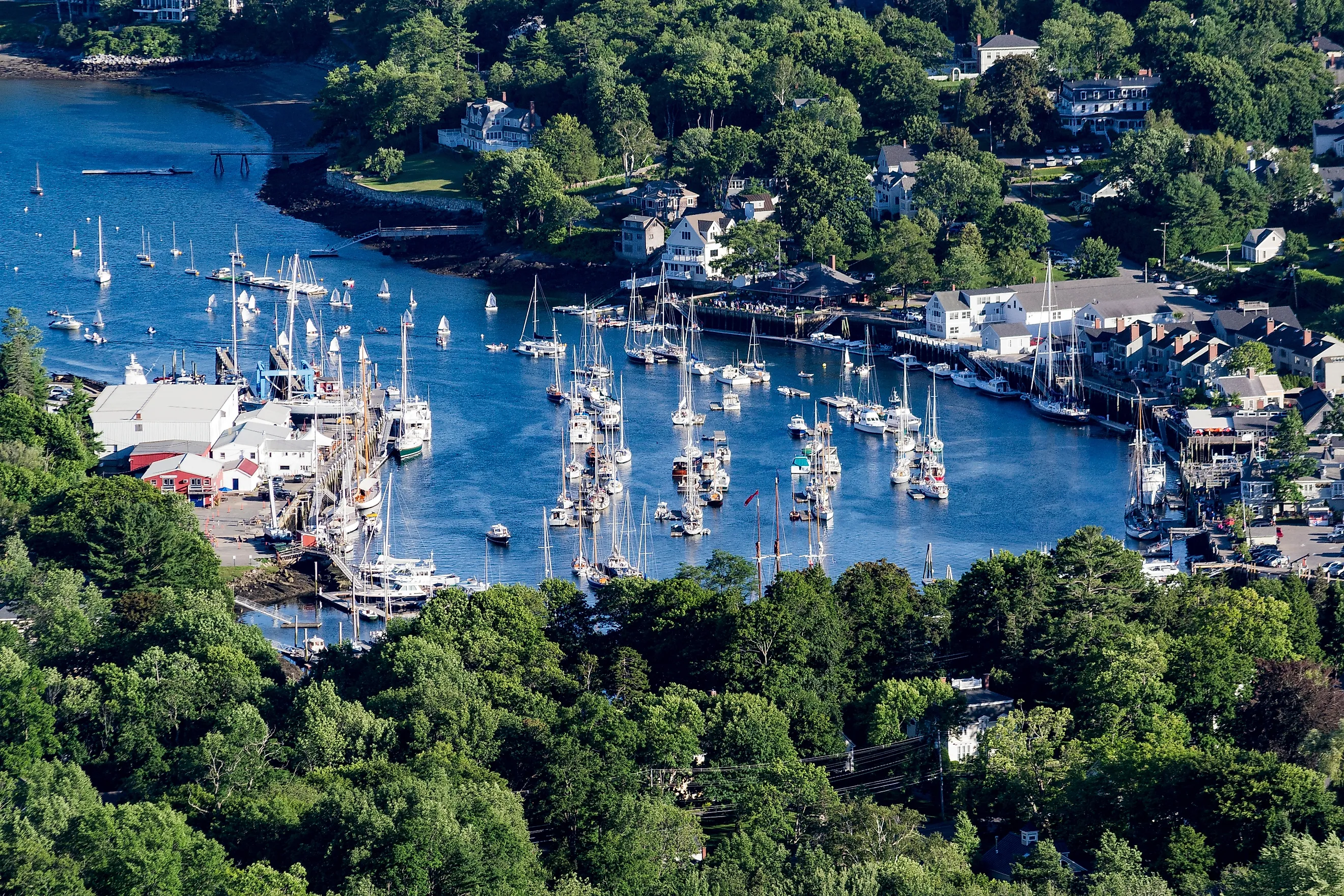
Camden Harbor is one of the busier working harbors on the Maine coast, with lobster boats and pleasure craft tied up a few steps from the restaurants on the Public Landing. Lobstering is the backbone of the local fishery, and you can see the work up close on a lobstering cruise out of Camden, where the crew runs you into Penobscot Bay and puts you to work hauling traps and handling the catch. Osprey and bald eagles turn up overhead on most trips, and harbor seals surface near the boat. The region's big event is the Maine Lobster Festival, held each August just down the coast in Rockland, five days of lobster dinners, cooking contests, and crafts on the Penobscot Bay waterfront.
Hood River, Oregon

Hood River sits at the windy heart of the Columbia River Gorge, where wind funneling through the canyon has made the town one of the country's best-known spots for windsurfing and kiteboarding. The gorge itself is a National Scenic Area, a canyon over 4,000 feet deep and more than 80 miles long, and the water turns especially good in the evening as the light drops. Outfitters in Hood River rent kayaks and paddleboards or run guided sunset paddles on the calmer stretches. The other draw is waterfalls. Multnomah Falls, the most visited waterfall in Oregon, is about 30 miles west, and the 242-foot Wahkeena Falls and the two-tiered Bridal Veil Falls are close by. Guided bike tours run the old highway past a string of them, including Lancaster Falls, Starvation Creek Falls, and Hole-in-the-Wall Falls, close enough that you feel the spray.
Port Townsend, Washington

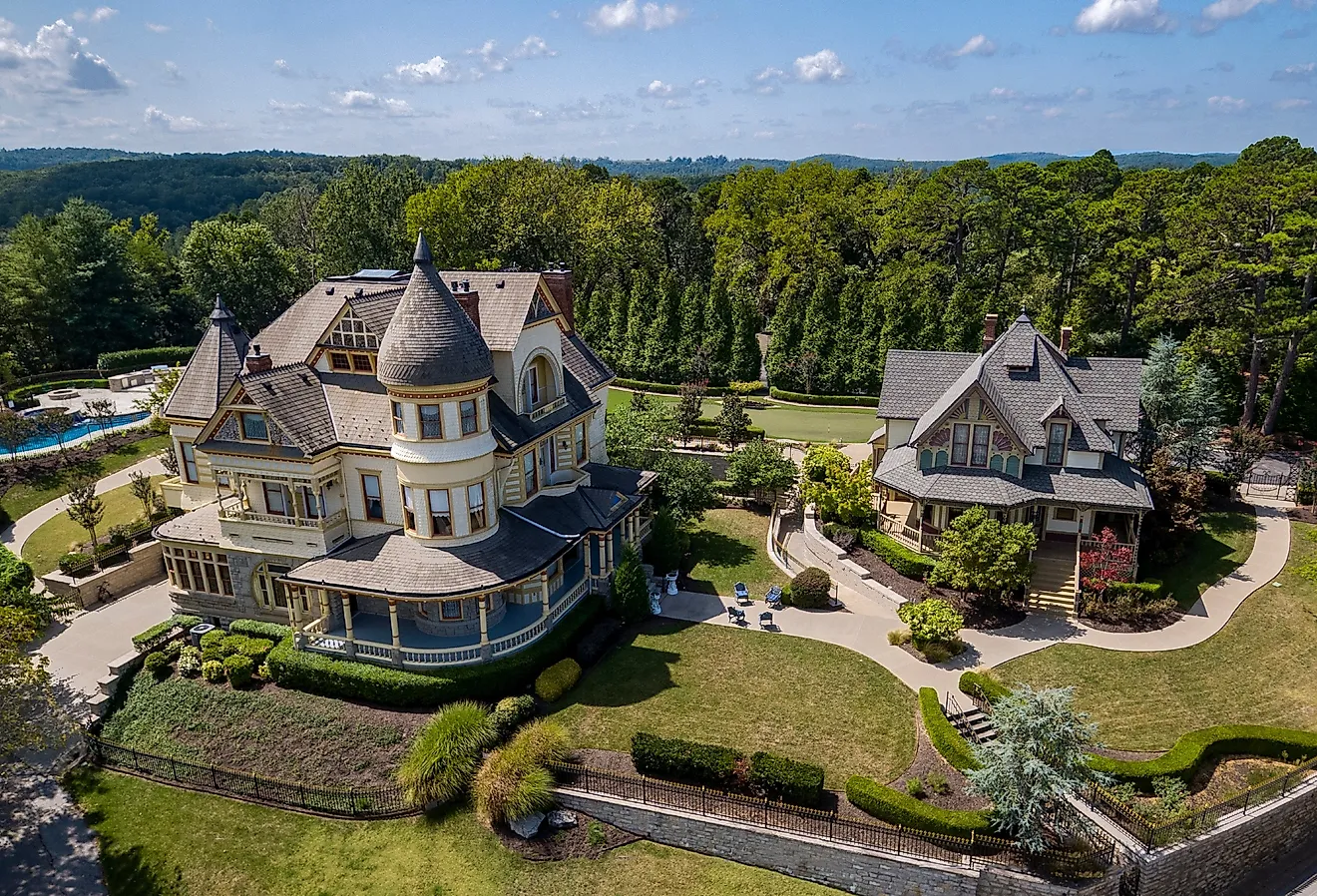
Port Townsend has a working shoreline and one of the best-preserved Victorian seaports on the West Coast. The town boomed in the 1880s and 1890s, when it was expected to become the region's great port, and the boom left behind hundreds of Victorian houses and commercial buildings that you can still see on walking tours downtown and up on the bluff. Out at Fort Worden Historical State Park, a beach runs along Port Townsend Bay beneath forested hills, next to an interpretive trail through the old Chinese Gardens lagoon with illustrated panels on the history of the Chinese community that once lived and worked there.
Higher up, on Artillery Hill, the concrete batteries, bunkers, and gun emplacements of Fort Worden remain from its decades as a US Army coast-artillery post, part of the "Triangle of Fire" that once guarded the entrance to Puget Sound. The fort is a state park now, and the batteries are open to walk through.
When To Go North
Timing is the real constraint up here. Most of these towns run on a short season: the free Island Explorer buses around Acadia and the boat tours out of Bayfield wind down by mid-October, the Apostle Islands sea caves are only safe to paddle when Lake Superior lies calm, and the Adirondack Rail Trail fills with snowmobiles once the snow arrives. Summer and early fall are the easy windows, but winter has its own draw: you can still skate on the Olympic ice at Lake Placid, and Stowe's slopes are the reason the town exists at all. The move is to match the town to the month you can actually get there, and let the rest of the list keep until next year.