2026's 11 Most Scenic Atlantic Coast Towns
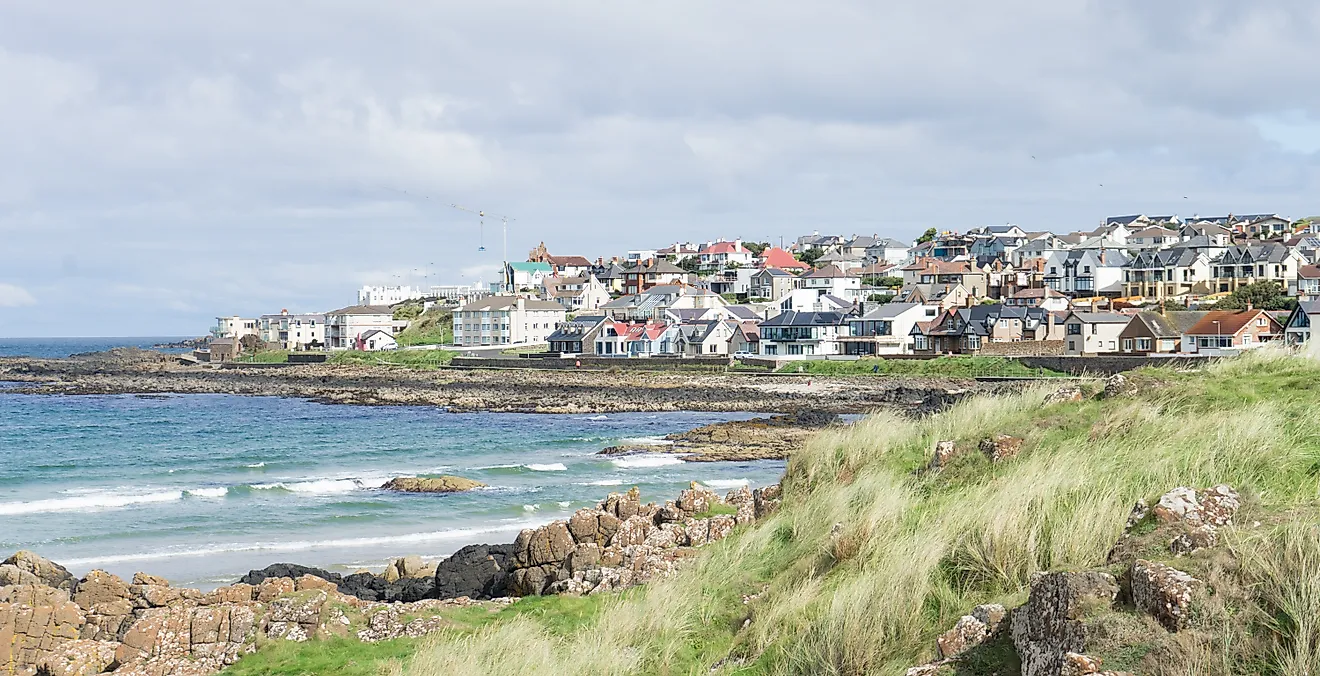
The Atlantic Coast runs for over 2,000 miles from Maine to Florida, and its most scenic towns have almost nothing in common with each other except the water. A rocky Maine harbor at low tide looks nothing like a South Carolina marsh at dusk or a Florida island with 40-foot sand dunes and a Victorian downtown. Then, there is an island town where wild ponies steal the spotlight every summer and a Rhode Island city where a path runs between Gilded Age mansions and the Atlantic. These eleven towns show just how many different versions of coastal scenery can fit along one stretch of ocean.
Rockport, Maine

Rockport is the quieter neighbor of Camden on Maine's Midcoast, and it earns its place on any scenic list through sheer visual consistency. The Rockport Harbor, framed by lime kilns on one shore and wooden boats on the other, is one of the most photographed working harbors in New England. Camden Hills State Park, just north of the village, rises 800 feet above the water and delivers one of the finest views of Penobscot Bay available without a boat. The Maine Photographic Workshops, one of the most respected photography schools in the country, has been based here since 1973, drawn by the same quality of light and landscape that painters discovered a century before them. The village center is small enough to walk in twenty minutes, with a handful of good galleries and restaurants clustered near the harbor.
Ogunquit, Maine

Ogunquit's reputation rests on two things: its beach and its cliff path, and both are exceptional. Ogunquit Beach, a 3.5-mile barrier beach backed by dunes and tidal creek, is consistently ranked among the most beautiful in New England, with fine white sand and calm swimming conditions on the inlet side. The Marginal Way, a paved footpath threading along the rocky headland above the open Atlantic, was donated to the town in the 1920s and offers over a mile of uninterrupted ocean views from the cliffs. The Ogunquit Museum of American Art, perched on the rocks above the sea, houses an impressive collection of American paintings in a building whose setting alone is worth the visit. The village of Perkins Cove, reached by footbridge, is a working lobster wharf turned cluster of galleries and seafood restaurants that fills with boats every morning.
Kennebunkport, Maine

Kennebunkport sits at the mouth of the Kennebunk River on the southern Maine coast, and it combines working harbor character with the kind of handsome architecture that comes from two centuries of prosperous shipbuilding and summer visitors. Ocean Avenue follows the rocky shoreline past grand Victorian cottages and the Walker's Point compound, the summer home of the Bush family for generations, visible from the road and from boat tours leaving the harbor. The Goat Island Lighthouse, established in 1833 in Cape Porpoise Harbor just east of town, is one of the most scenic in Maine. The working harbor at Cape Porpoise, a quieter village within the town, still launches lobster boats every morning and remains one of the least changed fishing harbors on the New England coast. The Dock Square commercial center, compact and walkable, provides the restaurants and independent shops that make the town worth more than a single afternoon.
Rockport, Massachusetts

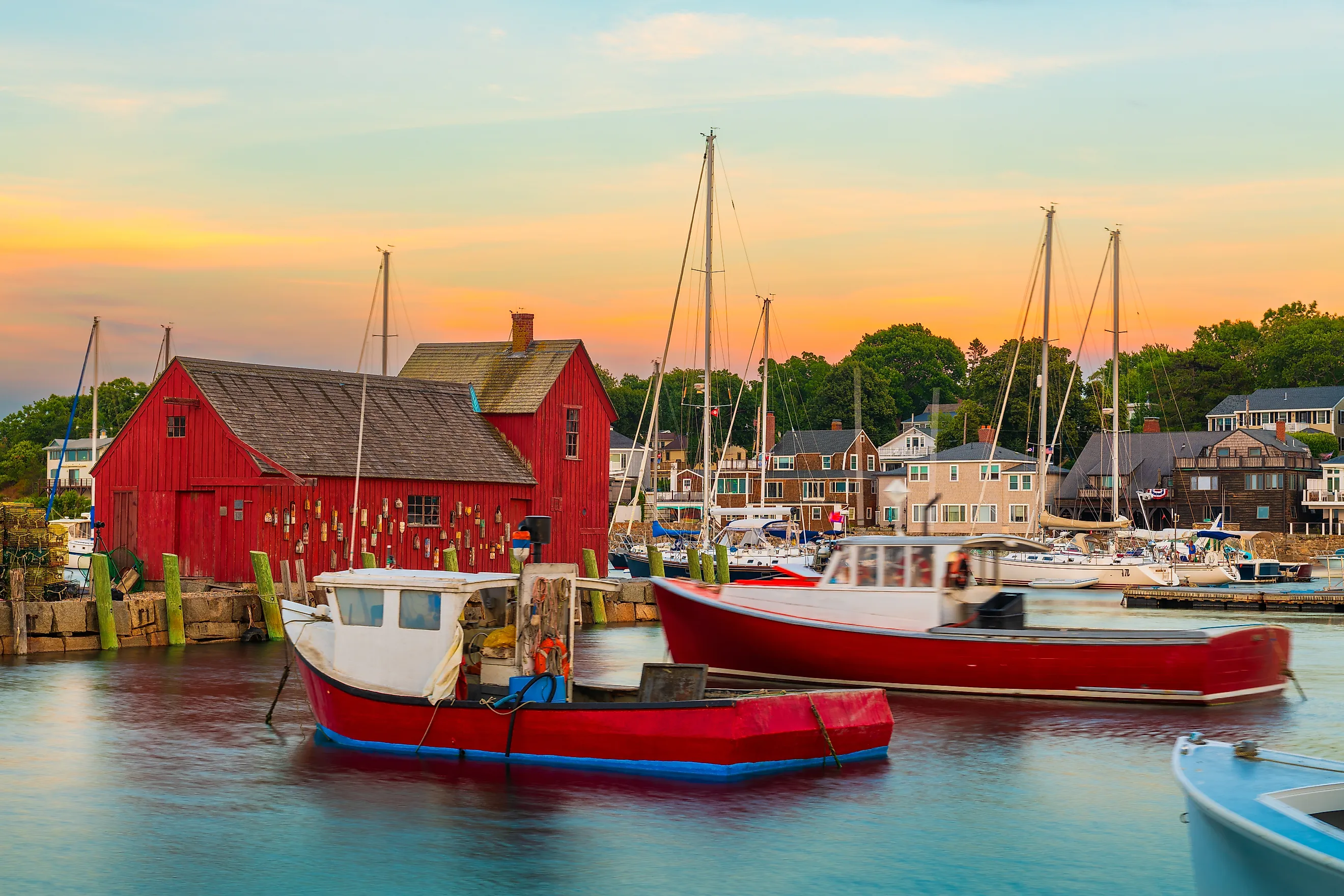
Rockport, Massachusetts occupies the tip of Cape Ann north of Boston, and its granite coast has been drawing painters and photographers since the 1800s with good reason. A replica of Motif Number 1, a red fishing shack on Bradley Wharf that has been called the most painted building in America, sits at the harbor's edge and looks exactly as the original one destroyed during a blizzard in 1978. The Bearskin Neck commercial strip runs out along the wharf with galleries, studios, and seafood shacks packed into former fish houses. Halibut Point State Park, at the northern tip of the cape, preserves an old granite quarry above the sea with views on a clear day stretching to New Hampshire. The Rockport Art Association, one of the oldest artists' organizations in the country, still runs galleries and exhibitions in a historic building on Main Street, keeping the town's creative identity alive well past the summer season.
Newport, Rhode Island

Newport has two faces and both are scenic. The Cliff Walk, a three-and-a-half mile footpath running between the Gilded Age mansion lawns and the rocky Atlantic shore, is one of the finest coastal walks in the northeastern United States, with views that put the mansions and the ocean in the same frame. The mansions themselves, The Breakers, Marble House, and Rosecliff among them, are open for tours and represent one of the most concentrated displays of American wealth from the 1880s and 1890s anywhere in the country. Thames Street and the Historic Point neighborhood offer a completely different Newport, with Colonial-era buildings, working boatyards, and a harbor that has hosted the America's Cup sailing races more times than any other venue in the world. The Fort Adams State Park on the harbor's western shore frames the best view of Newport's skyline from the water side.
Cape May, New Jersey

Cape May sits at the southernmost tip of New Jersey where the Delaware Bay meets the Atlantic, and it is the most architecturally intact Victorian seaside resort in the United States, with over 600 Victorian-era buildings preserved in a downtown that looks much as it did in the 1880s. The Cape May Historic District, a National Historic Landmark, is the reason most people come, but the Cape May Lighthouse, rising 157 feet above the point at the tip of Cape May Point State Park, and the Sunset Beach on the bay side, where the sun sets directly over the water, give the town a natural scenery to match its architectural one. The Cape May Bird Observatory draws serious birders every spring and fall as the town sits directly on one of the most important migratory bird routes on the East Coast. The Washington Street Mall, a pedestrian street through the center of the historic district, has the concentration of good restaurants and independent shops that keeps Cape May lively outside of peak summer weekends.
Chincoteague, Virginia

Chincoteague is a small island town on Virginia's Eastern Shore whose most famous residents are not human. Every July, the Chincoteague Wild Ponies, a herd of feral horses that has roamed Assateague Island since at least the 17th century, swim across the channel in the annual Pony Swim, one of the most extraordinary wildlife spectacles on the East Coast. The rest of the year, the Chincoteague National Wildlife Refuge on the southern end of Assateague protects one of the finest undeveloped barrier island landscapes on the Atlantic, with wide beaches, salt marshes, and over 300 species of birds recorded in the refuge. The Assateague Lighthouse, a candy-striped tower built in 1867, rises above the pine and oak forest of the island and is open for climbing on weekends. The town itself is a classic Eastern Shore fishing community with a working oyster and clam industry, and the seafood restaurants on Main Street serve some of the freshest shellfish on the mid-Atlantic coast.
Beaufort, North Carolina

Beaufort, North Carolina is a small waterfront town on the Crystal Coast that most visitors miss on their way to the Outer Banks, which is exactly what gives it its character. The Beaufort Historic Site on the waterfront preserves a collection of 18th and 19th-century buildings including a 1796 courthouse, an old jail, and a apothecary shop, all open for tours. Just across Taylor's Creek from the downtown waterfront, Carrot Island is home to a herd of wild horses that roam the barrier island freely and are visible from the waterfront docks with binoculars or by kayak. The North Carolina Maritime Museum on Front Street houses a collection of artifacts from Blackbeard's flagship, Queen Anne's Revenge, which sank just offshore in 1718 and whose remains continue to be excavated. The Rachel Carson Reserve, a protected estuary accessible only by boat, offers some of the finest kayaking and wildlife watching on the North Carolina coast.
Pawleys Island, South Carolina

Pawleys Island claims to be the oldest seaside resort in America, drawing South Carolina plantation families to its barrier beaches since the 1700s, and it has resisted modernization with a stubbornness that is genuinely rare on the East Coast. There are no traffic lights on the island, no gas stations, no chain stores, and no commercial development beyond two historic inns, the Pelican Inn built in the 1840s and the Sea View Inn built in 1937, which between them define the island's accommodation options and its pace. The three-mile beach is wide, uncrowded, and backed by weathered cottages that have been in the same families for generations. Brookgreen Gardens, just north of the island on the mainland, is one of the finest sculpture gardens in the country, set within a former rice plantation with Spanish moss hanging from ancient oaks. The salt marsh creek on the island's western side offers kayaking through one of the most serene Lowcountry landscapes in South Carolina.
Beaufort, South Carolina

Beaufort, South Carolina is the kind of Southern town where the scenery is inseparable from the history, the two having been built together over three centuries of rice planting, war, and recovery. The Historic District on the bluff above the Beaufort River is lined with antebellum houses shaded by live oaks draped in Spanish moss, their wide porches facing the water in a scene that photographers and filmmakers have returned to repeatedly. The Henry C. Chambers Waterfront Park runs along the river with views across to Port Royal Sound and the marshes stretching toward the sea. Hunting Island State Park, a 15-minute drive south, preserves five miles of wild Atlantic beach backed by a maritime forest and anchored by an 1859 cast-iron lighthouse that can be climbed for views across the barrier islands. The town's role as a center of Gullah Geechee culture, the living heritage of enslaved Africans who shaped the Lowcountry's language, food, and art, gives it a cultural depth that makes a weekend here feel more rewarding than most.
Fernandina Beach, Florida

Fernandina Beach sits on Amelia Island at Florida's northeastern tip, just south of the Georgia border, and it has flown the flags of eight different nations over its history, earning the island the nickname the Isle of Eight Flags. The Historic Downtown, built largely during a Victorian-era boom in the 1880s when the island was the eastern terminus of the first cross-state railroad in Florida, is one of the best preserved Victorian commercial districts in the South, with the Palace Saloon, Florida's oldest bar, still operating on Centre Street. Fort Clinch State Park at the northern tip of the island preserves a remarkably intact Civil War-era brick fortress whose ramparts offer views across the Cumberland Sound to Georgia, surrounded by a park with 13 miles of beaches, dunes up to 40 feet high, and trails through maritime forest draped in Spanish moss. The island's working shrimping fleet still operates from Fernandina Harbor Marina, and the annual Isle of Eight Flags Shrimp Festival every May is one of the largest outdoor festivals in Florida. The Amelia Island Lighthouse, the oldest lighthouse in Florida, stands at the island's northern end and has guided ships into the harbor since 1839.
Beautiful Views In The Atlantic Coast
The Atlantic Coast does not run short of scenic towns, and this list could reasonably have been twice as long. What the eleven above share is a quality that goes beyond a good beach or a photogenic harbor: a sense that the landscape and the community have grown around each other over a long enough time that neither looks accidental. That is what makes them worth the trip.