12 Towns In Florida That Were Frozen In Time
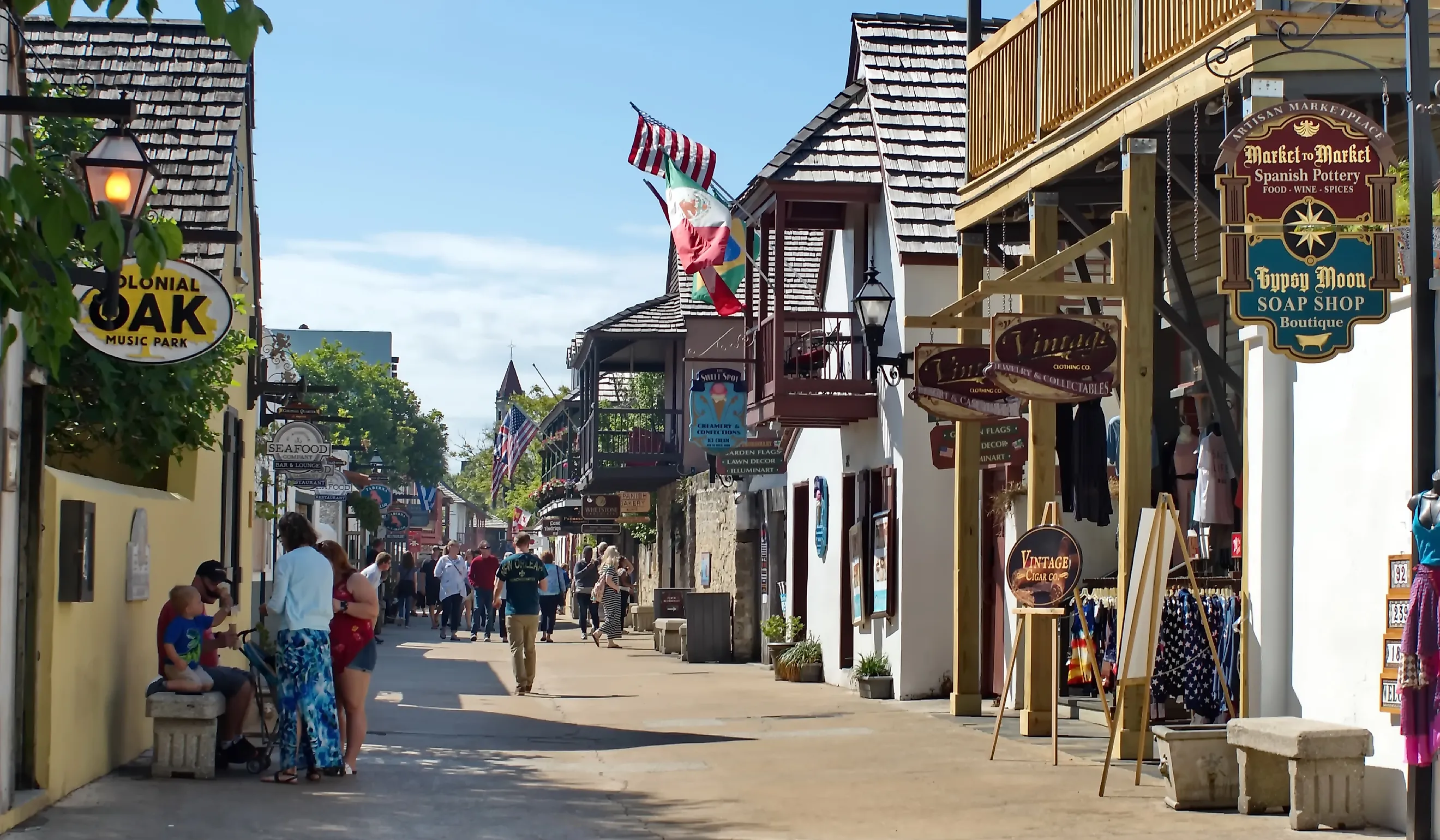
Long before the opening of Walt Disney World in 1971, Florida was home to the oldest city in the United States, St. Augustine, founded in 1565 by Spanish explorer Pedro Menéndez de Avilés.
Rich in history, Florida continues to be shaped by its geography, diverse cultures, and pivotal moments, like the railroad connecting mainland Florida to Key West, the Civil Rights Movement, the tourism boom of the 1970s, and many more. Visitors to Florida will be sure to find "Old Florida" charm in places like Micanopy, Fernandina Beach, Dade City, and Quincy, where historic architecture and slower paces evoke earlier eras and small towns frozen in time.
St. Augustine

With over 450 years of history, St. Augustine, on Florida’s Atlantic coast, has earned its moniker as the “Ancient City.” It is the oldest continuously inhabited European settlement in the United States, where history lovers can spend days discovering the numerous historical icons peppering the town, like the can’t-miss oldest masonry fort in the U.S.—the Castillo de San Marcos National Monument on the Matanzas River. Two miles north, the 40-acre Fort Mose Historic State Park is the location of the first free African settlement in North America.
Families with children won’t want to miss Ponce de Leon’s Fountain of Youth Archaeological Park, where they can take a sip from Juan Ponce de Leon’s Spring of Eternal Hope in the Spring House, a 60-year-old coquina building that encompasses the original spring. The Colonial Quarter is another historical attraction in town that immerses visitors in the city’s colonial past through reconstructed colonial-era homes, shops, and a blacksmith’s forge. Climb the 17th-century watchtower replica for panoramic views of St. Augustine and Matanzas Bay.
St. Marks

St. Mark's is the third-oldest settlement in North America. Its storied past includes Apalachee Indians, Spanish explorers, marauding pirates, and sunken ships. Military history enthusiasts interested in exploring the town’s layered history can visit the San Marcos de Apalache Historic State Park, where the St. Marks and Wakulla Rivers meet. Originally a Spanish military outpost established in 1679, the site played a key role during various conflicts, including the American Civil War. Another must-see landmark is the 1831 St. Mark's Lighthouse, the second-oldest lighthouse in the state. It stands 88 feet tall, and according to legend, the 12-foot limestone blocks it sits upon are from the ruins of the old Fort San Marcos de Apalache.
Micanopy

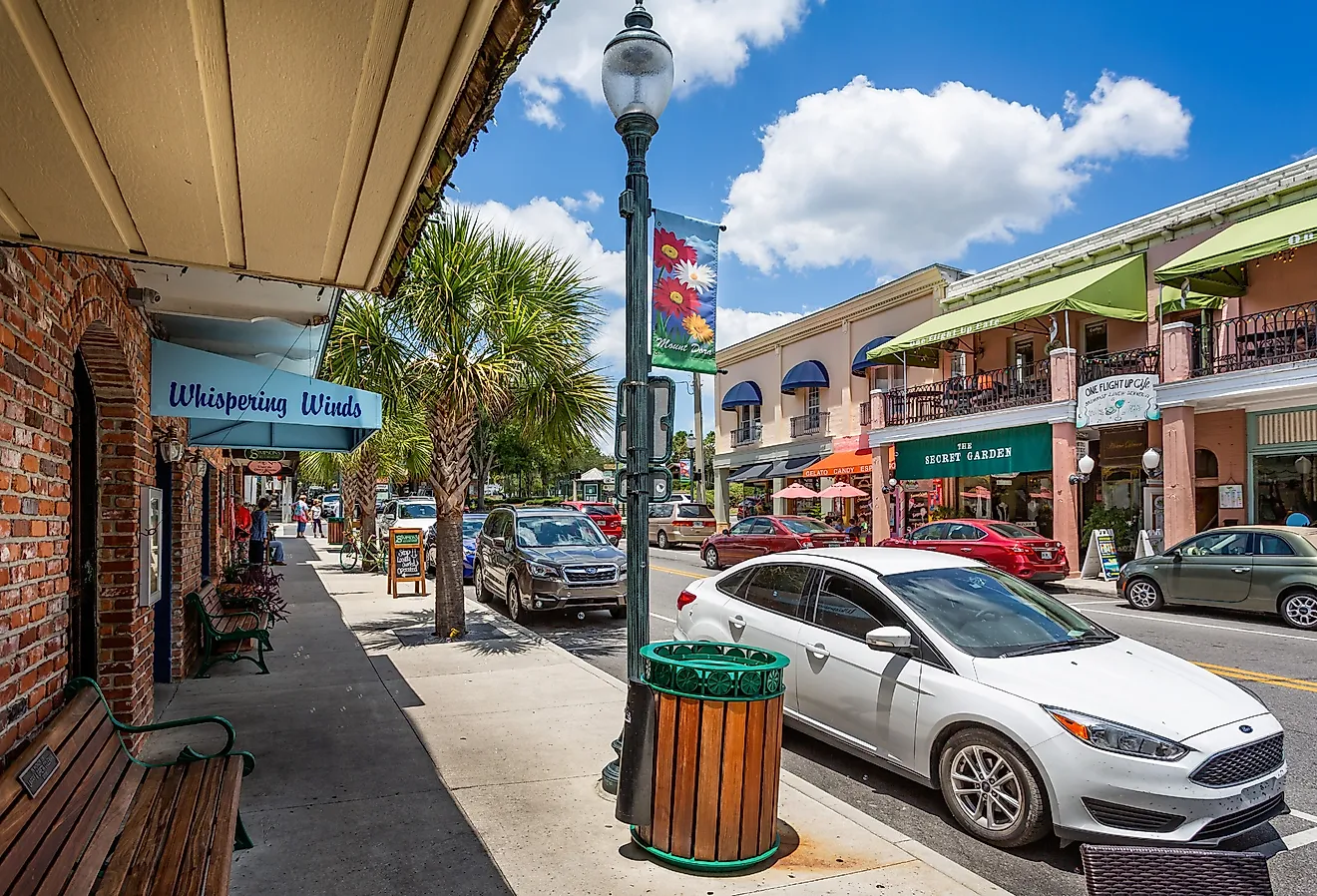
With its unofficial nickname of “The Town That Time Forgot,” Micanopy (pronounced Mi-kuh-no-pee) is also Florida’s oldest inland town. With about 650 residents, it might be easy for visitors to bypass this small town on their way to theme parks like Walt Disney World and attractions, but they shouldn’t. Walk down Micanopy’s charming main street, Cholokka Boulevard, and go antiquing old-Florida style in shops like the Micanopy Outpost and Delectable Collectibles.
Visit the Micanopy Historical Society Museum to see exhibits on Micanopy’s “Bicentennial,” learn about Florida’s storied history in “Florida Under Five Flags,” and see a cashier’s cage from an original general store. Stay overnight at the elegant Herlong Mansion, a 1845 Bed & Breakfast that oozes old-world charm.
Apalachicola

Apalachicola, appropriately located on Florida’s Forgotten Coast, was a thriving cotton and lumber port and a hub for the wealthy in 1836. Today, it is experiencing a renaissance of sorts, with a mix of upscale dining eateries like Apalachicola Chocolate & Coffee Company, bookstores like Downtown Books & Purl, and on-trend boutiques like Becasa popping up in its historic district. Visitors can take a self-guided tour of the town to see over 900 historic homes and buildings. Other landmarks to see include the John Gorrie Museum State Park, which contains a replica of the first ice machine, and the Orman House Historic State Park, with its stately antebellum home and botanical gardens.
Fernandina Beach

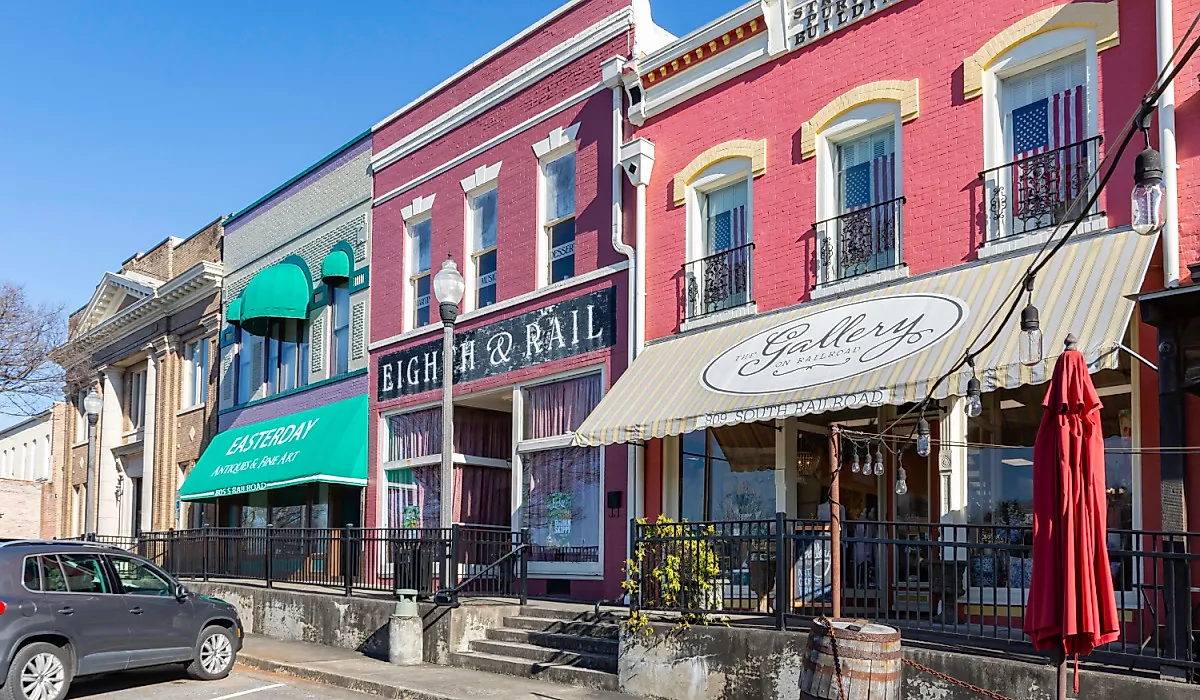
With its mix of historic elegance and coastal charm, the island town of Fernandina Beach is a must-see for history buffs in search of forgotten iconic Florida towns. Sitting on the north end of Amelia Island, Fernandina Beach’s 52-block downtown and historic Centre Street has everything to keep visitors busy, from antiquing at the Eight Flags Antique Market to yoga at Centred on Yoga, with plenty of stops in between. Step back to 1864 with a visit to the 1,400-acre Fort Clinch State Park and its Civil War-era fort, where Union soldiers reenact life during the war in front of a row of cannons pointing across St. Marys River.
The Amelia Island Lighthouse, built in 1838, is one of Florida’s oldest surviving lighthouses. Its light marks the entrance to the St. Marys inlet, leading to the St. Marys River and the harbor of Fernandina Beach. Finish a perfect day in this old river town at the Palace Saloon on Centre Street, the oldest continuously operating saloon in Florida since its opening in 1903. The saloon is renowned for its tin ceiling, vintage murals, and signature drink—the Pirate’s Punch.
Quincy

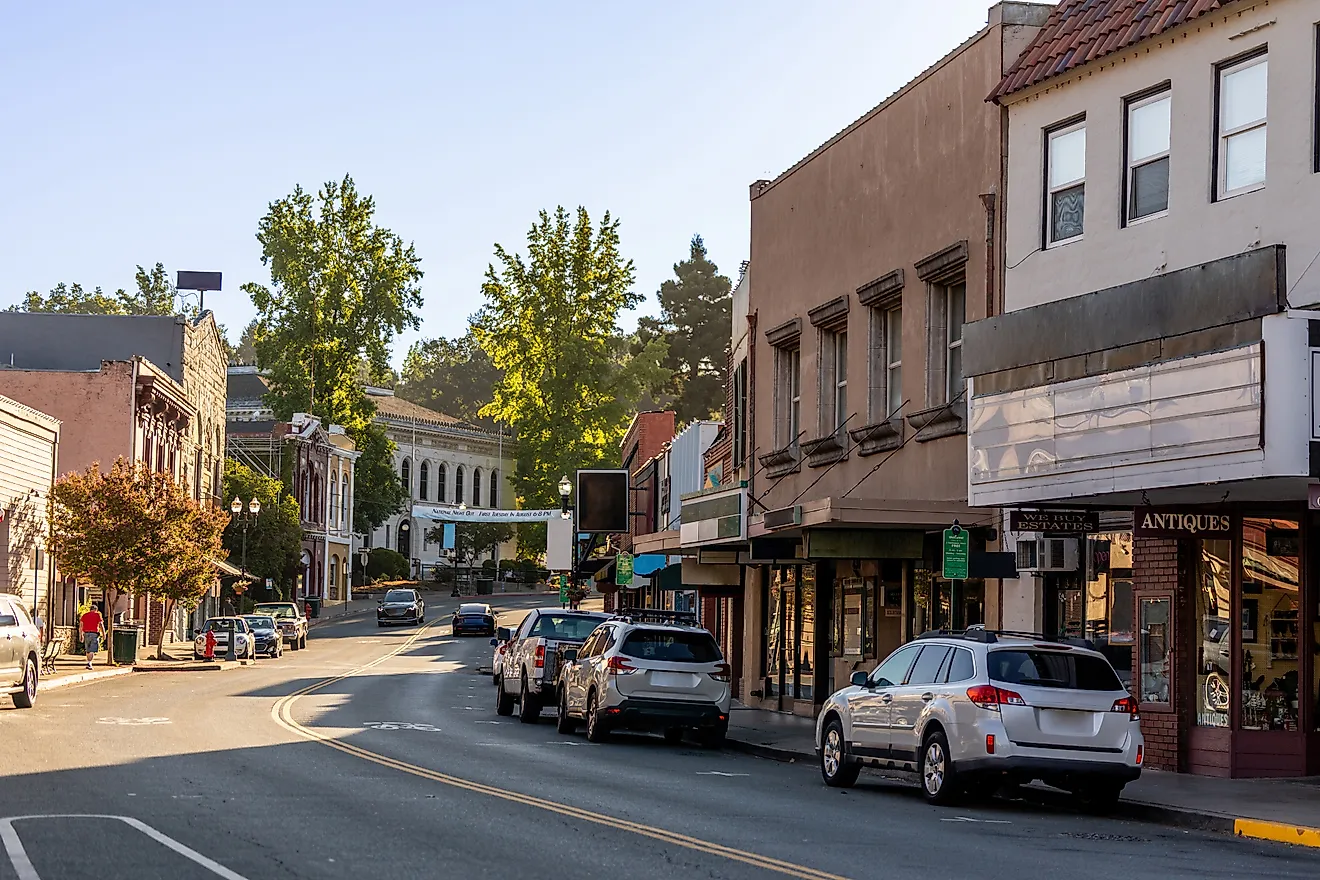
Twenty-five miles north of the state capital of Tallahassee, the small town of Quincy embodies Old Florida with its 36-block Quincy Historic District—a National Register Historic District with over 200 buildings. A few of the landmark buildings include the Gadsden County Courthouse, built in 1913 and the fifth on the same square since 1827; the Bell and Bates Building, a hardware store founded in 1902 and now the Gadsden Arts Center and Museum; the Old Quincy State Bank Building & Opera House, constructed in 1893, and many more. With an array of unique shops like the White Rabbit Market, cafés, bakeries like Bantam Bay, and galleries like the Marie Brooks Gallery, visitors can spend the day strolling along the tree-lined streets.
New Smyrna Beach

Founded in 1768, New Smyrna Beach is one of Florida’s oldest towns, once the largest British Settlement established in North America known as “Smyrnea.” Learn more about the town’s unique history at the New Smyrna Museum of History, which has exhibits on Native American History, the Turnbull Settlement, the Pioneer Years, and the Railroad Era. While the town is becoming increasingly recognized as a hip, artsy seaside town, its deep history adds to its frozen-in-time appeal with landmarks like the 17-acre historic Sugar Mill Ruins, once a coquina sugar factory, and the 40-by-80-foot coquina ruins known as Old Fort Park that overlook the Intracoastal Waterway near New Smyrna’s downtown.
Other historical sites that belie the town’s deep roots include the Eldora State House, a 1910-era blend of Victorian, Colonial Revival, and Cracker-style design, and Dummit’s Tomb, the above-ground grave of one of the town’s first settlers, a sugar merchant turned orange grower, often credited with helping to establish Florida’s famous Indian River citrus.
Dade City

For lovers of history, there’s no better place than the Dade City 20-acre Pioneer Florida Museum and Village to learn about the heritage of Florida’s early pioneers. The museum is a family-friendly destination that features restored historical buildings, like the 1930s Old Lacoochee School, the Trilby Depot, the Enterprise Church dating back to 1878, and a working Cane Syrup Mill where demonstrations of cane grinding and syrup making are held. A self-guided historic Dade City walking tour takes visitors to 35 historic sites around town. Grab a table for a low-country lunch at the Florida Cracker Lunch on Limoges, whose history dates back to 1981.
Punta Gorda

The coastal town of Punta Gorda, founded in 1884, is located along the shores of Charlotte Harbor on Florida’s stunning Gulf Coast. To get a feel for the town’s history, download a walking tour from the Punta Gorda Historic Mural Society that directs visitors to over 30 historic murals throughout the town. Wander through streets lined with royal palms and admire the restored homes; starting at History Park, visit the landmark Mediterranean Revival-style train depot built during the land boom of the 1920s, the Punta Gorda Women’s Club, and the Old First National Bank of Punta Gorda building.
The Fishermen’s Village, an historic fishing village now turned into a waterfront destination, features a military heritage museum, distinctive shops, and restaurants such as the Captain’s Table, which offers stunning views of Charlotte Harbor. It also includes popular spots like Harpoon Harry’s and the Village Brewhouse.
Monticello

Monticello, with no traffic lights, appears like a town frozen in time, featuring the Jefferson County Courthouse, established in 1909, as one of its key landmarks. The streets are shaded by live oak trees draped with Spanish moss and lined with well-mainterved antebellum and historic buildings, including the 1890 Monticello Opera House, which was preserved from demolition in the 1970s to protect Florida’s cultural heritage. Visitors are drawn to the town for its relaxed ambiance and welcoming vibe. Like many of Florida’s historic towns, it has a reputation for being haunted. Although landlocked, Monticello is encircled by the Wacissa River, Wacissa Springs, and the Aucilla River, known for disappearing underground for 8 miles before reemerging as a series of sinkholes—making it a top spot for paddlers.
Key West

Key West is an island paradise well-known for its literary and maritime history. It has a unique blend of old-world charm and new-world contemporary living. “Old Town” is the name of Key West’s historic district, where many must-see landmarks are located, such as the iconic 1891 Custom House Key West in Mallory Square, which was originally a post office and courthouse but is now a museum. The Shipwreck Treasure Museum takes visitors back to 1851 with tales of sunken treasure and ships lost at sea. Ernest Hemingway famously made his home in Key West, and President Harry S. Truman spent time in the Little White House.
Discover the area’s maritime history with a visit to the Key West Lighthouse & Museum, established in the 19th century. Ascend the 88-step staircase to the top, where Barbara Mabrity served as the lighthouse keeper and was among the rare women to hold such a role at the time. Explore the 19-acre Key West Cemetery, another local attraction, housing over 100,000 burials. Keep an eye out for the famous headstone inscribed with, “I told you I was sick.”
White Springs

White Springs is a surprising location for one of the biggest and oldest folk festivals in the U.S., the Florida Folk Festival, held annually since 1953 at the Stephen Foster Folk Culture Center State Park. The park is on the banks of the Suwannee River and was made famous by the American composer of the same name who wrote “Old Folks at Home.” There’s a museum in the park and a carillon, with the world’s largest set of tubular bells playing Foster’s songs throughout the day.
Like many “spring” or “thermal” towns, White Springs was founded in 1831 as “Jackson Springs " and became White Springs in 1885. It was developed around a spring believed to have healing powers. Today, the town is a haven for outdoor enthusiasts, especially paddlers, hikers, birders, and anglers.
Florida features charming small towns that seem frozen in time, each steeped in history and natural beauty. Many of these towns were established around significant historical events, helping to preserve the state’s deep cultural roots. Visitors can walk through well-preserved landmarks and architecture, from the historic streets of St. Augustine to the quaint, antique-lined streets of Micanopy, experiencing a step back in history. Towns like Fernandina Beach and Monticello showcase historic districts, antebellum homes, and evoke nostalgia. Meanwhile, White Springs honors its unique land connection through annual folk festivals and outdoor activities. These towns showcase Florida’s rich heritage and provide a relaxed pace of life, ideal for those seeking to connect with the past and enjoy a timeless, laid-back atmosphere.