7 Of The Quietest Victoria Towns
Five of the seven quietest towns in Victoria were built on the 1850s gold rush, and that is mostly why they are quiet now. When the gold ran out, the populations followed. What stayed behind are intact 19th-century streetscapes, working heritage railways, and the kind of weekend pace that draws Melburnians out of the city. The other two, Port Fairy on the Southern Ocean coast and Daylesford in the spa-country hills, run on completely different premises: a Victorian-era whaling port and a mineral-springs town. Maldon, Port Fairy, Walhalla, Clunes, Daylesford, Beechworth, and Castlemaine cover the spread.
Maldon

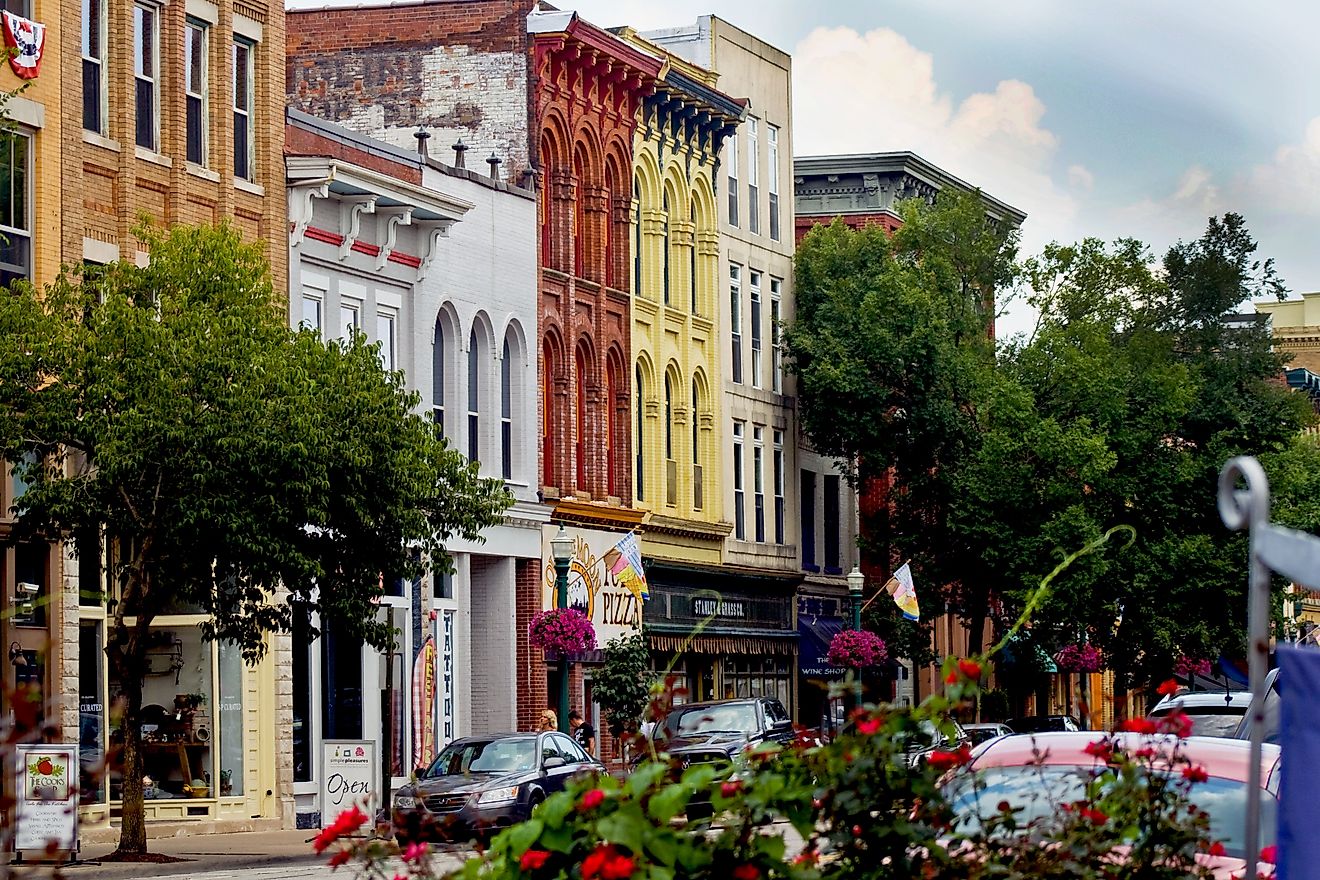
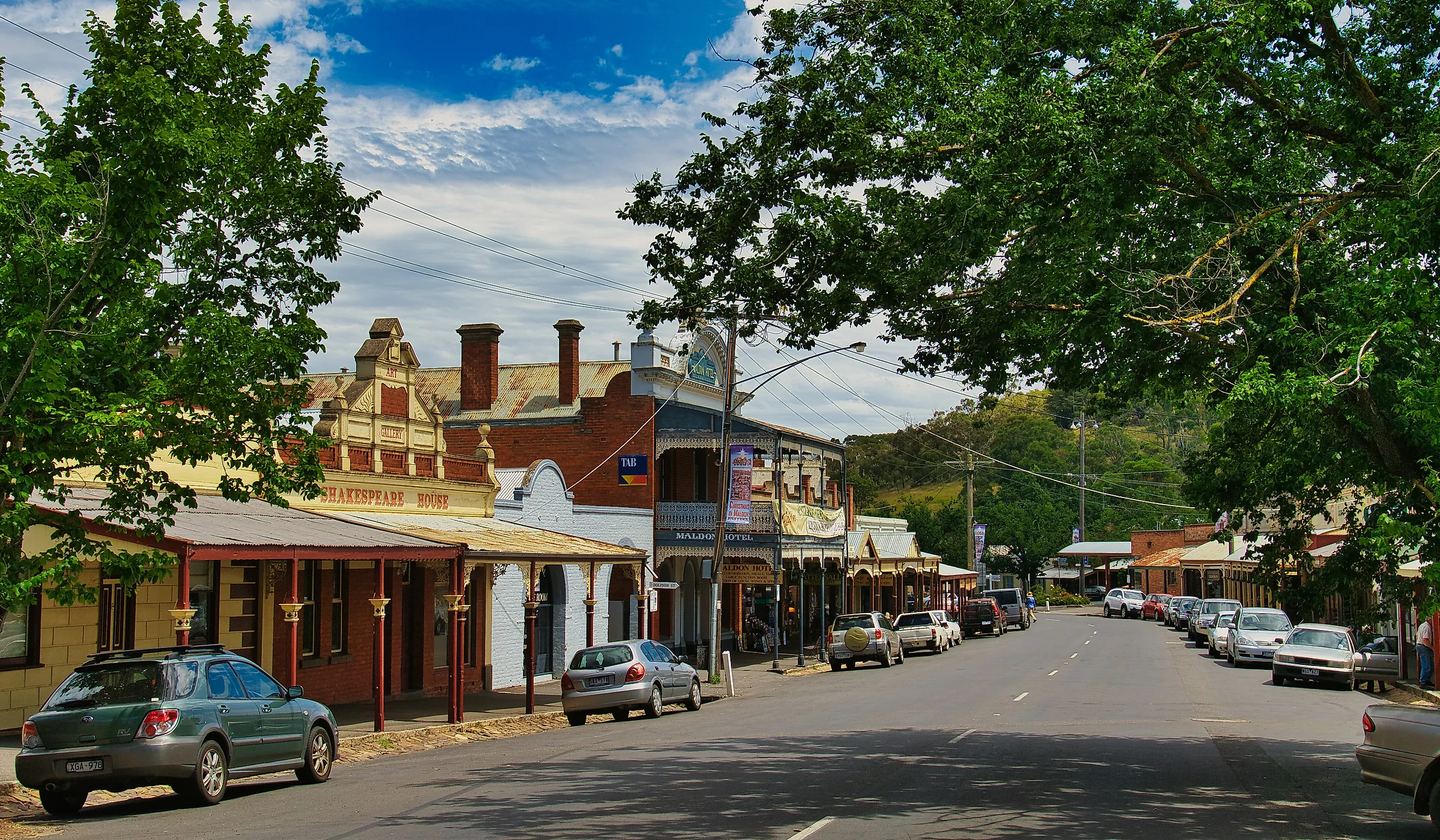
The National Trust of Australia designated Maldon as the country's first "Notable Town" in 1966, recognizing the town's intact 19th-century main street as a complete preserved gold rush streetscape. The town runs about 1,500 residents in the Shire of Mount Alexander, two hours northwest of Melbourne. Gold was discovered in the area in 1853, and Maldon's peak population in the late 1850s reached about 18,000 across the surrounding goldfields. Strict heritage controls have kept the buildings from being modernized; the bluestone-and-timber facades on Main Street and High Street look much as they did in the 1880s.
The Victorian Goldfields Railway runs heritage steam trains between Maldon and Castlemaine on weekends and most holidays, retracing the 1884 alignment. The Beehive Mine Chimney, a 25-meter brick stack built in 1862 for the Beehive Reef gold mine, stands at the eastern edge of town as the most visible mining-era landmark. Mount Tarrengower rises directly behind town and runs an 1860s timber poppet-head as a lookout tower with views across the central Victorian goldfields.
Port Fairy

Port Fairy sits at the mouth of the Moyne River on Victoria's southwestern coast, about three hours west of Melbourne by car. The town was founded in 1843 as Belfast, named after the Irish city by the Atkinson family of Belfast-born settlers; the name was officially changed to Port Fairy in 1887. Before settlement, the bay had been a sealing and whaling station from 1828, and the town's 1855 Customs House, the Caledonian Inn (1844, the oldest continuously licensed hotel in Victoria), and the bluestone fishermen's cottages on Gipps Street date from the deep-water-port era.

The Port Fairy Folk Festival, running every Labour Day weekend in March since 1977, draws roughly 50,000 visitors and is the largest folk festival in Australia. Battery Hill, at the southeast end of town, holds a coastal artillery battery built in 1887 with two 80-pounder cannons; the site was restored in 2008. The Griffiths Island Lighthouse, an 1859 bluestone tower on the small island at the river mouth, hosts a colony of short-tailed shearwaters (also called mutton-birds) that return every September to nest after migrating from the Aleutian Islands.
Walhalla

Walhalla holds about 20 permanent residents at the bottom of a steep valley in the Baw Baw foothills 180 kilometers east of Melbourne. The town was founded in 1862 after gold was struck at the Long Tunnel mine, and the population peaked around 4,000 in the 1910s when the Long Tunnel Extended produced more than 13.7 metric tons of gold over its lifetime. When the mine closed in 1914, the town emptied. Walhalla did not receive mains electricity until 1998, more than a century later than most Victorian towns.
The town has been carefully restored. Visitors can take an hour-long guided tour of the Long Tunnel Extended Gold Mine, ride the Walhalla Goldfields Railway across the Stringers Creek trestle bridges (the line runs about 4 kilometers between Walhalla Station and Thomson Station), and walk the original timber-board sidewalks to the Walhalla Bandstand. The cemetery, set into the steep western valley wall, requires a near-vertical climb up cut stone steps.
Clunes

On July 1, 1851, James Esmond struck payable gold near Donald Cameron's sheep station at Clunes, the first marketable goldfield in Victoria and the trigger for the Victorian gold rush that transformed the colony over the following decade. The discovery monument stands on the hillside above the original site at the Port Phillip mine. Clunes today holds about 1,800 residents in the Shire of Hepburn, 36 kilometers north of Ballarat.

The town has built a second identity as a book town. The International Organisation of Book Towns recognized Clunes as an official Book Town in April 2012, and the annual Clunes Booktown Festival, running since 2007, brings more than 130 booksellers into the town's heritage buildings each May. More than ten permanent bookshops operate year-round. The original 1979 Mad Max was partly filmed in Clunes; the Creswick Creek Bridge appears in the opening sequences.
Daylesford

The Hepburn Shire region around Daylesford produces about 80 percent of Australia's natural mineral water, drawing from more than 70 mineral springs that surface across a small radius. Swiss-Italian miners who arrived during the 1850s gold rush stayed on to develop the springs as a spa destination, and the town has run on health-resort traffic for more than 150 years. The Hepburn Bathhouse and Spa, originally opened in 1895 and substantially rebuilt in 2008, sits at the original Mineral Springs Reserve about five minutes from town.

The Wombat Hill Botanic Gardens, established in 1863 on the volcanic plug that rises directly above town, run a 4-hectare hilltop arboretum with mature redwoods, oaks, and a lookout tower. The Convent Gallery, set in the 1864 former Holy Cross Convent, houses contemporary Australian art across three floors of the restored sandstone building. Daylesford runs about 2,500 residents and sits 90 minutes northwest of Melbourne on the Midland Highway.
Beechworth

Ned Kelly faced his committal hearing at the Beechworth Courthouse in August 1880, four months before his execution in Melbourne. The courthouse is still on its original site at the corner of Ford and Williams Streets, restored and open to visitors with the original dock and judge's bench. The Old Beechworth Gaol, opened in 1860, held members of the Kelly Gang including Ned Kelly during the lead-up to the trial; the prison closed in 2004 and reopened as a public tour facility in 2014.

Beechworth runs about 3,000 residents in northeastern Victoria, three hours from Melbourne on the Hume Highway. The 1850s gold rush around the nearby Spring Creek workings turned the town into one of the largest in colonial Victoria, with about 40 hotels at the peak. The Burke Museum, founded in 1857 and one of the oldest continuously operating regional museums in Australia, is named for Robert O'Hara Burke, who served as Beechworth's police superintendent before leading the ill-fated Burke and Wills expedition into the continental interior in 1860. The Beechworth Chinese Gardens at Lake Sambell commemorate the substantial Chinese population that worked the goldfields, estimated at roughly 6,000 at peak.
Castlemaine

Gold was struck at Specimen Gully near Castlemaine on July 20, 1851, three weeks after the Clunes discovery, by shepherd Christopher Thomas Peters on William Barker's run. The Mount Alexander goldfields around Castlemaine produced more than 152 metric tons of gold over the following decade, the richest shallow alluvial field in the world at the time. Castlemaine today runs about 10,000 residents, the largest town on this list, and operates as the regional administrative center for the Shire of Mount Alexander.

The town has run a strong arts identity for decades. The Castlemaine State Festival, established in 1976 and held every two years over Easter, draws international and Australian artists in music, theater, visual art, and literature. The Theatre Royal Castlemaine, built in 1858, is one of the longest continuously operating theaters in mainland Australia. Buda Historic Home and Garden, the 1861 home of Hungarian-Australian silversmith Ernest Leviny, runs as a house museum with the family's original collection of decorative arts and a heritage-listed garden across about 1 hectare.
Choosing The Right Quiet Town
The seven split into three clear groups. Maldon, Walhalla, Clunes, Beechworth, and Castlemaine are gold rush towns that have kept their 19th-century streetscapes intact, each at a different scale: Maldon as a preserved village of 1,500, Walhalla as a ghost-town remnant of 20, Castlemaine as a regional center of 10,000. Daylesford runs on a different historical economy, the spa-and-mineral-water trade that has supported the town since the 1860s. Port Fairy is the only coastal town on the list, a deep-water port that became a folk-music destination. The seven cluster within a three-hour drive of Melbourne, which is why they all double as weekend trips for the city.