6 Senior-Friendly Towns in Nevada
Six small towns across Nevada offer the kind of retirement-friendly infrastructure that suits day-to-day life: walkable downtowns, dedicated senior centers, regional hospital access, and outdoor recreation a short drive from home. The towns ahead range from Ely on US-50 in the eastern mountains to Laughlin on the Colorado River at the southern tip. Median home prices run from about $280,000 in Ely and Laughlin to about $450,000 in Tonopah.
Ely

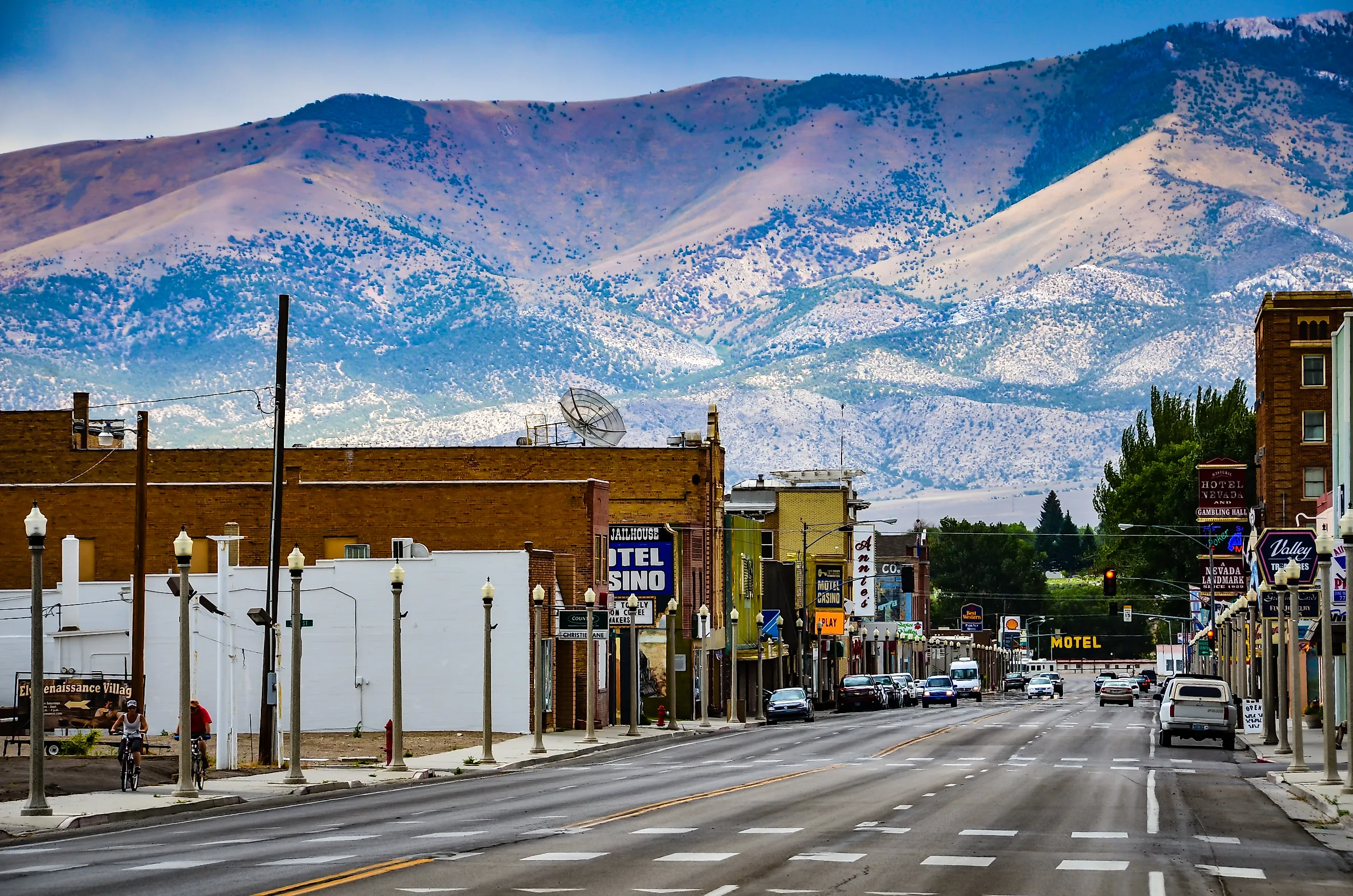
Ely sits at the intersection of US-50 ("the loneliest road in America") and US-93 in White Pine County, with a working downtown that has held its 1900s mining-boom character. The William Bee Ririe Hospital handles regional medical needs, and the town runs a senior center with daily lunch, a pool table room, and bingo. The Ely Renaissance Village on the east edge of downtown holds a dozen reconstructed buildings representing the immigrant groups that worked the copper mines, and the downtown mural walk covers about 20 large-scale paintings on commercial building exteriors. The Ely Art Bank in a former bank building runs the local gallery program.
The local outdoor anchor is Great Basin National Park, about an hour east of town, which protects the second-tallest mountain in Nevada (Wheeler Peak, 13,065 feet) and the Bristlecone Pine grove that includes some of the oldest trees on Earth, with Prometheus (cut down in 1964) confirmed at about 4,862 years. The park also runs Lehman Caves tours and holds Gold Tier International Dark Sky Park designation for star viewing. Cave Lake State Park and Ward Mountain offer closer-in trails for mountain biking and afternoon hikes. The median home price in Ely runs about $279,000.
Elko

Elko sits along I-80 in northeastern Nevada with about 21,000 residents and the largest economy on this list, anchored by the gold-mining industry of the Carlin Trend that has produced more gold than any region in the United States since 1965. The Northeastern Nevada Regional Hospital handles regional medical care, and the city operates a senior center with daily lunch service and weekly programming. The Northeastern Nevada Museum holds the Carlin Trend mining exhibits along with the Western Folklife Center, which runs the National Cowboy Poetry Gathering every January.
The Ruby Mountains rising directly southeast of town hold Lamoille Canyon, often called "Nevada's Yosemite" for its glacially carved walls. The canyon runs a 12-mile paved scenic drive past Lamoille Creek with trailhead access for hikes including Island Lake and Lamoille Lake. The Ruby Lake National Wildlife Refuge in the valley below supports one of the few stable trumpeter swan populations in Nevada. Angel Lake about 25 miles east of town runs catch-and-release brook trout fishing at 8,500 feet of elevation. The median home price runs about $415,000.
Winnemucca

Winnemucca sits along I-80 in Humboldt County with about 8,000 residents and a downtown built around the Humboldt River crossing. The town is named for Chief Winnemucca of the Northern Paiute, whose daughter Sarah Winnemucca Hopkins wrote Life Among the Piutes: Their Wrongs and Claims in 1883, the first known book published by a Native American woman. Humboldt General Hospital handles regional medical care, and the Pleasant Senior Center serves weekday meals along with transportation, sewing classes, legal services, and health programming.
The Winnemucca Sand Dunes north of town cover Nevada's largest dune field at about 17,000 acres of off-road and recreation terrain. Water Canyon Recreation Area in the Sonoma Range south of town has Bureau of Land Management trails through a riparian corridor at 6,000 feet. The Humboldt River runs walleye, bass, and catfish through the central Humboldt County stretches. The Buckaroo Hall of Fame inside the Winnemucca Convention Center covers the Great Basin ranching tradition, and the Winnemucca Hotel on Bridge Street has run as a Basque boarding house since 1863. The median home price runs about $398,000.
Tonopah

Tonopah sits at the intersection of US-95 and US-6 in central Nevada with about 2,400 residents and a 1900s silver-rush downtown that has held its shape. Silver was discovered in May 1900 by Jim Butler, and the resulting boom made Tonopah briefly the largest silver-producing district in the world during the early 1900s. The Tonopah Historic Mining Park covers 100 acres of the original mining infrastructure with shaft houses, hoist works, and underground tour access. The Central Nevada Museum on Logan Field Road covers the broader regional history. The Mizpah Hotel, built in 1907 and reopened in 2011 after a major restoration, runs guided tours of the original gilded-age interior.
The town runs a medical clinic, urgent care, and a senior center with lunch, transportation, and an on-site thrift store. The Belmont Ghost Town 45 miles northeast preserves the 1860s-era courthouse and saloons of a silver town that emptied when the ore ran out. The Crescent Dunes solar power plant southeast of town used to be the largest concentrating solar power tower in the world before going out of service. Tonopah has earned the title of Stargazing Capital of America for its Bortle Class 1 dark skies, the darkest available on the dark-sky rating scale. The median home price runs about $450,000, the highest on this list.
Laughlin

Laughlin sits on the west bank of the Colorado River at Nevada's southern tip, directly across from Bullhead City, Arizona, and about 90 miles south of Las Vegas. The town runs a smaller casino strip with eight resorts along Casino Drive, including the Aquarius, the Edgewater, the Tropicana, and the Riverside. The Western Arizona Regional Medical Center across the river handles regional medical care, and the Laughlin/Bullhead International Airport sits five minutes from downtown.
The Colorado River through Laughlin runs warm enough for year-round swimming. Boat cruises and water-taxi service connect the casinos along the river, and Lake Mohave a few miles upstream covers 28,260 acres of Lake Mead National Recreation Area waters for boating, kayaking, and fishing. Big Bend State Recreation Area south of town runs Colorado River paddling and camping. The Laughlin River Walk runs 1.5 miles along the casino strip. Average daytime highs run above 100°F from June through September, making the cooler months the more pleasant time for outdoor activity. The median home price runs about $279,900.
Fallon

Fallon sits in the Lahontan Valley about an hour east of Reno on US-50, with about 9,000 residents in the city proper and a regional economy supported by the Naval Air Station Fallon, the Navy's premier air-combat training site (home of the Strike Fighter Tactics Instructor program, also known as "Top Gun," since 1996). The Banner Churchill Community Hospital handles regional medical care. The town runs a senior transit service and bus service to Reno and Las Vegas for weekend trips.
Grimes Point Archaeological Area east of town preserves one of the largest concentrations of petroglyphs in Nevada, with rock art dating back as far as 8,000 years. The Stillwater National Wildlife Refuge protects 77,500 acres of wetlands that draw migrating birds along the Pacific Flyway. The Lahontan State Recreation Area on Lahontan Reservoir 18 miles west of town covers boating, fishing, and waterfront camping. The Oats Park Arts Center runs gallery rotations and live performance programming. The Fallon Cantaloupe Festival, running annually since 1985, is Nevada's longest continuously operating agricultural festival and takes place the third weekend of August. The median home price runs about $414,800.
Choosing The Right Nevada Town
The six split into rough regional clusters. The I-80 corridor produces Elko and Winnemucca for northern Nevada. US-50 produces Ely in the eastern mountains and Fallon in the Lahontan Valley. The central desert produces Tonopah on US-95. The southern Colorado River produces Laughlin at the Arizona border. Median home prices range from $279,000 to $450,000, all well below the Las Vegas metro average. Each town runs a senior center, regional hospital access, and a working downtown. The right choice depends on whether retirement here favors the mountains, the river, or the high desert.