12 Prettiest Small Towns In Northern Ireland
Northern Ireland's small towns trade the pace of Belfast and Derry for market squares, harbour walls and seaside promenades, and coast roads that run beneath the mountains. Some, like Portrush, sit on the Atlantic shoreline of the Causeway Coast, while others gather around loughs, forest parks, or the nine Glens of Antrim. Between them, these dozen towns hold most of the region's castles, oldest pubs, and best walking routes. Here are twelve of the prettiest, county by county and coast by coast.
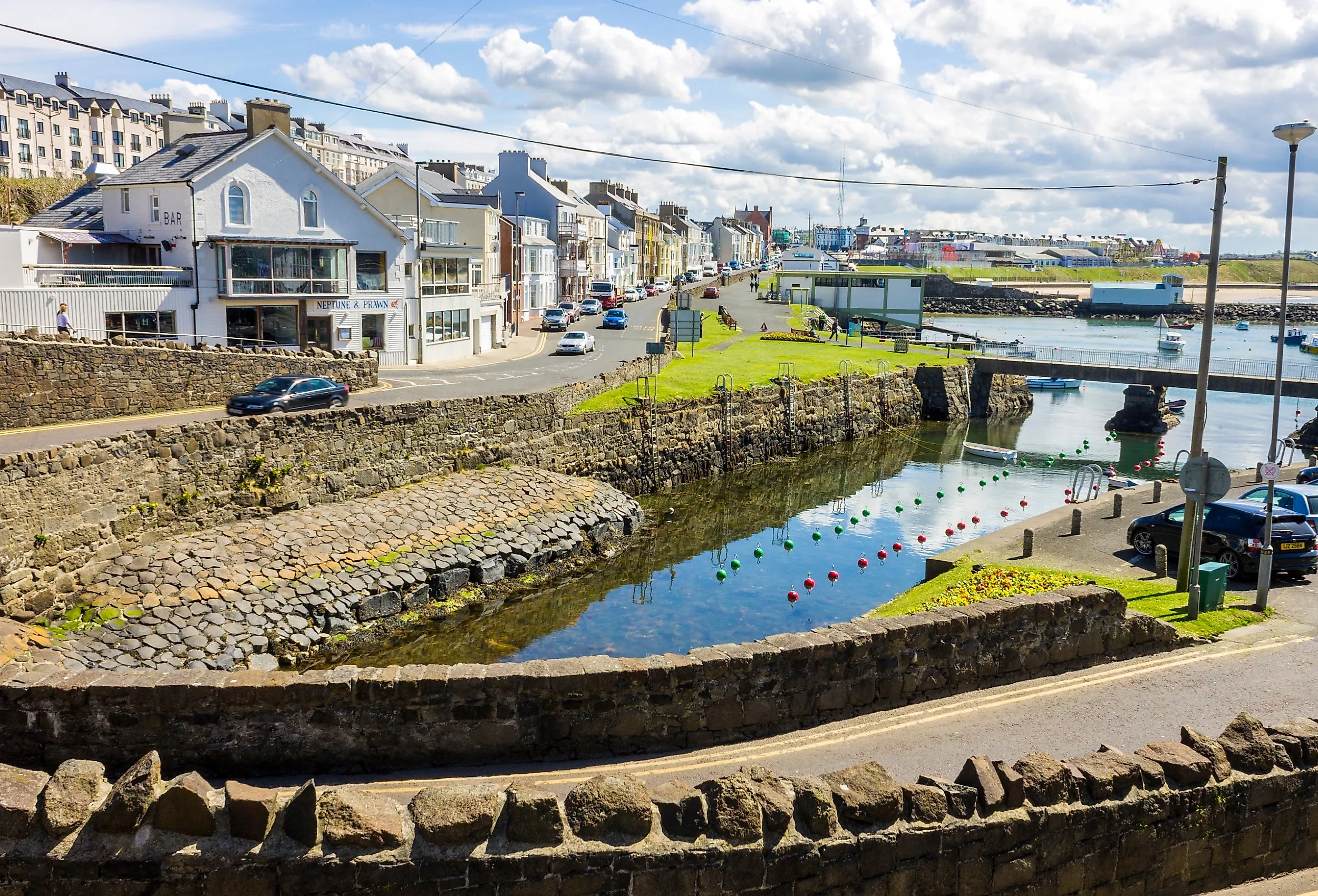
Portrush

Built on a rocky peninsula that runs out into the sea, Portrush grew up as a Victorian rail resort, and the grand seafront and promenade still show it. East Strand offers a long stretch of golden sand backed by dunes and coastal paths, while West Strand faces the ocean and the cliffs, with Scotland visible across the water on clear days. The harbour is lined with restaurants and cafes, and Morton's Fish & Chips beside the water is a long-running stop for fresh seafood. Just outside town, the medieval ruin of Dunluce Castle sits dramatically on the cliffs above the Causeway Coast, one of the most photographed sites in the region. With its beaches, ocean views, and nearby landmarks, Portrush is a fixture of Northern Ireland's Atlantic coast year-round.
Holywood

Independent cafes, restaurants, and shops give Holywood a more personal feel than most towns of its size, helped by its spot between Belfast and the coast on the shores of Belfast Lough. Coffee Yard is known for its espresso and baked goods, the Bay Tree draws a crowd on the High Street for brunch, and Noble is a highlight of the local dining scene. History runs alongside the shops. Holywood Priory preserves the remains of a medieval church at the heart of the old town. Redburn Country Park, a wooded hill just above the town, has walking trails and views out over the lough that are best at sunset, when the water and the far hills light up. The waterfront ties it together, a stretch of coast that shows the quieter side of the towns along this shoreline.
Newcastle

Few towns pack a sandy beach, mountain views, and a lively promenade into as short a walk as Newcastle, where the Irish Sea meets the Mourne Mountains. Newcastle Beach runs along the seafront directly beneath the peaks, and the promenade above it is the town's main walking route. South along the coast, Murlough National Nature Reserve protects a system of dunes, grasslands, and trails that overlook the sea. Just beside it, Royal County Down Golf Club sits under the Mournes and is regularly ranked among the finest courses anywhere, as memorable for the scenery as for the design. Back on the promenade, cafes, restaurants, and traditional seaside stops keep the town busy throughout the year, with Villa Vinci, an Italian restaurant overlooking the front, a popular and reliable choice for dinner.
Bushmills

Whiskey made this County Antrim village, and it still defines it. The Old Bushmills Distillery, licensed in 1608 and one of the oldest licensed whiskey distilleries in the world, draws visitors for tours and tastings. Beyond it, Bushmills keeps a slow pace: stone cottages, local shops, and traditional pubs line quiet streets, and walking routes along the River Bush offer a quieter way into the surrounding countryside. Two miles north, the UNESCO World Heritage Site of the Giant's Causeway steps its basalt columns down into the sea. In the village itself, the Bushmills Inn, a historic hotel and restaurant, and the Distiller's Arms, a pub serving local dishes, carry the old-world character. Between the distillery, the coast, and the pubs, Bushmills earns its place on the Causeway Coast.
Cushendall

Colourful streets and a setting between the mountains and the sea make Cushendall one of the highlights of the Antrim Coast. It sits within the Glens of Antrim, the collection of nine valleys shaped by forests, waterfalls, and winding roads, which puts some of the region's best walking right at the village edge. Cushendall Beach runs along the shoreline for an easy stretch on foot, and nearby viewpoints open out across the Irish Sea. In the village centre, the Central Bar is a traditional pub known for live music and a friendly crowd, and small independent shops line the main street. Just outside town, Red Bay Castle, a medieval tower house, overlooks the coast and adds a layer of history to the landscape. Coast, mountains, and a compact village core give Cushendall an outsized appeal for its size.
Ballycastle

Where the Causeway Coast meets the Glens of Antrim, Ballycastle keeps the maritime character of a working coastal town, built on fishing and trade. Ann Street, one of its main streets, is lined with independent businesses and cafes, and Ursa Minor Bakehouse has become a well-known artisan stop. The waterfront centers on Ballycastle Marina, where boats set out toward the coast and Rathlin Island, Northern Ireland's only inhabited offshore island, with its wildlife, walking trails, and sea views. Ballycastle Beach runs along the shore facing the island and the distant Scottish coast. Each summer, the town hosts the Ould Lammas Fair, one of Ireland's oldest traditional fairs, which fills the streets with old customs and local trade. Coast, island, and fair together make Ballycastle a gateway to the region's wildest edges.
Rostrevor

The Mourne Mountains rise directly behind Rostrevor, a village on Carlingford Lough whose scenery comes largely from that backdrop of forests, trails, and viewpoints looking across the water toward the Cooley Mountains. Kilbroney Park, a wooded estate above the village, offers forest walks, picnic areas, and some of the widest views in County Down. Higher up, the Cloughmore Stone, a huge granite boulder left above the village, marks a well-known viewpoint over the surrounding landscape. Down in the village, the Rostrevor Inn, a historic pub, serves local dishes to walkers coming off the hills. The shoreline of Carlingford Lough is open to kayaking, sailing, and quiet walks, and mountain-biking routes run through Rostrevor Forest. For a slower visit, Shore Street, the village's old main street, has the friendly, unhurried feel that defines the place.
Enniskillen

Enniskillen is an island town, set on the water between Upper and Lower Lough Erne, and the bridges, waterfront views, and boat routes have shaped daily life there for generations. Its streets carry the history of County Fermanagh, anchored by Enniskillen Castle, a 15th-century fortress overlooking the River Erne. In town, independent shops such as Waterstones line the older streets, and Church Street runs through the traditional core, past small cafes and pubs. The Buttermarket, a restored 19th-century courtyard filled with craft shops and workshops, is a quieter spot to browse local makers. Along the water, walks beside the River Erne and views from the bridges are the best way to feel the island setting, with restaurants overlooking the lough. Between its waterways and its heritage, Enniskillen is among the most memorable inland towns in the region.
Hillsborough

Georgian architecture and tree-lined streets set the tone in Hillsborough, a carefully preserved village in the County Down countryside. Its centerpiece is Hillsborough Castle, an 18th-century Georgian mansion that serves as the official royal residence in Northern Ireland; its grounds and state rooms are open to visitors, and Hillsborough Castle Gardens add landscaped grounds and woodland paths. Around the village square, cafes, restaurants, and small shops occupy traditional buildings, and the Plough Inn, a historic pub, is known for its food and welcome. Just beyond the houses, Hillsborough Forest offers walking trails around a lake, a quieter way to reach the countryside without leaving the village behind. Compact, elegant, and easy to explore on foot, Hillsborough is one of County Down's most appealing villages.
Donaghadee

Donaghadee's harbour, ringed by 17th-century stone walls, has shaped this seaside town on the eastern coast of County Down for centuries, through fishing and coastal travel alike. Standing at the end of the harbour wall, the Donaghadee Lighthouse, built in the 19th century, remains the town's most recognisable landmark and a favourite viewpoint out over the Irish Sea. The harbour walls double as a walking route, a place to watch boats come and go, and the streets behind them hold independent shops, cafes, and restaurants. Among them is Grace Neill's, one of Northern Ireland's oldest pubs, where visitors can settle in for local hospitality in a historic room. Sea views, a working harbour, and an easy waterfront make Donaghadee a memorable stop along the County Down coast.
Portstewart

Portstewart Strand defines this Causeway Coast town: a two-mile stretch of golden sand backed by dunes that is one of the best-known beach landscapes in Northern Ireland. Like its neighbour Portrush, Portstewart grew as a Victorian seaside resort, and the traditional promenade and colourful streets still reflect that. The promenade is the heart of an afternoon here, lined with cafes and restaurants, including Morelli's Ice Cream, a family-run shop that has been a favourite for generations, and Bob & Berts for coffee and brunch. Portstewart Golf Club, on the edge of town, gives players a round with views across the Atlantic. With its beach, its promenade, and its links, Portstewart is one of the most rounded coastal destinations on this stretch of shore.
Strangford

Strangford Lough, with its islands, wildlife, and quiet water, gives this County Down village its whole character, from the harbour to the fishing traditions that shaped it. Colourful buildings and old streets line the shore, and Audley Castle, a 15th-century tower house, stands in the countryside just outside the village. The harbour is a scenic place to walk and watch boats pass through the lough, and a short ferry crossing to Portaferry opens up the far side of the coastline. Nearby, Castle Ward, an 18th-century National Trust estate, spreads gardens, woodland paths, and historic architecture along the lough. Around the village, the Cuan, a historic inn, and the Artisan Cookhouse, serving seasonal dishes, keep the pubs and restaurants worth lingering in after a day outdoors.
Discovering Northern Ireland's Small-Town Charm
These twelve towns show a side of Northern Ireland where landscape, history, and local life stay closely tied together. The Atlantic resorts of Portrush and Portstewart trade on their beaches and Victorian promenades; Rostrevor and Cushendall lean on the forests and glens behind them; Enniskillen and Strangford build their character around water. Castles, harbors, old pubs, and coast roads recur across all of them, but each town arranges those pieces differently.
Belfast and Derry hold the region's major cultural institutions, yet these smaller places offer something the cities cannot: room for history, nature, and community to sit side by side at close range. Followed as a coastal drive or picked off one at a time for a weekend, they make the case that some of Northern Ireland's most rewarding corners lie well outside its urban centers.