12 of the Most Charming Towns in Texas
Fredericksburg pours German wine in the middle of the Hill Country. A couple hundred miles west, Terlingua sits half-abandoned in the desert, a cinnabar-mining town that emptied out in 1942 and somehow became a destination anyway. Marshall once made the Confederacy's gunpowder and briefly hosted Missouri's government-in-exile. Wimberley has the swimming holes, Granbury has a courthouse square older than most in the state, and Pilot Point still looks like a 1967 movie set because it was one. Texas is big enough that these twelve towns barely resemble each other, and that is exactly the point.
Fredericksburg

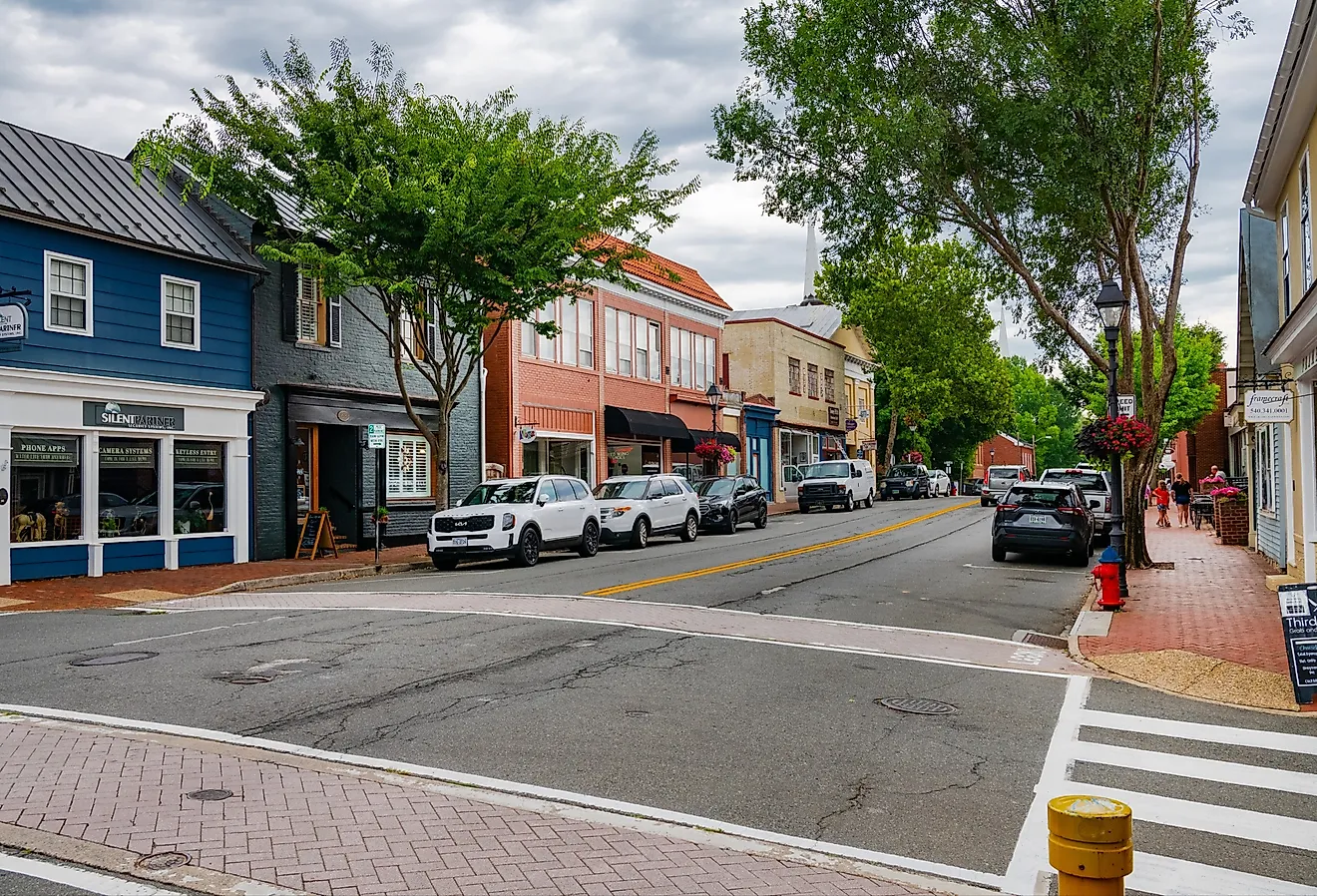
Fredericksburg is where Texas does German wine country. German immigrants founded it in 1846 under the Adelsverein settlement plan, and the town leaned into that heritage hard. There are more than 50 wineries and tasting rooms within a short drive, places like Grape Creek, Becker, and Pedernales Cellars that stay busy every weekend. The Pioneer Museum on West Main keeps the original Sunday houses, the tiny in-town cottages farm families built so they would have somewhere to sleep after the weekend trip into town for church. Grab breakfast at the Old German Bakery, then head out to Enchanted Rock, a 425-foot pink granite dome that is one of the largest exposed granite formations on the continent and a favorite with climbers. It is the kind of town that makes a weekend disappear.
Marshall

Marshall surprises people who file it away as just another East Texas county seat. By 1860 it was the fourth-largest city in the state and the seat of its wealthiest county, and during the Civil War it produced gunpowder for the Confederacy and served as the capital of Missouri's government-in-exile, which earned it the nickname City of Seven Flags. The Harrison County Historical Museum on the courthouse square walks through all of it: Caddo culture, the antebellum cotton economy, and the Civil War years. Wiley University, founded in 1873, is one of the country's historically Black colleges and the home of the debate team that famously beat USC in 1935, the story behind "The Great Debaters"; East Texas Baptist University rounds out the college scene. The Starr Family Home, an 1870 Greek Revival place built by planter and politician James Harper Starr, still keeps its original furnishings, and the Michelson Museum of Art holds the largest US collection of Russian-American painter Leo Michelson.
Kerrville

Kerrville is the town the rest of the Hill Country uses as a base camp. It sits right on the Guadalupe River, and Louise Hays Park puts a six-mile trail along the water in the middle of town. For music people, the big draw is the Kerrville Folk Festival, which has run every Memorial Day weekend since 1972 and stretches across roughly 18 days, one of the longest singer-songwriter gatherings in the country. The Museum of Western Art covers cowboy painting and bronze, and the Schreiner Mansion downtown belonged to Captain Charles Schreiner, the Alsace-born Confederate veteran who built a ranching and banking empire and is still called the father of the Hill Country. If you want one town that explains the whole region, this is it.
Nacogdoches

Nacogdoches will tell you, repeatedly, that it is the oldest town in Texas, and it has a decent case. There has been a European presence here since the Spanish mission system of 1716, and Antonio Gil Ybarbo formally resettled the place in 1779. The brick streets downtown are lined with 19th-century storefronts, and Millard's Crossing Historic Village reassembles 14 antique frontier buildings in one spot. The Sterne-Hoya House, built around 1830, belonged to Texas Revolution financier Adolphus Sterne, who hosted Sam Houston when Houston was baptized Catholic in 1833. In spring the whole place goes pink: the Ruby M. Mize Azalea Garden at Stephen F. Austin State University packs more than 6,000 azaleas across eight acres. It is a college town with deep roots and an easy pace.
Jefferson

Jefferson froze in time, and that is its whole appeal. Steamboat money built the town in the mid-1800s, and when the river traffic dried up, the wealth stopped, leaving a downtown with more than 60 buildings on the National Register. The Jefferson Historical Museum fills the old 1888 federal building on Austin Street, and there is even a museum of Gone with the Wind memorabilia put together by a private collector. Jefferson also leans hard into being one of the most reportedly haunted towns in Texas, with year-round ghost walks that take the reputation seriously. Pull up a chair at Riverport Barbeque for slow-smoked brisket, and the 19th century does not feel that far off.
Wimberley

Wimberley is swimming-hole country. Jacob's Well, the centerpiece of an 81-acre county park, is an artesian spring whose narrow opening drops into one of the longest underwater cave systems in Texas, a magnet for divers, though swimming has been closed in recent drought years when the spring flow drops. When Jacob's Well is off-limits, Blue Hole Regional Park is the backup, a cypress-shaded stretch of Cypress Creek with a rope swing over the spring-fed water. The Cypress Creek Nature Preserve connects the square to Blue Hole on foot, and the EmilyAnn Theatre runs Shakespeare in summer and a Trail of Lights in December. This is the Hill Country at its most laid-back.
Bastrop

Bastrop has pine trees it has no business having. The Lost Pines are a 13-mile-wide island of loblolly pines stranded about 100 miles west of where the species normally grows, and Bastrop State Park has protected 6,600 acres of them since 1933. Downtown holds more than 130 National Register buildings around the courthouse square, including the 1889 Bastrop Opera House, still running community theater more than a century on. The Colorado River cuts right through, about 30 miles southeast of Austin, close enough for a day trip but far enough to feel like its own place. Hit the Saturday farmers market for producer-only local goods and the morning is sorted.
Pilot Point

Pilot Point got its big moment in 1967, when Arthur Penn shot the bank-robbery scenes for "Bonnie and Clyde" on its downtown square. The original First National Bank building still stands, and the square still turns up on every walking tour. North of the Dallas-Fort Worth metroplex in Denton County, the town also backs onto Ray Roberts Lake State Park, 30,000 acres of water for swimming, fishing, and mountain biking. The genuinely odd stop is Sharkarosa Ranch, a 126-acre wildlife sanctuary with capuchin monkeys, lemurs, binturongs, white tigers, and zebras. Western Son Distillery makes its vodka and gin in town, so there is a tasting room to close out the day.
Terlingua

Terlingua is a ghost town that refused to fully die. Cinnabar mining boomed here in the early 1900s, and when the Chisos Mining Company closed in 1942, the place nearly emptied out. What is left is one of the best-preserved mining ghost towns in Texas, including a cemetery of about 400 graves on the National Register. The Starlight Theatre, set in the old movie house, serves Tex-Mex and live music on a porch facing the desert, and every November the Terlingua International Chili Championship brings thousands out to the middle of nowhere. It is also the jumping-off point for Big Bend, with outfitters running raft trips on the Rio Grande.
Granbury

Granbury built its identity around its courthouse square. The 1891 Hood County Courthouse, a Second Empire limestone building, still runs county government, and the square was one of the first in Texas listed on the National Register of Historic Places. The 1886 Granbury Opera House stages a full professional season right on that square. Out at Lake Granbury, an 8,310-acre reservoir on the Brazos River, City Beach Park has a swimming area, sand volleyball, and a splash pad. The Hood County Jail Museum keeps its original 1885 cells, which is exactly as eerie as it sounds.
Smithville

Smithville had its close-up in 1998, when "Hope Floats" filmed here and put the town's Colorado River main street on screen. The Bullock family house from the movie is still a private home at Olive and 7th. Smithville shares the Lost Pines with Bastrop: Buescher State Park protects more than 1,000 acres of the same forest, linked to Bastrop State Park by the winding Park Road 1C. Downtown keeps more than 30 National Register buildings, including the 1898 Olde Town Mercantile, and a small but real art scene runs out of the Mary Nichols Art Center. Come fall, Scream Hollow turns 20 acres east of town into a haunted attraction. Quiet most of the year, which is the appeal.
New Braunfels

New Braunfels actually beat Fredericksburg to it, founded in 1845 by Prince Carl of Solms-Braunfels as the main German colony in Texas a year before its neighbor. The Sophienburg Museum keeps the immigrant story, and the Gruene Historic District up the road holds Gruene Hall, the oldest continuously operating dance hall in Texas, built in 1878 and still booking live music. Every November, Wurstfest pulls in the biggest German-heritage crowd in the state for sausage, beer, and polka. Landa Park spreads across 51 acres along Comal Springs, the largest spring system in Texas, and Schlitterbahn, open since 1979, lands on most lists of the best waterparks in the country. Between the beer halls and the river, it is built for summer.
Twelve Towns, Twelve Texases
That is the thing about Texas: there is no single small-town template. The Hill Country towns (Fredericksburg, New Braunfels, Wimberley, Kerrville, and Bastrop) run on German heritage, spring-fed water, and those out-of-place pines. The East Texas trio of Marshall, Nacogdoches, and Jefferson keeps the antebellum architecture and the college-town energy. Pilot Point, Granbury, and Smithville hold down the prairie-and-lake middle, and Terlingua sits out west on its own, a desert ghost town with nothing nearby for miles. Pick the version of Texas you are in the mood for. There is a town for it.