How Many National Forests Allow Logging?
The roar of a chainsaw is not exactly something most people expect to hear while hiking through a national forest. Yet timber harvesting has been allowed in the US National Forest System for more than a century, alongside recreation and wildlife conservation. That often comes as a surprise because national forests are frequently mistaken for highly protected national parks, even though they are managed for very different purposes.
Timber harvest is authorized within the National Forest System, but whether it may occur in a particular national forest or location depends on that forest's management plan, land status, and the purpose of the proposed cutting. Whether timber is actually harvested depends on the individual forest, its management plan, environmental laws, and the specific land involved. Some forests support active commercial timber programs, while others harvest relatively little or focus primarily on ecological restoration projects such as reducing wildfire fuels or removing insect-damaged trees. Learn why logging is allowed in US national forests, how timber sales work, and why national parks follow different rules for tree removal.
Does Logging Happen In Every National Forest?

Logging is legally permitted within the US National Forest System, but that does not mean every national forest has an active commercial timber program, nor does it mean every part of a forest is available for timber harvesting. Whether trees are cut depends on the forest's management plan, federal environmental laws, protected land designations, ecological conditions, and the purpose of the proposed project.
Although timber harvesting is one of the U.S. Forest Service's authorized uses, commercial logging does not occur at the same scale or for the same reasons in every national forest. Some forests hold regular timber sales that support local wood-products industries. Others harvest relatively little timber, and some projects remove trees primarily to reduce wildfire fuels or address storms, insect infestations, or disease.

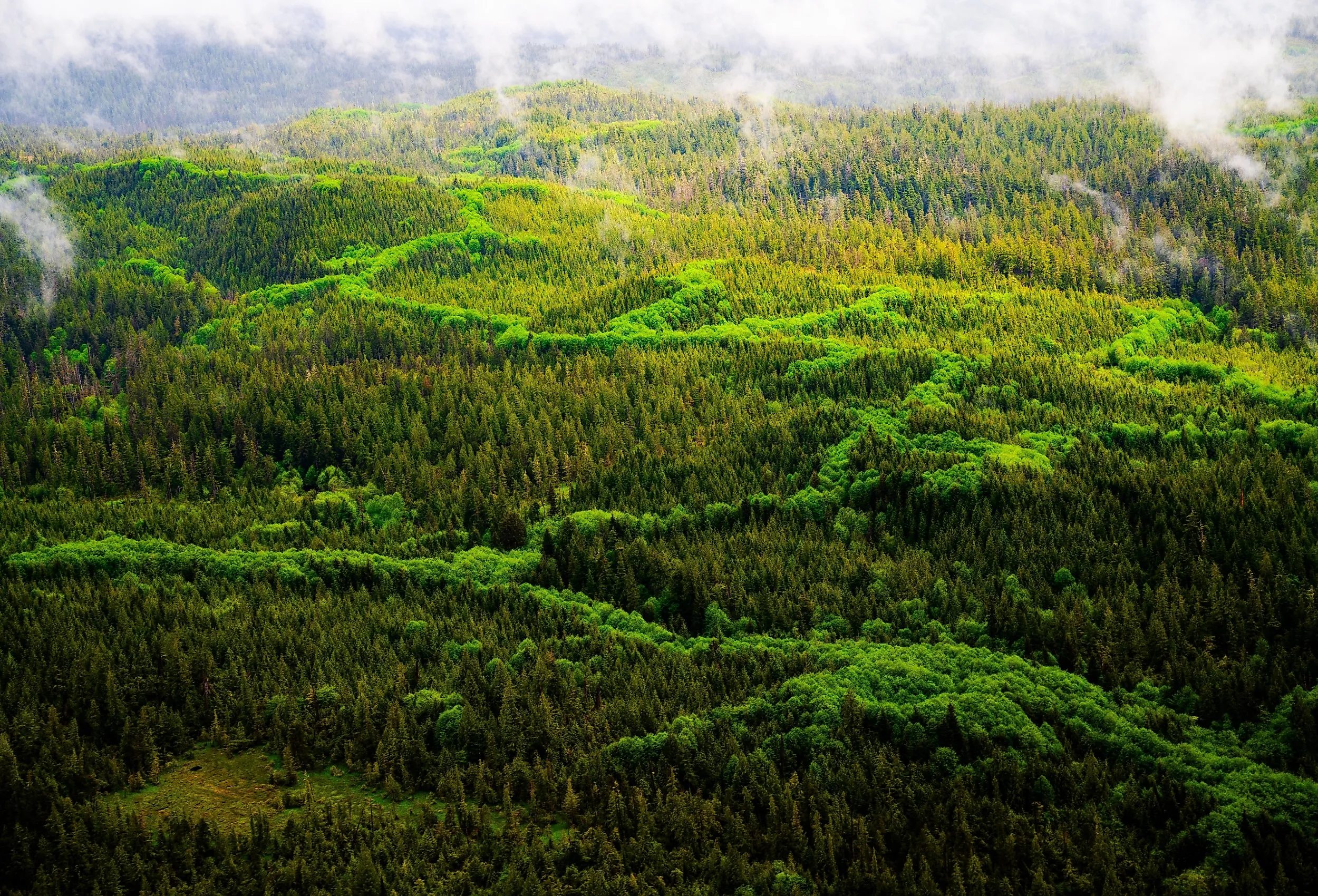
Alaska's Tongass National Forest, which covers nearly 16.7 million acres, illustrates why broad assumptions about this divisive issue rarely work. While it has supported commercial timber production for decades, the forest is managed as a patchwork of different land allocations. Some areas have been designated for timber production, while others are managed primarily for wilderness, wildlife habitat, watershed protection, recreation, or other conservation objectives. As a result, one drainage may contain an active timber project while a neighboring valley remains unharvested.
That is why it's impossible to answer the question by simply counting forests. A national forest is not managed as one continuous timber operation. Every proposed harvest is planned individually, reviewed under federal law, and evaluated against the management objectives for that specific part of the forest.
According to the US Forest Service, about 49 million of the National Forest System’s 193 million acres are considered suitable for timber management.
Why Can National Forests Be Logged But National Parks Cannot?

The main reason that national forests can be logged, but national parks cannot is not because trees can never be cut in national parks, but rather that national forests may produce timber under a multiple-use mandate, while tree removal in parks must serve conservation, safety, or another authorized park purpose.
America's 154 national forests are managed by the US Department of Agriculture's Forest Service, an agency established in 1905 to manage public lands for a variety of long-term uses. Under the Multiple-Use Sustained-Yield Act of 1960, national forests are managed not only for outdoor recreation but also for timber, grazing, watershed protection, wildlife and fish habitat, and other renewable resources. Timber harvesting is one of the many tools the Forest Service is legally authorized to use, but it is only one part of a much broader management strategy.
National parks operate under a different philosophy. Managed by the National Park Service, part of the US Department of the Interior, they are overseen under the National Park Service Organic Act of 1916, which directs the agency to conserve scenery, wildlife, and natural and historic objects while leaving them "unimpaired for the enjoyment of future generations." Commercial timber harvesting is therefore not a standard land-management practice inside national parks such as Yellowstone.
That doesn't mean every national forest is actively being logged. Before any commercial timber sale moves forward, the Forest Service must comply with federal laws such as the National Forest Management Act, the National Environmental Policy Act, and the Endangered Species Act, while also ensuring the project is consistent with that forest's individual management plan. The federal statutes apply nationwide, but the resulting analysis and constraints vary by forest, site, and proposed project.
Wilderness areas, research natural areas, riparian buffers, and other protected parts of national forests may prohibit or severely limit timber harvesting altogether. The result is that two federally protected forests can look remarkably similar to a visitor standing on a trail, yet be managed under entirely different legal frameworks.
The broadest of those limits is the 2001 Roadless Area Conservation Rule, which restricts road construction and most timber harvesting across inventoried roadless areas covering close to a third of National Forest System land. Its status is unsettled. The Department of Agriculture began formal rulemaking in 2025 to rescind the rule, and a final decision is expected in late 2026. Whichever way that lands, it will reset where harvesting is permitted on tens of millions of acres.
Why Does The US Forest Service Harvest Timber?

The word "logging" usually brings to mind trucks carrying commercial lumber. Inside a national forest, however, a timber project may begin with a wildfire, an insect outbreak, an overcrowded stand, or a row of dead trees leaning over a public road, trail, or campground.
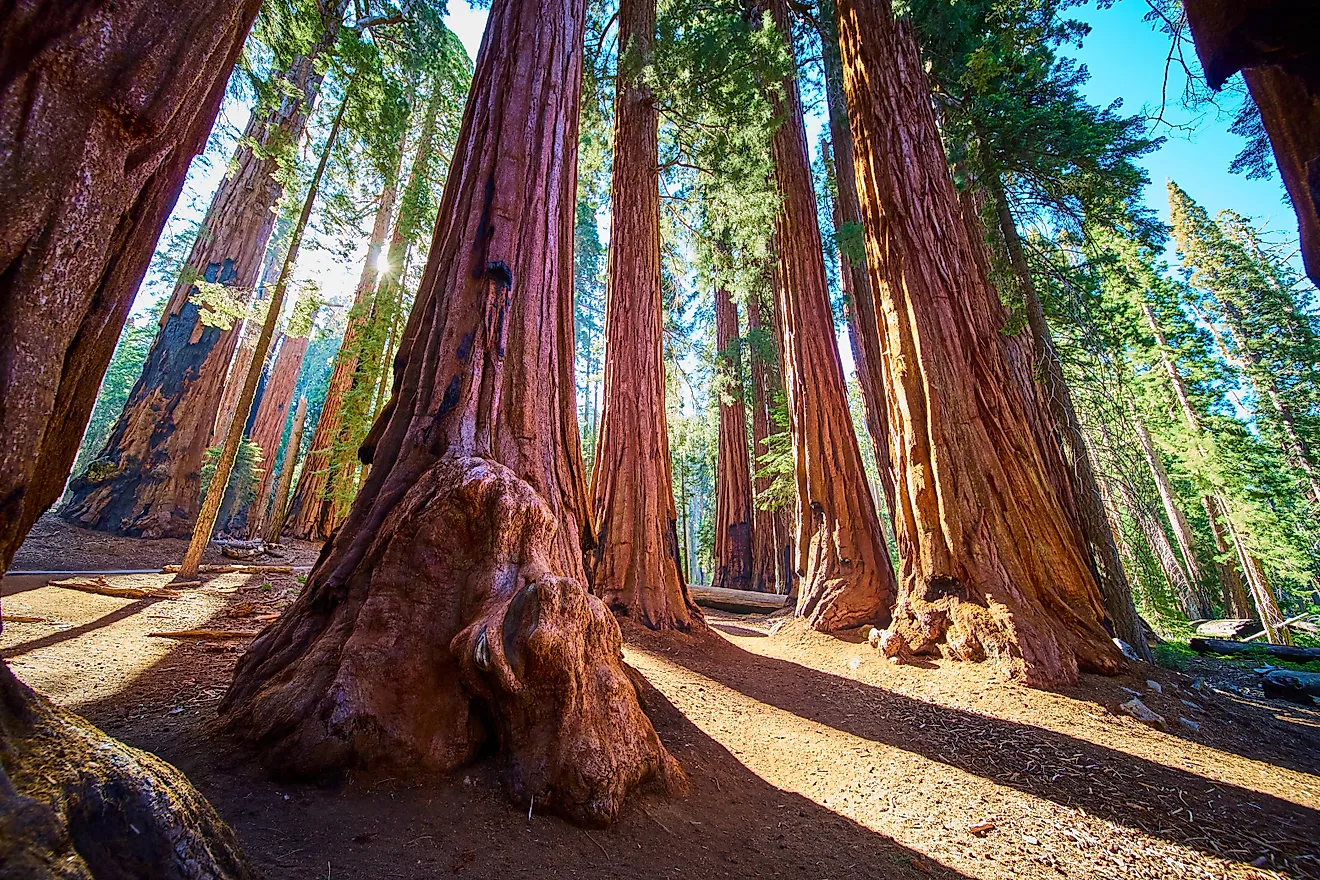
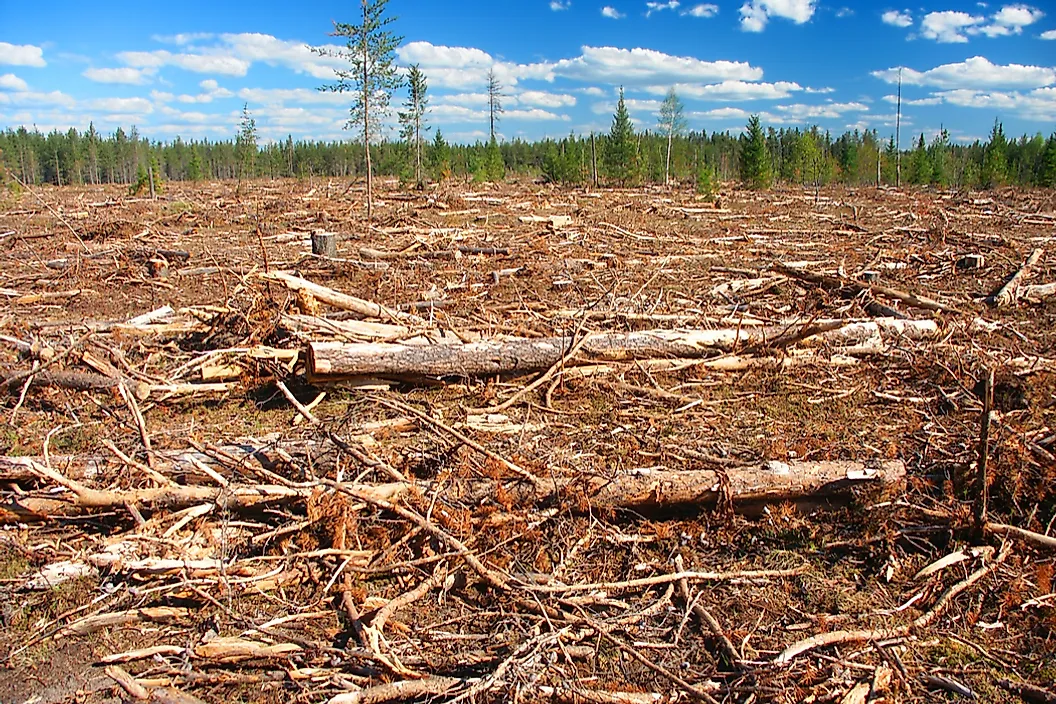
After the 2024 Borel Fire burned 59,288 acres in Kern County, the Forest Service approved salvaging timber on about 415 high-severity acres and removing hazard trees along about 110 acres of Saddle Springs Road in Sequoia National Forest. The decision, signed in August 2025, also called for reforestation treatments across roughly 400 acres. Public safety and usable timber were part of the reasoning, but so were watershed health, future fuel accumulation, and the recovery of severely burned land.
In the Black Hills National Forest, which spans western South Dakota and northeastern Wyoming, tree cutting has also been studied as a way to reduce losses from mountain pine beetles. Forest Service researchers compared 21 pairs of commercially thinned and unthinned ponderosa-pine stands and found substantially less beetle-caused mortality in the thinned areas. That does not mean every dead or vulnerable tree is automatically removed. Managers may treat a dense stand to make it less susceptible to beetles while leaving dead trees elsewhere to provide wildlife habitat or because removal would serve no practical purpose.

Commercial wood production remains another reason why timber is frequently harvested in national forests, including in Alaska's Tongass National Forest. Farther south, Oregon's Willamette National Forest continues to advertise timber sales. One 2025 offering in Linn County put up an estimated 64,383 tons of Douglas fir and other conifer sawtimber.
Whatever the stated purpose, a proposed timber project must fit the forest's management plan and comply with federal environmental law. Depending on the size and location of the project, Forest Service specialists may evaluate possible effects on water, wildlife, soils, roads, recreation, cultural resources, and nearby communities. The project can then be modified, delayed, challenged, or abandoned before any trees are cut.
Who Buys Timber From US National Forests?

The US Forest Service does not harvest and sell the logs itself. Instead, it typically sells the right to harvest timber through competitive bidding. Purchasers are often sawmills, logging companies, wood-products manufacturers, or other businesses that process timber into products such as lumber, plywood, paper, or engineered wood.

In some cases, stewardship contracts allow companies to remove timber in exchange for completing restoration work, such as thinning overcrowded forests or improving wildlife habitat. Not every timber sale receives a bid, however. Forest Service research found that 11.9% of timber volume offered between 2007 and 2020 went unsold at first offering, although later sales reduced the share never sold to 2.7%.
Working Lands Under A Multiple-Use Mandate
The Forest Service manages 154 national forests, but it does not publish a simple count of how many currently permit or conduct commercial logging. Timber harvest may be authorized under the National Forest System’s multiple-use framework, while individual forest plans and protected designations determine where it can occur.
National forests were never intended to function like national parks. They are working public lands where recreation, wildlife habitat, clean water, timber harvesting, grazing, and wildfire management often exist side by side. Whether logging occurs depends on the forest and the landscape in question, but understanding that a multiple-use mission helps explain why two federally protected forests can look and be managed so differently.