Where People Are Moving To In New Zealand In 2026
New Zealand's population grew by just 0.7% in the year to June 2025, down from 1.7% the year before. Despite slower national growth, some regions continue to attract new residents. Much of the fastest expansion is occurring in the mid and lower South Island, according to Infometrics' analysis of Stats NZ's June 2025 subnational estimates. Selwyn, Waimakariri, and Christchurch together accounted for the bulk of Canterbury's population gain last year, while a similar shift is underway around Queenstown and its neighboring Central Otago towns. Five towns saw the strongest population gains in 2025, and are among places to watch in 2026.
Rolleston

Rolleston is the largest town in Selwyn District, New Zealand's fastest-growing territorial authority, which grew 2.4% to 87,600 people in the year to June 2025, according to Stats NZ. Rolleston itself has grown from around 1,500 residents in the 1990s to more than 34,000 in 2025, now representing over a third of the district's total population.
According to Selwyn District Council's own 2024 Long-Term Plan Growth & Demand Report, around 80% of Selwyn's population growth comes from net internal migration, with people moving in "from Christchurch City and other areas of Aotearoa New Zealand." The overwhelming majority of new residents relocate from next-door Christchurch, drawn by larger sections, newer housing stock, and a short commute via the Southern Motorway. Rolleston is now a major employment hub in the district too, home to two inland freight ports and a fast-growing retail and industrial base.
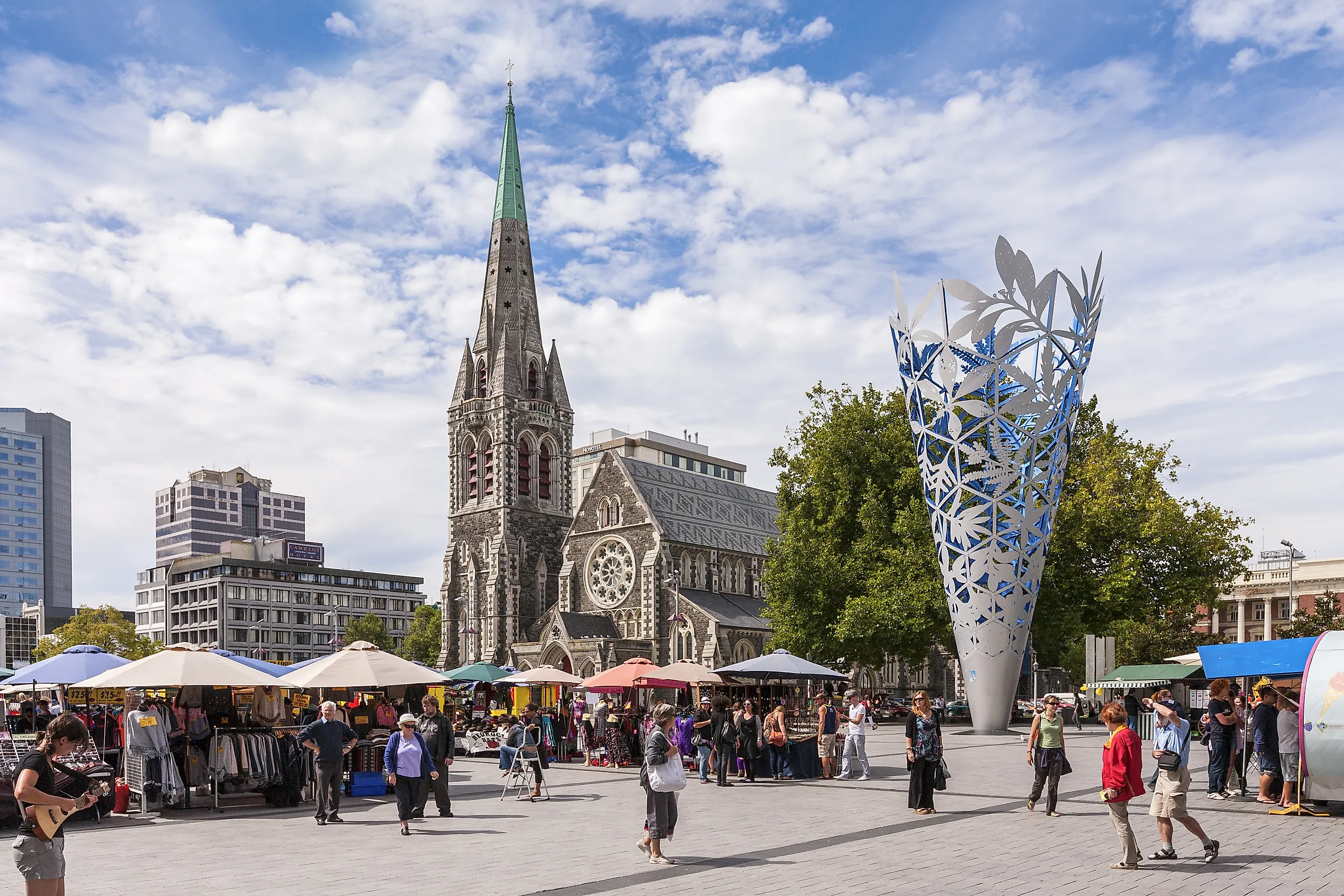
Christchurch

Christchurch grew 1.0% in the year to June 2025, reaching a population of 419,200, according to Stats NZ's subnational population estimates. It posted a net internal migration gain of 1,700 people that year, the largest among New Zealand's major cities, even as it lost residents to neighboring Selwyn and Waimakariri.
Stats NZ's 2023 Census mobility data shows Canterbury was among the top three regions people moved to after leaving Auckland between 2018 and 2023, with 17,283 arrivals from Auckland alone. That figure is reported at the regional level rather than for Christchurch city specifically, though Christchurch is by far Canterbury's largest urban center. The revitalized central city has also added new drawcards, including the Te Pae Christchurch Convention Centre and the Riverside Market food hall, both opened after the 2011 earthquake, alongside a net internal migration gain that outpaces every other New Zealand city.
Rangiora

Rangiora is the largest town in Waimakariri District, which grew 1.1% in the year to June 2025 to a population of roughly 69,800, according to Stats NZ. Rangiora itself has a population of over 19,000 and sits about 30 minutes north of central Christchurch.
Stats NZ's 2023 Census mobility release found that 11.2% of people living in Waimakariri District in 2023 had lived in Christchurch City five years earlier, making Christchurch the district's single largest source of new residents. The district has one of New Zealand's highest rates of owner-occupied housing, and Waimakariri District Council has identified more than 330 hectares of land for future residential development in Rangiora and neighbouring Kaiapoi. These growth areas are expected to provide capacity for thousands of additional homes as the district's population moves toward 100,000 over coming decades. New subdivisions continue to expand in both towns as Waimakariri absorbs continued demand from the wider Christchurch region.
Cromwell

Cromwell is the largest town in Central Otago District, which grew 1.3% in the year to June 2025, faster than the national average, according to Stats NZ figures reported by Infometrics. Cromwell itself currently has a population of roughly 7,900 and sits on the shores of Lake Dunstan.
Central Otago District Council has pointed to a "trickle-down effect" from neighboring Queenstown-Lakes District, as rising prices and growth pressure there push buyers toward more affordable towns nearby. These alternatives include Cromwell, Alexandra, and smaller settlements like Roxburgh and Omakau. RNZ reported in early 2026 that this pattern has continued, with buyers priced out of Queenstown-Lakes increasingly relocating to Cromwell specifically.
Cromwell has become a major service and commercial hub for the district, anchored by its wine and stone-fruit industries alongside its lakeside setting. Lake Dunstan and the surrounding vineyards remain the town's biggest draw for both new residents and visitors.
Queenstown

Queenstown, classified by Stats NZ as a medium urban area, had an estimated population of 29,000 in the year to June 2025. The wider Queenstown-Lakes District grew 1.7% that year to 53,800 people, the second-fastest rate of any territorial authority in the country after Selwyn, according to Stats NZ figures reported by Infometrics.
A joint Otago Regional Council and Queenstown Lakes District Council Housing and Business Capacity Assessment projects the district's resident population could reach around 97,700 within 30 years, an increase of roughly 80% from 2025 levels.
Locally, the district's tourism, hospitality, and construction sectors have continued to draw workers even as national hiring has slowed. The council's 2025 Housing and Business Capacity Assessment identified housing capacity pressures in the Whakatipu Basin, with development at estates like Jack's Point continuing to expand.
Where New Zealand's Growth Is Heading Next
The pattern across each New Zealand town is consistent: new residents are settling less in Christchurch and Queenstown and more in the smaller towns around them, where housing is more affordable and commutes are still workable. For residents already living in these areas, that means new subdivisions, rising demand on local infrastructure, and traffic on roads that didn't have rush hours a decade ago. If national population growth stays this slow, these corridors are likely to continue accounting for a large share of New Zealand's population growth in the years ahead, rather than the country's biggest cities.