11 Most Beautiful Small Towns in the Great Lakes Region You Should Visit
The water off Tobermory, Ontario, is so clear that boaters drift over century-old shipwrecks on the bottom of Georgian Bay. The Great Lakes do that to the towns built along them. Fishing villages, Victorian harbor towns, beach towns under limestone bluffs, each takes its looks from the water at its edge. Lake by lake, the beauty changes, the open Superior horizon, the warm beaches of Lake Michigan, the vineyard slopes above Lake Ontario. The small towns that ring the five lakes are among the most beautiful places in the interior of North America.
Munising, Michigan

Munising is a small town of under 2,000 people on the south shore of Lake Superior, the largest freshwater lake in the world by surface area. It is the gateway to Pictured Rocks National Lakeshore, 15 miles of sandstone cliffs streaked red, orange, and green by the iron, copper, and manganese in the rock. Boat tours follow the cliffs in summer. The colors are the reason most people come.
Munising Falls, just outside town, drops about 50 feet over a sandstone ledge, an easy walk from the parking area. Grand Island, a short ferry ride offshore, has its own beaches, hardwood forests, and inland lakes, and the national recreation area there is laced with trails. Between the cliffs, the falls, and the island, the town gives visitors a few days' worth to do.
Mackinac Island, Michigan

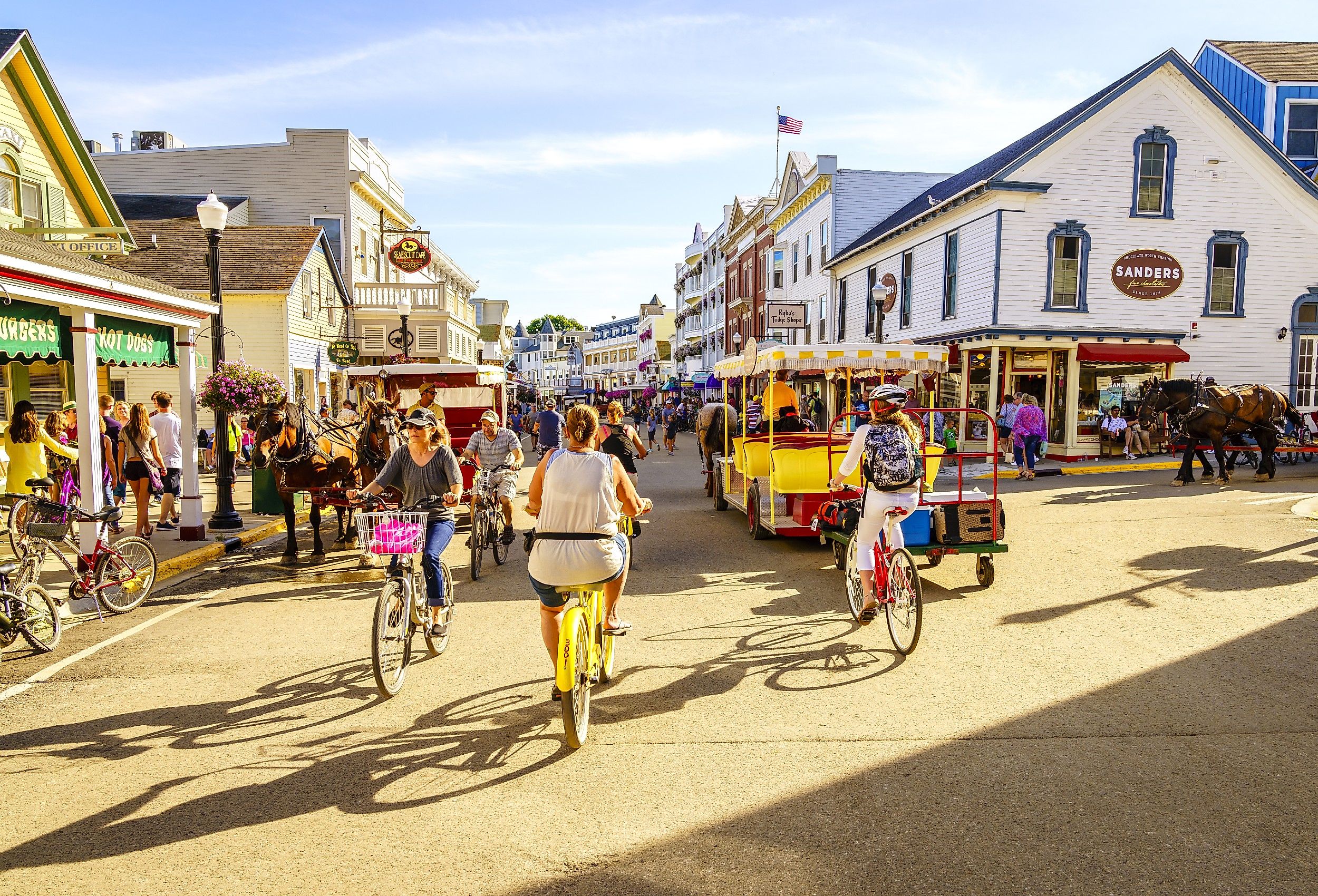
Mackinac Island lies in Lake Huron near the Straits of Mackinac, the narrows that connect Lake Huron and Lake Michigan. The Mackinac Bridge, a five-mile suspension span, crosses the straits nearby and links Michigan's Upper and Lower peninsulas. About 500 people live on the island year-round. Cars have been banned since the 1890s, so travel is by bicycle, horse-drawn carriage, or on foot.
A ferry from Mackinaw City or St. Ignace makes the crossing in about 20 minutes. The island is known for its fudge, made in shops along Main Street from old recipes. Fort Mackinac, above the harbor, dates to the Revolutionary era, when the island guarded one of the main fur-trade routes in the northern Great Lakes. Its cannons and barracks are open to walk through.
Grand Marais, Minnesota

Grand Marais is a harbor village of about 1,340 people on the North Shore of Lake Superior, in Cook County, Minnesota. The Sawtooth Mountains rise behind it, and on clear nights the northern lights appear over the lake. Grand Marais is quiet most of the year and busiest in summer. The harbor lighthouse and the breakwater are the easiest things to walk to.
The Boundary Waters Canoe Area Wilderness begins inland, a roadless expanse of lakes where motors are mostly banned. A nearby Dark Sky Sanctuary has lookouts for the northern lights. From the harbor, a ferry crosses to Isle Royale National Park, an island far out in Lake Superior known for its fishing and its wolves.
Tobermory, Ontario

Tobermory is a small harbor village at the northern tip of the Bruce Peninsula, where Georgian Bay meets Lake Huron. It is the freshwater diving capital of the Great Lakes. The clear water and the rocky shoals have produced more than 20 shipwrecks, most of them in Fathom Five National Marine Park, Canada's first national marine park.
Divers and snorkelers reach the wrecks by boat or right from the harbor. On land, the Grotto at Bruce Peninsula National Park is a sea cave on Georgian Bay, reached on foot from Cyprus Lake. Greig's Caves, farther down the peninsula, is a set of limestone caves along the Niagara Escarpment with views over the bay. The water here is a clear blue-green that looks closer to the Caribbean than to Canada.
Bayfield, Wisconsin

Bayfield is a town of about 600 people on Lake Superior in northern Wisconsin, and it is the gateway to the Apostle Islands National Lakeshore. Boats and kayaks leave the harbor for the islands, the lighthouses scattered among them, and the Meyers Beach sea caves, where waves have cut hollows into the sandstone cliffs.
In winter, when the lake freezes hard enough, the sea caves can be reached on foot across the ice, though the ice rarely cooperates. The town itself has orchards and small wineries on the hills behind it, and a working harbor with a long fishing history. The Madeline Island ferry leaves from the dock for most of the year.
Chesterton, Indiana

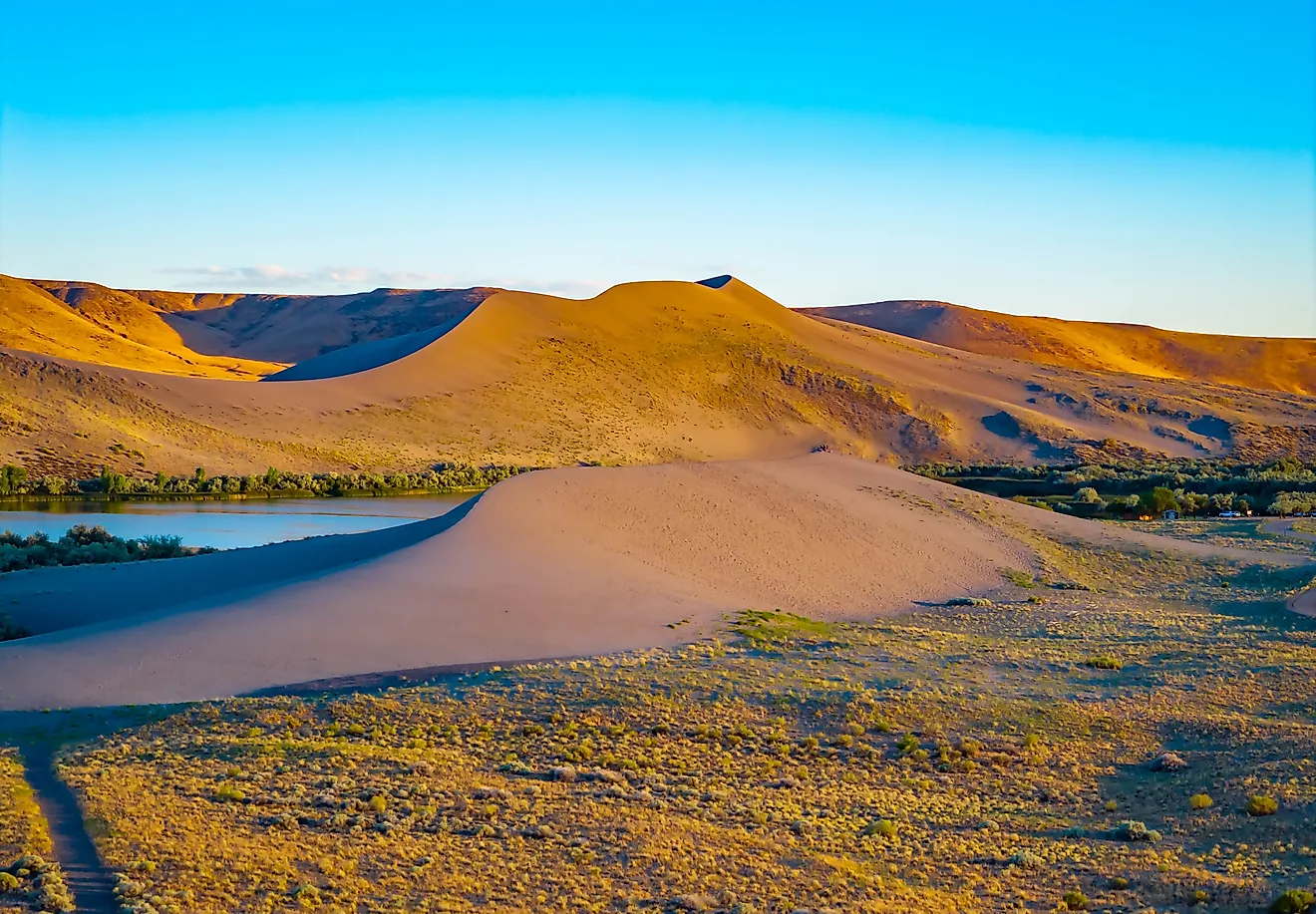
Chesterton is a town of about 14,000 on the southern shore of Lake Michigan, in northwest Indiana. It is the doorway to Indiana Dunes, the state park and the national park that share the lakeshore, where tall sand dunes back wide beaches. On a clear day the Chicago skyline is visible across the water.
Swimmers and sunbathers crowd the beaches all summer, and sailboats cross the water offshore. Cowles Bog, part of the national park, protects an unusual mix of wetland and dune habitats, with a 4.7-mile trail through it. Downtown Chesterton, a few miles inland, has the shops and restaurants the beach areas lack.
Traverse City, Michigan

Traverse City stands at the foot of Grand Traverse Bay on Lake Michigan, a town of about 15,000 and the self-styled cherry capital of the world. The orchards around it supply much of the country's tart cherries, and the National Cherry Festival each July is the year's main event. The food scene leans toward farm-to-table, with wineries on the two peninsulas north of town.
Old Victorian homes line the waterfront streets, and the bay crowds with sailboats in the warm months. Sleeping Bear Dunes National Lakeshore, about half an hour west, has some of the tallest freshwater dunes anywhere, with overlooks high above Lake Michigan. Traverse City is the largest town on this list, but it still moves at a small-town pace outside festival week.
Angola, New York

County Route 9 through Angola, New York. Editorial credit: Wikimedia Commons
Angola is a village of about 2,000 on the shore of Lake Erie, south of Buffalo, in western New York. It was once called Evans Station, after the town of Evans that surrounds it. The main attraction is Evangola State Park, with a curved natural beach and views out over Lake Erie.
The park's low cliffs give a view over the lake and the rolling land behind it. Inland, Woodbury Vineyards is one of several wineries in the Lake Erie grape belt, the long band of vineyards that follows the shore. Angola is a quiet stop, more a place to swim and picnic than a destination in its own right.
Niagara-on-the-Lake, Ontario

Niagara-on-the-Lake stands where the Niagara River empties into Lake Ontario, a town of about 18,000 in the heart of Ontario's wine country. The 19th-century downtown is well preserved, and horse-drawn carriages still work the main streets. More than 40 wineries surround the town.
The local specialty is icewine, pressed from grapes left to freeze on the vine, sweet and expensive. Inniskillin, Reif Estate, and Wayne Gretzky Estates are among the wineries open for tastings. Across the river on the American side, Old Fort Niagara guarded the river mouth through the colonial wars and the War of 1812, and it is visible from the Canadian shore.
Goderich, Ontario

Goderich stands on the eastern shore of Lake Huron, at the mouth of the Maitland River, a town of about 7,900 and the seat of Huron County. It has long been called Canada's Prettiest Town. The center is the unusual part, an eight-sided downtown built around a central park and courthouse, with the streets radiating out from it like spokes. The Canada Company laid it out that way in the 1820s.
The town faces due west, and the Lake Huron sunsets are what most people come for, best seen from the bluff by the Goderich Lighthouse, the oldest light station on the Canadian side of the lake. Three sand beaches, Main, St. Christopher's, and Rotary Cove, line the shore below, joined by a boardwalk. Under the lake itself, reached by a shaft in town, is the largest underground salt mine in the world, its tunnels reaching miles out beneath Lake Huron. An F3 tornado tore through the Square in 2011, and the town spent years rebuilding it.
Cobourg, Ontario

Cobourg Marina and Victoria Hall clock tower in Cobourg, Ontario.
Cobourg is the largest town in Northumberland County, a community of about 20,000 on Lake Ontario, an hour east of Toronto by train. Its main draw is Cobourg Beach, a wide sand beach right downtown, busy with swimmers and boats all summer. The harbor, marina, and downtown all lie within a short walk of the water.
Victoria Park, on the waterfront, is the center of the town's summer events. Cobourg is also a base for cycling, with the Great Lakes Waterfront Trail running through it and routes like the Rice Lake Ramble heading inland. Farm markets like the Burnham Family Farm Market sell local produce from the country around Lake Ontario.
Life On The Inland Seas
For all their size, the Great Lakes feel less like lakes than inland seas, and the towns along them live accordingly. Bayfield sends kayakers out to the Apostle Islands, Cobourg crowds its downtown beach on Lake Ontario, and Mackinac bans the cars entirely. Some are barely more than a harbor and a main street. Others, like Traverse City, have grown into small cities. What they share is the water at the end of the street and a short, busy season squeezed into the northern summer.