7 Most Underrated Towns In Nebraska
The largest railroad yard on the planet is not in Chicago or Kansas City. It sits in North Platte, Nebraska: eight miles of track sorting thousands of railcars a day. That is the kind of thing you find when you actually stop in Nebraska instead of blowing past it on Interstate 80. The seven places below do not crowd many travel lists, and they range more widely than the title lets on: genuine small towns like Chadron and Sidney sit alongside mid-size cities like Grand Island and Kearney. Each gives you a real reason to pull off the highway, whether you are after pioneer history, one of the continent's great bird migrations, or a hot meal on a downtown block that kept its old brick storefronts. Here is where to point the car.
Chadron

Chadron sits up in Nebraska's northwest corner, in the Pine Ridge country just shy of the South Dakota Black Hills. Its calling card is Chadron State Park, and here is a fact worth knowing: it was Nebraska's very first state park. Close to a thousand acres of canyon and ponderosa pine give you room to camp, hike, fish, or just let the dog run. A few miles east of town, the Museum of the Fur Trade tells the story of the High Plains hide trade from inside a reconstructed 1830s trading post, which is a more atmospheric setting than most museums can manage.
The other anchor is the Mari Sandoz High Plains Heritage Center, over on the Chadron State College campus. Sandoz grew up in the Sandhills east of here and turned that hard ranching country into books like Old Jules and Crazy Horse, and the center walks you through both her life and the High Plains she wrote about. It opened in 2002 in the college's old library, and it runs talks and workshops through the year if you want more than a quick look.
Grand Island

Grand Island is no town, it is Nebraska's fourth-largest city, but it earns a stop anyway. The Stuhr Museum of the Prairie Pioneer is the headliner: a full 1890s village called Railroad Town, with more than a hundred original buildings and costumed interpreters who stay in character while they work the blacksmith shop and the mercantile. There is also a Pawnee earth lodge and a rotunda packed with Native American artifacts. If you are traveling with kids in July, the Island Oasis Water Park and its wave pool will buy you a few hours of peace.
The real reason to time a visit, though, is the cranes. Every spring, hundreds of thousands of sandhill cranes drop onto this stretch of the Platte River to rest and feed before pushing north, one of the biggest bird gatherings anywhere in North America. The Crane Trust Nature and Visitor Center puts you close to it with trails, viewing blinds, and a small bison herd grazing the prairie out back.
McCook

Down in the state's southwest corner, McCook is a railroad town of about 7,000 that punches above its size. Start at Heritage Square and grab the walking-tour map to find the preserved storefronts from the late 1800s and early 1900s. Here is the surprise: McCook is home to the only Frank Lloyd Wright-designed house in Nebraska. It is a private residence, so you admire it from the sidewalk, but it is there.
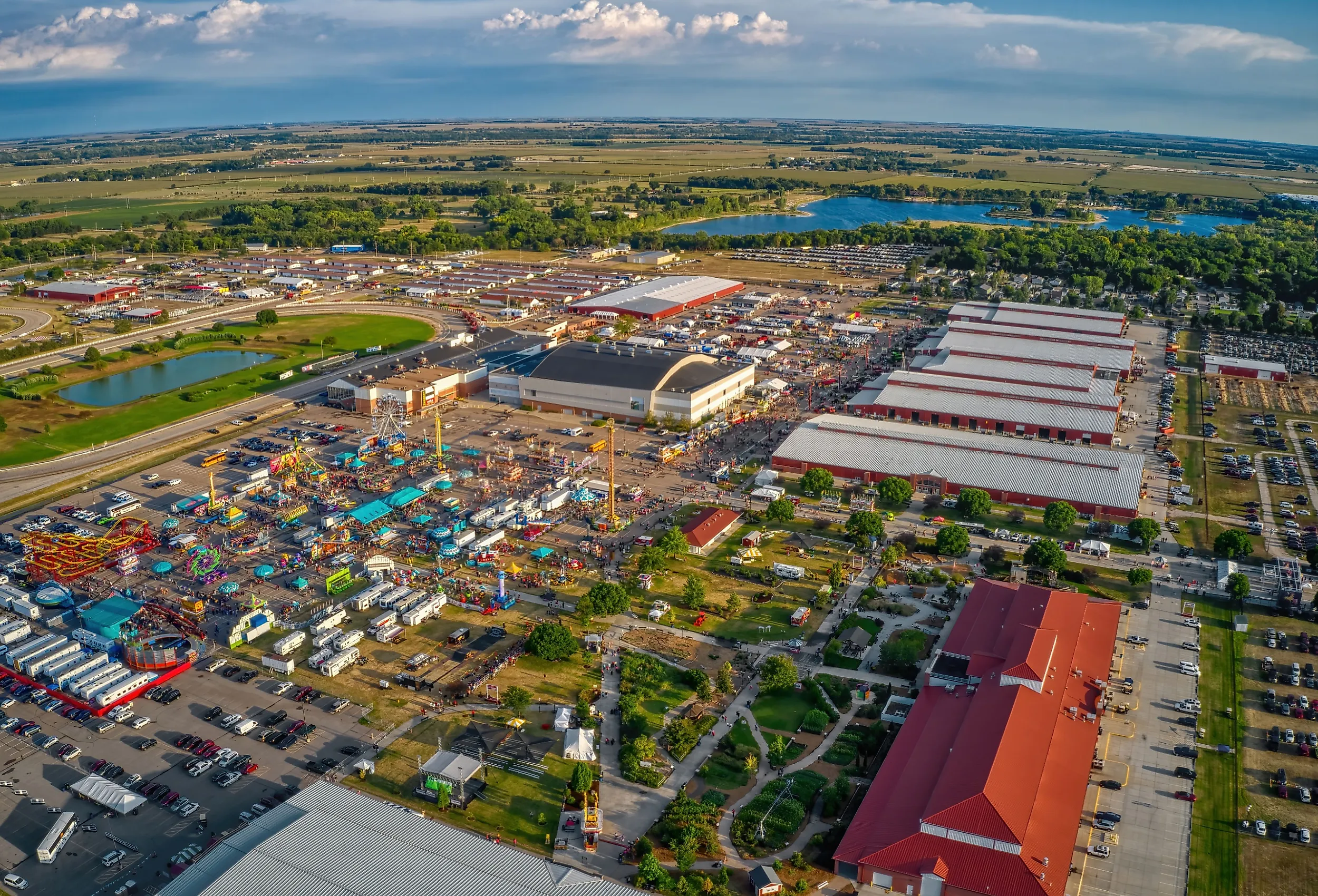
For the outdoors, Red Willow State Recreation Area just north of town opens up a reservoir for fishing, boating, and camping, with the surrounding county good for spotting deer, turkeys, and pheasants. And for one weekend a year the town fills right up: McCook's Kiplinger Arena, out at the county fairgrounds, pulls something like 30,000 to 40,000 horse people for rodeos and shows. That is a lot of cowboy hats for a place this size.
Norfolk

Norfolk, up in the northeast, is Johnny Carson's town, even if it is not quite his birthplace. Carson was born across the line in Corning, Iowa, but his family moved here when he was eight, and he considered Norfolk home for the rest of his life. He never forgot it, either: he left the money that built the Johnny Carson Theatre, which still books concerts and shows. Over at the Elkhorn Valley Museum, a dedicated Carson gallery sits alongside the area's pioneer and railroad history.
Beyond the Carson connection, Norfolk keeps a steady arts habit. The Norfolk Arts Center runs rotating gallery shows of local and regional work, plus classes for every age and the occasional concert, and it does not charge admission. That is a lot of culture for a city of around 24,000.
North Platte

North Platte sits where the North and South Platte Rivers meet, and it has leaned into two very different claims to fame. The first is Buffalo Bill Cody, who built his Scout's Rest Ranch here in 1886, a Victorian house so grand the locals called it the Mansion on the Prairie. It is a state historical park now, with the house, the big horse barn, and a pile of Wild West Show memorabilia.
The second claim is the one from the intro: Bailey Yard, the largest railroad classification yard in the world, recognized as such by Guinness back in 1995. It runs about eight miles long and handles thousands of railcars a day. You get the full view from the eight-story Golden Spike Tower, where a volunteer up top will explain what all those trains are actually doing. For a quieter afternoon, Lake Maloney State Recreation Area south of town has walleye, catfish, and crappie waiting.
Sidney

Out in the panhandle near the Colorado border, Sidney has a wilder past than its quiet main street suggests. During the 1874 gold rush, this was a jumping-off point for the Black Hills gold fields, and it earned a reputation as the toughest town on the tracks. You can still feel the era downtown, where dozens of buildings carry late-1800s brick and sit on the National Register. The old Fort Sidney left three original buildings behind, including the restored Post Commander's Home, which you can tour in summer.
The mood is calmer now. The Living Memorial Gardens downtown were built right on top of the town's old 1940s swimming pool, repurposed into a landscaped park honoring local veterans, with a tall war memorial and the Angel of Hope statue at its center. A block or two away, the Sidney Fine Arts Center runs classes and rotating exhibits for anyone curious about what the local arts scene is up to.
Kearney

Kearney straddles I-80 in south-central Nebraska, and you cannot really miss its signature sight: the Great Platte River Road Archway, a monument that arches clear over the interstate. Inside, it tells the story of everyone who funneled through this corridor heading west, the Oregon, California, and Mormon Trail pioneers, the Pony Express, the railroad. Pull off and walk through it; it is more engaging than a building spanning a highway has any right to be.
Downtown, the Museum of Nebraska Art is the official state art museum, with more than 5,000 works housed in a handsome 1911 former post office, including a strong collection of John James Audubon's wildlife prints. A few miles southeast, Fort Kearny State Historical Park rebuilds the 1848 frontier fort that once guarded those same trails. And when you need to stretch your legs, Yanney Heritage Park has walking trails, fishing ponds, and an observation tower right in town.
None of these places is trying to be a destination, which is exactly what makes them worth the stop. The cranes, the world's biggest rail yard, the only Frank Lloyd Wright house in the state, a talk-show legend's hometown: this is the stuff sitting in plain sight along a highway most people treat as a place to get through. Next time you are crossing Nebraska, build in a day to get off the interstate. You will come away with better stories than the drivers who did not.