9 Prettiest Downtown Strips In The Maritimes
Walk the head of the harbour in Mahone Bay and three church steeples line up along the water in a row, the single most photographed view in Nova Scotia. That image captures what the best Maritime towns trade on: not size, but a tight, walkable core where heritage buildings, working harbours, and independent shops sit within a few blocks of each other. Across New Brunswick, Nova Scotia, and Prince Edward Island, towns built by Acadian settlers, Scottish immigrants, and shipbuilders have kept their downtowns intact. These nine are the ones worth slowing down for.
Lunenburg, Nova Scotia
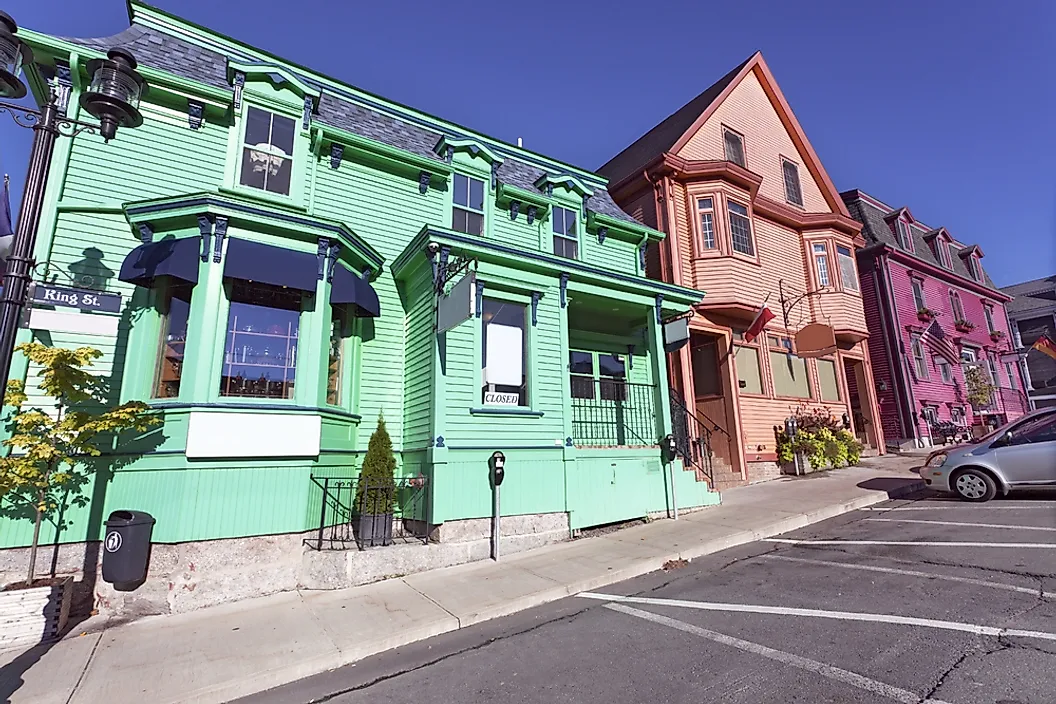
UNESCO inscribed Lunenburg as the best-surviving example of a planned British colonial settlement in North America, and the proof is in the grid: a tight pattern of steep streets laid out in 1753, lined with brightly painted wooden buildings that have barely shifted in two centuries. The harbour below is a working one, not a stage set. The Fisheries Museum of the Atlantic sits right on the water and lays out the town's saltbank-fishing history, and the schooner Bluenose II, when she is not away sailing, ties up nearby.

The streets above the docks carry the rest of the day. The Salt Shaker Deli does seafood and chowder by the water, No. 9 Coffee Bar handles the caffeine, and the hilltop Lunenburg Academy, a turreted 1895 schoolhouse, is one of the few wooden academy buildings of its kind still standing in the province. Live music turns up at the Lunenburg Opera House, which has been running in one form or another since the 1900s.
St. Andrews, New Brunswick

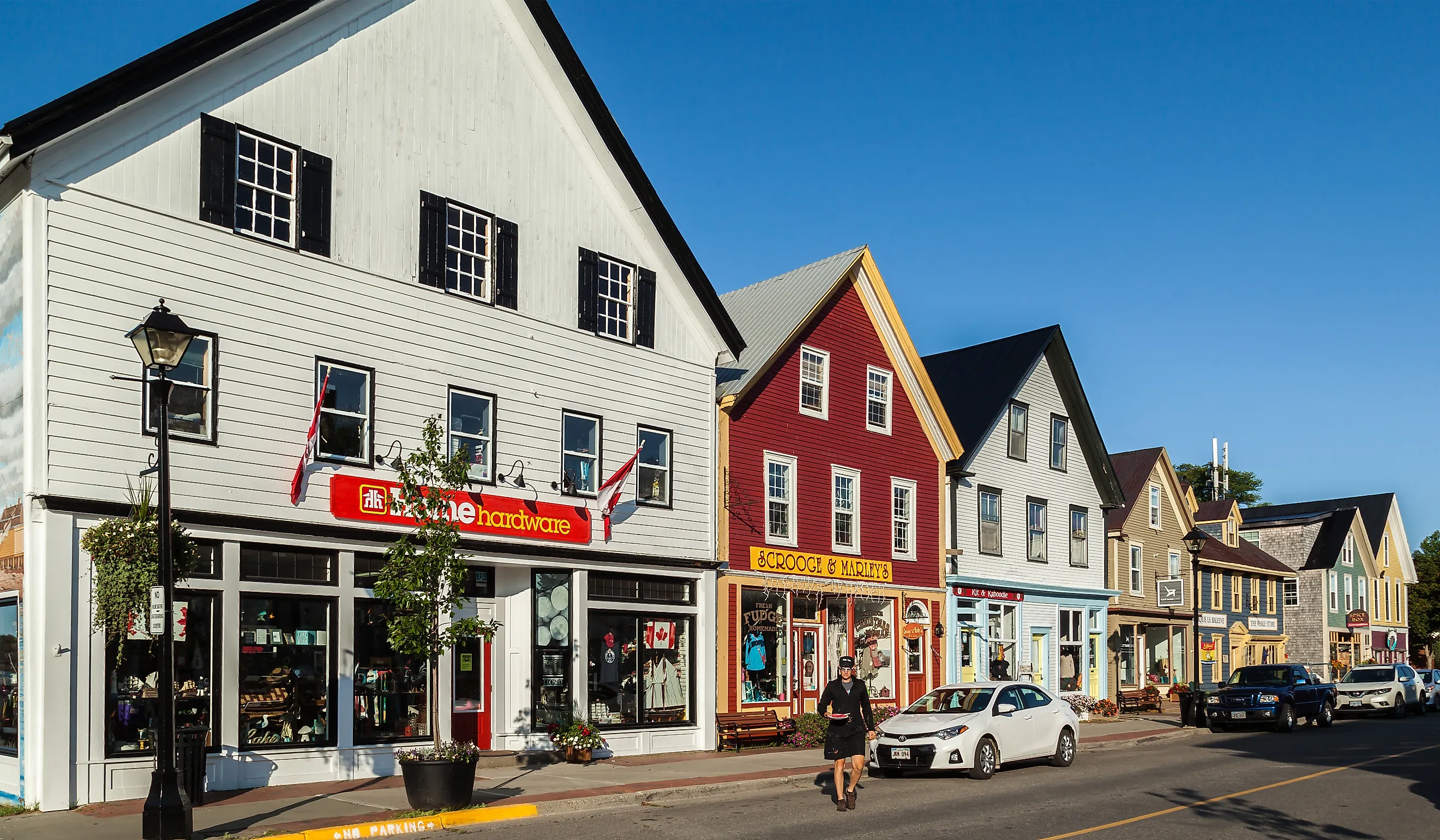
St. Andrews has drawn summer visitors since the railway era, and the Tudor-style Algonquin Resort, open on the hill above town since 1889, still sets the tone. The town sits on a peninsula reaching into Passamaquoddy Bay, and its main thoroughfare, Water Street, runs parallel to the shore with locally owned restaurants, ice cream counters, and shops in centuries-old storefronts. St. Andrews wears its founding by Loyalists openly.
Two stops anchor the rest of a visit. Kingsbrae Garden spreads across 27 acres above the bay, mixing formal plantings with sculpture and a few resident alpacas, while the Ross Memorial Museum fills a Georgian mansion with the collection of Henry and Sarah Ross. Whale-watching boats leave from the wharf through the summer, hunting the same Bay of Fundy waters that the tides churn twice a day.
Mahone Bay, Nova Scotia

The three churches do the advertising. St. James' Anglican, St. John's Lutheran, and Trinity United stand shoulder to shoulder at the head of the harbour, a lineup so recognizable that mariners once used the steeples to find their bearing. The town behind them, a shipbuilding center since the 1700s, has turned its century-old buildings over to potters, booksellers, and cafes.
Edgewater Street is the spine of it, an easy walk past artisan studios and the Barn Coffee & Social House, with the Mahone Bay Museum filling in the boatbuilding backstory. Come late September and into October, the Scarecrow Festival fills the streets with hundreds of handmade figures, the town's busiest stretch of the year.
Shediac, New Brunswick

A giant concrete-and-steel lobster, sculpted by New Brunswick artist Winston Bronnum, sits at the edge of Shediac, and the town has built an identity to match it as the self-declared Lobster Capital of the World. Steps from the water, the downtown runs to seafood halls, souvenir shops, and summer crowds, with the Pascal-Poirier Historic House, the oldest in town, holding down the Acadian history.
Main Street fills out the rest with cafes and specialty shops, and in July the Shediac Lobster Festival takes over for several days of cooking, music, and competition. Just outside town, Parlee Beach offers some of the warmest saltwater swimming in Canada, a quirk of the shallow, sun-warmed Northumberland Strait.
Annapolis Royal, Nova Scotia

Few towns in Canada go back further. Annapolis Royal grew up beside the Port-Royal colony of 1605 and served for generations as the capital of Acadia and then Nova Scotia, and that long history shows along St. George Street, where colonial-era buildings now hold antique shops and small restaurants. Fort Anne National Historic Site, its grassy earthwork ramparts overlooking the Annapolis Basin, anchors the downtown.
The Annapolis Royal Historic Gardens lay out 17 acres of roses, dykelands, and native plantings a short walk from the main street, and a weekend farmers market keeps the town center busy. After dark, a long-running candlelit graveyard tour winds through the old burial ground at Fort Anne, one of the oldest tours of its kind on the continent.
Summerside, Prince Edward Island

Spinnaker's Landing, a boardwalk market of shops, food stalls, and studios, gives Summerside's waterfront its center of gravity, and the Baywalk boardwalk runs from there along the harbour with open views across the strait. The island's second-largest community after Charlottetown, Summerside lines Water Street with cafes, bookshops, and restored brick storefronts.

The Harbourfront Theatre stages live shows year-round, and the Wyatt Historic House Museum preserves a local merchant family's home much as they left it. The Confederation Trail, built on the island's old rail bed, runs through town for an easy walk or ride, and Summerside makes a calmer base than Charlottetown without giving up much.
Pictou, Nova Scotia

In 1773, the ship Hector landed its first boatload of Scottish settlers here, and Pictou has called itself the Birthplace of New Scotland ever since. A full-size replica of the Hector sits at the Hector Heritage Quay on the waterfront, and Water Street behind it runs to artisan shops, pubs, and bakeries with a Scottish streak.
The Northumberland Fisheries Museum lays out the area's fishing past, and the marina gives a clear view of the boats working the harbour. Each summer the Pictou Lobster Carnival, one of the oldest events of its kind in the province, fills the town for a few days in July.
Alma, New Brunswick

Alma counts only a few hundred residents, but it sits at the gate of Fundy National Park and beside the highest tides on Earth, which makes its short main street busy out of all proportion to its size. Kelly's Bake Shop has built a regional reputation on sticky buns, and the seafood spots turn out lobster rolls to hikers coming off the park trails.
The tide is the real attraction. At low water the harbour empties completely, leaving the fishing boats sitting on the mud of the exposed sea floor, and six hours later they are floating again at the top of the wharf. The town doubles as a launch point for sea kayaking and boat tours along the Bay of Fundy coast.
Montague, Prince Edward Island

Locals call it Montague the Beautiful, and the town earns the nickname on its river. The Montague River runs straight through the center, with a marina, a riverside boardwalk, and waterfront patios giving the downtown its shape. Tree-lined streets and a row of independent shops fill in the blocks above the water.
The Garden of the Gulf Museum, the oldest museum on Prince Edward Island, sits near the river, and Copper Bottom Brewing pours island-made beer a short walk away. Murals and public art turn up on walls and down alleys, and Montague works as a base for exploring the quieter eastern end of the island.
What Ties These Towns Together
For all the distance between them, these nine downtowns share a pattern. Each grew up around a harbour or a river and kept its center compact, so the history, the food, and the water all sit within a few blocks. The economies that built them, fishing, shipbuilding, and trade, mostly faded, but the buildings stayed, and the towns filled them with museums, markets, and independent shops rather than tearing them down. That is what makes them walkable now, and what separates a genuine working harbour town from a manufactured one.